Results by title
10 books match the query 'Pension trusts'
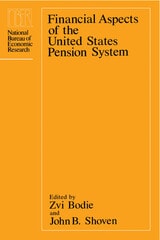
Financial Aspects of the United States Pension System
Edited by Zvi Bodie and John B. Shoven
University of Chicago Press, 1984
This book provides valuable information and analysis to managers, policymakers, and investment counselors in the rapidly expanding field of pension funding. American workers, too, need answers and insights on how to invest their money and plan for their retirement. fifteen of America's leading financial analysts address such pressing questions as
-What is the current financial status of the elderly, and how vulnerable are they to inflation?
-What is the impact of inflation on the private pension system, and what are the effects of alternative indexing schemes?
-What roles can the social security system play in the provision of retirement income?
-What is the effect of the tax code and the Employee Retirement Income Security Act of 1974 (ERISA) on corporate pension policy?
-How well funded are corporate pension plans, and is a firm's unfunded pension liability fully reflected in the market value of its common stock?
Many of the conclusions these experts reach contradict and challenge popular views, thus providing fertile ground for innovation in pension planning.
[more]
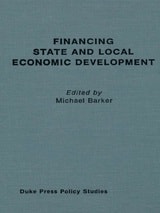
Financing State and Local Economic Development
Michael Barker, ed.
Duke University Press, 1983
The contributors discuss alternative methods of financing state and local economic development, including the role of venture capital in urban development, the role of banking institutions in encouraging the growth of small business, and the place of pension funds in economic growth.
[more]
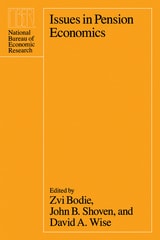
Issues in Pension Economics
Edited by Zvi Bodie, John B. Shoven, and David A. Wise
University of Chicago Press, 1987
In the past several decades, pension plans have become one of the most significant institutional influences on labor and financial markets in the U.S. In an effort to understand the economic effects of this growth, the National Bureau of Economic Research embarked on a major research project in 1980. Issues in Pension Economics, the third in a series of four projected volumes to result from thsi study, covers a broad range of pension issues and utilizes new and richer data sources than have been previously available.
The papers in this volume cover such issues as the interaction of pension-funding decisions and corporate finances; the role of pensions in providing adequate and secure retirement income, including the integration of pension plans with social security and significant drops in the U.S. saving rate; and the incentive effects of pension plans on labor market behavior and the implications of plans on labor market behavior and the implications of plans for different demographic groups.
Issues in Pension Economics offers important empirical studies and makes valuable theoretical contributions to current thinking in an area that will most likely continue to be a source of controversy and debate for some time to come. The volume should prove useful to academics and policymakers, as well as to members of the business and labor communities.
[more]

Pension Plans and Employee Performance
Evidence, Analysis, and PolicyRichard A. Ippolito
University of Chicago Press, 1997
In this provocative book, Richard A. Ippolito explores the relationship between employees' preferences for certain types of pension plans and their productivity. Ippolito begins by reviewing how pensions influence workers' behavior on the job, helping employers reduce early quit rates and increase early retirement rates. In a novel contribution, Ippolito then shows how pensions can assist employers in attracting and retaining workers who have personal attributes valued by the firm.
Challenging the accepted view of defined contribution plans, such as the 401k, as merely convenient tax-deferred savings plans, Ippolito argues that these plans can help firms select and pay their best workers without expending monitoring resources. Building on his proposals for managing private pension plans, Ippolito concludes with a blueprint for fixing the social security system that would promote incentives to work and save while at the same time improving the system's financial condition.
Challenging the accepted view of defined contribution plans, such as the 401k, as merely convenient tax-deferred savings plans, Ippolito argues that these plans can help firms select and pay their best workers without expending monitoring resources. Building on his proposals for managing private pension plans, Ippolito concludes with a blueprint for fixing the social security system that would promote incentives to work and save while at the same time improving the system's financial condition.
[more]

Pension Puzzles
Social Security and the Great DebateMelissa Hardy
Russell Sage Foundation, 2007
The rancorous debate over the future of Social Security reached a fever pitch in 2005 when President Bush unsuccessfully proposed a plan for private retirement accounts. Although efforts to reform Social Security seem to have reached an impasse, the long-term problem—the projected Social Security deficit—remains. In Pension Puzzles, sociologists Melissa Hardy and Lawrence Hazelrigg explain for a general audience the fiscal challenges facing Social Security and explore the larger political context of the Social Security debate. Pension Puzzles cuts through the sloganeering of politicians in both parties, presenting Social Security's technical problems evenhandedly and showing how the Social Security debate is one piece of a larger political struggle. Hardy and Hazelrigg strip away the ideological baggage to explicate the basic terms and concepts needed to understand the predicament of Social Security. They compare the cases for privatizing Social Security and for preserving the program in its current form with adjustments to taxes and benefits, and they examine the different economic projections assumed by proponents of each approach. In pursuit of its privatization agenda, Hardy and Hazelrigg argue, the Bush administration has misled the public on an issue that was already widely misunderstood. The authors show how privatization proponents have relied on dubious assumptions about future rates of return to stock market investments and about the average citizen's ability to make informed investment decisions. In addition, the administration has painted the real but manageable shortfalls in Social Security revenue as a fiscal crisis. Projections of Social Security revenues and benefits by the Social Security Administration have treated revenues as fixed, when in fact they are determined by choices made by Congress. Ultimately, as Hardy and Hazelrigg point out, the clash over Social Security is about more than technical fiscal issues: it is part of the larger culture wars and the ideological struggle over what kind of social responsibilities and rights American citizens should have. This rancorous partisan wrangling, the alarmist talk about a "crisis" in Social Security, and the outright deception employed in this debate have all undermined the trust between citizens and government that is needed to restore the solvency of Social Security for future generations of retirees. Drawing together economic analyses, public opinion data, and historical narratives, Pension Puzzles is a lucid and engaging guide to the major proposals for Social Security reform. It is also an insightful exploration of what that debate reveals about American political culture in the twenty-first century. A Volume in the American Sociological Association's Rose Series in Sociology
[more]
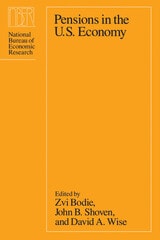
Pensions in the U.S. Economy
Edited by Zvi Bodie, John B. Shoven, and David A. Wise
University of Chicago Press, 1988
Pensions in the U.S. Economy is the fourth in a series on pensions from the National Bureau of Economic Research. For both economists and policymakers, this volume makes a valuable contribution to current research on pensions and the economics of the elderly. The contributors report on retirement saving of individuals and the saving that results from corporate funding of pension plans, and they examine particular aspects of the plans themselves from the employee's point of view.
Steven F. Venti and David A. Wise offer a careful analysis of who contributes to IRAs and why. Benjamin M. Friedman and Mark Warshawsky look at the reasons more retirement saving is not used to purchase annuities. Personal saving through pension contribution is discussed by B. Douglas Bernheim and John B. Shoven in the context of recent government and corporate pension funding changes. Michael J. Boskin and John B. Shoven analyze indicators of the economic well-being of the elderly, addressing the problem of why a large fraction of the elderly remain poor despite a general improvement in the economic status of the group as a whole. The relative merits of defined contribution versus defined benefit plans, with emphasis on the risk aspects of the two types of plans for the individual, are examined by Zvi Bodie, Alan J. Marcus, and Robert C. Merton. In the final paper, pension plans and worker turnover are the focus of the discussion by Edward P. Lazear and Robert L. Moore, who propose pension option value rather than the commonly used accrued pension wealth as a measure of pension value.
Steven F. Venti and David A. Wise offer a careful analysis of who contributes to IRAs and why. Benjamin M. Friedman and Mark Warshawsky look at the reasons more retirement saving is not used to purchase annuities. Personal saving through pension contribution is discussed by B. Douglas Bernheim and John B. Shoven in the context of recent government and corporate pension funding changes. Michael J. Boskin and John B. Shoven analyze indicators of the economic well-being of the elderly, addressing the problem of why a large fraction of the elderly remain poor despite a general improvement in the economic status of the group as a whole. The relative merits of defined contribution versus defined benefit plans, with emphasis on the risk aspects of the two types of plans for the individual, are examined by Zvi Bodie, Alan J. Marcus, and Robert C. Merton. In the final paper, pension plans and worker turnover are the focus of the discussion by Edward P. Lazear and Robert L. Moore, who propose pension option value rather than the commonly used accrued pension wealth as a measure of pension value.
[more]
Pensions, Labor, and Individual Choice
David A. Wise
University of Chicago Press, 1985
In recent years a decline in the labor force participation of older workers has combined with rapid current and projected increases in the number of older Americans, producing major policy debates over looming "crises" in social security and, to a lesser extent, in the private pension system. That private system is playing an increasing role in the support of retired workers and promises to be the subject of increasing scrutiny by economists and policymakers alike.
Previous books on private pensions have largely neglected behavioral implications of the features of pension plans. The papers in this volume, developed from material presented at a recent National Bureau of Economic Research conference, address two aspects of the relation between varieties of labor coverage and participation in the labor force. First, age at retirement may be correlated with kind of pension coverage. The papers, in fact, provide strong evidence that individual decisions about when to retire are directly influenced by pension options. Second, pension plans usually impose a high cost on workers who change jobs, which suggests that pension coverage reduces instances of job change. Pensions, Labor, and Individual Choice quantifies these correlations and proposes a conceptual framework within which to view them.
Previous books on private pensions have largely neglected behavioral implications of the features of pension plans. The papers in this volume, developed from material presented at a recent National Bureau of Economic Research conference, address two aspects of the relation between varieties of labor coverage and participation in the labor force. First, age at retirement may be correlated with kind of pension coverage. The papers, in fact, provide strong evidence that individual decisions about when to retire are directly influenced by pension options. Second, pension plans usually impose a high cost on workers who change jobs, which suggests that pension coverage reduces instances of job change. Pensions, Labor, and Individual Choice quantifies these correlations and proposes a conceptual framework within which to view them.
[more]
Privatizing Social Security
Edited by Martin Feldstein
University of Chicago Press, 1998
This volume represents the most important work to date on one of the pressing policy issues of the moment: the privatization of social security. Although social security is facing enormous fiscal pressure in the face of an aging population, there has been relatively little published on the fundamentals of essential reform through privatization. Privatizing Social Security fills this void by studying the methods and problems involved in shifting from the current system to one based on mandatory saving in individual accounts.
[more]

Social Security Pension Reform in Europe
Edited by Martin Feldstein and Horst Siebert
University of Chicago Press, 2002
Social Security in the United States and in Europe is at a critical juncture. Through the essays assembled in Social Security Pension Reform in Europe, Martin Feldstein and Horst Siebert, along with a number of distinguished contributors, discuss the challenges facing Social Security reform in the aging societies of Europe. A remarkable range of European nations—Germany, France, Finland, the Netherlands, Poland, Romania, Italy, Sweden, the United Kingdom, and Hungary—have implemented or are about to implement mixed Social Security systems that combine a traditional defined benefit of the pay-as-you-go system with an individual retirement account defined contribution of a capital-funded system.
The essays here highlight the problems that the European pension reform process faces and how it differs from that of the United States. This timely volume will significantly enrich the debate on pension reform worldwide.
The essays here highlight the problems that the European pension reform process faces and how it differs from that of the United States. This timely volume will significantly enrich the debate on pension reform worldwide.
[more]

The Distributional Aspects of Social Security and Social Security Reform
Edited by Martin Feldstein and Jeffrey B. Liebman
University of Chicago Press, 2002
Social security is the largest and perhaps the most popular program run by the federal government. Given the projected increase in both individual life expectancy and sheer number of retirees, however, the current system faces an eventual overload. Alternative proposals have emerged, ranging from reductions in future benefits to a rise in taxrevenue to various forms of investment-based personal retirement accounts.
As this volume suggests, the distributional consequences of these proposals are substantially different and may disproportionately affect those groups who depend on social security to avoid poverty in old age. Together, these studies persuasively show that appropriately designed investment-based social security reforms can effectively reduce the long-term burden of an aging society on future taxpayers, increase the expected future income of retirees, and mitigate poverty rates among the elderly.
As this volume suggests, the distributional consequences of these proposals are substantially different and may disproportionately affect those groups who depend on social security to avoid poverty in old age. Together, these studies persuasively show that appropriately designed investment-based social security reforms can effectively reduce the long-term burden of an aging society on future taxpayers, increase the expected future income of retirees, and mitigate poverty rates among the elderly.
[more]