Results by title
20 books match the query 'Perils'

An Appalachian Reawakening
West Virginia and the Perils of the New Machine Age, 1945-1972JERRY B. THOMAS
West Virginia University Press, 2010
As the long boom of post-World War II economic expansion spread across the globe, dreams of white picket fences, democratic ideals, and endless opportunities flourished within the United States. Middle America experienced a period of affluent stability built upon a modern age of industrialization. Yet for the people of Appalachia, this new era brought economic, social, and environmental devastation, preventing many from realizing the American Dream. Some families suffered in silence; some joined a mass exodus from the mountains; while others, trapped by unemployment, poverty, illness, and injury became dependent upon welfare. As the one state most completely Appalachian, West Virginia symbolized the region's dilemma, even as it provided much of the labor and natural resources that fueled the nation's prosperity.
An Appalachian Reawakening: West Virginia and the Perils of the New Machine Age, 1945-1972 recounts the difficulties the state of West Virginia faced during the post-World War II period. While documenting this turmoil, this valuable analysis also traces the efforts of the New Frontier and Great Society programs, which stimulated maximum feasible participation and lead to the ultimate rise of grass roots activities and organizations that improved life and labor in the region and undermined the notion of Appalachian fatalism.
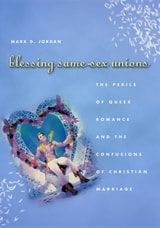
Blessing Same-Sex Unions
The Perils of Queer Romance and the Confusions of Christian MarriageMark D. Jordan
University of Chicago Press, 2005
Why then, asks noted gay commentator Mark D. Jordan, are so many churches vehemently opposed to blessing same-sex unions? In this incisive work, Jordan shows how carefully selected ideals of Christian marriage have come to dominate recent debates over same-sex unions. Opponents of gay marriage, he reveals, too often confuse simplified ideals of matrimony with historical facts. They suppose, for instance, that there has been a stable Christian tradition of marriage across millennia, when in reality Christians have quarreled among themselves for centuries about even the most basic elements of marital theology, authorizing experiments like polygamy and divorce.
Jordan also argues that no matter what the courts do, Christian churches will have to decide for themselves whether to bless same-sex unions. No civil compromise can settle the religious questions surrounding gay marriage. And queer Christians, he contends, will have to discover for themselves what they really want out of marriage. If they are not just after legal recognition as a couple or a place at the social table, do they really seek the blessing of God? Or just the garish melodrama of a white wedding? Posing trenchant questions such as these, Blessing Same-Sex Unions will be a must-read for both sides of the debate over gay marriage in America today.
Eating Anxiety
The Perils of Food PoliticsChad Lavin
University of Minnesota Press, 2013
Debates about obesity are really about the meaning of responsibility. The trend toward local foods reflects the changing nature of space due to new communication technologies. Vegetarian theory capitalizes on biotechnology’s challenge to the meaning of species. And food politics, as this book makes powerfully clear, is actually about the political anxieties surrounding globalization.
In Eating Anxiety, Chad Lavin argues that our culture’s obsession with diet, obesity, meat, and local foods enacts ideological and biopolitical responses to perceived threats to both individual and national sovereignty. Using the occasion of eating to examine assumptions about identity, objectivity, and sovereignty that underwrite so much political order, Lavin explains how food functions to help structure popular and philosophical understandings of the world and the place of humans within it. He introduces the concept of digestive subjectivity and shows how this offers valuable resources for rethinking cherished political ideals surrounding knowledge, democracy, and power.
Exploring discourses of food politics, Eating Anxiety links the concerns of food—especially issues of sustainability, public health, and inequality—to the evolution of the world order and the possibilities for democratic rule. It forces us to question the significance of consumerist politics and—simultaneously—the relationship between politics and ethics, public and private.
Has It Come to This?
The Promises and Perils of Geoengineering on the BrinkJ.P. Sapinski
Rutgers University Press, 2021
Hillary Clinton's Career in Speeches
The Promises and Perils of Women's Rhetorical AdaptivityShawn J. Parry-Giles
Michigan State University Press, 2023
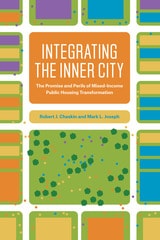
Integrating the Inner City
The Promise and Perils of Mixed-Income Public Housing TransformationRobert J. Chaskin and Mark L. Joseph
University of Chicago Press, 2015
In the most thorough examination of mixed-income public housing redevelopment to date, Robert J. Chaskin and Mark L. Joseph draw on five years of field research, in-depth interviews, and volumes of data to demonstrate that while considerable progress has been made in transforming the complexes physically, the integrationist goals of the policy have not been met. They provide a highly textured investigation into what it takes to design, finance, build, and populate a mixed-income development, and they illuminate the many challenges and limitations of the policy as a solution to urban poverty. Timely and relevant, Chaskin and Joseph’s findings raise concerns about the increased privatization of housing for the poor while providing a wide range of recommendations for a better way forward.

Planet of Microbes
The Perils and Potential of Earth's Essential Life FormsTed Anton
University of Chicago Press, 2017
In Planet of Microbes, Ted Anton takes readers through the most recent discoveries about microbes, revealing their unexpected potential to reshape the future of the planet. For years, we knew little about these invisible invaders, considering them as little more than our enemies in our fight against infectious disease. But the more we learn about microbes, the more it’s become clear that our very lives depend on them. They may also hold the answers to some of science’s most pressing problems, including how to combat a warming planet, clean up the environment, and help the body fight off a wide variety of diseases. Anton has spent years interviewing and working with the determined scientists who hope to harness the work of microbes, and he breaks down the science while also sharing incredible behind-the-scenes stories of the research taking place everywhere from microbreweries to Mars.
The world’s tiniest organisms were here more than three billion years before us. We live in their world, and Planet of Microbes at last gives these unsung heroes the recognition they deserve.
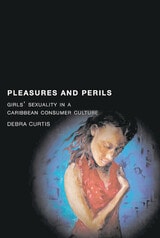
Pleasures and Perils
Girls' Sexuality in a Caribbean Consumer CultureCurtis, Debra
Rutgers University Press, 2009
Curtis shows that girls are often caught between conflicting discourses of Christian teachings about chastity, public health cautions about safe sex, and media enticements about consumer delights. Sexuality's contradictions are exposed: power and powerless¡ness, self-determination and cultural control, violence and pleasure. Pleasures and Perils illuminates the methodological and ethical issues anthropologists face when they conduct research on sex, especially among girls. The sexually explicit narratives conveyed in this book challenge not only the reader's own thoughts on sexuality but also the broader limits and possibilities of ethnography.
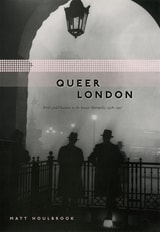
Queer London
Perils and Pleasures in the Sexual Metropolis, 1918-1957Matt Houlbrook
University of Chicago Press, 2005
Cyril's story is Matt Houlbrook's point of entry into the queer worlds of early twentieth-century London. Drawing on previously unknown sources, from police reports and newspaper exposés to personal letters, diaries, and the first queer guidebook ever written, Houlbrook here explores the relationship between queer sexualities and modern urban culture that we take for granted today. He revisits the diverse queer lives that took hold in London's parks and streets; its restaurants, pubs, and dancehalls; and its Turkish bathhouses and hotels—as well as attempts by municipal authorities to control and crack down on those worlds. He also describes how London shaped the culture and politics of queer life—and how London was in turn shaped by the lives of queer men. Ultimately, Houlbrook unveils the complex ways in which men made sense of their desires and who they were. In so doing, he mounts a sustained challenge to conventional understandings of the city as a place of sexual liberation and a unified queer culture.
A history remarkable in its complexity yet intimate in its portraiture, Queer London is a landmark work that redefines queer urban life in England and beyond.
Winner of History Today’s Book of the Year Award, 2006
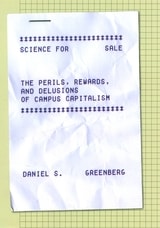
Science for Sale
The Perils, Rewards, and Delusions of Campus CapitalismDaniel S. Greenberg
University of Chicago Press, 2007
With Science for Sale, acclaimed journalist Daniel S. Greenberg reveals that campus capitalism is more complicated—and less profitable—than media reports would suggest. While universities seek out corporate funding, news stories rarely note that those industry dollars are dwarfed by government support and other funds. Also, while many universities have set up technology transfer offices to pursue profits through patents, many of those offices have been financial busts. Meanwhile, science is showing signs of providing its own solutions, as highly publicized misdeeds in pursuit of profits have provoked promising countermeasures within the field.
But just because the threat is overhyped, Greenberg argues, doesn’t mean that there’s no danger. From research that has shifted overseas so corporations can avoid regulations to conflicts of interest in scientific publishing, the temptations of money will always be a threat, and they can only be countered through the vigilance of scientists, the press, and the public.
Based on extensive, candid interviews with scientists and administrators, Science for Sale will be indispensable to anyone who cares about the future of scientific research.

Studies into Darkness
The Perils and Promise of Freedom of SpeechEdited by Carin Kuoni and Laura Raicovich
Amherst College Press, 2022
Contributions by Zach Blas, Mark Bray, Natalie Diaz, Aruna D’Souza, Silvia Federici and Gabriela López Dena, Jeanne van Heeswijk, shawné michaelain holloway, Prathibha Kanakamedala and Obden Mondésir, Amar Kanwar, Carin Kuoni, Lyndon, Debora, and Abou, Svetlana Mintcheva, Mendi + Keith Obadike, Vanessa Place, Laura Raicovich, Michael Rakowitz, Kameelah Janan Rasheed, and Nabiha Syed.
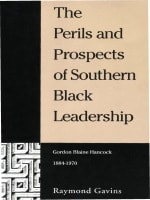
The Perils and Prospects of Southern Black Leadership
Gordon Blaine Hancock, 1884–1970Raymond Gavins
Duke University Press, 1993
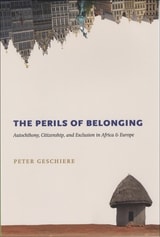
The Perils of Belonging
Autochthony, Citizenship, and Exclusion in Africa and EuropePeter Geschiere
University of Chicago Press, 2009
Despite being told that we now live in a cosmopolitan world, more and more people have begun to assert their identities in ways that are deeply rooted in the local. These claims of autochthony—meaning “born from the soil”—seek to establish an irrefutable, primordial right to belong and are often employed in politically charged attempts to exclude outsiders. In The Perils of Belonging, Peter Geschiere traces the concept of autochthony back to the classical period and incisively explores the idea in two very different contexts: Cameroon and the Netherlands.
In both countries, the momentous economic and political changes following the end of the cold war fostered anxiety over migration. For Cameroonians, the question of who belongs where rises to the fore in political struggles between different tribes, while the Dutch invoke autochthony in fierce debates over the integration of immigrants. This fascinating comparative perspective allows Geschiere to examine the emotional appeal of autochthony—as well as its dubious historical basis—and to shed light on a range of important issues, such as multiculturalism, national citizenship, and migration.
The Perils of Global Legalism
Eric A. Posner
University of Chicago Press, 2009
The first months of the Obama administration have led to expectations, both in the United States and abroad, that in the coming years America will increasingly promote the international rule of law—a position that many believe is both ethically necessary and in the nation’s best interests.
With The Perils of Global Legalism, Eric A. Posner explains that such views demonstrate a dangerously naive tendency toward legalism—an idealistic belief that law can be effective even in the absence of legitimate institutions of governance. After tracing the historical roots of the concept, Posner carefully lays out the many illusions—such as universalism, sovereign equality, and the possibility of disinterested judgment by politically unaccountable officials—on which the legalistic view is founded. Drawing on such examples as NATO’s invasion of Serbia, attempts to ban the use of land mines, and the free-trade provisions of the WTO, Posner demonstrates throughout that the weaknesses of international law confound legalist ambitions—and that whatever their professed commitments, all nations stand ready to dispense with international agreements when it suits their short- or long-term interests.
Provocative and sure to be controversial, The Perils of Global Legalism will serve as a wake-up call for those who view global legalism as a panacea—and a reminder that international relations in a brutal world allow no room for illusions.
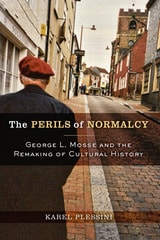
The Perils of Normalcy
George L. Mosse and the Remaking of Cultural HistoryKarel Plessini
University of Wisconsin Press, 2014
In this intellectual biography of George Mosse, Karel Plessini draws on all of Mosse's published and unpublished work to illuminate the origins and development of his groundbreaking methods of historical analysis and the close link between his life and work. He redefined the understanding of modern mass society and politics, masterfully revealing the powerful influence of conformity and political liturgies on twentieth-century history. Mosse warned against the dangers inherent in acquiescence, showing how identity creation and ideological fervor can climax in intolerance and mass murder—a message of continuing relevance.
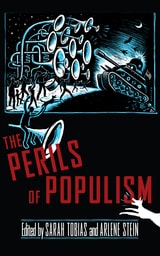
The Perils of Populism
Sarah Tobias
Rutgers University Press, 2022
The Perils of Populism shows how a feminist lens can help diagnose the factors behind the global rise of right-wing populism and teach us how to resist the threat it presents to democracy. Featuring interdisciplinary essays about politics in the United States, the Middle East, Europe, and India from a variety of acclaimed theorists and activists, the volume contributes to a rapidly expanding literature on gender and the far right. Together, these chapters offer a truly intersectional analysis of the problem, addressing everything from how populism has thrived in a “post-truth” era to the ways it appeals to working-class voters looking for an alternative to neoliberalism. Yet the authors also find reasons to be hopeful, as they showcase forms of grassroots feminist activism that challenge right-wing populism by advocating for racial and economic justice.
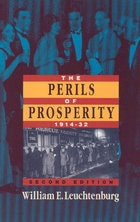
The Perils of Prosperity, 1914-1932
William E. Leuchtenburg
University of Chicago Press, 1993
William E. Leuchtenburg's lively yet balanced account of this hotly debated era in American history has been a standard text for many years. This substantial revision gives greater weight to the roles of women and minorities in the great changes of the era and adds new insights into literature, the arts, and technology in daily life. He has also updated the lists of important dates and resources for further reading.
“This book gives us a rare opportunity to enjoy the matured interpretation of an American Historian who has returned to the story and seen how recent decades have added meaning and vividness to this epoch of our history.”—Daniel J. Boorstin, from the Preface
The Perils of Prosperity, 1914-1932
William E. Leuchtenburg
University of Chicago Press, 1993
Beginning with Woodrow Wilson and U.S. entry into World War I and closing with the Great Depression, The Perils of Prosperity traces the transformation of America from an agrarian, moralistic, isolationist nation into a liberal, industrialized power involved in foreign affairs in spite of itself.
William E. Leuchtenburg's lively yet balanced account of this hotly debated era in American history has been a standard text for many years. This substantial revision gives greater weight to the roles of women and minorities in the great changes of the era and adds new insights into literature, the arts, and technology in daily life. He has also updated the lists of important dates and resources for further reading.
“This book gives us a rare opportunity to enjoy the matured interpretation of an American Historian who has returned to the story and seen how recent decades have added meaning and vividness to this epoch of our history.”—Daniel J. Boorstin, from the Preface
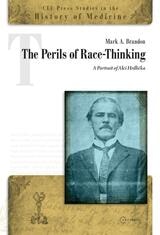
The Perils of Race-Thinking
A Portrait of Ales HrdlickaMark A. Brandon
Central European University Press, 2023
Eugenics and scientific racism are experiencing a resurgence, and an understanding of the ideas of Aleš Hrdlička can help combat them. Today, the racial science of the early twentieth century is both untenable and contemptible. This book is about an arch figure of that period: Aleš Hrdlička served as Curator of Physical Anthropology at the prestigious Smithsonian Institution from 1910 to 1941. Although his ideas about race are today considered pseudoscience, the uncomfortable truth is that he was an internationally respected scientist in his own day.
The Perils of Race-Thinking advances a bold new interpretation of modern racial ideology by exploring Hrdlička’s intellectual world. Using previously untapped Czech-language sources, Brandon irrevocably alters the discussion about this important figure by placing Czech nationalism at the center of his racial thinking. Defying disciplinary categories, Perils of Race-Thinking joins critical analysis of this key American anthropologist with an incisive revisionist perspective of interwar Czechoslovakia to unearth transnational racial presumptions lurking behind the worst crimes of the twentieth century.
At the center of Hrdlička’s race beliefs was his commitment to Czech and Slovak unity and independence. From this center, his next level of concern was what he believed to be a millennial racial struggle between Germans and Slavs. On a global scale, he viewed the Slavs, and especially the Soviet Union, as a eugenic bastion of White strength holding off the “rising tide of color.”
Step by step, Perils of Race-Thinking mercilessly dismantles Hrdlička’s racial system and exposes it as mysticism dressed up in the language of science. Convinced that human individuals belonged “naturally” in racial groups, Hrdlička embraced a revolutionary program of reordering the globe according to a harrowing morality of “Darwinist” struggle. Yet despite a lifetime of measuring body parts, even Hrdlička could not decide how many races there were or how to tell them apart.
Undermining Intersectionality
The Perils of Powerblind FeminismBarbara Tomlinson
Temple University Press, 2019
In this provocative book, esteemed scholar Barbara Tomlinson asserts that intersectionality—the idea that categories such as gender, race, and class create overlapping systemsof oppression—is consistently misinterpreted in feminist argument. Despite becoming a central theme in feminist scholarship and activism, Tomlinson believes dominant feminism has failed to fully understand the concept.
Undermining Intersectionality reveals that this apparent paradox is the result of the disturbing racial politics underlying more than two decades of widely-cited critiques of intersectionality produced by prominent white feminist scholars who have been insufficiently attentive to racial dynamics. As such, feminist critiques of intersectionality repeatedly reinforce racial hierarchies, undermining academic feminism’s supposed commitment to social justice. Tomlinson offers a persuasive analysis of the rhetorics and conventions of argument used in these critiques to demonstrate their systematic reliance on “powerblind” discursive practices.
Undermining Intersectionality concludes by presenting suggestions about concrete steps feminist researchers, readers, authors, and editors can take to promote more productive and principled engagements with intersectional thinking.