Results by title
12 books match the query 'Personal & Practical Guides'
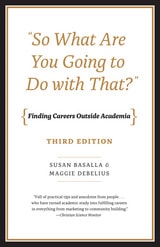
"So What Are You Going to Do with That?"
Finding Careers Outside Academia, Third EditionSusan Basalla and Maggie Debelius
University of Chicago Press, 2014
In this third edition of “So What Are You Going to Do with That?”, thoroughly revised with new advice for students in the sciences, Susan Basalla and Maggie Debelius—PhDs themselves—answer all those questions with a resounding “Yes!” A witty, accessible guide full of concrete advice for anyone contemplating the jump from scholarship to the outside world, “So What Are You Going to Do with That?” covers topics ranging from career counseling to interview etiquette to how to translate skills learned in the academy into terms an employer can understand and appreciate. Packed with examples and stories from real people who have successfully made this daunting—but potentially rewarding—transition, and written with a deep understanding of both the joys and difficulties of the academic life, this fully updated guide will be indispensable for any graduate student or professor who has ever glanced at his or her CV, flipped through the want ads, and wondered, “What if?”
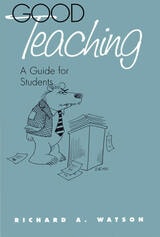
Good Teaching
A Guide for StudentsRichard A. Watson
Southern Illinois University Press, 1997
From junior college to Ivy League university, the level of teaching ranges from "great to awful," according to Richard A. Watson, who explains not only how to survive but how to profit from and enjoy your college experience.
To help students make important personal choices—what school? what major? what classes?—Watson explains such broad areas as administrative structure, institutional goals, and faculty aspirations.
Charging the student with the ultimate responsibility for learning, Watson presents certain academic facts of life: teaching is not the primary concern of either the faculty or the administration in most institutions; few professors on the university level have had any training in teaching, and even fewer started out with teaching as their goal; senior professors do not teach much (the higher the rank and salary, the less time in the classroom), and those seeking tenure must emphasize research to survive; and almost certainly, the bad teacher who is a good researcher will get paid more than the good teacher who does not publish.
This is a book about good teaching and how to find it. Rejecting the conventional wisdom that a professor devoted to research will not be effective in the classroom, Watson advises that you take classes from the professor you may have been cautioned to avoid.
Honor and Respect
The Official Guide to Names, Titles, and Forms of AddressRobert Hickey
University of Chicago Press, 2023
For any personal or professional situation where formality is of the essence and proper decorum is the expectation, this book offers critical information on how to address, introduce, and communicate with officials, functionaries, and dignitaries from all walks of life. From presidents to pastors, ambassadors to attorneys general to your local alderperson, Honor and Respect offers clear explanations and examples of the official honorifics of thousands of federal, state, and municipal officials; corporate executives; clergy; tribal officials; and members of the armed services in the United States, Australia, Canada, and the United Kingdom. It also includes titles and guidance on addressing high officials from more than 180 countries.
This updated third edition reflects the nuanced changes in language, protocol, and conventions that have been implemented by the State Department, Armed Forces, and myriad other government offices in the United States and beyond. With its all-encompassing scope and quick-reference format, Honor and Respect provides easy access for all who seek the proper protocols of forms of address. This book is an indispensable reference for individuals and offices working in government, foreign affairs, diplomacy, law, the military, training and consulting, and public relations, among others.
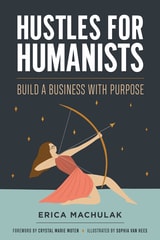
Hustles for Humanists
Build a Business with PurposeErica Machulak
Rutgers University Press, 2025
As a humanities professional, your skills are in demand. Despite the challenges of a competitive job market, the unique skill set that you possess is highly transferable to various industries and roles. Knowing how to position your creativity, knowledge and empathy is vital for achieving meaningful employment and professional growth.
Hustles for Humanists provides a detailed roadmap for humanities professionals who want to leverage their valuable skills to find or create meaningful work. Drawing from her experiences as an academic turned entrepreneur, Erica Machulak gives practical advice on how to connect with your core values, market yourself, build relationships with clients, and negotiate fair compensation.
This is an essential field guide for finding work that aligns with the core values of your humanities scholarship and practice. It demonstrates how the professional strengths of the humanities can be drawn upon to create fairer, more just and equitable entrepreneurial approaches – whether you’re launching a business, job hunting, or looking for inspiration. Hustles for Humanists helps you unlock the value of your humanities practice and explore exciting new pathways to achieving economic stability both within and beyond academia.
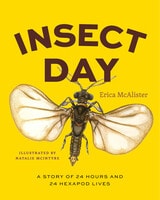
Insect Day
A Story of 24 Hours and 24 Hexapod LivesErica McAlister
University of Chicago Press, 2026
An hourly guide that follows twenty-four insects as they find food, mates, and safety from predators.
In this short book, celebrated scientist and award-winning author Erica McAlister leads readers on a worldwide field trip in search of insects. Each chapter of Insect Day introduces a single insect during a single hour, highlighting how twenty-four different species spend their time.
Early in our day, we meet a cold Arctic bumblebee, basking among poppy flower petals to warm itself. Even when the world around her is very cold, she keeps remarkably warm simply by vibrating. Near midday, there is enough sunlight for the blue-winged helicopter, a damselfly, to navigate the forests for her prey. When our insect spots a spider web, she looks for its creator—one vicious hunter eyeing up another. The giant damselfly reverses away from the web and then launches into an attack, grabbing onto the spider with her forelegs. If successful (many spiders are dropped), she perches while feasting. And then, like the most fastidious of diners, she cleans off any gossamer threads with a good preen. In the dark, the dung beetle also looks to the sky, using the Milky Way to orient itself as it rolls a ball of dung—a future home for its offspring. And, as our day closes, a tiger moth escapes bat hunters by fighting sound with sound—jamming bats’ sonar with ultrasonic clicking noises.
For each chapter, artist Natalie McIntyre has depicted these insects in stunning illustrations, blending traditional scientific drawing methods with fine art techniques. Working together to narrate and illustrate these unique moments in time, McAlister and McIntyre have created an engaging read that is a perfect way to spend an hour or two—and a true gift for readers, amateur naturalists, and all insect lovers.

Living and Sustaining a Creative Life
Essays by 40 Working ArtistsEdited by Sharon Louden
Intellect Books, 2013
Living with Florida's Atlantic Beaches
Coastal Hazards from Amelia Island to Key WestDavid M. Bush, William J. Neal, Norma J. Longo, Kenyon C. Lindeman, Deborah F. Pilkey, Luciana Slomp Esteves, John D. Congleton, and Orrin H. Pilkey
Duke University Press, 2004
From Amelia Island just south of Georgia to Key West's southern tip, beaches are one of Florida's greatest assets. Yet these beaches are in danger: rapid structural development on a highly erodible coast make them vulnerable to some of nature's greatest storms. The same development that has been driven by the attraction of beautiful beaches and coastal amenities now threatens those very resources. In turn, coastal structures are at risk from sea-level rise, shoreline retreat, winter storms, and hurricanes. Most of the methods for reducing losses associated with storms protect property only in the short term—at a growing cost in dollars and loss of natural habitat in the long term.
Living with Florida's Atlantic Beaches is a guide to mitigating or reducing losses of property, human life, and natural resources by living with, rather than just at, the shore. This illustrated volume provides an introduction to coastal processes and geology as well as a brief history of coastal hazards and short-sighted human responses. This is the first volume in the Living with the Shore series to discuss the significant long-term impact of dredge-and-fill beach construction on living marine resources. Guidance is provided for long-term risk reduction in the form of tips on storm-resistant construction and site evaluation; maps for evaluating relative vulnerability to hazards are also included. A brief review of coastal regulations will help property owners understand and navigate the various permit requirements for developing coastal property. Living with Florida's Atlantic Beaches is an invaluable source of information for everyone from the curious beach visitor to the community planner, from the prudent property investor to the decision-making public official.
Living with Hearing Loss
Marcia B. Dugan
Gallaudet University Press, 2003
Living with Hearing Loss also suggests strategies for everyday situations and times of emergency. Chapters on speechreading, oral interpreters, assertive communication, and other tips for improving communication can enable people with hearing loss to make changes at work, home, and while traveling to cope with most situations. It can raise significantly the quality of the lives of hard of hearing people while also helping them to avoid dependency upon others.
Looking After Your Books
Francesca Galligan
Bodleian Library Publishing, 2025
A quirky, indispensable resource packed with tips and advice on how to properly care for your books at home.
Have you ever wondered whether the assortment of books you have at home is a “collection”? Do you want to reorganize it? Expand it? Repair some of your treasured volumes?
This quirky but practical guide covers questions book lovers might have about caring for their books at home. Written by an expert rare book librarian at the Bodleian Library and covering a range of subjects including collecting, arranging, and keeping books in good condition, Looking After Your Books offers friendly advice that will guide readers through all aspects of book ownership. Within these pages, readers will find useful tips on buying from book fairs, bookshops, and dealers, as well as how to identify first editions. Help is on hand with treating accidental mishaps and a range of common problems such as an attack of red rot or a broken spine. There are also chapters on shelving, how to keep track of your books, how to commission a special box for a special book, and how to pass books on usefully.
With historical anecdotes and curious examples at every turn, Looking After Your Books is an indispensable resource and delight for anyone with an interest in books and their history.
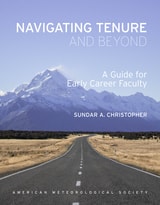
Navigating Tenure and Beyond
A Guide for Early Career FacultySundar A. Christopher
American Meteorological Society, 2019
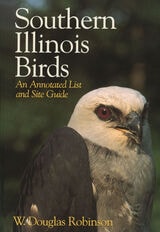
Southern Illinois Birds
An Annotated List and Site GuideW. Douglas Robinson
Southern Illinois University Press, 1996
Designed to help bird watchers in the field and at home discover the significance of their observations, Southern Illinois Birds documents current knowledge of the birds of southern Illinois by surveying both the published literature on the subject and the unpublished field notes of active observers summarizing many important observations that are not readily available elsewhere.
Bordered on three sides by major rivers, with both upland and lowland forests and dramatic topographic relief in the unglaciated Shawnee Hills, southern Illinois offers a wide variety of habitats and birds unusual to Illinois and the Midwest in general. Compared with studies in central and northern Illinois, there have been few active field observers in the south; yet the contributions of those who worked in southern Illinois have been considerable. Robinson displays their efforts convincingly in this book.
Southern Illinois Birds includes information on early arrival and late departure dates of migrants, the highest reported single-day counts in each season, and records of all vagrants. In addition, Robinson includes maps and guides to some of the best birding areas in the region to encourage birders and others to explore the many birding and scenic attractions in southern Illinois.
Robinson has produced a definitive reference for ornithologists and amateur bird watchers, conservation and government agencies, college students in biology, and future researchers who wish to determine the status and abundance of southern Illinois birds.
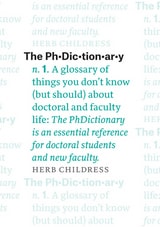
The PhDictionary
A Glossary of Things You Don't Know (but Should) about Doctoral and Faculty LifeHerb Childress
University of Chicago Press, 2016
With more than two decades as a doctoral student, college teacher, and administrator, Herb Childress has tripped over almost every possible misunderstood term, run up against every arcane practice, and developed strategies to deal with them all. He combines current data and personal stories into memorable definitions of 150 key phrases and concepts graduate students will need to know (or pretend to know) as they navigate their academic careers. From ABD to white paper—and with buyout, FERPA, gray literature, and soft money in between—each entry contains a helpful definition and plenty of relevant advice. Wry and knowledgeable, Childress is the perfect guide for anyone hoping to scale the ivory tower.