Results by title
2 books match the query 'Peruvian State'
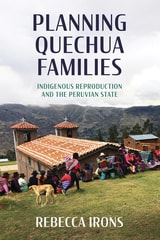
Planning Quechua Families
Indigenous Reproduction and the Peruvian StateRebecca Irons
University of Arizona Press, 2027
Planning Quechua Families: Indigenous Reproduction and the Peruvian State examines how reproductive health is shaped by a history of colonial power, state intervention, and social upheaval. This ethnography is centered on the experiences of Indigenous women in the Andes. The book situates contemporary family planning within the legacy of forced sterilizations and political violence during the era of Shining Path terrorism. Drawing on extensive fieldwork, Rebecca Irons brings together the perspectives of both Quechua women and the health-care workers who serve them, offering a nuanced account of how reproductive services are experienced, negotiated, and contested in rural clinics.
The book explores how reproductive health is embedded within broader processes of social change, including “Incanization,” shifting ideas of citizenship, and efforts to integrate marginalized communities into the Peruvian nation. Irons demonstrates how Indigenous understandings of kinship, health, and identity intersect with state policies and biomedical practices, revealing forms of violence that are often less visible but deeply consequential.
By placing Indigenous reproductive experiences within a wider cultural and political context, Planning Quechua Families provides a critical perspective on how power operates through intimate aspects of life in the contemporary Andes.
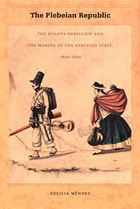
The Plebeian Republic
The Huanta Rebellion and the Making of the Peruvian State, 1820–1850Cecilia Méndez
Duke University Press, 2005
In addition to official sources such as trial dossiers, census records, tax rolls, wills, and notary and military records, Méndez uses a wide variety of previously unexplored sources produced by the mostly Quechua-speaking rebels. She reveals the Huanta rebellion as a complex interaction of social, linguistic, economic, and political forces. Rejecting ideas of the Andean rebels as passive and reactionary, she depicts the barely literate insurgents as having had a clear idea of national political struggles and contends that most local leaders of the uprising invoked the monarchy as a source of legitimacy but did not espouse it as a political system. She argues that despite their pronouncements of loyalty to the Spanish crown, the rebels’ behavior evinced a political vision that was different from both the colonial regime and the republic that followed it. Eventually, their political practices were subsumed into those of the republican state.