Results by title
117 books match the query 'Philippines' and 11 start with a
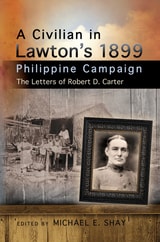
A Civilian in Lawton's 1899 Philippine Campaign
The Letters of Robert D. CarterEdited by Michael E. Shay
University of Missouri Press, 2013
In the midst of the Philippine-American War, twenty-two-year-old Robert Dexter Carter served in Manila as a civilian quartermaster clerk. Through his letters to his family, he provided a vivid picture of army life in Manila—the sights, the smells, and his responses to the native culture. In addition to his letters, his diary and several related articles present a firsthand account of the historic voyage of the United States Army Transport Grant through the Suez Canal to Manila in early 1899. Carter’s writings not only tell of his sometimes harrowing experiences, but also reveal the aspirations and fears of a young man not quite sure of his next steps on life’s journey.
Carter’s father, Robert Goldthwaite Carter, was a war hero and a longtime friend of Maj. Gen. Henry W. Lawton. Carter obtained his position through Lawton’s influence, and his respect for Lawton is clear throughout his writings. A frequent guest in the Lawton home, the young clerk was introduced to many notable figures both military and civilian. Carter’s letters, particularly to his father, are full of news and gossip related to his commander. In other letters, he reveals the kindness and generosity of Mrs. Lawton, who took time to look out for Carter while he was in the hospital and often loaned him books.
This well-researched and expertly edited work casts light on the role of support troops in war, a subject too often minimized or ignored. Shay begins each chapter with an introduction that establishes the setting, the context of events, and the disposition of Carter and his compatriots and provides notes and commentary to place the letters in context. By choosing not to edit the offensive expletives of a sometimes arrogant and racist young man, Shay presents a fully nuanced portrait of a young American exploring the larger world in a time of turmoil.
Enhanced by photographs from collections at the Library of Congress and the Military History Institute, as well as many of Carter’s own whimsical drawings, the book will appeal to armchair historians and scholars alike.
A Nation on the Line
Call Centers as Postcolonial Predicaments in the PhilippinesJan M. Padios
Duke University Press, 2018
A Reckoning
Philippine Trials of Japanese War CriminalsSharon W. Chamberlain
University of Wisconsin Press, 2019
Chamberlain highlights the differing views of Filipinos and Japanese about the trials. The Philippine government aimed to show its commitment to impartial proceedings with just outcomes. In Japan, it appeared that defendants were selected arbitrarily, judges and prosecutors were biased, and lower-ranking soldiers were punished for crimes ordered by their superior officers. She analyzes the broader implications of this divergence as bilateral relations between the two nations evolved and contends that these competing narratives were reimagined in a way that, paradoxically, aided a path toward postwar reconciliation.
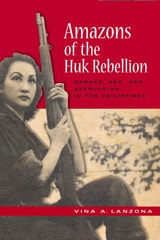
Amazons of the Huk Rebellion
Gender, Sex, and Revolution in the PhilippinesVina A. Lanzona
University of Wisconsin Press, 2009
Drawing on interviews with over one hundred veterans of the movement, Vina A. Lanzona explores the Huk rebellion from the intimate and collective experiences of its female participants, demonstrating how their presence, and the complex questions of gender, family, and sexuality they provoked, ultimately shaped the nature of the revolutionary struggle.
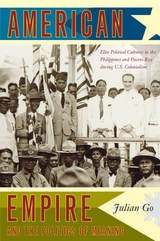
American Empire and the Politics of Meaning
Elite Political Cultures in the Philippines and Puerto Rico during U.S. ColonialismJulian Go
Duke University Press, 2007
American Empire and the Politics of Meaning is an examination of how these efforts to provide the elite of Puerto Rico and the Philippines a practical education in self-government played out on the ground in the early years of American colonial rule, from 1898 until 1912. It is the first systematic comparative analysis of these early exercises in American imperial power. The sociologist Julian Go unravels how American authorities used “culture” as both a tool and a target of rule, and how the Puerto Rican and Philippine elite received, creatively engaged, and sometimes silently subverted the Americans’ ostensibly benign intentions. Rather than finding that the attempt to transplant American-style democracy led to incommensurable “culture clashes,” Go assesses complex processes of cultural accommodation and transformation. By combining rich historical detail with broader theories of meaning, culture, and colonialism, he provides an innovative study of the hidden intersections of political power and cultural meaning-making in America’s earliest overseas empire.
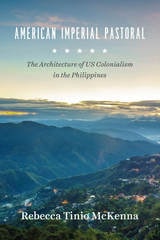
American Imperial Pastoral
The Architecture of US Colonialism in the PhilippinesRebecca Tinio McKenna
University of Chicago Press, 2017
In American Imperial Pastoral, Rebecca Tinio McKenna examines the design, construction, and use of Baguio, making visible the physical shape, labor, and sustaining practices of the US’s new empire—especially the dispossessions that underwrote market expansion. In the process, she demonstrates how colonialists conducted market-making through state-building and vice-versa. Where much has been made of the racial dynamics of US colonialism in the region, McKenna emphasizes capitalist practices and design ideals—giving us a fresh and nuanced understanding of the American occupation of the Philippines.
American Mestizos, The Philippines, and the Malleability of Race
1898-1961Nicholas Trajano Molnar
University of Missouri Press, 2017
Across the Pacific, these same mestizos were racialized in a way that characterized them as a asset to the United States, opening up the possibility of their assimilation to American society during a period characterized by immigration restriction and fears of miscegenation. Drawing upon Philippine and American archives, Nicholas Trajano Molnar documents the imposed and self-ascribed racializations of the American mestizos, demonstrating that the boundaries of their racial identity shifted across time and space with no single identity coalescing.
American Tropics
Articulating Filipino AmericaAllan Punzalan Isaac
University of Minnesota Press, 2006
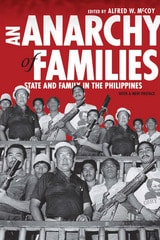
An Anarchy of Families
State and Family in the PhilippinesAlfred W. McCoy
University of Wisconsin Press, 2009
Edited by Alfred W. McCoy, An Anarchy of Families explores the pervasive influence of the modern dynasties that have led the Philippines during the past century. Exemplified by the Osmeñas and Lopezes, elite Filipino families have formed a powerful oligarchy—controlling capital, dominating national politics, and often owning the media. Beyond Manila, strong men such as Ramon Durano, Ali Dimaporo, and Justiniano Montano have used “guns, goons, and gold” to accumulate wealth and power in far-flung islands and provinces. In a new preface for this revised edition, the editor shows how this pattern of oligarchic control has continued into the twenty-first century, despite dramatic socio-economic change that has supplanted the classic “three g’s” of Philippine politics with the contemporary “four c’s”—continuity, Chinese, criminality, and celebrity.
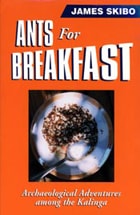
Ants For Breakfast
James Skibo
University of Utah Press, 1999
A view from the remote Philippine highlands where the author’s time in the kalinga homeland was packed with the elements of a thriller novel: mystery, danger, sex, violence, death—and research too!
Ants for Breakfast is about the adventure of modern archaeology. Seeking insight into prehistoric pottery manufacture and use, archaeologist James Skibo traveled to the remote Phillippine highlands to live with the Kalinga people, once headhunters, and one of the few groups in the world who still use ceramics for cooking.
Even as he looked for clues to the past in the practices of the present, the author’s time in the Kalinga homeland was packed with excitment: mystery, danger, sex, violence, and death. It was also an opportunity to taste a world both subtly and vastly different, while adding a new perspective to his own. In the course of his narrative, Skibo seizes every opportunity to link his experiences to the development of modern archaeology, and to such topics as human evolution, the peopling of the world, animal domestication, cultural logic, food taboos, basketball, Indiana Jones, and even Imelda Marcos.
Archipelagic American Studies
Brian Russell Roberts and Michelle Ann Stephens, editors
Duke University Press, 2017
Birte Blascheck, J. Michael Dash, Paul Giles, Susan Gillman, Matthew Pratt Guterl, Hsinya Huang, Allan Punzalan Isaac, Joseph Keith, Yolanda Martínez-San Miguel, Brandy Nālani McDougall, Ifeoma Kiddoe Nwankwo, Craig Santos Perez, Brian Russell Roberts, John Carlos Rowe, Cherene Sherrard-Johnson, Ramón E. Soto-Crespo, Michelle Ann Stephens, Elaine Stratford, Etsuko Taketani, Alice Te Punga Somerville, Teresia Teaiwa, Lanny Thompson, Nicole A. Waligora-Davis