Results by title
28 books match the query 'Philosophy, American'
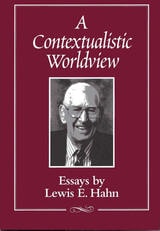
A Contextualistic Worldview
Essays by Lewis E. HahnLewis E. Hahn
Southern Illinois University Press, 2001
This selection of articles by Lewis E. Hahn addresses the philosophical school of contextualism and four contemporary American philosophers: John Dewey, Henry Nelson Wieman, Stephen C. Pepper, and Brand Blanshard.
Stressing the relatively recent contextualistic worldview, which he considers one of the best world hypotheses, Hahn seeks to achieve a broad perspective within which all things may be given their due place. After providing a brief outline, Hahn explains contextualism in relation to other philosophies. In his opening chapter, as in later chapters, he expresses contextualism as a form of pragmatic naturalism. In spite of Hahn’s high regard for contextualism, however, he does not think it would be good if we were limited to a single worldview. “The more different views we have and the more different sources of possible light we have, the better our chances that some of these cosmic maps will shed light on our world and our place in it.”
America and the Political Philosophy of Common Sense
Scott Philip Segrest
University of Missouri Press, 2009
America's Philosophical Vision
John E. Smith
University of Chicago Press, 1992
American philosophers like Peirce, James, Royce, and
Dewey have forged a unique philosophical tradition—one
that is rich and complex enough to represent a genuine
alternative to the analytic, phenomenological, and
hermeneutical traditions which have originated in Britain
or Europe.
"In my judgment, John Smith has no equal today in
combining two scholarly qualities: the analysis of
philosophical texts with penetration and rigor, and the
discernment of what it is in these texts that matters.
These qualities are in evidence throughout the essays in
America's Philosophical Vision. Whether he is
evaluating Rorty's view of Dewey; the pragmatic theory of
experience and truth; theories of freedom, creativity,
and the self; Royce's conception of community; or
synoptic philosophic visions, Smith always succeeds in
uniting a comprehensive understanding of philosophic
writings with a sure grasp of their import for human
culture and aspiration. It is a great benefit to
students of American thought that these papers have now
been collected into one volume."—James Gouinlock, Emory
University
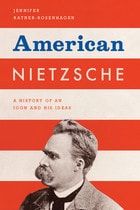
American Nietzsche
A History of an Icon and His IdeasJennifer Ratner-Rosenhagen
University of Chicago Press, 2011
If you were looking for a philosopher likely to appeal to Americans, Friedrich Nietzsche would be far from your first choice. After all, in his blazing career, Nietzsche took aim at nearly all the foundations of modern American life: Christian morality, the Enlightenment faith in reason, and the idea of human equality. Despite that, for more than a century Nietzsche has been a hugely popular—and surprisingly influential—figure in American thought and culture.
In American Nietzsche, Jennifer Ratner-Rosenhagen delves deeply into Nietzsche's philosophy, and America’s reception of it, to tell the story of his curious appeal. Beginning her account with Ralph Waldo Emerson, whom the seventeen-year-old Nietzsche read fervently, she shows how Nietzsche’s ideas first burst on American shores at the turn of the twentieth century, and how they continued alternately to invigorate and to shock Americans for the century to come. She also delineates the broader intellectual and cultural contexts within which a wide array of commentators—academic and armchair philosophers, theologians and atheists, romantic poets and hard-nosed empiricists, and political ideologues and apostates from the Left and the Right—drew insight and inspiration from Nietzsche’s claims for the death of God, his challenge to universal truth, and his insistence on the interpretive nature of all human thought and beliefs. At the same time, she explores how his image as an iconoclastic immoralist was put to work in American popular culture, making Nietzsche an unlikely posthumous celebrity capable of inspiring both teenagers and scholars alike.
A penetrating examination of a powerful but little-explored undercurrent of twentieth-century American thought and culture, American Nietzsche dramatically recasts our understanding of American intellectual life—and puts Nietzsche squarely at its heart.
Beyond Realism and Antirealism
John Dewey and the NeopragmatistsDavid L. Hildebrand
Vanderbilt University Press, 2003
In Beyond Realism and Antirealism: John Dewey and the Neopragmatists, David L. Hildebrand asks two important questions: first, how faithful are the Neopragmatists' reformulations of Classical Pragmatism (particularly Deweyan Pragmatism)? Second, and more significantly, can their Neopragmatisms work?
In assessing Neopragmatism, Hildebrand advances a number of historical and critical points:
• Current debates between realists and antirealists (as well as objectivists and relativists) are similar to early twentieth-century debates between realists and idealists that Pragmatism addressed extensively.
• Despite their debts to Dewey, the Neopragmatists are reenacting realist and idealist stands in their debate over realism, thus giving life to something shown fruitless by earlier Pragmatists.
• What is absent from the Neopragmatist's position is precisely what makes Pragmatism enduring: namely, its metaphysical conception of experience and a practical starting point for philosophical inquiry that such experience dictates.
• Pragmatism cannot take the "linguistic turn" insofar as that turn mandates a theoretical starting point.
• While Pragmatism's view of truth is perspectival, it is nevertheless not a relativism.
• Pace Rorty, Pragmatism need not be hostile to metaphysics; indeed, it demonstrates how pragmatic instrumentalism and metaphysics are complementary.
In examining these and other difficulties in Neopragmatism, Hildebrand is able to propose some distinct directions for Pragmatism. Beyond Realism and Antirealism will provoke specialists and non-specialists alike to rethink not only the definition of Pragmatism, but its very purpose.

Classical American Pragmatism
ITS CONTEMPORARY VITALITYEdited by Sandra B. Rosenthal, Carl R. Hausman, and Douglas R. Anderson
University of Illinois Press, 1999
Pragmatism emerged as a characteristically American response to an inheritance of British empiricism.
Presenting a radical reconception of the nature of experience, pragmatism represents a belief that ideas are not merely to be contemplated but must be put into action, tested and refined through experience. At the same time, the American pragmatists argued for an emphasis on human community that would offset the deep-seated American bias in favor of individualism. Far from being a relic of the past, pragmatism offers a dynamic and substantive approach to questions of human conduct, social values, scientific inquiry, religious belief, and aesthetic experience that lie at the center of contemporary life. This volume is an invaluable introduction to a school of thought that remains vital, instructive, and provocative.
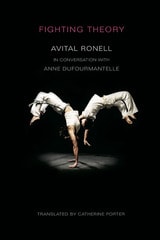
Fighting Theory
Avital Ronell, in conversation with Anne Dufourmantelle
University of Illinois Press, 2010
International interest in the work of Avital Ronell has expressed itself in reviews, articles, essays, and dissertations. For Fighting Theory, psychoanalyst and philosopher Anne Dufourmantelle conducted twelve interviews with Ronell, each focused on a key topic in one of Ronell's books or on a set of issues that run throughout her work.
What do philosophy and literary studies have to learn from each other? How does Ronell place her work within gender studies? What does psychoanalysis have to contribute to contemporary thought? What propels one in our day to Nietzsche, Derrida, Nancy, Bataille, and other philosophical writers? How important are courage and revolt? Ronell's discussions of such issues are candid, thoughtful, and often personal, bringing together elements from several texts, illuminating hints about them, and providing her up-to-date reflections on what she had written earlier.
Intense and often ironic, Fighting Theory is a poignant self-reflection of the worlds and walls against which Avital Ronell crashed.
Habits of Hope
A Pragmatic TheoryPatrick Shade
Vanderbilt University Press, 2001
In Quest of the Ordinary
Lines of Skepticism and RomanticismStanley Cavell
University of Chicago Press, 1988
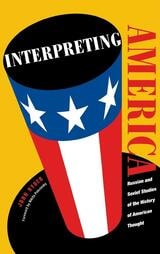
Interpreting America
Russian and Soviet Studies of the History of American ThoughtJohn Ryder
Vanderbilt University Press, 1999
In his pioneering new book Interpreting America John Ryder makes available for the first time to English-speaking readers Russian views of the full range of American philosophical thought: from seventeenth-century Puritanism through the colonial and revolutionary periods, nineteenth- century idealism, pragmatism, naturalism, and other twentieth-century movements and figures. Using his own accurate translations, he clearly reconstructs a chain of core ideas, emphasizes the most essential concepts of each writer's work, and gives a multidimensional reconstruction of the arguments of each author.
By taking mainstream Soviet philosophical commentators like Baskin, Bogomolov, Karimsky, Melvil, Pokrovsky, Sidorov, and Yulina seriously and letting them speak for themselves, Ryder shows not only what Soviet philosophers and scholars thought of American philosophy (and why they were so interested in the first place) but also the nuances of the internal disagreements among Soviet thinkers about what American philosophers were saying. He also reveals a strong continuity between contemporary, post-Soviet Russian philosophy and earlier Soviet work.
Perhaps no other book has ever explored in such a systematic manner the ways in which one philosophical system has regarded another. Ryder's revealing study of how others have viewed us helps to clarify the depth, richness, and complexity of our own American philosophical heritage.
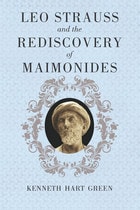
Leo Strauss and the Rediscovery of Maimonides
Kenneth Hart Green
University of Chicago Press, 2013
An invaluable companion to Green’s comprehensive collection of Strauss’s writings on Maimonides, this volume shows how Strauss confronted the commonly accepted approaches to the medieval philosopher, resulting in both a new understanding of Maimonides and a new depth and direction for his own thought. It will be welcomed by anyone engaged with the work of either philosopher.

Nature in American Philosophy (Studies in Philosophy and the History of Philosophy, Volume 42)
Jean De Groot
Catholic University of America Press, 2004
Pragmatic Naturalism
An IntroductionS. Morris Eames
Southern Illinois University Press, 1977
It is said that America came of age intellectually with the appearance of the pragmatic movement in philosophy. Pragmatic Naturalism presents a selective and interpretative overview of this philosophy as developed in the writings of its intellectual founders and chief exponents—Charles Sanders Peirce, William James, George Herbert Mead, and John Dewey. Mr. Eames groups the leading ideas of these pragmatic naturalists around the general fields of “Nature and Human Life,” “Knowledge,” “Value,” and “Education,” treating the primary concerns and special emphasis of each philosopher to these issues.
Philosophy students, teachers of philosophy, and general readers will find this book a comprehensive overview of American philosophy.
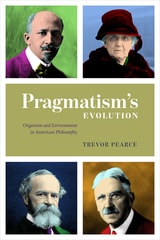
Pragmatism's Evolution
Organism and Environment in American PhilosophyTrevor Pearce
University of Chicago Press, 2020
Although the various thinkers associated with pragmatism—from Charles Sanders Peirce to Jane Addams and beyond—were towering figures in American intellectual life, few realize the full extent of their engagement with the life sciences. In his analysis, Pearce focuses on a series of debates in biology from 1860 to 1910—from the instincts of honeybees to the inheritance of acquired characteristics—in which the pragmatists were active participants. If we want to understand the pragmatists and their influence, Pearce argues, we need to understand the relationship between pragmatism and biology.
Realism for the 21st Century
A John Deely ReaderJohn Deely
University of Scranton Press, 2009
Realism for the 21st Century is a collection of thirty essays from John Deely—a major figure in contemporary semiotics and an authority on scholastic realism and the works of Charles Sanders Peirce. The volume tracks Deely’s development as a pragmatic realist, featuring his early essays on our relation to the world after Darwinism; crucial articles on logic, semiotics, and objectivity; overviews of philosophy after modernity; and a new essay on “purely objective reality.”

Science, Community, and the Transformation of American Philosophy, 1860-1930
Daniel J. Wilson
University of Chicago Press, 1990
The author situates the emergence of professional philosophy in the context of the professionalization of American higher education and articulates, in the case of philosophy, the structures and values of a professional discipline. One of the most important consequences of this transformation was a new emphasis on communal theories of truth. Peirce, Dewey, and Royce all developed sophisticated and important theories of community as they were engaged in reshaping and redefining the limits of philosophy. This book will be of great importance for those interested in the history of philosophy, the rise of professions, and American intellectual and educational history, and to all those seeking to understand the contemporary revival of pragmatic thought and theories of community.
Seeking the Truth
Richard Reinsch II
Catholic University of America Press, 2016
Serious Larks
The Philosophy of Ted CohenTed Cohen
University of Chicago Press, 2018
This collection, edited and introduced by philosopher Daniel Herwitz, brings together some of Cohen’s best work to capture the unique style that made Cohen one of the most beloved philosophers of his generation. Among the perceptive, engaging, and laugh-out-loud funny reflections on movies, sports, art, language, and life included here are Cohen’s classic papers on metaphor and his Pushcart Prize–winning essay on baseball, as well as memoir, fiction, and even poetry. Full of free-spirited inventiveness, these Serious Larks would be equally at home outside Thoreau’s cabin on the waters of Walden Pond as they are here, proving that intelligence, sensitivity, and good humor can be found in philosophical writing after all.
The American Evasion of Philosophy
A Genealogy of PragmatismCornel West
University of Wisconsin Press, 1989
Taking Emerson as his starting point, Cornel West’s basic task in this ambitious enterprise is to chart the emergence, development, decline, and recent resurgence of American pragmatism. John Dewey is the central figure in West’s pantheon of pragmatists, but he treats as well such varied mid-century representatives of the tradition as Sidney Hook, C. Wright Mills, W. E. B. Du Bois, Reinhold Niebuhr, and Lionel Trilling. West’s "genealogy" is, ultimately, a very personal work, for it is imbued throughout with the author’s conviction that a thorough reexamination of American pragmatism may help inspire and instruct contemporary efforts to remake and reform American society and culture.
"West . . . may well be the pre-eminent African American intellectual of our generation."—The Nation
"The American Evasion of Philosophy is a highly intelligent and provocative book. Cornel West gives us illuminating readings of the political thought of Emerson and James; provides a penetrating critical assessment of Dewey, his central figure; and offers a brilliant interpretation—appreciative yet far from uncritical—of the contemporary philosopher and neo-pragmatist Richard Rorty. . . . What shines through, throughout the work, is West's firm commitment to a radical vision of a philosophic discourse as inextricably linked to cultural criticism and political engagement."—Paul S. Boyer, professor emeritus of history, University of Wisconsin–Madison.
Wisconsin Project on American Writers
Frank Lentricchia, General Editor
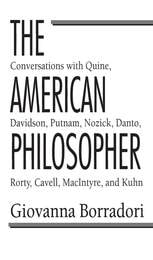
The American Philosopher
Conversations with Quine, Davidson, Putnam, Nozick, Danto, Rorty, Cavell, MacIntyre, KuhnGiovanna Borradori
University of Chicago Press, 1993
Giovanna Borradori, in her substantial introduction, explains the history of the analytic movement in America and the home-grown reaction against it. In the late nineteenth and early twentieth centuries, American philosophy was a socially engaged interdisciplinary enterprise. In transcendentalism and pragmatism, then the dominant currents in American thought, philosophy was connected to history, psychology, and public issues. But in the 1930s, the imported European movement of logical positivism redefined philosophical discourse in terms of mathematical logic and theory of language. Under the influence of this analytic view, American philosophy became a professionalized discipline, divorced from public debate and intellectual history and antagonistic to the other, more humanistic tradition of continental thought.
The American Philosopher explores the opposition between analytic and continental thought and shows how recent American work has begun to bridge the gap between the two traditions. Through a reexamination of pragmatism, and through an attempt to understand philosophy in a more hermeneutical way, the participants narrow the distance between America's distinctly scientific philosophy and Europe's more literary approach.
Moving beyond classical analytic philosophy, the participants confront each other on a number of topics. The logico-linguistic orientations of Quine and Davidson come up against the more discursive, interdisciplinary agendas of Rorty, Putnam, and Cavell. Nozick's theory of pluralist anarchism goes face-to-face with the aesthetic neo-foundationalism of Danto. And Kuhn's hypothesis of paradigm shifts is measured against MacIntyre's ethics of "virtues."
Borradori's conversations offer an unconventional portrait of the way philosophers think about their work; scholars and students will not be its only beneficiaries, so will everyone who wonders about the current state of American philosophy.
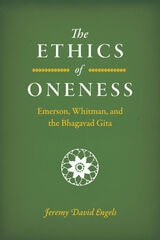
The Ethics of Oneness
Emerson, Whitman, and the Bhagavad GitaJeremy David Engels
University of Chicago Press, 2021
In The Ethics of Oneness, Jeremy David Engels reads the Bhagavad Gita alongside the works of American thinkers Ralph Waldo Emerson and Walt Whitman. Drawing on this rich combination of traditions, Engels presents the notion that individuals are fundamentally interconnected in their shared divinity. In other words, everything is one. If the lessons of oneness are taken to heart, particularly as they were expressed and celebrated by Whitman, and the ethical challenges of oneness considered seriously, Engels thinks it is possible to counter the pervasive and problematic American ideals of hierarchy, exclusion, violence, and domination.
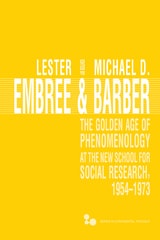
The Golden Age of Phenomenology at the New School for Social Research, 1954–1973
Lester Embree
Ohio University Press, 2017
This collection focuses on the introduction of phenomenology to the United States by the community of scholars who taught and studied at the New School for Social Research from 1954 through 1973. During those years, Dorion Cairns, Alfred Schutz, and Aron Gurwitsch—all former students of Edmund Husserl—came together in the department of philosophy to establish the first locus of phenomenology scholarship in the country. This founding trio was soon joined by three other prominent scholars in the field: Werner Marx, Thomas M. Seebohm, and J. N. Mohanty. The Husserlian phenomenology that they brought to the New School has subsequently spread through the Anglophone world as the tradition of Continental philosophy.
The first part of this volume includes original works by each of these six influential teachers of phenomenology, introduced either by one of their students or, in the case of Seebohm and Mohanty, by the thinkers themselves. The second part comprises contributions from twelve leading scholars of phenomenology who trained at the New School during this period. The result is a powerful document tracing the lineage and development of phenomenology in the North American context, written by members of the first two generations of scholars who shaped the field.
Contributors: Michael Barber, Lester Embree, Jorge García-Gómez, Fred Kersten, Thomas M. T. Luckmann, William McKenna, J. N. Mohanty, Giuseppina C. Moneta, Thomas Nenon, George Psathas, Osborne P. Wiggins, Matthew M. Seebohm, and Richard M. Zaner.
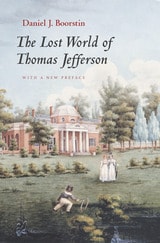
The Lost World of Thomas Jefferson
Daniel J. Boorstin
University of Chicago Press, 1993
"The volume is too subtle, too rich in ideas for anyone to do justice to it in brief summary, too heavily documented and too carefully wrought for anyone to dismiss its thesis. . . . It is a major contribution not only to Jefferson studies but to American intellectual history. . . . All who work in the history of ideas will find themselves in Mr. Boorstin's debt."—Richard Hofstadter, South Atlantic Monthly
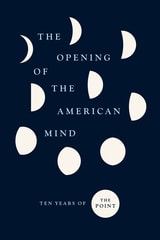
The Opening of the American Mind
Ten Years of The PointThe Point
University of Chicago Press, 2020
Featuring award-winning and highly acclaimed essays from The Point’s first ten years, The Opening of the American Mind traces the path of American intellect from the magazine’s inception in 2009, when Barack Obama was ascending the steps of the White House, to the brink of the 2020 election. The essays, chosen both for the way they capture their time and transcend it, are assembled into five sections that address cycles of cultural frustrations, social movements, and the aftermath of the 2016 election, and provide lively, forward-looking considerations of how we might expand our imaginations into the future. Spanning the era of Obama and Trump, Occupy Wall Street and Black Lives Matter, #MeToo and renewed attention to reparations, this anthology offers critical reflections on some of the decade’s most influential events and stands as a testament to the significance of open exchange. The intellectual dialogue provided by The Point has never been more urgently needed, and this collection will bring the magazine’s vital work to an even broader readership.
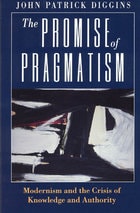
The Promise of Pragmatism
Modernism and the Crisis of Knowledge and AuthorityJohn Patrick Diggins
University of Chicago Press, 1994
"Diggins, an eminent historian of American intellectual life, has written a timely and impressive book charting the rich history of American pragmatism and placing William James, Charles Peirce, John Dewey, George Herbert Mead, Sidney Hook, and Richard Rorty in their times and in the light of contemporary concerns. The book also draws on an alternative set of American thinkers to explore the blind spots in the pragmatic temper."—William Connolly, New York Times Book Review
"An extraordinarily ambitious work of both analysis and synthesis. . . . Diggins's book is rewarding in its thoughtfulness and its nuanced presentation of ideas."—Daniel J. Silver, Commentary
"Diggins's superbly informed book comprises a comprehensive history of American pragmatic thought. . . . It contains expert descriptions of James, John Dewey and Charles Sanders Peirce, the first generation of American pragmatists. . . . Diggins is just as good on the revival of pragmatism that's taken place over the last 20 years in America. . . . [A] richly intelligent book."—Mark Edmundson, Washington Post Book World
The Relevance of Philosophy to Life
John Lachs
Vanderbilt University Press, 1995
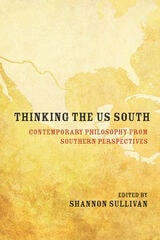
Thinking the US South
Contemporary Philosophy from Southern PerspectivesEdited by Shannon Sullivan
Northwestern University Press, 2021
Knowledge emerges from contexts, which are shaped by people’s experiences. The varied essays in Thinking the US South: Contemporary Philosophy from Southern Perspectives demonstrate that Southern identities, borders, and practices play an important but unacknowledged role in ethical, political, emotional, and global issues connected to knowledge production. Not merely one geographical region among others, the US South is sometimes a fantasy and other times a nightmare, but it is always a prominent component of the American national imaginary. In connection with the Global North and Global South, the US South provides a valuable perspective from which to explore race, class, gender, and other inter- and intra-American differences. The result is a fresh look at how identity is constituted; the role of place, ancestors, and belonging in identity formation; the impact of regional differences on what counts as political resistance; the ways that affect and emotional labor circulate; practices of boundary policing, deportation, and mourning; issues of disability and slowness; racial and other forms of suffering; and above all, the question of whether and how doing philosophy changes when done from Southern standpoints. Examining racist tropes, Indigenous land claims, Black Southern philosophical perspectives, migrant labor, and more, this incisive anthology makes clear that roots matter.
Time in the Ditch
American Philosophy and the McCarthy EraJohn McCumber
Northwestern University Press, 2023