Results by title
426 books match the query 'Philosophy & Social Aspects' and 17 start with a
A Book of Waves
Stefan Helmreich
Duke University Press, 2023
A Course on Perception
1964-1965Gilbert Simondon
University of Minnesota Press, 2027
The first English translation of Gilbert Simondon’s wide-ranging course on the philosophical and scientific histories of perception
Translated into English for the first time, Gilbert Simondon’s A Course on Perception: 1964–1965 engages in a wide-ranging inquiry into the structure, operation, and activity of perception. Investigating its history throughout the centuries, Simondon shows how perception continually shapes and is reshaped by various strands of philosophical and scientific thought.
Prior to the advent of the natural sciences, perception functioned as the foundation of philosophical reflection and the sole instrument for acquiring knowledge and truth. Tracing his subject from these roots in antiquity, Simondon’s course draws on the work of other prominent philosophers such as Spinoza, Berkeley, Hume, and Bergson to follow the evolving trajectory of perception in the wake of classical Cartesian rationalism. As the realms of biology, physiology, and positivism in the natural sciences emerged with the Modern epoch, perception became a necessary theoretical starting point for philosophical investigations of an organism’s relation to its particular milieu.
Emerging from a course delivered at the Sorbonne in Paris between 1964 and 1965, Simondon utilizes a transdisciplinary approach to better understand the sensitivities that various life forms use to orient themselves in the world, offering a nuanced examination of perception in all its philosophical complexity.
Retail e-book files for this title are screen-reader friendly with images accompanied by short alt text and/or extended descriptions.
A Future History of Water
Andrea Ballestero
Duke University Press, 2019
A Nice Derangement of Epistemes
Post-positivism in the Study of Science from Quine to LatourJohn H. Zammito
University of Chicago Press, 2004
Zammito shows how problems that Quine and Kuhn saw in the philosophy of the natural sciences inspired a turn to the philosophy of language for resolution. This linguistic turn led to claims that science needs to be situated in both historical and social contexts, but the claims of recent "science studies" only deepened the philosophical quandary. In essence, Zammito argues that none of the problems with positivism provides the slightest justification for denigrating empirical inquiry and scientific practice, delivering quite a blow to the "discipline" postmodern science studies.
Filling a gap in scholarship to date, A Nice Derangement of Epistemes will appeal to historians, philosophers, philosophers of science, and the broader scientific community.
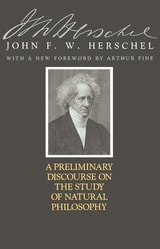
A Preliminary Discourse on the Study of Natural Philosophy
John F. W. Herschel
University of Chicago Press, 1987
"Herschel's book . . . brilliantly analyzes both the history and nature of science."—Keith Stewart Thomson, American Scientist
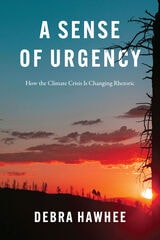
A Sense of Urgency
How the Climate Crisis Is Changing RhetoricDebra Hawhee
University of Chicago Press, 2023
Why is it difficult to talk about climate change? Debra Hawhee argues that contemporary rhetoric relies on classical assumptions about humanity and history that cannot conceive of the present crisis. How do we talk about an unprecedented future or represent planetary interests without privileging our own species? A Sense of Urgency explores four emerging answers, their sheer novelty a record of both the devastation and possible futures of climate change. In developing the arts of magnitude, presence, witness, and feeling, A Sense of Urgency invites us to imagine new ways of thinking with our imperiled planet.
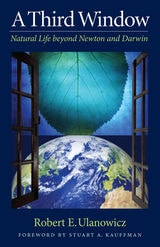
A Third Window
Natural Life beyond Newton and DarwinRobert W. Ulanowicz
Templeton Press, 2009
Thus far, the dominant paradigms through which modern scientists have viewed nature have been structured primarily around Newtonian and Darwinian approaches. As theoretical ecologist Robert E. Ulanowicz observes in his new work, A Third Window, neither of these models is sufficient for explaining how real change—in the form of creative advance or emergence—takes place in nature.
Drawing on the writings of Walter Elsasser, Karl Popper, Gregory Bateson, Robert Rosen, and Alfred North Whitehead, as well as his own experience as a theoretical ecologist, Ulanowicz offers a new set of axioms for how nature behaves. Chance and disarray in natural processes are shown to be necessary conditions for real change. Randomness is shown to contribute richness and autonomy to the natural world.
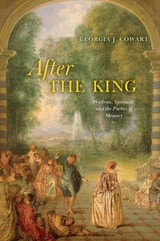
After the King
Watteau, Spectacle, and the Poetics of MemoryGeorgia J. Cowart
University of Chicago Press, 2026
Musicologist Georgia J. Cowart explores how Antoine Watteau’s late paintings reimagine the symbolic order of absolutism in the wake of Louis XIV’s death.
Antoine Watteau has long been known for the theatricality of his paintings, but what that theatricality signifies has remained elusive. In After the King, Georgia Cowart contends that this mode of painting takes shape in response to the spectacle of Louis XIV’s absolutism, which the painter’s late works transform into a new aesthetic language.
The king’s death marked a turning point in Watteau’s art. In the six years that followed, his paintings turned more decisively toward the musical stage. Evoking theatrical plots, frontispieces, and costume types, they conjured a world in which the legacy of absolutist culture lingered as stylized memory—its rituals, emblems, and pleasures recast through theatrical illusion and ironic distance.
Rather than treating Watteau as a painter of nostalgic reverie or Rococo charm, Cowart situates his art within the immersive performance culture of Versailles and the vibrant Parisian stage, at a time when the opéra-ballet, popular opera, and the commedia dell’arte were charting new theatrical landscapes. Drawing on art history, musicology, theater studies, and Pierre Nora’s theory of lieux de mémoire, she proposes a new framework that understands Watteau’s paintings as acts of theatrical memory and cultural recomposition.
Elegantly written and conceptually ambitious, After the King reveals how Watteau recoded the symbols of monarchy to stage a post-absolutist cultural imagination shaped by irony, sensuality, and poetic transformation.
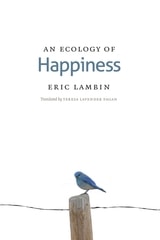
An Ecology of Happiness
Eric Lambin
University of Chicago Press, 2012
In this clever and wide-ranging work, Lambin draws on new scientific evidence in the fields of geography, political ecology, environmental psychology, urban studies, and disease ecology, among others, to answer such questions as: To what extent do we need nature for our well-being? How does environmental degradation affect our happiness? What can be done to protect the environment and increase our well-being at the same time? Drawing on case studies from Asia, Africa, Europe, and North America, Lambin makes a persuasive case for the strong link between healthy ecosystems and happy humans.
Unique in its scope and evenhanded synthesis of research from many fields, An Ecology of Happiness offers a compelling human-centered argument that is impossible to overlook when we marvel at murmurations of starlings or seek out the most brilliant fall foliage: nature makes our steps a little lighter and our eyes a little brighter. What better reason to protect an ecosystem or save a species than for our own pleasure?
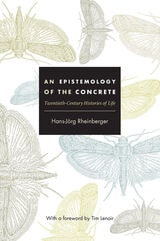
An Epistemology of the Concrete
Twentieth-Century Histories of LifeHans-Jörg Rheinberger
Duke University Press, 2010
An Orderly Mess
Helga Nowotny
Central European University Press, 2017

Analyses of Theories and Methods of Physics and Psychology
Michael Radner
University of Minnesota Press, 1970
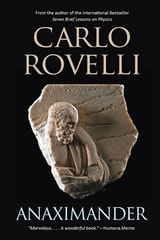
Anaximander
Carlo Rovelli
Westholme Publishing, 2011
THIS EBOOK IS NO LONGER AVAILABLE.
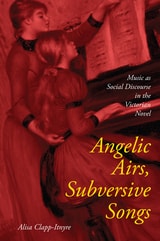
Angelic Airs, Subversive Songs
Music as Social Discourse in the Victorian NovelAlisa Clapp-Itnyre
Ohio University Press, 2027
Music was at once one of the most idealized and one of the most contested art forms of the Victorian period. Yet this vitally important nineteenth-century cultural form has been studied by literary critics mainly as a system of thematic motifs. Angelic Airs, Subversive Songs positions music as a charged site of cultural struggle, promoted concurrently as a transcendent corrective to social ills and as a subversive cause of those ills. Alisa Clapp-Itnyre examines Victorian constructions of music to advance patriotism, Christianity, culture, and domestic harmony, and suggests that often these goals were undermined by political tensions in song texts or “immoral sensuality” in the “spectacle” of live music-making. Clapp-Itnyre turns her focus to the novels of Elizabeth Gaskell, George Eliot, and Thomas Hardy, who present complex engagements with those musical genres most privileged by Victorian society: folk songs, religious hymns, and concert music. Angelic Airs, Subversive Songs recovers the pervasive ambiguities of the Victorian musical period, ambiguities typically overlooked by both literary scholars and musicologists. To the literary critic and cultural historian, Clapp-Itnyre demonstrates the necessity of further exploring the complete aesthetic climate behind some of the Victorian period’s most powerful literary works. And to the feminist scholar and the musicologist, Clapp-Itnyre reveals the complexities of music as both an oppressive cultural force and an expressive, creative outlet for women.
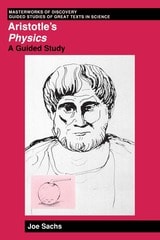
Aristotle's Physics
A Guided StudyAritotle
Rutgers University Press, 1995
This is a new translation, with introduction, commentary, and an explanatory glossary.
"Sachs's translation and commentary rescue Aristotle's text from the rigid, pedantic, and misleading versions that have until now obscured his thought. Thanks to Sachs's superb guidance, the Physics comes alive as a profound dialectical inquiry whose insights into the enduring questions about nature, cause, change, time, and the 'infinite' are still pertinent today. Using such guided studies in class has been exhilarating both for myself and my students." ––Leon R. Kass, The Committee on Social Thought, University of Chicago
Aristotle’s Physics is the only complete and coherent book we have from the ancient world in which a thinker of the first rank seeks to say something about nature as a whole. For centuries, Aristotle’s inquiry into the causes and conditions of motion and rest dominated science and philosophy. To understand the intellectual assumptions of a powerful world view—and the roots of the Scientific Revolution—reading Aristotle is critical. Yet existing translations of Aristotle’s Physics have made it difficult to understand either Aristotle’s originality or the lasting value of his work.
In this volume in the Masterworks of Discovery series, Joe Sachs provides a new plain-spoken English translation of all of Aristotle’s classic treatise and accompanies it with a long interpretive introduction, a running explication of the text, and a helpful glossary. He succeeds brilliantly in fulfilling the aim of this innovative series: to give the general reader the tools to read and understand a masterwork of scientific discovery.
Articulating the World
Conceptual Understanding and the Scientific ImageJoseph Rouse
University of Chicago Press, 2015
In Articulating the World, Joseph Rouse argues that the most pressing challenge for advocates of naturalism today is precisely this: to understand how to make sense of a scientific conception of nature as itself part of nature, scientifically understood. Drawing upon recent developments in evolutionary biology and the philosophy of science, Rouse defends naturalism in response to this challenge by revising both how we understand our scientific conception of the world and how we situate ourselves within it.
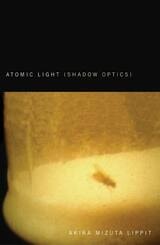
Atomic Light (Shadow Optics)
Akira Mizuta Lippit
University of Minnesota Press, 2005
Akira Mizuta Lippit focuses on historical moments in which such modes of avisuality came into being—the arrival of cinema, which brought imagination to life; psychoanalysis, which exposed the psyche; the discovery of x-rays, which disclosed the inside of the body; and the “catastrophic light” of Hiroshima and Nagasaki, which instituted an era of atomic discourses.
With a taut, poetic style, Lippit produces speculative readings of secret and shadow archives and visual structures or phenomenologies of the inside, charting the materiality of what both can and cannot be seen in the radioactive light of the twentieth century.
Akira Mizuta Lippit is professor of cinema, comparative literature, and Japanese culture at the University of Southern California. He is the author of Electric Animal: Toward a Rhetoric of Wildlife (Minnesota, 2000).