Results by title
230 books match the query 'Physics' and 22 start with a
A Condensed Course of Quantum Mechanics
Pavel Cejnar
Karolinum Press, 2014
A Condensed Course of Quantum Mechanics
Pavel Cejnar
Karolinum Press, 2025
This book presents a concise summary of nonrelativistic quantum mechanics for physics students at the university level. The text covers essential topics, from general mathematical formalism to specific applications. The formulation of quantum theory is explained and supported with illustrations of the general concepts of elementary quantum systems. In addition to traditional topics of nonrelativistic quantum mechanics—including single-particle dynamics, symmetries, semiclassical and perturbative approximations, density-matrix formalism, scattering theory, and the theory of angular momentum—the book also covers modern issues, among them quantum entanglement, decoherence, measurement, nonlocality, and quantum information. The historical context and chronology of basic achievements are also outlined in explanatory notes.
Ideal as a supplement to classroom lectures, A Condensed Course of Quantum Mechanics will also serve as a compact and comprehensible refresher of elementary quantum theory for more advanced students.

A Final Story
Science, Myth, and BeginningsNasser Zakariya
University of Chicago Press, 2017
In A Final Story, Nasser Zakariya delves into the origins and ambitions of these scientific epics, from the nineteenth century to the present, to see what they reveal about the relationship between storytelling, integrated scientific knowledge, and historical method. While seeking to transcend the perspectives of their own eras, the authors of the epics and the debates surrounding them are embedded in political and social struggles of their own times, struggles to which the epics in turn respond. In attempts to narrate an approach to a final, true account, these synthesizing efforts shape and orient scientific developments old and new. By looking closely at the composition of science epics and the related genres developed along with them, we are able to view the historical narrative of science as a form of knowledge itself, one that discloses much about the development of our understanding of and relationship to science over time.
A Preliminary Discourse on the Study of Natural Philosophy
John F. W. Herschel
University of Chicago Press, 1987
"Herschel's book . . . brilliantly analyzes both the history and nature of science."—Keith Stewart Thomson, American Scientist
A Relatively Painless Guide to Special Relativity
Dave Goldberg
University of Chicago Press, 2023
Special relativity challenges one’s physical intuition of space, time, matter, and energy in a way that few other topics in physics do. Yet the subject is often treated as an extra in undergraduate courses—something to be picked up in a few random lectures and presented as a combination of geometric and logical puzzles (seemingly with the premise of getting the novice student to concede that Einstein was a genius and that the universe is weird). But special relativity is absolutely fundamental to modern physics. It is the canvas on which electromagnetism, particle physics, field theory, and ultimately general relativity are based. For physics students, developing a relativistic intuition isn’t just a luxury: it’s a requirement.
Physicist and popular author Dave Goldberg provides a rigorous but conversational introduction to fill this void in spacetime education. Employing the standard calculus a sophomore or junior university student in science, engineering, or computer science will have encountered, Goldberg connects relativity to a student’s work ahead, acquainting them with topics like tensors, the development of new physical theories, and how relativity directly relates to other disciplines. But more than this, Goldberg welcomes lifelong learners who may have encountered special relativity in popular accounts, but are seeking a mathematical challenge to understand an elegant physical theory.
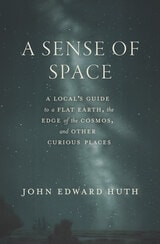
A Sense of Space
A Local’s Guide to a Flat Earth, the Edge of the Cosmos, and Other Curious PlacesJohn Edward Huth
University of Chicago Press, 2025
When you give directions, do you tell someone to go straight ahead and turn left? Or do you suggest that they head north before moving west? Your answer reveals more than you might think.
In A Sense of Space, writer and physicist John Edward Huth uses these two kinds of navigation—either centered on or independent of people—to help readers chart a path through evolving spatial models. In doing so, he offers an astonishing exploration of how changing scientific models of space alter our social perceptions, and vice versa. New visions of space can emanate from human considerations, he argues, and those new visions can in turn spawn new cultural phenomena. With accessible introductions to topics including mental maps, astrology, astronomy, particle physics, and Einstein’s relativity, Huth makes clear that, although our minds have evolved to comprehend space in terrestrial distances, we routinely extend this understanding to realms far removed from our everyday experiences, from cosmological to subatomic scales.
Taking us across the eons from the myth of a flat earth to the mysteries of the multiverse, A Sense of Space is an energetic, thoughtful guide to how we orient ourselves in our world—and beyond.

Action at a Distance
John Durham Peters
University of Minnesota Press, 2020
How are human actions shaped by the materiality of media?
Contemporary media leads us more than ever to an ‘acting at a distance,’ an acting entangled with the materiality of communication and the mediality of transmission. This book explores this crucial phenomenon thereby introducing urgent questions of human interaction, the binding and breaking of time and space, and the entanglement of the material and the immaterial.
Three vivid inquiries deal with histories and theories of mediality and materiality: John Durham Peters looks at episodes of simultaneity and synchronization. Christina Vagt discusses the agency of computer models against the backdrop of aesthetic theories by Henri Bergson and Hans Blumenberg, and Florian Sprenger discusses early electrical transmissions through copper wire and the temporality of instantaneity.

Active and Passive Protection from Space Radiation
A systems engineering approachCharles J. Baker
The Institution of Engineering and Technology, 2026
Advanced Theoretical and Numerical Electromagnetics
Field representations and the Method of Moments, Volume 2Vito Lancellotti
The Institution of Engineering and Technology, 2022
Advanced Theoretical and Numerical Electromagnetics
Static, stationary and time-varying fields, Volume 1Vito Lancellotti
The Institution of Engineering and Technology, 2022
Advances and Future Capabilities in RFID Technology
Alice Buffi
The Institution of Engineering and Technology, 2026

Aesthetics, Industry, and Science
Hermann von Helmholtz and the Berlin Physical SocietyM. Norton Wise
University of Chicago Press, 2018
In Aesthetics, Industry, and Science M. Norton Wise answers these questions not simply from a technical perspective of theories and practices but with a broader cultural view of what was happening in Berlin at the time. He emphasizes in particular how rapid industrial development, military modernization, and the neoclassical aesthetics of contemporary art informed the ways in which these young men thought. Wise argues that aesthetic sensibility and material aspiration in this period were intimately linked, and he uses these two themes for a final reappraisal of Helmholtz’s early work. Anyone interested in modern German cultural history, or the history of nineteenth-century German science, will be drawn to this landmark book.
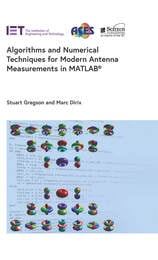
Algorithms and Numerical Techniques for Modern Antenna Measurements in MATLAB®
Stuart Gregson
The Institution of Engineering and Technology, 2026

American Astronomical Society Centennial Issue of the Astrophysical Journal
Edited by Helmut A. Abt
University of Chicago Press, 2000
An Equation That Changed the World
Newton, Einstein, and the Theory of RelativityHarald Fritzsch
University of Chicago Press, 1994
"Fritzsch could not give the modern reader a more memorable introduction to the personalities and science of Isaac Newton and Albert Einstein unless somehow he could find the keys to H. G. Wells' time machine. . . . Many readers will applaud Fritzsch for this lively but profoundly insightful book." —Booklist, starred review
"[Fritzsch] has dreamed up a dialogue between the two great physicists, helped along by a fictional modern physicist. . . . The conversation builds up to an explanation of E=mc2, and on the way illuminates the important points where Newtonian and Einsteinian theory diverge." —David Lindley, New York Times Book Review
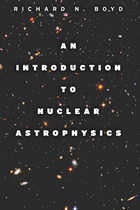
An Introduction to Nuclear Astrophysics
Richard N. Boyd
University of Chicago Press, 2008
In An Introduction to Nuclear Astrophysics, author Richard Boyd includes basic nomenclature and information so that students from astronomy or physics can quickly orient themselves in the material. Subsequent chapters describe earthbound and space born instruments operating in service to nuclear astrophysics worldwide; background topics such as nuclear and neutrino physics, scattering formalism, and thermonuclear reaction rates; and information on galactic chemical evolution, solar nucleosynthesis, s- and r-processes, and gamma-ray bursts. Each chapter includes problem sets against which students may test their knowledge before moving ahead, and the author has included copious references intended to guide students to further study.
An Introduction to Nuclear Astrophysics is an essential textbook for undergraduate and graduate students in astronomy and astrophysics. It is also an invaluable overview of the subject for researchers in nuclear astrophysics and related fields.
Applications of Deep Learning in Electromagnetics
Teaching Maxwell's equations to machinesMaokun Li
The Institution of Engineering and Technology, 2022
Aristote et le lexique de l'espace
Claude Vandeloise
CSLI, 2001
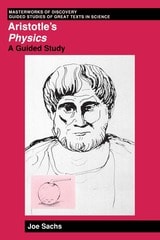
Aristotle's Physics
A Guided StudyAritotle
Rutgers University Press, 1995
This is a new translation, with introduction, commentary, and an explanatory glossary.
"Sachs's translation and commentary rescue Aristotle's text from the rigid, pedantic, and misleading versions that have until now obscured his thought. Thanks to Sachs's superb guidance, the Physics comes alive as a profound dialectical inquiry whose insights into the enduring questions about nature, cause, change, time, and the 'infinite' are still pertinent today. Using such guided studies in class has been exhilarating both for myself and my students." ––Leon R. Kass, The Committee on Social Thought, University of Chicago
Aristotle’s Physics is the only complete and coherent book we have from the ancient world in which a thinker of the first rank seeks to say something about nature as a whole. For centuries, Aristotle’s inquiry into the causes and conditions of motion and rest dominated science and philosophy. To understand the intellectual assumptions of a powerful world view—and the roots of the Scientific Revolution—reading Aristotle is critical. Yet existing translations of Aristotle’s Physics have made it difficult to understand either Aristotle’s originality or the lasting value of his work.
In this volume in the Masterworks of Discovery series, Joe Sachs provides a new plain-spoken English translation of all of Aristotle’s classic treatise and accompanies it with a long interpretive introduction, a running explication of the text, and a helpful glossary. He succeeds brilliantly in fulfilling the aim of this innovative series: to give the general reader the tools to read and understand a masterwork of scientific discovery.
Asymptotic and Hybrid Methods in Electromagnetics
F. Molinet
The Institution of Engineering and Technology, 2005

Atoms in the Family
My Life with Enrico FermiLaura Fermi
University of Chicago Press, 1995

Aurora Watcher's Handbook
Neil Davis
University of Alaska Press, 1992
Starting at a basic level, the handbook begins appropriately with matters of immediate concern to someone who hopes to see an auroral display: what causes the aurora, where and when it is most often seen, and how best to capture it on film. Later sections provide a thorough and clear review of all aspects of auroral science, including the mysterious realm of auroral sound. In a concise and readable fashion, the handbook covers what is known about auroras, encompassing overviews of the northern Natives' legends and myths and the several theories geophysicists have produced to explain why auroras behave as they do. The Aurora Watcher's Handbook includes numerous illustrations, ranging from cartoons to color plates and drawings.
"I am confident [this book] will become the aurora watcher's bible for many years to come." (Sky & Telescope)
"This is participatory science at its best!" (Midwest Book Review)
"A delightful book, highly recommended." (CHOICE )
"A complete course for the layman with an interest in the northern lights." (Fairbanks Daily News-Miner)
"[Davis] has written the book in a smooth, how-it-works style, and his presentation is remarkably clear. . . . [He] expended much effort on this book, forming from his lifetime of knowledge a coherent and comprehensible picture of the aurora for the non-specialist." (ARCTIC)
"For a comprehensive guide to the northern lights, read Neil Davis's The Aurora." (Small Press Magazine)