Results by title
16 books match the query 'Russians'
A Journey to Inner Africa
Egor Kovalevsky
Amherst College Press, 2020
Contributions by Egor Kovalevsky, Anna Aslanyan, Sergey Glebov, David Schimmelpenninck, Mukaram Hhana, and Michal Wasiucionek

Alexandre Kojève and the Specters of Russian Philosophy
Trevor Wilson
Northwestern University Press, 2025
Recounts Kojève’s key role in the pivotal exchange of ideas between Eastern and Western European intellectuals in the early twentieth century
This book shines critical new light on the story of Alexandre Kojève’s intellectual origins and his role in the emigration of Russian philosophy into the West in the early twentieth century. Trevor Wilson illustrates how Kojève, at once adversarial to the insular communities of émigré philosophy and yet dependent on their networks and ideas for professional success, navigated the specters of the Russian tradition in pursuit of an autonomous self-definition as a philosopher and intellectual.
Alexandre Kojève and the Specters of Russian Philosophy analyzes the philosopher’s complicated relationship to the interwar diaspora and the complex role played by the Russian tradition in his intellectual formation. Wilson examines Kojève’s early writings in the émigré press on Russian religious philosophy, Soviet politics, and Eurasianism and argues for their enduring relevance for understanding Kojève in his mature period. Crucially, he contextualizes Kojève’s famed seminars on Hegel and examines how Kojève’s thought became embedded in the politics of the Cold War. Based on newly transcribed and translated archival material, he highlights a previously unacknowledged, transnational exchange of ideas between Eastern and Western European intellectuals and shows how it played a pivotal role in twentieth-century intellectual history—and its legacy in the twenty-first.
Between National Socialism and Soviet Communism
Displaced Persons in Postwar GermanyAnna Holian
University of Michigan Press, 2015
"Though its primary focus is on the immediate postwar, Between National Socialism and Soviet Communism will surely illuminate the contemporary crisis around citizenship and definitions of Germanness in the context of European Union and globalization."
---Geoff Eley, University of Michigan
In May of 1945, there were more than eight million "displaced persons" (or DPs) in Germany---recently liberated foreign workers, concentration camp prisoners, and prisoners of war from all of Nazi-occupied Europe, as well as eastern Europeans who had fled west before the advancing Red Army. Although most of them quickly returned home, it soon became clear that large numbers of eastern European DPs could or would not do so. In the aftermath of National Socialism, Germany thus ironically became a temporary home for a large population of "foreigners." Focusing on Bavaria, in the heart of the American occupation zone, Between National Socialism and Soviet Communism examines the cultural and political worlds that four groups of displaced persons---Polish, Ukrainian, Russian, and Jewish---created in Germany during the late 1940s and early 1950s. The volume investigates the development of refugee communities and how divergent interpretations of National Socialism and Soviet Communism defined these displaced groups.
Combining German and eastern European history, Anna Holian draws on a rich array of sources in cultural and political history and engages the broader literature on displacement in the fields of anthropology, sociology, political theory, and cultural studies. Her book will interest students and scholars of German, eastern European, and Jewish history; migration and refugees; and human rights.
Blacks, Reds, and Russians
Sojourners in Search of the Soviet PromiseJoy Gleason Carew
Rutgers University Press, 2010
In Blacks, Reds, and Russians, Joy Gleason Carew offers insight into the political strategies that often underlie relationships between different peoples and countries. She draws on the autobiographies of key sojourners, including Harry Haywood and Robert Robinson, in addition to the writings of Claude McKay, W.E.B. Du Bois, and Langston Hughes. Interviews with the descendents of figures such as Paul Robeson and Oliver Golden offer rare personal insights into the story of a group of emigrants who, confronted by the daunting challenges of making a life for themselves in a racist United States, found unprecedented opportunities in communist Russia.
Charlottengrad
Russian Culture in Weimar BerlinRoman Utkin
University of Wisconsin Press, 2023
By closely examining the intellectual output of Charlottengrad, Roman Utkin explores how community members balanced their sense of Russianness with their position in a modern Western city charged with artistic, philosophical, and sexual freedom. He highlights how Russian authors abroad engaged with Weimar-era cultural energies while sustaining a distinctly Russian perspective on modernist expression, and follows queer Russian artists and writers who, with their German counterparts, charted a continuous evolution in political and cultural attitudes toward both the Weimar and Soviet states.
Utkin provides insight into the exile community in Berlin, which, following the collapse of the tsarist government, was one of the earliest to face and collectively process the peculiarly modern problem of statelessness. Charlottengrad analyzes the cultural praxis of “Russia Abroad” in a dynamic Berlin, investigating how these Russian émigrés and exiles navigated what it meant to be Russian—culturally, politically, and institutionally—when the Russia they knew no longer existed.
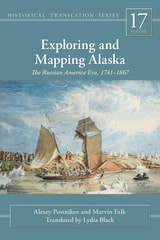
Exploring and Mapping Alaska
The Russian America Era, 1741-1867Alexey Postnikov and Marvin Falk
University of Alaska Press, 2015
Exploring and Mapping Alaska focuses on this foundational period in Arctic cartography. Russia spurred a golden era of cartographic exploration, while shrouding their efforts in a veil of secrecy. They drew both on old systems developed by early fur traders and new methodologies created in Europe. With Great Britain, France, and Spain following close behind, their expeditions led to an astounding increase in the world’s knowledge of North America.
Through engrossing descriptions of the explorations and expert navigators, aided by informative illustrations, readers can clearly trace the evolution of the maps of the era, watching as a once-mysterious region came into sharper focus. The result of years of cross-continental research, Exploring and Mapping Alaska is a fascinating study of the trials and triumphs of one of the last great eras of historic mapmaking.
Global Russian Cultures
Edited by Kevin M. F. Platt
University of Wisconsin Press, 2020
The volume's internationally renowned contributors treat the many different global Russian cultures not as "displaced" elements of Russian cultural life but rather as independent entities in their own right. They describe diverse forms of literature, music, film, and everyday life that transcend and defy political, geographic, and even linguistic borders. Arguing that Russian cultures today are many, this volume contends that no state or society can lay claim to be the single or authentic representative of Russianness. In so doing, it contests the conceptions of culture and identity at the root of nation-building projects in and around Russia.

Ivan and Misha
StoriesMichael Alenyikov
Northwestern University Press, 2010
Socially adrift, father and sons search for meaning in their divergent romantic relationships. Louie embarks on a traditional heterosexual dating relationship late in life, while Ivan is sexually opportunistic and omnivorous, and Misha,a young gay man, is torn between his family and the prospect of a committed relationship. The brothers’ search for connection leads them through a multitude of subcultures, all depicted in vivid detail. An evocative and frank exploration of identity, loss, dislocation, and sexuality, Ivan and Misha marks the arrival of a unique, authentic voice.
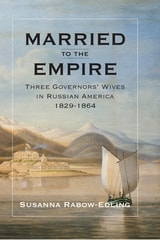
Married to the Empire
Three Governors' Wives in Russian America 1829-1864Susanna Rabow-Edling
University of Alaska Press, 2015
Elisabeth von Wrangell, Margaretha Etholén, and Anna Furuhjelm were three of eight governors' wives who took up this domestic mantle. Married to the Empire tells their stories using their own words and though extraordinary research by Susanna Rabow-Edling. All three were young and newly wed when they left Russia for the furthest outpost of the empire, and all three went through personal and cultural struggles as they worked to adjust to life in the colony. Their trials offer a little-heard female history of Russian Alaska, while illuminating the issues that arose while trying to reconcile expectations of womanhood with the realities of frontier life.
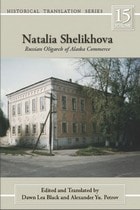
Natalia Shelikhova
Russian Oligarch of Alaska CommerceEdited by Dawn Lea Black and Alexander Petrov
University of Alaska Press, 2010
This volume makes available for the first time in English a variety of primary source materials relating to the life and work of Natalia Shelikov, a pioneering nineteenth-century Russian-American businesswoman. As a principal of the Russian-American Company, Shelikov worked in Alaska, and her business acumen and wide-ranging connections—including the empress of Russia and a swathe of northern leaders—were crucial to the growth of Alaska’s economy, as well as to the welfare of the Native people, in whose life and culture she took a strong interest. The letters, petitions, and personal documents presented here will be indispensable for students of Alaska and nineteenth-century women’s history.

Russia's American Colony
S. Frederick Starr, ed.
Duke University Press, 1986

Russian Refuge
Religion, Migration, and Settlement on the North American Pacific RimSusan Wiley Hardwick
University of Chicago Press, 1993
Russian Refuge is a comprehensive account of the Russian immigrant experience in California, Oregon, Washington, Alaska, and British Columbia since the first settlements over two hundred years ago. Susan Hardwick focuses on six little-studied Christian groups—Baptists, Pentecostals, Molokans, Doukhobors, Old Believers, and Orthodox believers—to study the role of religion in their decisions to emigrate and in their adjustment to American culture.
Hardwick deftly combines ethnography and cultural geography, presenting narratives and other data collected in over 260 personal interviews with recent immigrants and their family members still in Russia. The result is an illuminating blend of geographic analysis with vivid portrayals of the individual experience of persecution, migration, and adjustment.
Russian Refuge will interest cultural geographers, historians, demographers, immigration specialists, and anyone concerned with this virtually untold chapter in the story of North American ethnic diversity.
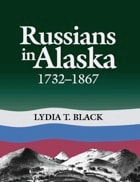
Russians in Alaska
1732-1867Lydia Black
University of Alaska Press, 2004
Black's work challenges the standard perspective on the Russian period in Alaska as a time of unbridled exploitation of Native inhabitants and natural resources. Without glossing over the harsher aspects of the period, Black acknowledges the complexity of relations between Russians and Native peoples.
She chronicles the lives of ordinary men and women, the merchants and naval officers, laborers and clergy, who established Russian outposts in Alaska. These early colonists carried with them the Orthodox faith and the Russian language; their legacy endures in architecture and place names from Baranof Island to the Pribilofs.
This deluxe volume features fold-out maps and color illustrations of rare paintings and sketches from Russian, American, Japanese, and European sources, many have never before been published. An invaluable source for historians and anthropologists, this accessible volume brings to life a dynamic period in Russian and Alaskan history. A tribute to Black's life as a scholar and educator, Russians in Alaska will become a classic in the field.
The Quality of Divided Democracies
Minority Inclusion, Exclusion, and Representation in the New EuropeLicia Cianetti
University of Michigan Press, 2019
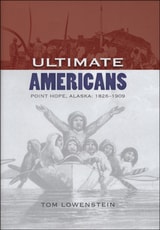
Ultimate Americans
Point Hope Alaska: 1826-1909Tom Lowenstein
University of Alaska Press, 2008
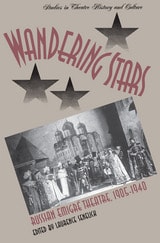
Wandering Stars
Russian Emigré Theatre, 1905-1940Laurence Senelick
University of Iowa Press, 1992