Results by title
16 books match the query 'Physiological effect'
Becoming a Marihuana User
Howard S. Becker
University of Chicago Press, 2015
Becker doesn’t judge, but neither does he holler for legalization, tell you how to grow it in a hollowed-out dresser, or anything else like that for which there are plenty of other books you can buy. Instead, he looks at marijuana with a clear sociological lens—as a substance that some people enjoy, and that some others have decided none of us should. From there he asks: so how do people decide to get high, and what kind of experience do they have as a result of being part of the marijuana world? What he discovers will bother some, especially those who proselytize the irrefutably stunning effects of the latest strain: chemistry isn’t everything—the important thing about pot is how we interact with it. We learn to be high. We learn to like it. And from there, we teach others, passing the pipe in a circle that begins to resemble a bona fide community, defined by shared norms, values, and definitions just like any other community.
All throughout this book, you’ll see the intimate moments when this transformation takes place. You’ll see people doing it for the first time and those with considerable experience. You’ll see the early signs of the truths that have come to define the marijuana experience: that you probably won’t get high at first, that you have to hold the hit in, and that there are other people here who are going to smoke that, too.
Contested Medicine
Cancer Research and the MilitaryGerald Kutcher
University of Chicago Press, 2009
In the 1960s University of Cincinnati radiologist Eugene Saenger infamously conducted human experiments on patients with advanced cancer to examine how total body radiation could treat the disease. But, under contract with the Department of Defense, Saenger also used those same patients as proxies for soldiers to answer questions about combat effectiveness on a nuclear battlefield.
Using the Saenger case as a means to reconsider cold war medical trials, Contested Medicine examines the inherent tensions at the heart of clinical studies of the time. Emphasizing the deeply intertwined and mutually supportive relationship between cancer therapy with radiation and military medicine, Gerald Kutcher explores post–World War II cancer trials, the efforts of the government to manage clinical ethics, and the important role of military investigations in the development of an effective treatment for childhood leukemia. Whereas most histories of human experimentation judge research such as Saenger’s against idealized practices, Contested Medicine eschews such an approach and considers why Saenger’s peers and later critics had so much difficulty reaching an unambiguous ethical assessment. Kutcher’s engaging investigation offers an approach to clinical ethics and research imperatives that lays bare many of the conflicts and tensions of the postwar period.
Healing Songs
Ted Gioia
Duke University Press, 2006
Until recently, that is. Over the past few decades there has been a resurgence of interest in healing music. In the midst of this nascent revival, Ted Gioia, a musician, composer, and widely praised author, offers the first detailed exploration of the uses of music for curative purposes from ancient times to the present. Gioia’s inquiry into the restorative powers of sound moves effortlessly from the history of shamanism to the role of Orpheus as a mythical figure linking Eastern and Western ideas about therapeutic music, and from Native American healing ceremonies to what clinical studies can reveal about the efficacy of contemporary methods of sonic healing.
Gioia considers a broad range of therapies, providing a thoughtful, impartial guide to their histories and claims, their successes and failures. He examines a host of New Age practices, including toning, Cymatics, drumming circles, and the Tomatis method. And he explores how the medical establishment has begun to recognize and incorporate the therapeutic power of song. Acknowledging that the drumming circle will not—and should not—replace the emergency room, nor the shaman the cardiologist, Gioia suggests that the most promising path is one in which both the latest medical science and music—with its capacity to transform attitudes and bring people together—are brought to bear on the multifaceted healing process.
In Healing Songs, as in its companion volume Work Songs, Gioia moves beyond studies of music centered on specific performers, time periods, or genres to illuminate how music enters into and transforms the experiences of everyday life.
Heightened Expectations
The Rise of the Human Growth Hormone Industry in AmericaAimee Medeiros
University of Alabama Press, 2016
This book documents how the rise of modern capitalism and efforts to protect those most vulnerable to its harmful effects contributed to the social stigmatization of short statured children. Short boys bore the brunt of this discrimination by the mid-twentieth century, as cultural notions of masculinity deemed smallness a troubling trait in need of remedy. These boys became targets of growth hormone treatment, a trend accelerated by the development of effective HGH therapy in the late 1950s.
With a revisionist twist, Medeiros argues that HGH therapy was not plagued by a limited number of sources of the hormone but rather a difficult-to-access supply during the 1960s and 1970s. The advent of synthetic HGH remedied this situation. Therapy was available, however, only to those who could afford it. Very few could, which made short stature once again a mark of the underprivileged class.
Today, small boys with dreams of being taller remain the key customer base of the legitimate arm of the HGH industry. As gender and economic class disparities in treatment continue, some medical experts have alluded to patients’ parents as culprits of this trend. This book sheds light on how medicine’s attempt to make up for perceived physical shortcomings has deep roots in American culture.
Of interest to historians and scholars of medicine, gender studies, and disability studies, Heightened Expectations also offers much to policy makers and those curious about where standards and therapies originate.
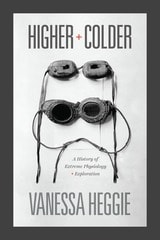
Higher and Colder
A History of Extreme Physiology and ExplorationVanessa Heggie
University of Chicago Press, 2019
Unlike most books on modern biomedicine, Higher and Colder focuses on fieldwork, expeditions, and exploration, and in doing so provides a welcome alternative to laboratory-dominated accounts of the history of modern life sciences. Though centered on male-dominated practices—science and exploration—it recovers the stories of women’s contributions that were sometimes accidentally, and sometimes deliberately, erased. Engaging and provocative, this book is a history of the scientists and physiologists who face challenges that are physically demanding, frequently dangerous, and sometimes fatal, in the interest of advancing modern science and pushing the boundaries of human ability.
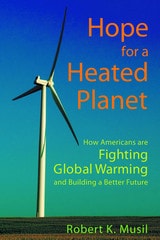
Hope for a Heated Planet
How Americans Are Fighting Global Warming and Building a Better FutureMusil, Robert K
Rutgers University Press, 2009
Musil draws on personal experience and compelling data in this practical and rigorous analysis of the causes and cures for global warming. The book presents all the players in the most pressing challenge facing society today, from the massive fossil fuel lobby to the enlightened corporations that are joining the movement to "go green." Musil thoroughly explains the tremendous potential of renewable energy sources-wind, solar, and biofuel-and the startling conclusions of experts who say society can do away entirely with fossil fuels. He tells readers about the engaged politicians, activists, religious groups, and students who are already working together against climate change.
But the future depends, Musil insists, on what changes ordinary citizens make. Through personal choices and political engagement, he shows how readers can cut carbon emissions and create green communities where they live. With practical and realistic solutions, Hope for a Heated Planet inspires readers to be accountable and enables them to usher in an age of sustainability for future generations.
Hush
Media and Sonic Self-ControlMack Hagood
Duke University Press, 2019
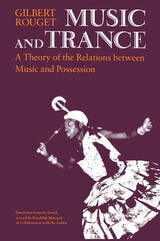
Music and Trance
A Theory of the Relations Between Music and PossessionGilbert Rouget
University of Chicago Press, 1985
Rouget rigorously examines a worldwide corpus of data from ethnographic literature, but he also draws on the Bible, his own fieldwork in West Africa, and the writings of Plato, Ghazzali, and Rousseau. To organize this immense store of information, he develops a typology of trance based on symbolism and external manifestations. He outlines the fundamental distinctions between trance and ecstasy, shamanism and spirit possession, and communal and emotional trance. Music is analyzed in terms of performers, practices, instruments, and associations with dance. Each kind of trance draws strength from music in different ways at different points in a ritual, Rouget concludes. In possession trance, music induces the adept to identify himself with his deity and allows him to express this identification through dance.
Forcefully rejecting pseudo-science and reductionism, Rouget demystifies the so-called theory of the neurophysiological effects of drumming on trance. He concludes that music's physiological and emotional effects are inseparable from patterns of collective representations and behavior, and that music and trance are linked in as many ways as there are cultural structures.
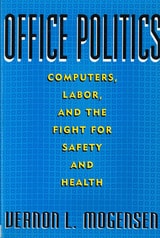
Office Politics
Computers, Labor, and the Fight for Safety and HealthMogensen, Vernon L
Rutgers University Press, 1996
The desktop computer has transformed office work. Business and social forecasters claimed that the use of video display terminals (VDTs) in the “Office of the Future” would free workers from routine tasks, giving them more time for creative work and chances for career advancement. Office Politics argues that, for many VDT workers––most of whom are nonunionized women in low-paying, dead-end jobs––exactly the opposite has been true. VDTs have been used to routinize office tasks; export work via satellite to low-wage, nonunion offshore offices; to de-skill workers and monitor their productivity. And the nature of the work has led to widespread health and safety problems, including vision, musculoskeletal (repetitive motion), and stress-related illnesses. Many have also charged that the electromagnetic fields (EMFs) emitted by computer terminals are responsible for miscarriages, for birth defects, and for promoting cancer.
As office workers sought to protect themselves against these new occupational health and safety problems, they found little help from organized labor, business, or the government. Office Politics is the first book to explain why. It shows how corporate interests successfully redefined the VDT health and safety crisis as a “comfort” problem, how the government refused to collect data on the true scope of VDT-related illnesses or to regulate Information Age industries, and how labor unions ignored women workers.
Office Politics is key reading for everyone who works at a computer. It will be of special interest to students, academics, and professionals in political science, sociology, occupational and environmental health, business, labor and management issues, women’s studies, computing, and public policy.
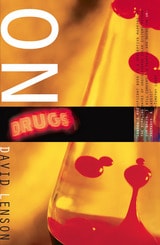
On Drugs
David Lenson
University of Minnesota Press, 1995
A critical exploration of the user’s perspective on drug consciousness-now in paperback!
Engaging, articulate, and brilliantly argued, On Drugs is destined to become a revolutionary classic that redefines what it means to be “high.” Calling for the acceptance of a “diversity of consciousness,” Lenson delivers a searing critique of the War on Drugs as an effort based, like all attempts to eradicate “getting high,” on an incomplete understanding of human nature.
In lucid prose, Lenson ventures outside the conventional genres of drug writing and offers a new look at the drug debate from a lost, and often forbidden, point of view: the user’s. Walking a fine line between the antidrug hysteria of the 1980s and an uncritical advocacy of drug use, he describes in provocative detail the experiences and dynamics of drugs of pleasure and desire-from nicotine to marijuana, alcohol to LSD, and caffeine to cocaine.From lotus-eaters to hippies to crackheads, history has shown the state’s inability to legislate the bloodstreams of its citizens. After considering several specific issues associated with drug use-including sex, violence, and money-On Drugs asks what drugs really do and challenges society’s accepted notions of sobriety and addiction. Lenson concludes with his vision of the end of the War on Drugs by questioning the sense in condemning millions of Americans to lives of concealment and deceit.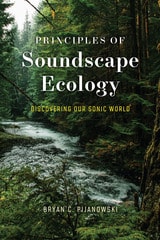
Principles of Soundscape Ecology
Discovering Our Sonic WorldBryan C. Pijanowski
University of Chicago Press, 2024
What do the sounds of a chorus of tropical birds and frogs, a clap of thunder, and a cacophony of urban traffic have in common? They are all components of a soundscape, acoustic environments that have been identified by scientists as a combination of the biophony, geophony, and anthrophony, respectively, of all of Earth’s sound sources. As sound is a ubiquitous occurrence in nature, it is actively sensed by most animals and is an important way for them to understand how their environment is changing. For humans, environmental sound is a major factor in creating a psychological sense of place, and many forms of sonic expression by people embed knowledge and culture. In this book, soundscape ecology pioneer Bryan C. Pijanowski presents the definitive text for both students and practitioners who are seeking to engage with this thrilling new field. Principles of Soundscape Ecology clearly outlines soundscape ecology’s critical foundations, key concepts, methods, and applications. Fundamentals include concise and valuable descriptions of the physics of sound as well as a thorough elucidation of all sounds that occur on Earth. Pijanowski also presents a rich overview of the ecological, sociocultural, and technical theories that support this new science, illustrating the breadth of this amazingly transdisciplinary field. In methods, he describes the principles of data mining, signal processing, and mixed methods approaches used to study soundscapes in ecological, social, or socio-ecological contexts. The final section focuses on terrestrial, aquatic, urban, and music applications, demonstrating soundscape ecology’s utility in nearly all spaces.
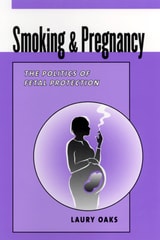
Smoking and Pregnancy
The Politics of Fetal ProtectionOaks, Laury
Rutgers University Press, 2001
The 1966 edition of the leading medical textbook states that pregnant women can safely smoke half a pack of cigarettes a day. Yet today, women who smoke during pregnancy are among the most vilified figures in public health campaigns. Laury Oaks argues this shift is not due solely to medical findings indicating that cigarette smoking may harm the fetus. Also responsible are a variety of social factors that converged more than a decade ago to construct the demonized category of the “pregnant smoker.”
This book charts the emergence of smoking during pregnancy as a public health concern and social problem. Oaks looks at the emphasis public health educators place on individual responsibility, the current legal and social assertion of fetal personhood, the changing expectations of pregnant and prepregnant women, and the advent of antismoking campaigns. She explores how public health educators discuss “the problem” with one another, how they communicate with pregnant smokers, and how these women themselves understand the “risk” of fetal harm. Finally, Oaks discusses the various meanings of “objective” statistics on the effects of smoking on the fetus, exploring the significance of cultural context in assessing the relative importance of those numbers. She argues that rather than bombarding pregnant women with statistics, health educators should consider the daily lives of these women and their socioeconomic status to understand why some women choose to smoke during pregnancy. Without downplaying the seriousness of the health risks that smoking poses to women and their babies, the book supports new efforts that challenge the moral policing of pregnant smokers.
Suffering Made Real
American Science and the Survivors at HiroshimaM. Susan Lindee
University of Chicago Press, 1994
Suffering Made Real is the first comprehensive history of the ABCC's research on how radiation affected the survivors of the atomic bomb. Arguing that Cold War politics and cultural values fundamentally shaped the work of the ABCC, M. Susan Lindee tells the compelling story of a project that raised disturbing questions about the ethical implications of using human subjects in scientific research.
How did the politics of the emerging Cold War affect the scientists' biomedical research and findings? How did the ABCC document and publicly present the effects of radiation? Why did the ABCC refuse to provide medical treatment to the survivors? Through a detailed examination of ABCC policies, archival materials, the minutes of committee meetings, newspaper accounts, and interviews with ABCC scientists, Lindee explores how political and cultural interests were reflected in the day-to-day operations of this controversial research program.
Set against a period of conflicting views of nuclear weapons and nuclear power, Suffering Made Real follows the course of a politically charged research program and reveals in detail how politics and cultural values can shape the conduct, results, and uses of science.
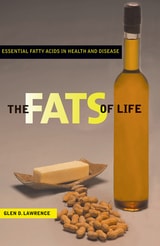
The Fats of Life
Essential Fatty Acids in Health and DiseaseLawrence, Glen D
Rutgers University Press, 2010
The Fats of Life delineates the importance of essential fatty acids, with a focus on distinctions between omega-3 and omega-6 fatty acid variants. The chemical and biochemical characteristics of these fatty acids and their metabolism to a vast array of potent bioactive messengers are described in the context of their potential effects on general health and impact on various diseases and neurological disorders. Glen D. Lawrence addresses in detail the capacity for polyunsaturated fatty acids to influence asthma, atherosclerosis, heart disease, inflammation, cancer, and immunity. Lawrence makes clear that our understanding of the biochemical and physiological effects of dietary fats has advanced tremendously as a result of careful research, but he also stresses that this knowledge has not easily translated into sound dietary recommendations.
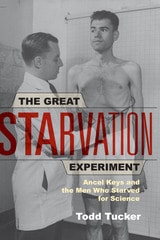
The Great Starvation Experiment
Ancel Keys and the Men Who Starved for ScienceTodd Tucker
University of Minnesota Press, 2007
“The Great Starvation Experiment is wide-ranging, weaving progress in the war into the day-to-day suffering of the hungry volunteers.” —Saint Paul Pioneer Press
“Fascinating . . .” —Minneapolis Star Tribune
Near the end of World War II, thirty-six conscientious objectors volunteered to be systematically starved for renowned scientist Ancel Keys’s study at the University of Minnesota in the basement of Memorial Stadium. Aimed to benefit relief efforts in war-ravaged Europe and Asia, the study sought the best way to rehabilitate starving citizens. Tucker captures a lost moment in American history—a time when stanch idealism and a deep willingness to sacrifice trumped even basic human needs.
“Tucker provides a fascinating and moving history of the experiment, centering on the lives and experiences of the volunteers and the formidable obstacles they overcame. Tucker tells the story with verve and economy. . . . Keys, his experiment and his 36 starving men form a compelling combination.” —Publishers Weekly
Todd Tucker is the author of several books, including Notre Dame vs. the Klan: How the Fighting Irish Defeated the Ku Klux Klan (2004). He served on the legendary Navy submarine USS Alabama before moving to Valparaiso, Indiana.
The Most Secret Quintessence of Life
Sex, Glands, and Hormones, 1850-1950Chandak Sengoopta
University of Chicago Press, 2006
Through a series of case studies drawn from Central Europe, the United States, and Britain, The Most Secret Quintessence of Life explores how the notion of sex hormones enabled scientists to remap the human body, encouraging hopes that glandular interventions could cure ills, malfunctions, and even social deviance in ways inconceivable to previous generations. Many of these dreams failed, but their history, Chandak Sengoopta shows, takes us into the very heart of scientific medicine, revealing how even its most arcane concerns are shaped by cultural preoccupations and anxieties.