Results by title
6 books match the query 'Picture'
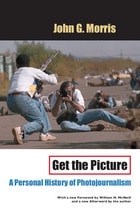
Get the Picture
A Personal History of PhotojournalismJohn G. Morris
University of Chicago Press, 2002
Find out in Get the Picture, a personal history of fifty years of photojournalism by one of the top journalists of the twentieth century. John G. Morris brought us many of the images that defined our era, from photos of the London air raids and the D-Day landing during World War II to the assassination of Robert Kennedy. He tells us the inside stories behind dozens of famous pictures like these, which are reproduced in this book, and provides intimate and revealing portraits of the men and women who shot them, including Robert Capa, Henri Cartier-Bresson, and W. Eugene Smith. A firm believer in the power of images to educate and persuade, Morris nevertheless warns of the tremendous threats posed to photojournalists today by increasingly chaotic wars and the growing commercialism in publishing, the siren song of money that leads editors to seek pictures that sell copies rather than those that can change the way we see the world.
Picture a Professor
Interrupting Biases about Faculty and Increasing Student LearningJessamyn Neuhaus
West Virginia University Press, 2022
“Does a service to all who would prefer a different path, offering realistic strategies to engage students in undermining scholarly stereotypes.”—Science
Picture a Professor is a collection of evidence-based insights and intersectional teaching strategies crafted by and for college instructors. It aims to inspire transformative student learning while challenging stereotypes about what a professor looks like.
Representing a variety of scholarly disciplines, the volume’s contributing authors offer practical advice for effectively navigating student preconceptions about embodied identity and academic expertise. Each contributor recognizes the pervasiveness of racialized, gendered, and other biases about professors and recommends specific ways to respond to and interrupt such preconceptions—helping students, teachers, and others reenvision what we think of when we picture a professor.
Educators at every stage of their career will find affirming acknowledgment of the ways systemic inequities affect college teaching conditions, as well as actionable advice about facilitating student learning with innovative course design, classroom activities, assessment techniques, and more.
Ruining the Picture
Pimone Triplett
Northwestern University Press, 1998
"Pimone Triplett has a large discursive intelligenge, a keen lyric sensibility, a strong feeling for drama. . . . What an abiding pleasure to encounter a first book of such maturity." --Edward Hirsch
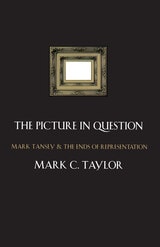
The Picture in Question
Mark Tansey and the Ends of RepresentationMark C. Taylor
University of Chicago Press, 1999
The Public in the Picture
Involving the Beholder in Antique, Islamic, Byzantine, Western Medieval and Renaissance ArtEdited by Beate Fricke and Urte Krass
Diaphanes, 2015
With The Public in the Picture, contributors describe this shift, with each essay focusing on a specific group of works created at a different moment in history. Together, the contributions explore the political, religious, and social contexts of the publics depicted and relate this shift to the rise of perspectival representation. Contributors to The Public in the Picture include Andrew Griebler, Annette Haug, Henrike Haug, Christiane Hille, Christopher Lakey, Andrea Lermer, Cornelia Logemann, Anja Rathmann-Lutz, Alberto Saviello, and Daniela Wagner.
Too Beautiful to Picture
Zeuxis, Myth, and MimesisElizabeth C. Mansfield
University of Minnesota Press, 2007