Results by title
41 books match the query 'Mobility'
A Colonial Lexicon
Of Birth Ritual, Medicalization, and Mobility in the CongoNancy Rose Hunt
Duke University Press, 1999
Relying on archival research in England and Belgium, as well as fieldwork in the Congo, Hunt reconstructs an ethnographic history of a remote British Baptist mission struggling to survive under the successive regimes of King Leopold II’s Congo Free State, the hyper-hygienic, pronatalist Belgian Congo, and Mobutu’s Zaire. After exploring the roots of social reproduction in rituals of manhood, she shows how the arrival of the fast and modern ushered in novel productions of gender, seen equally in the forced labor of road construction and the medicalization of childbirth. Hunt focuses on a specifically interwar modernity, where the speed of airplanes and bicycles correlated with a new, mobile medicine aimed at curbing epidemics and enumerating colonial subjects. Fascinating stories about imperial masculinities, Christmas rituals, evangelical humor, colonial terror, and European cannibalism demonstrate that everyday life in the mission, on plantations, and under a strongly Catholic colonial state was never quite what it seemed. In a world where everyone was living in translation, privileged access to new objects and technologies allowed a class of “colonial middle figures”—particularly teachers, nurses, and midwives—to mediate the evolving hybridity of Congolese society. Successfully blurring conventional distinctions between precolonial, colonial, and postcolonial situations, Hunt moves on to discuss the unexpected presence of colonial fragments in the vibrant world of today’s postcolonial Africa.
With its close attention to semiotics as well as sociology, A Colonial Lexicon will interest specialists in anthropology, African history, obstetrics and gynecology, medical history, religion, and women’s and cultural studies.
A New Vision of Southern Jewish History
Studies in Institution Building, Leadership, Interaction, and MobilityMark K. Bauman, Foreword by Ronald H. Bayor
University of Alabama Press, 2019
Essays from a prolific career that challenge and overturn traditional narratives of southern Jewish history
Mark K. Bauman, one of the foremost scholars of southern Jewish history working today, has spent much of his career, as he puts it, “rewriting southern Jewish history” in ways that its earliest historians could not have envisioned or anticipated, and doing so by specifically targeting themes and trends that might not have been readily apparent to those scholars. A New Vision of Southern Jewish History: Studies in Institution Building, Leadership, Interaction, and Mobility features essays collected from over a forty-year career, including a never-before-published article.
The prevailing narrative in southern Jewish history tends to emphasize the role of immigrant Jews as merchants in small southern towns and their subsequent struggles and successes in making a place for themselves in the fabric of those communities. Bauman offers assessments that go far beyond these simplified frameworks and draws upon varieties of subject matter, time periods, locations, tools, and perspectives over three decades of writing and scholarship.
A New Vision of Southern Jewish History contains Bauman’s studies of Jewish urbanization, acculturation and migration, intra- and inter-group relations, economics and business, government, civic affairs, transnational diplomacy, social services, and gender—all complicating traditional notions of southern Jewish identity. Drawing on role theory as informed by sociology, psychology, demographics, and the nature and dynamics of leadership, Bauman traverses a broad swath—often urban—of the southern landscape, from Savannah, Charleston, and Baltimore through Atlanta, New Orleans, Galveston, and beyond the country to Europe and Israel.
Bauman’s retrospective volume gives readers the opportunity to review a lifetime of work in a single publication as well as peruse newly penned introductions to his essays. The book also features an “Additional Readings” section designed to update the historiography in the essays.
AIoT for Smart Transportation
Transforming the future of mobilityMeenu Gupta
The Institution of Engineering and Technology, 2025
African American Travel Narratives from Abroad
Mobility and Cultural Work in the Age of Jim CrowGary Totten
University of Massachusetts Press, 2015
In this book, Gary Totten examines the global travel narratives of a diverse set of African American writers, including Ida B. Wells, Booker T. Washington, Matthew Henson, Jessie Redmon Fauset, and Zora Neale Hurston. While these writers deal with issues of identity in relation to a reimagined sense of self—in a way that we might expect to find in travel narratives—they also push against the constraints and conventions of the genre, reconsidering discourses of tourism, ethnography, and exploration. This book not only offers new insights about African American writers and mobility, it also charts the ideological distinctions and divergent agendas within this group of writers. Totten demonstrates how these travelers and their writings challenged dominant ideologies about African American experience, expression, and identity in a period of escalating racial violence. By setting these texts in their historical context and within the genre of travel writing, Totten presents a nuanced understanding of both popular and recovered work of the period.
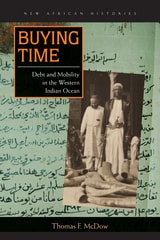
Buying Time
Debt and Mobility in the Western Indian OceanThomas F. McDow
Ohio University Press, 2018
In Buying Time, Thomas F. McDow synthesizes Indian Ocean, Middle Eastern, and East African studies as well as economic and social history to explain how, in the nineteenth century, credit, mobility, and kinship knit together a vast interconnected Indian Ocean region. That vibrant and enormously influential swath extended from the desert fringes of Arabia to Zanzibar and the Swahili coast and on to the Congo River watershed.
In the half century before European colonization, Africans and Arabs from coasts and hinterlands used newfound sources of credit to seek out opportunities, establish new outposts in distant places, and maintain families in a rapidly changing economy. They used temporizing strategies to escape drought in Oman, join ivory caravans in the African interior, and build new settlements.
The key to McDow’s analysis is a previously unstudied trove of Arabic business deeds that show complex variations on the financial transactions that underwrote the trade economy across the region. The documents list names, genealogies, statuses, and clan names of a wide variety of people—Africans, Indians, and Arabs; men and women; free and slave—who bought, sold, and mortgaged property. Through unprecedented use of these sources, McDow moves the historical analysis of the Indian Ocean beyond connected port cities to reveal the roles of previously invisible people.
Dancing out of Line
Ballrooms, Ballets, and Mobility in Victorian Fiction and CultureMolly Engelhardt
Ohio University Press, 2009
Dancing out of Line transports readers back to the 1840s, when the craze for social and stage dancing forced Victorians into a complex relationship with the moving body in its most voluble, volatile form.
By partnering cultural discourses with representations of the dance and the dancer in novels such as Jane Eyre, Bleak House, and Daniel Deronda, Molly Engelhardt makes explicit many of the ironies underlying Victorian practices that up to this time have gone unnoticed in critical circles. She analyzes the role of the illustrious dance master, who created and disseminated the manners and moves expected of fashionable society, despite his position as a social outsider of nebulous origins. She describes how the daughters of the social elite were expected to “come out” to society in the ballroom, the most potent space in the cultural imagination for licentious behavior and temptation. These incongruities generated new, progressive ideas about the body, subjectivity, sexuality, and health.
Engelhardt challenges our assumptions about Victorian sensibilities and attitudes toward the sexual/social roles of men and women by bringing together historical voices from various fields to demonstrate the versatility of the dance, not only as a social practice but also as a forum for Victorians to engage in debate about the body and its pleasures and pathologies.
Finding Augusta
Habits of Mobility and Governance in the Digital EraHeidi Rae Cooley
Dartmouth College Press, 2014
Forms of Mobility
Genre, Language, and Media in African Literary CulturesStephanie Bosch Santana
Northwestern University Press, 2025
Presents alternative categories of fiction through which to examine how contemporary writers have envisaged Africa’s changing literary terrains
Stephanie Bosch Santana analyzes southern African writers’ experimentations with literary form in periodical print and digital media since the mid-twentieth century in order to offer an alternative account of contemporary African imaginations of mobility. Based on an understudied archive of texts in English and Chichewa/Nyanja from Malawi, South Africa, Zimbabwe, and Zambia, Forms of Mobility: Genre, Language, and Media in African Literary Cultures examines new, noncanonical categories of fiction, including migrant forms, township tales, weekend stories, and digital diaries. These generically, linguistically, and geographically mobile forms map changing ideas of interconnection and belonging. By reading them “in motion,” as they travel across space, time, genre, and language and between publications and platforms, Bosch Santana limns multiple centers of literary influence and relation across southern African and Black diasporas, revealing forms of literary mobility and space making that are occluded by current models of world literature.
From the Land of Ever Winter to the American Southwest
Athapaskan Migrations, Mobility, and EthnogenesisDeni J. Seymour
University of Utah Press, 2012
The Athapaskan departure from the Canadian Subarctic centuries ago and their subsequent arrival in the American Southwest has remained the subject of continuous debate in anthropological research. This book examines archaeological, genetic, linguistic, and traditional oral history data and brings them together in fresh ways, in many cases for the first time. With a backdrop of these new and interrelated lines of evidence, each subfield must now reevaluate its approach and the forms of evidence it uses to construct arguments.
The contributors here include the most knowledgeable scholars in each of the above fields, collectively providing the most up-to-date research on early Athapaskans and their movements and migrations. Each chapter approaches Athapaskan migration with data obtained from different regions, providing clarity as to the basis for individual arguments. Often, entrenched regional visualizations and localized conventions are clarified only when placed in juxtaposition to those of other regions. Because of this, conclusions rest on sometimes widely divergent theoretical and methodological underpinnings, thus expressing preference for and conveying weight to certain types of evidence and lines of reasoning. The goal of this volume is to expose these arguments in order to clarify appropriate directions for future research, making advances possible.

Hydra Rising
The Enduring Struggle for Freedom, Mobility, and the CommonsBridget Anderson, Nandita Sharma, and Cynthia Wright, editors
Duke University Press, 2027
Ireland's Farthest Shores
Mobility, Migration, and Settlement in the Pacific WorldMalcolm Campbell
University of Wisconsin Press, 2022
Malcolm Campbell examines the rich history of Irish experiences on land and at sea, offering new perspectives on migration and mobility in the Pacific world and of the Irish role in the establishment and maintenance of the British Empire. This volume investigates the extensive transnational connections that developed among Irish immigrants and their descendants across this vast and unique oceanic space, ties that illuminate how the Irish participated in the making of the Pacific world and how the Pacific world made them.
Latina/os and World War II
Mobility, Agency, and IdeologyEdited by Maggie Rivas-Rodriguez and B.V. Olguín
University of Texas Press, 2014
The first book-length study of Latina/o experiences in World War II over a wide spectrum of identities and ancestries—from Cuban American, Spanish American, and Mexican American segments to the under-studied Afro-Latino experience—Latina/os and World War II probes the controversial aspects of Latina/o soldiering and citizenship in the war, the repercussions of which defined the West during the twentieth century. The editors also offer a revised, more accurate tabulation of the number of Latina/os who served in the war.
Spanning imaginative productions, such as vaudeville and the masculinity of the soldado razo theatrical performances; military segregation and the postwar lives of veterans; Tejanas on the homefront; journalism and youth activism; and other underreported aspects of the wartime experience, the essays collected in this volume showcase rarely seen recollections. Whether living in Florida in a transformed community or deployed far from home (including Mexican Americans who were forced to endure the Bataan Death March), the men and women depicted in this collection yield a multidisciplinary, metacritical inquiry. The result is a study that challenges celebratory accounts and deepens the level of scholarly inquiry into the realm of ideological mobility for a unique cultural crossroads. Taking this complex history beyond the realm of war narratives, Latina/os and World War II situates these chapters within the broader themes of identity and social change that continue to reverberate in postcolonial lives.
Meanings of Mobility
Family, Education, and Immigration in the Lives of Latino YouthLeah Schmalzbauer
Russell Sage Foundation, 2023
To better understand these experiences, Schmalzbauer draws on interviews with 60 low-income Latino youth who graduated or were set to graduate from Amherst College, one of the most selective private colleges in the United States. The vast majority of these students were the first in their immigrant families to go to college in the U.S. She finds that while most of the students believed attending Amherst provided them with previously unimaginable opportunities, adjusting to life on campus came with significant challenges. Many of the students Schmalzbauer spoke with had difficulties adapting to the cultural norms at Amherst as well as with relating to their non-Latino, non-low-income peers. The challenges these students faced were not limited to life on campus. As they attempted to adapt to Amherst, many felt distanced from the family and friends they left behind who could not understand the new challenges they faced.
The students credit their elite education for access to extraordinary educational and employment opportunities. However, their experiences while in college and afterward reveal that the relationship between educational and social mobility is much more complicated and less secure than popular conversations about the “American Dream” suggest. Many students found that their educational attainment was not enough to erase the core challenges of growing up in a marginalized immigrant family: many were still poor, faced racism, and those who were undocumented or had undocumented family members still feared deportation.
Schmalzbeauer suggests ways elite colleges can better support low-income Latino students and lower the emotional price of educational mobility, including the creation of immigration offices on campus to provide programming and support for undocumented students and their families. She recommends educating staff to better understand the centrality of family for these students and the challenges they face, as well as educating more privileged students about inequality and the life experiences of their marginalized peers.
Meanings of Mobility provides compelling insights into the difficulties faced by low-income Latinos pursuing educational and social mobility in America’s elite institutions.
Measuring Distribution and Mobility of Income and Wealth
Raj Chetty, John N. Friedman, Janet C. Gornick, Barry Johnson, and Arthur Kennickell
University of Chicago Press, 2022
Economic research is increasingly focused on inequality in the distribution of personal resources and outcomes. One aspect of inequality is mobility: are individuals locked into their respective places in this distribution? To what extent do circumstances change, either over the lifecycle or across generations? Research not only measures inequality and mobility, but also analyzes the historical, economic, and social determinants of these outcomes and the effect of public policies. This volume explores the latest developments in the analysis of income and wealth distribution and mobility. The collection of twenty-three studies is divided into five sections. The first examines observed patterns of income inequality and shifts in the distribution of earnings and in other factors that contribute to it. The next examines wealth inequality, including a substantial discussion of the difficulties of defining and measuring wealth. The third section presents new evidence on the intergenerational transmission of inequality and the mechanisms that underlie it. The next section considers the impact of various policy interventions that are directed at reducing inequality. The final section addresses the challenges of combining household-level data, potentially from multiple sources such as surveys and administrative records, and aggregate data to study inequality, and explores ways to make survey data more comparable with national income accounts data.
Mobility and Integration in Urban Argentina
Córdoba in the Liberal EraBy Mark D. Szuchman
University of Texas Press, 1981
Between the 1870s, when the great influx of European immigrants began, and the start of World War I, Argentina underwent a radical alteration of its social composition and patterns of economic productivity. Mark Szuchman, in this groundbreaking study, examines the occupational, residential, educational, and economic patterns of mobility of some four thousand men, women, and children who resided in Córdoba, Argentina's most important interior city, during this changeful era.
Through several kinds of samples, Szuchman provides a widely encompassing social picture of Córdoba, describing, among others, the unskilled laborer, the immigrant bachelor in search of roots and identity, the merchant seeking or giving credit, and the member of the elite, blind to some of the realities around him. The challenge that the pursuit of security entailed for most people and the failure of so many to persist successfully form a large part of that picture.
The author has made ample use of quantitative techniques, but secondary materials are also utilized to provide social perspectives that round out and humanize the quantitative data. The use of record linkage as the essential research method makes this work the first book on Argentina to follow similar and very successful research methodologies employed by U.S. historians.
Mobility and Migration in Ancient Mesoamerican Cities
M. Charlotte Arnauld
University Press of Colorado, 2024
In a series of data-rich chapters that address specific evidence for movement in their respective study areas, an international group of scholars assesses mobility through the isotopic and demographic analysis of human remains, stratigraphic identification of gaps in occupation, and local intensification of water capture in the Maya lowlands. Others examine migration through the integration of historic and archaeological evidence in Michoacán and Yucatán and by registering how daily life changed in response to the influx of new people in the Basin of Mexico.
Offering a range of critical insights into the vital and under-studied role that mobility and migration played in complex agrarian societies, Mobility and Migration in Ancient Mesoamerican Cities will be of value to Mesoamericanist archaeologists, ethnohistorians, and bioarchaeologists and to any scholars working on complex societies.
Contributors:
Jaime J. Awe, Meggan Bullock, Sarah C. Clayton, Andrea Cucina, Véronique Darras, Nicholas P. Dunning, Mélanie Forné, Marion Forest, Carolyn Freiwald, Elizabeth Graham, Nancy Gonlin, Julie A. Hoggarth, Linda Howie, Elsa Jadot, Kristin V. Landau, Eva Lemonnier, Dominique Michelet, David Ortegón Zapata, Prudence M. Rice, Thelma N. Sierra Sosa, Michael P. Smyth, Vera Tiesler, Eric Weaver
Mobility and Migration
East Anglian Founders of New England, 1629-1640Roger Thompson
University of Massachusetts Press, 1994
During the 1630s, more than 14,000 people sailed from Britain bound for New England, constituting what has come to be known as the Great Migration. This book offers the most extensive study of these emigrants ever undertaken. Focusing on 2,000 individuals who moved from the five counties of eastern England, it provides historians with important new findings on mobility, family life, kinship networks, and community cohesion.
Roger Thompson reveals the personal experiences and ancestral histories of the emigrants. He follows them across the Atlantic and investigates their lives and achievements in the New World. Distinguising between such groups as gentry, entrepreneurs, artisans, farmers, and servants, he explores whether the migration tended to be a solitary uprooting from a stable and predictable world of familiar neighborhoods or simply a longer move among many relocations.
Thompson also sheds light on the issue of motivation: Were these settlers pulled by the hope of eventual enrichment or of founding a purified society, or were they pushed by intolerance and persecution at home? Did they see New England as a haven of escape or an opportunity to exploit? Did New Englanders seek to replicate “English ways,” preserving traditional culture and society, or did they embrace change and innovation? Mobility and Migration provides a wealth of new evidence for historians of both early modern England and colonial America.
Mobility and Modernity
Migration in Germany, 1820-1989Steve Hochstadt
University of Michigan Press, 1999
Mobility and Modernity
Panama in the Nineteenth-Century Anglo-American ImaginationRobert D. Aguirre
The Ohio State University Press, 2017
In this study, Robert D. Aguirre provides bold new interpretations of Anthony Trollope, John Lloyd Stephens, and Eadweard Muybridge and also recovers information about literary communities previously lost to history. Mobility and Modernity shows how Panama became defined as a site of incipient globalization and a crucial link of empire. Across this narrow strip of land people and things traveled, technology developed, and political forces erupted. The isthmus became a site of mobility that paradoxically produced varieties of immobility. Parting ways with histories that celebrate the canal as a mighty engineering feat, Mobility and Modernity reveals a more complex story of cultural conflict that began with the first gold rush news in the late 1840s and continued throughout the century.

Mobility and the Small Town, 1900-1930
Norman T. Moline
University of Chicago Press, 1971
Mobility as a Service
Its development, deployment, and futureBeate Kubitz
The Institution of Engineering and Technology, 2024
Mobility in French History, Volume 29
Carla Hesse and Peter Sahlins
Duke University Press, 0
Mobility of Imagination
A companion guide to international cultural cooperationDragan Klaic
Central European University Press, 2006
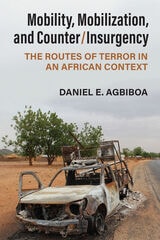
Mobility, Mobilization, and Counter/Insurgency
The Routes of Terror in an African ContextDaniel E. Agbiboa
University of Michigan Press, 2022
In Mobility, Mobilization, and Counter/Insurgency, Daniel Agbiboa takes African insurgencies back to their routes by providing a transdisciplinary perspective on the centrality of mobility to the strategies of insurgents, state security forces, and civilian populations caught in conflict. Drawing on one of the world’s deadliest insurgencies, the Boko Haram insurgency in northeast Nigeria and the Lake Chad region, this well-crafted and richly nuanced intervention offers fresh insights into how violent extremist organizations exploit forms of local immobility and border porosity to mobilize new recruits, how the state’s “war on terror” mobilizes against so-called subversive mobilities, and how civilian populations in transit are treated as could-be terrorists and subjected to extortion and state-sanctioned violence en route. The multiple and intersecting flows analyzed here upend Eurocentric representations of movement in Africa as one-sided, anarchic, and dangerous. Instead, this book underscores the contradictions of mobility in conflict zones as simultaneously a resource and a burden. Intellectually rigorous yet clear, engaging, and accessible, Mobility, Mobilization, and Counter/Insurgency is a seminal contribution that lays bare the neglected linkages between conflict and mobility.
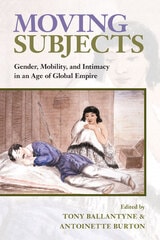
Moving Subjects
Gender, Mobility, and Intimacy in an Age of Global EmpireEdited by Tony Ballantyne and Antoinette Burton
University of Illinois Press, 2008
Moving Subjects is the first of its kind to make a case not simply for the necessity of a spatial analysis of imperial formations, but for the indispensability of an investigative approach that links space and movement with the domain of the intimate. Through careful archival research and a commitment to excavating the variety of "mobile intimacies" at the heart of imperial power, its agents, and its interlocutors, contributors offer new evidence and approaches for scholars engaged in capturing the historical nuances of imperial domination.
Contributors are Tony Ballantyne, Antoinette Burton, Adrian Carton, David Haines, Katherine Ellinghaus, Charlotte Macdonald, Michael A. McDonnell, Kirsten McKenzie, Michelle Moran, Fiona Paisley, Adele Perry, Dana Rabin, Christine M. Skwiot, Rachel Standfield, Frances Steel, Elizabeth Vibert, and Kerry Wynn.

Namibia Under South African Rule
Mobility and Containment, 1915–46Patricia Hayes
Ohio University Press, 1998
The peoples of Namibia have been on the move throughout history. The South Africans in 1915 took over from the Germans in trying to fit Namibia into a colonial landscape. This book is about the clashes and stresses which resulted from the first three decades of South African colonial rule.
Namibia under South African Rule is a major contribution to Namibian historiography, exploring, in particular, many new themes in twentieth-century Namibian history. Here is exciting new work from a host of scholars and writers on a heretofore under-researched subject.
RSF
The Russell Sage Foundation Journal of the Social Sciences: Opportunity, Mobility, and Increased InequalityKatharine Bradbury
Russell Sage Foundation, 2016
Several contributors investigate how rising inequality in parental investments in children, lack of public resources for low-income families, and the high cost of postsecondary education limit the futures of many. Janet L. Yellen, Chair of the Federal Reserve Board, reviews trends in income and wealth inequality since the 1980s and shows how lack of access to key resources such as high-quality childhood education, affordable college, private business ownership, and inheritances for those in the lower half of the wealth distribution has significantly restricted economic opportunity in the U.S. Isabel Sawhill and Richard Reeves find that the socioeconomic status of one’s parents strongly predicts where one will end up on the income ladder as an adult, particularly for those at the very bottom and top of the income distribution. Timothy Smeeding shows that black men, children of never-married mothers, and children of parents lacking high school diplomas are likely to both begin life in the bottom quartile of the income distribution and remain there as adults.
Other contributors explore how inequality of opportunity begins in childhood, where family conditions and neighborhood quality influence children’s life outcomes. Katherine Magnuson and Greg Duncan show that even prior to kindergarten, low-income children lag behind their affluent peers in math and reading skills, in part because they lack access to high-quality preschool education. Greg Duncan and Richard Murnane find that affluent children’s advantages are further amplified during their school years, in part because their parents invest more time and resources in their educational and extra-curricular activities. They also show that increased residential segregation has led to higher concentrations of children with behavioral problems in low-income areas, which negatively affects their classmates’ ability to learn. Patrick Sharkey reviews research on the correlation between child neighborhood conditions and adult economic outcomes and confirms that the longer low-income children reside in bad neighborhoods, the more their disadvantages are compounded.
This issue of RSF offers new insights into how, despite our persistent belief in the American Dream, economic opportunity and mobility have stagnated for a growing number of citizens.
Sedentism and Mobility in a Social Landscape
Mesa Verde and BeyondMark D. Varien
University of Arizona Press, 1999
Social Stratification and Mobility in Central Veracruz
By Hugo G. Nutini
University of Texas Press, 2005
Since the Revolution of 1910, Mexican society has undergone a profound transformation, characterized by the disempowerment of the landed aristocracy and the rise of a new ruling class of plutocrats and politicians; the development of a middle class of white-collar professionals; and the upward mobility of formerly disenfranchised Indians who have become urban, working-class Mestizos. Indeed, Mexico's class system today increasingly resembles that of Western industrialized nations, proving that, while further democratic reforms are needed, the Revolution initiated an ongoing process of change that has created a more egalitarian society in Mexico with greater opportunities for social advancement.
This authoritative ethnography examines the transformation of social classes in the Córdoba-Orizaba region during the latter half of the twentieth century to create a model of provincial social stratification in Mexico. Hugo Nutini focuses on the increased social mobility that has affected all classes of society, especially the rural Indians who have taken advantage of education, job opportunities, and contact with the wider world to achieve Mestizo status. He also traces the transfer of power that followed the demise of the hacienda system, as well as the growing importance of the middle class. This description and analysis of the provincial social stratification system complements the work Nutini has done on the national class system, centered in Mexico City, to offer a comprehensive picture of social stratification and mobility in Mexico today.
Street Fight
The Politics of Mobility in San FranciscoJason Henderson
University of Massachusetts Press, 2013
Faced with intolerable congestion and noxious pollution, cities around the world are rethinking their reliance on automobiles. In the United States a loosely organized livability movement seeks to reduce car use by reconfiguring urban space into denser, transit-oriented, walkable forms, a development pattern also associated with smart growth and new urbanism. Through a detailed case study of San Francisco, Jason Henderson examines how this is not just a struggle over what type of transportation is best for the city, but a series of ideologically charged political fights over issues of street space, public policy, and social justice.
Historically San Francisco has hosted many activist demonstrations over its streets, from the freeway revolts of the 1960s to the first Critical Mass bicycle rides decades later. Today the city's planning and advocacy establishment is changing zoning laws to limit the number of parking spaces, encouraging new car-free housing near transit stations, and applying “transit first” policies, such as restricted bus lanes. Yet Henderson warns that the city's accomplishments should not be romanticized. Despite significant gains by livability advocates, automobiles continue to dominate the streets, and the city's financially strained bus system is slow and often unreliable.
Both optimistic and cautionary, Henderson argues that ideology must be understood as part of the struggle for sustainable cities and that three competing points of view—progressive, neoliberal, and conservative—have come to dominate the contemporary discourse about urban mobility. Consistent with its iconic role as an incubator of environmental, labor, civil rights, and peace movements, San Francisco offers a compelling example of how the debate over sustainable urban transportation may unfold both in the United States and globally.
The Citizen and the Vagabond
A Politics of MobilityTim Cresswell
University of Minnesota Press, 2026
An expansive treatise on the power relations that govern our movement
The Citizen and the Vagabond develops a theoretical approach to the study of mobility and its relationship to the production, maintenance, and transformation of social and cultural hierarchies. Expanding upon his foundational work on the subject, Tim Cresswell examines human movement from around the globe to better understand the various forms of inequality and injustice that shape our lives.
Establishing a framework for movement in terms of rhythm, speed, routes, and friction, Cresswell extends these themes to address the Covid-19 pandemic and subsequent lockdowns, exploring what this turbulent period reveals to us about the politics of mobility. He demonstrates that while flexibility and ease of movement are typically considered markers of personal freedom, increased mobility brings with it new modes of control and surveillance. As he investigates the hierarchies and embodied experiences that emerge amid these tensions, Cresswell employs two figures: the citizen, whose mobility within and across borders is expected and accepted, and the vagabond, whose perpetual mobility is deemed suspect and in need of ordering.
In conversation with the work of theorists such as Mimi Sheller, Zygmunt Bauman, Paul Virilio, Henri Lefebvre, Ivan Illich, and Anna Tsing, Cresswell reaches beyond geography to incorporate insights from the humanities and social sciences. An interdisciplinary intervention into the study of mobility and citizenship, The Citizen and the Vagabond provides a new set of coordinates from which to grasp the shifting dynamics of movement and power.
Retail e-book files for this title are screen-reader friendly with images accompanied by short alt text and/or extended descriptions.
The Insecure City
Space, Power, and Mobility in BeirutMonroe, Kristin V
Rutgers University Press, 2016
Download open access ebook here.
The Mobility of Modernism
Art and Criticism in 1920s Latin AmericaBy Harper Montgomery
University of Texas Press, 2017
Arvey Foundation Book Award, Association for Latin American Art, 2018
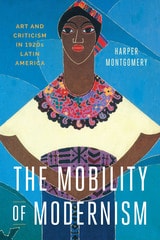
Many Latin American artists and critics in the 1920s drew on the values of modernism to question the cultural authority of Europe. Modernism gave them a tool for coping with the mobility of their circumstances, as well as the inspiration for works that questioned the very concepts of the artist and the artwork and opened the realm of art to untrained and self-taught artists, artisans, and women. Writing about the modernist works in newspapers and magazines, critics provided a new vocabulary with which to interpret and assign value to the expanding sets of abstracted forms produced by these artists, whose lives were shaped by mobility.
The Mobility of Modernism examines modernist artworks and criticism that circulated among a network of cities, including Buenos Aires, Mexico City, Havana, and Lima. Harper Montgomery maps the dialogues and relationships among critics who published in avant-gardist magazines such as Amauta and Revista de Avance and artists such as Carlos Mérida, Xul Solar, and Emilio Pettoruti, among others, who championed esoteric forms of abstraction. She makes a convincing case that, for these artists and critics, modernism became an anticolonial stance which raised issues that are still vital today—the tensions between the local and the global, the ability of artists to speak for blighted or unincorporated people, and, above all, how advanced art and its champions can enact a politics of opposition.

The Politics of Migration and Mobility in the Art World
Transnational Baltic Artistic Practices across EuropeEmma Duester
Intellect Books, 2021
Offering a fresh perspective on art and the working lives of those who create it, this multidisciplinary work investigates patterns of migration and mobile working practices across Europe and discusses the implications of artists’ movements on conventional notions of home, mobility, and diaspora. Amid a global refugee crisis, a resurgence in negative portrayals of Eastern Europeans in mainstream media, and increasing anti-immigrant sentiment fueled by Brexit and the rise of protectionism, this is a vital work that shines important new light on diaspora, displacement, and what it means to belong.
The Roma as Agents of the “G*psy Question”
Belonging, Mobility, and Resettlement Policy in Socialist Czechoslovakia in the 1960sJan Ort
Karolinum Press, 2024
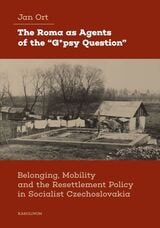
The story of Romani people in communist Czechoslovakia has long been framed by a discriminatory policy of assimilation, and thus by fatal interventions into Romani family ties and their broader socio-cultural systems. Paradoxically, such a narrative failed to integrate the perspective of the Roma themselves, who often associated the same period with an unprecedented experience of social inclusion and material security. In this book, Jan Ort examines the state policy that in the mid-1960s aimed at the definitive elimination of "G*psy backwardness" through the placement of thousands of Roma families in non-Roma society, thus becoming a symbol of the social engineering interventions of the Communist regime in the lives of Czechoslovak Roma. In contrast to the predominant focus on the perspective of state authorities, Ort seeks to map the practice of this policy in specific places with an emphasis on the experiences and agency of the Roma themselves, especially those who had their homes in eastern Slovakia. In the empirical richness of a micro-historical approach, Roma as Agents of the “G*psy Question” uncovers the diverse stories of ordinary Roma who were able to incorporate various aspects of state policy into their own lives without necessarily giving up their distinctive cultural identity.
Times of Mobility
Transnational Literature and Gender in TranslationJasmina Lukic
Central European University Press, 2020

Tracking Europe
Mobility, Diaspora, and the Politics of LocationGinette Verstraete
Duke University Press, 2009
In demystifying the old and new Europe across a multiplicity of texts, images, media, and cultural practices in various times and locations, Verstraete lays bare a territorial persistence in the European imaginary, one which has been differently tied up with the politics of inclusion and exclusion. Tracking Europe moves from policy papers, cultural tourism, and migration to philosophies of cosmopolitanism, nineteenth-century travel guides, electronic surveillance at the border, virtual pilgrimages to Spain, and artistic interventions in the Balkan region. It is a sustained attempt to situate current developments in Europe within a complex matrix of tourism, migration, and border control, as well as history, poststructuralist theory, and critical media and art projects.
Tracking Modernity
India’s Railway and the Culture of MobilityMarian Aguiar
University of Minnesota Press, 2010
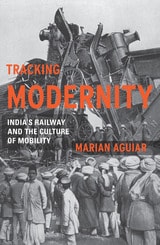
Since the colonial period in India, the railway has been idealized as a rational utopia—a moving box in which racial and class differences might be amalgamated under a civic, secular, and public order. Aguiar charts this powerful image into the postcolonial period, showing how the culture of mobility exposes this symbol of reason as surprisingly dynamic and productive. Looking in turn at the partition of India, labor relations, rituals of travel, works of literature and film, visual culture, and the Mumbai train bombings of 2006, Aguiar finds incongruities she terms “counternarratives of modernity” to signify how they work both with and against the dominant rhetoric. Revealing railways as a microcosm of tensions within Indian culture, Aguiar demonstrates how their representations have challenged prevailing ideas of modernity.
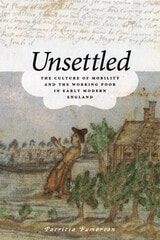
Unsettled
The Culture of Mobility and the Working Poor in Early Modern EnglandPatricia Fumerton
University of Chicago Press, 2006
Migrants made up a growing class of workers in late sixteenth- and seventeenth- century England. In fact, by 1650, half of England’s rural population consisted of homeless and itinerant laborers. Unsettled is an ambitious attempt to reconstruct the everyday lives of these dispossessed people. Patricia Fumerton offers an expansive portrait of unsettledness in early modern England that includes the homeless and housed alike.
Fumerton begins by building on recent studies of vagrancy, poverty, and servants, placing all in the light of a new domestic economy of mobility. She then looks at representations of the vagrant in a variety of pamphlets and literature of the period. Since seamen were a particularly large and prominent class of mobile wage-laborers in the seventeenth century, Fumerton turns to seamen generally and to an individual poor seaman as a case study of the unsettled subject: Edward Barlow (b. 1642) provides a rare opportunity to see how the laboring poor fashioned themselves, for he authored a journal of over 225,000 words and 147 pages of drawings. Barlow’s journal, studied extensively here for the first time, vividly charts what he himself termed his “unsettled mind” and the perpetual anxieties of England’s working and wayfaring poor. Ultimately, Fumerton explores representations of seamen as unsettled in the broadside ballads of Barlow’s time.

Urban Solidarity
Gender, Mobility, and the Unfinished Politics of Buen VivirJulie Gamble
University of Texas Press, 0
An exploration of how the citizens of Quito created community via transportation systems in spite of political crisis.
Between 2007 and 2017, Ecuadoreans breathed the air of revolution. Their national project, spearheaded by Democratic Socialist president Rafael Correa, was known as buen vivir—good living. Both a discourse and a development strategy, buen vivir promoted interdependence with and among working-class and marginalized people. And public investment shifted toward shared infrastructure, especially transit. Yet much work was still to be done when Correa left office, and Ecuador has since seen retrenchment.
Urban Solidarity explores and interprets buen vivir’s afterlife, as local organizers in the capital Quito sustain and build the interdependence agenda in the midst of state retreat. Since the IMF forced the government to cancel fuel subsidies, residents have responded by developing impressive carsharing (taxirutas) and shared-cycling resources. These efforts are markedly feminist as well, prioritizing women’s safety and independence as they travel about the city to earn money and care for their families. Gamble argues that buen vivir planted the seed of a new politics, that could once again inspire state action. For now, the people of Quito continue to foster the solidarity foundational to a good life.
Women and Change at the U.S.–Mexico Border
Mobility, Labor, and ActivismEdited by Doreen J. Mattingly and Ellen R. Hansen
University of Arizona Press, 2006