Results by title
4 books match the query 'Pillars'

Ascensions on High in Jewish Mysticism
Pillars, Lines, LaddersMoshe Idel
Central European University Press, 2005

Pillars of Salt, Monuments of Grace
New England Crime Literature and the Origins of American Popular Culture, 1674-1860Daniel A. Cohen
University of Massachusetts Press, 2006
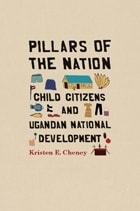
Pillars of the Nation
Child Citizens and Ugandan National DevelopmentKristen E. Cheney
University of Chicago Press, 2007
How can children simultaneously be the most important and least powerful people in a nation? In her innovative ethnography of Ugandan children—the pillars of tomorrow’s Uganda, according to the national youth anthem—Kristen E. Cheney answers this question by exploring the daily contradictions children face as they try to find their places amid the country’s rapidly changing social conditions.
Drawing on the detailed life histories of several children, Cheney shows that children and childhood are being redefined by the desires of a young country struggling to position itself in the international community. She moves between urban schools, music festivals, and war zones to reveal how Ugandans are constructing childhood as an empowering identity for the development of the nation. Moreover, through her analysis of children’s rights ideology, national government strategy, and children’s everyday concerns, Cheney also shows how these young citizens are vitally linked to the global political economy as they navigate the pitfalls and possibilities for a brighter tomorrow.
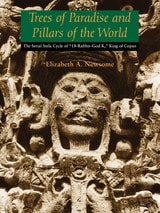
Trees of Paradise and Pillars of the World
The Serial Stelae Cycle of "18-Rabbit–God K," King of CopanBy Elizabeth A. Newsome
University of Texas Press, 2001
Assemblies of rectangular stone pillars, or stelae, fill the plazas and courts of ancient Maya cities throughout the lowlands of southern Mexico, Guatemala, Belize, and western Honduras. Mute testimony to state rituals that linked the king's power to rule with the rhythms and renewal of time, the stelae document the ritual acts of rulers who sacrificed, danced, and experienced visionary ecstasy in connection with celebrations marking the end of major calendrical cycles. The kings' portraits are carved in relief on the main surfaces of the stones, deifying them as incarnations of the mythical trees of life.
Based on a thorough analysis of the imagery and inscriptions of seven stelae erected in the Great Plaza at Copan, Honduras, by the Classic Period ruler "18-Rabbit-God K," this ambitious study argues that stelae were erected not only to support a ruler's temporal claims to power but more importantly to express the fundamental connection in Maya worldview between rulership and the cosmology inherent in their vision of cyclical time. After an overview of the archaeology and history of Copan and the reign and monuments of "18-Rabbit-God K," Elizabeth Newsome interprets the iconography and inscriptions on the stelae, illustrating the way they fulfilled a coordinated vision of the king's ceremonial role in Copan's period-ending rites. She also links their imagery to key Maya concepts about the origin of the universe, expressed in the cosmologies and mythic lore of ancient and living Maya peoples.