Results by title
22 books match the query 'Plains & Prairies'
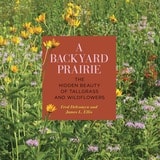
A Backyard Prairie
The Hidden Beauty of Tallgrass and WildflowersFred Delcomyn and James L. Ellis
Southern Illinois University Press, 2021
In 2003 Fred Delcomyn imagined his backyard of two and a half acres, farmed for corn and soybeans for generations, restored to tallgrass prairie. Over the next seventeen years, Delcomyn, with help from his friend James L. Ellis scored, seeded, monitored, reseeded, and burned these acres into prairie. In A Backyard Prairie, they document their journey and reveal the incredible potential of a backyard to travel back to a time before the wild prairie was put into plow rows. It has been said, “Anyone can love the mountains, but it takes a soul to love the prairie.” This book shows us how.
The first book to celebrate a smaller, more private restoration, A Backyard Prairie offers a vivid portrait of what makes a prairie. Delcomyn and Ellis describe selecting and planting seeds, recount the management of a prescribed fire, and capture the prairie’s seasonal parades of colorful flowers in concert with an ever-growing variety of animals, from the minute eastern tailed-blue butterfly to the imperious red-winged blackbird and the reclusive coyote.
This book offers a unique account of their work and their discovery of a real backyard, an inviting island of grass and flowers uncovered and revealed. We often travel miles and miles to find nature larger than ourselves. In this rich account of small prairie restoration, Delcomyn and Ellis encourage the revival of original prairie in our backyards and the patient, beauty-seeking soul sleeping within ourselves.
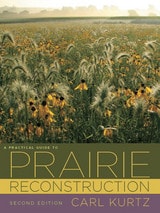
A Practical Guide to Prairie Reconstruction
Second EditionCarl Kurtz
University of Iowa Press, 2013
Kurtz has completely revised every chapter of the first edition, from site selection and harvest to soil preparation, seeding, postplanting mowing, burning, and growth and development. He has written new chapters on establishing prairie in old pastureland and on the judicious use of herbicides, including a table that shows particular problem species, the types of herbicides that are most effective at controlling them, and the timing and method of treatment. New photographs illustrate species and steps, and Kurtz has expanded the question-and-answer section and updated the references and the section on midwestern seed sources and services.
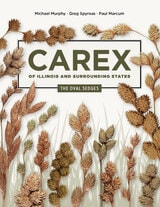
Carex of Illinois and Surrounding States
The Oval SedgesMichael Murphy, Greg Spyreas, and Paul Marcum
University of Illinois Press, 2025
Drawing on the study of thousands of specimens, Carex of Illinois and Surrounding States: The Oval Sedges is an invaluable resource for botanists, ecologists, environmental engineers, and professional and amateur environmentalists interested in a deeper understanding of these essential plants.
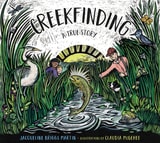
Creekfinding
A True StoryJacqueline Briggs Martin
University of Minnesota Press, 2017
Once upon a time a creek burbled up and tumbled across a prairie valley. It was filled with insects and brook trout that ate them, frogs that chirruped and birds watching for bugs and fish. This is a true story about a man named Mike who went looking for that creek long after it was buried under fields of corn. It is the story of how a creek can be brought back to life, and with it a whole world of nature.
In the words of award-winning author Jacqueline Briggs Martin and the enchanting illustrations by Claudia McGehee, this heartening tale of an ecosystem restored in the Driftless Area of northeast Iowa unfolds in a way that will charm and inform young readers who are drawn to a good mystery, the wonders of nature—and, of course, big earth-moving machines.
Ecological Restoration in the Midwest
Past, Present, and FutureChristian Lenhard and Peter C. Smiley, Jr.
University of Iowa Press, 2018
Most people do not realize it, but the Midwest has been at the forefront of ecological restoration longer than perhaps any other region in the United States, dating back to the 1930s. Because of its industrial history, agricultural productivity, and natural features such as the Great Lakes, the Midwest has always faced a unique set of ecological challenges.
Focusing on six cutting-edge case studies that highlight thirty restoration efforts and research sites throughout the region— Iowa, Indiana, Illinois, Wisconsin, Michigan, Minnesota, and Ohio— editors Christian Lenhart and Peter “Rocky” Smiley Jr. bring together a group of scholars and practitioners to show how midwestern restoration efforts have developed, as well as where they are headed. Whether cleaning up contamination from auto plants in Ohio, or restoring native prairie grasses along the Iowa highway, the contributors uncover a vast network of interested citizens and volunteer groups committed to preserving the region’s environment.
This study, intended for researchers, students, and practitioners, also provides an updated synthesis of restoration theory and practice, and pinpoints emerging issues of importance in the Midwest, such as climate change and the increase in invasive species it will bring to the region. Though focusing exclusively on the Midwest, the contributors demonstrate how these case studies apply to restoration efforts across the globe.
Contributors: Luther Aadland, David P. Benson, Andrew F. Casper, Hua Chen, Joe DiMisa, Steve Glass, Heath M. Hagy, John A. Harrington, Neil Haugerud, Constance Hausman, Michael J. Lemke, Christian Lenhart, Jen Lyndall, Dan Shaw, John A. Shuey, Peter C. Smiley Jr., Daryl Smith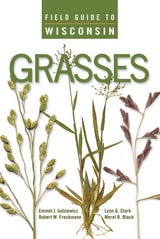
Field Guide to Wisconsin Grasses
Emmet J. Judziewicz , Robert W. Freckmann, Lynn G. Clark, Merel R. Black
University of Wisconsin Press, 2014
The book includes:
• drawings of most species
• chapters on grass morphology and grasses in natural communities
• keys to all species, including an illustrated key to genera
• a glossary of grass terminology.
Grasses in Your Pocket
A Guide to the Prairie Grasses of the Upper MidwestAnna B. Gardner, Michael Hurst, Deborah Lewis, and Lynn G. Clark
University of Iowa Press, 2014
The authors have organized species into groups by their most easily noted field characteristics. Are the flowering heads branched or unbranched? Are the branches dense, narrow, or fingerlike? For each species, its native or exotic status is followed by the months of flowering, abundance, general habitat, height, diagnostic features, geographic range, and, if relevant, threatened or endangered status.
Even amateur naturalists can identify big and little bluestem and prairie dropseed in the field, but both professional and amateur naturalists find certain grasses harder to identify, especially the less common or rare species such as cluster fescue and sand reedgrass. The photographs and descriptions in Grasses in Your Pocket will be an invaluable reference for outdoor expeditions in midwestern grasslands.
Green, Fair, and Prosperous
Paths to Sustainable IowaCharles Connerly
University of Iowa Press, 2020
At the center of what was once the tallgrass prairie, Iowa has stood out for clearing the land and becoming one of the most productive agricultural states in the nation. But its success is challenged by multiple issues including but not limited to a decline in union representation of meatpacking workers; lack of demographic diversity; the advent of job-replacing mechanization; growing income inequality; negative contributions to and effects of climate change and environmental hazards.
To become green, fair, and prosperous, Connerly argues that Iowa must reckon with its past and the fact that its farm economy continues to pollute waterways, while remaining utterly unprepared for climate change. Iowa must recognize ways in which it can bolster its residents’ standard of living and move away from its demographic tradition of whiteness. For development to be sustainable, society must balance it with environmental protection and social justice. Connerly provides a crucial roadmap for how Iowans can move forward and achieve this balance.
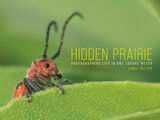
Hidden Prairie
Photographing Life in One Square MeterChris Helzer
University of Iowa Press, 2020
This book is packed with gorgeous full-page close-up photos of prairie plants and animals, interspersed with a dozen short essays that include both ecology and natural history tidbits and enthralling and gently humorous anecdotes about Helzer’s experience staring into a tiny bit of prairie for one year. Helzer writes eloquently about the conservation value of prairies and uses his photos and stories to reinforce a conservation ethic among his readers.
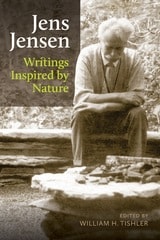
Jens Jensen
Writings Inspired by NatureWilliam H. Tishler
Wisconsin Historical Society Press, 2012
Today, Jensen is perhaps best remembered for establishing The Clearing on Wisconsin's Door County Peninsula. But the outspoken views in his writings - many of which were included in ephemeral planning reports, early newspapers, and now out-of-print journals - are virtually forgotten, with the exception of his two small books. "Jens Jensen: Writings Inspired by Nature" is an anthology of Jensen's most significant yet lesser-known articles, including a "Saturday Evening Post" piece that enabled him to reach the largest audience of his publishing career. The scope of Jensen's thoughts represented in this collection will further solidify his legacy and rightful place alongside conservation leaders such as John Muir and Aldo Leopold.
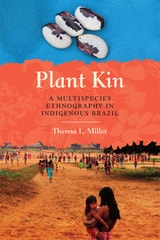
Plant Kin
A Multispecies Ethnography in Indigenous BrazilBy Theresa L. Miller
University of Texas Press, 2019
The Indigenous Canela inhabit a vibrant multispecies community of nearly 3,000 people and over 300 types of cultivated and wild plants living together in Maranhão State in the Brazilian Cerrado (savannah), a biome threatened with deforestation and climate change. In the face of these environmental threats, Canela women and men work to maintain riverbank and forest gardens and care for their growing crops, whom they consider to be, literally, children. This nurturing, loving relationship between people and plants—which offers a thought-provoking model for supporting multispecies survival and well-being throughout the world—is the focus of Plant Kin.
Theresa L. Miller shows how kinship develops between Canela people and plants through intimate, multi-sensory, and embodied relationships. Using an approach she calls “sensory ethnobotany,” Miller explores the Canela bio-sociocultural life-world, including Canela landscape aesthetics, ethnobotanical classification, mythical storytelling, historical and modern-day gardening practices, transmission of ecological knowledge through an education of affection for plant kin, shamanic engagements with plant friends and lovers, and myriad other human-nonhuman experiences. This multispecies ethnography reveals the transformations of Canela human-environment and human-plant engagements over the past two centuries and envisions possible futures for this Indigenous multispecies community as it reckons with the rapid environmental and climatic changes facing the Brazilian Cerrado as the Anthropocene epoch unfolds.
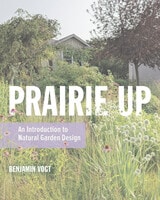
Prairie Up
An Introduction to Natural Garden DesignBenjamin Vogt
University of Illinois Press, 2023
Landscaping with native plants has encouraged gardeners from the Midwest and beyond to embark on a profound scientific, ecological, and emotional partnership with nature. Benjamin Vogt shares his expertise with prairie plants in a richly photographed guide aimed at gardeners and homeowners, making big ideas about design approachable and actionable. Step-by-step blueprints point readers to plant communities that not only support wildlife and please the eye but that rethink traditional planting and maintenance. Additionally, Vogt provides insider information on plant sourcing, garden tools, and working with city ordinances. This book will be an invaluable reference in sustainable garden design for those wanting both beautiful and functional landscapes.
Easy to use and illustrated with over 150 color photos, Prairie Up is a practical guide to artfully reviving diversity and wildness in our communities.
Received Honorable Mention from the AHS Book Awards (American Horticultural Society)
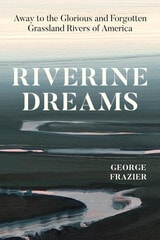
Riverine Dreams
Away to the Glorious and Forgotten Grassland Rivers of AmericaGeorge Frazier
University of Chicago Press, 2025
The North American grasslands that once covered vast areas of the central United States are now our most endangered ecosystems. But not far from any spot in the grasslands is a river. Grassland rivers are as central to the story of prairies as bison and bluestem. Defined as rivers that drain prairie watersheds, these waterways are crucial to plains ecosystems and no less endangered than the grasslands surrounding them. They are also enigmatic: some are restricted by local access laws and others have simply been forgotten. In any given year, fewer than a dozen people might lay eyes on tens of thousands of miles of America’s grassland rivers. But, as environmental writer George Frazier shows, following their twists and turns is one of the best ways to experience the wild essence of the prairies.
Riverine Dreams invites us on a trip along eight grassland rivers—including the Missouri, the Niobrara, and Purgatoire—traversing their environmental and cultural histories and introducing us to the people who study, paddle, and conserve them. This journey takes Frazier across the North American interior—from Montana and Colorado to Nebraska and Missouri—where he uncovers a remarkable movement to celebrate and preserve these natural treasures: nothing less than a grassland river revival.
The first accessible introduction to these waters, Riverine Dreams is a personal exploration of the rivers that are so vital to the health of the prairies.
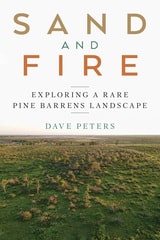
Sand and Fire
Exploring a Rare Pine Barrens LandscapeDave Peters
Wisconsin Historical Society Press, 2023
While many people are familiar with the federally protected St. Croix and Namekagon Rivers of northwestern Wisconsin, few know about the Namekagon Barrens, a rare pine barrens landscape within a few miles of their confluence. A tiny remnant of the millions of barrens acres that once covered the region, the Namekagon Barrens Wildlife Area lies in the heart of the state’s Northwest Sands, a band of pine and oak stretching from Bayfield on Lake Superior to St. Croix Falls on the Wisconsin–Minnesota border. Unfathomable amounts of glacial sand and repeated fires over thousands of years shaped a land of scrub oak and jack pine, blueberries and sweet fern, creating an ideal habitat for wolves and sharp-tailed grouse.
Just as compelling is the land’s rich human history, from Paleo-Indian hunters to Ojibwe berry pickers, loggers to early road builders, and immigrants whose farming efforts failed to the wildlife habitat specialists who manage it today. The book, told in memoir style and featuring color photographs by the author, sets the land’s unusual natural history as the backdrop for a multilayered story about the impact of people on this vulnerable landscape.
Silver winner of the 2023 Midwest Book Award for History
"Peters invites his readers on a journey across time and space, to the glacial formation of the Namekagon Barrens into the present. . . . The book is replete with beautiful photographs, useful maps, and a number of other images that seem to appear on nearly every other page. This book should appeal to a wide public readership while at the same time being a useful primer for academics and researchers."
—Hayden L. Nelson, Environmental History
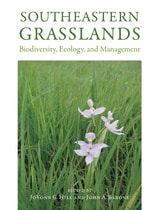
Southeastern Grasslands
Biodiversity, Ecology, and ManagementJoVonn G. Hill and John A. Barone, eds.
University of Alabama Press, 2019
Today the southeastern United States is a largely rural, forested, and agricultural landscape interspersed with urban areas of development. However, two centuries ago it contained hundreds of thousands of acres of natural grasslands that stretched from Florida to Texas. Now more than 99 percent of these prairies, glades, and savannas have been plowed up or paved over, lost to agriculture, urban growth, and cattle ranching. The few remaining grassland sites are complex ecosystems, home to hundreds of distinct plant and animal species, and worthy of study.
Southeastern Grasslands: Biodiversity, Ecology, and Management brings together the latest research on southeastern prairie systems and species, provides a complete picture of an increasingly rare biome, and offers solutions to many conservation biology queries. Editors JoVonn G. Hill and John A. Barone have gathered renowned experts in their fields from across the region who address questions related to the diversity, ecology, and management of southeastern grasslands, along with discussions of how to restore sites that have been damaged by human activity.
Over the last twenty years, both researchers and the public have become more interested in the grasslands of the Southeast. This volume builds on the growing knowledge base of these remarkable ecosystems with the goal of increasing appreciation for them and stimulating further study of their biota and ecology. Topics such as the historical distribution of grasslands in the South, the plants and animals that inhabit them, as well as assessments of several techniques used in their conservation and management are covered in-depth. Written with a broad audience in mind, this book will serve as a valuable introduction and reference for nature enthusiasts, scientists, and land managers.
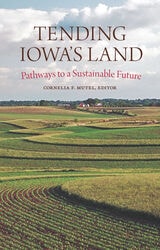
Tending Iowa’s Land
Pathways to a Sustainable FutureCornelia F. Mutel
University of Iowa Press, 2022
In the last 200 years, Iowa’s prairies and other wildlands have been transformed into vast agricultural fields. This massive conversion has provided us with food, fiber, and fuel in abundance. But it has also robbed Iowa’s land of its native resilience and created the environmental problems that today challenge our everyday lives: polluted waters, increasing floods, loss and degradation of rich prairie topsoil, compromised natural systems, and now climate change.
In a straightforward, friendly style, Iowa’s premier scientists and experts consider what has happened to our land and outline viable solutions that benefit agriculture as well as the state’s human and wild residents.
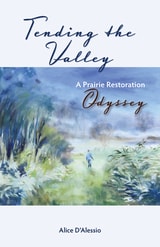
Tending the Valley
A Prairie Restoration OdysseyAlice D'Alessio
Wisconsin Historical Society Press, 2020
In Tending the Valley, Alice chronicles their efforts to return the land to its natural prairie state and to manage their oak and pine woods. Along the way they joined the land restoration movement, became involved in a number of stewardship groups, and discovered the depths of dedication and toil required to bring their dream to fruition. With hard-earned experience and the evocative language of a poet, D’Alessio shares her personal triumphs and setbacks as a prairie steward, along with a profound love for the land and respect for the natural history of the Driftless.

The Gardener's Guide to Prairie Plants
Neil Diboll and Hilary Cox
University of Chicago Press, 2023
The Gardener’s Guide to Prairie Plants is the one-stop compendium for all gardeners aspiring to use native prairie plants in their gardens. Neil Diboll and Hilary Cox—two renowned prairie gardeners—compile more than four decades’ worth of research to offer a wide-ranging and definitive reference for starting and maintaining prairie and meadow gardens and restorations. Alongside detailed synopses of plant life cycles, meticulous range maps, and sweeping overviews of natural history, Diboll and Cox also include photographs of 148 prairie plants in every stage of development, from seedling to seedhead. North America’s grasslands once stretched from the Blue Ridge to the Rocky Mountains, and from Texas to Manitoba, blanketing the mid-continent with ecologically important, garden-worthy, native species. This book provides all the inspiration and information necessary for eager native planters from across the country to welcome these plants back to their landscapes. The Gardener’s Guide to Prairie Plants is a must-have reference for gardeners, restorationists, and every flora fan with a passion for native plants, prairies and meadows.
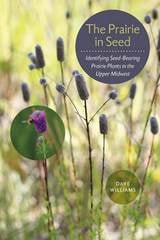
The Prairie in Seed
Identifying Seed-Bearing Prairie Plants in the Upper MidwestDave Williams
University of Iowa Press, 2016
As interest in these wildflowers and grasses has grown, so has demand for better resources to identify the hundreds of species that make up the native prairie. In The Prairie in Seed, Dave Williams shows us how to identify wildflowers when they are out of bloom and, in particular, how to harvest their seeds. Without the flower color and shape as guides, it can be difficult to identify prairie plants. Imagine trying to distinguish between a simple prairie sunflower and an ox-eye sunflower with no flowers to look at!
In this richly illustrated guide, Williams offers dormant plant identification information, seed descriptions, and advice on seed harvesting and cleaning for seventy-three of the most common wildflowers found in the tallgrass prairie. He includes photographs and descriptions of the plants in bloom and in seed to assist in finding them when you are ready to harvest. Each species description explains where the seeds are located on the plant, when seed ripening begins, and how many seeds each species produces, along with a photograph and approximate measurements of the actual seed. Finally, this guide provides assistance on how and when to hand-harvest seeds for each species, as well as some simple tips on seed cleaning.
An indispensable guide for anyone involved in prairie restoration or conservation, this book is the perfect complement to Williams’s The Tallgrass Prairie Center Guide to Seed and Seedling Identification in the Upper Midwest.
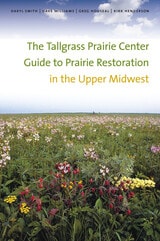
The Tallgrass Prairie Center Guide to Prairie Restoration in the Upper Midwest
Daryl Smith
University of Iowa Press, 2010
Although less than 3 percent of the original vast landscape survives, the tallgrass prairie remains a national treasure, glowing with a vast array of colorful wildflowers in spring and summer, enriched by the warm reds and browns of grasses in fall and winter. This comprehensive manual, crafted by the staff of the Tallgrass Prairie Center at the University of Northern Iowa, will be an essential companion for everyone dedicated to planning, developing, and maintaining all types of prairie restorations and reconstructions in the tallgrass prairie region of Iowa, northern Illinois, northwestern Indiana, southwestern Wisconsin, southwestern Minnesota, eastern South Dakota, eastern Nebraska, northwestern Missouri, and northeastern Kansas.
Focusing on conservation plantings, prairie recovery, native landscaping in yards and at schools, roadside plantings, and pasture renovations, the authors—who collectively have more than a hundred years of experience with prairie restoration—have created a manual that will be particularly useful to landowners, conservation agency personnel, ecosystem managers, native-seeding contractors, prairie enthusiasts, teachers, and roadside managers. A wealth of color and black-and-white photographs taken in the field as well as checklists and tables support the detailed text, which also includes useful online and print sources and references, a glossary, and lists of common and scientific names of all plant species discussed.
The text is divided into five parts. Part I, Reconstruction Planning, provides an overall summary of the entire process, information about securing good-quality seed, and the design of seed mixes. In Part II, Implementing Reconstruction, the authors consider ways to prepare and seed the site, manage the site in its first growing season, identify seedlings, and evaluate success. Part III, Prairie Restoration and Management, deals with identifying and assessing prairie remnants, working toward a predetermined restoration goal, and managing restored prairie remnants and completed reconstructions, including prescribed burning. Chapters in Part IV, Special Cases, discuss the uses of prairie in public spaces, roadside vegetation management, and landscaping on a smaller scale in yards and outdoor classrooms. Part V, Native Seed Production, describes the processes of harvesting, drying, cleaning, and storing native seed as well as propagating and transplanting native seedlings.
Although we cannot recreate the original blacksoil prairie, tallgrass prairie restoration offers the opportunity to reverse environmental damage and provide for the recovery of vital aspects of this lost ecosystem. Anyone in the Upper Midwest who wishes to improve water quality, reduce flood damage, support species diversity, preserve animal habitats, and enjoy the changing panorama of grasses and wildflowers will benefit from the clear, careful text and copious illustrations in this authoritative guide.
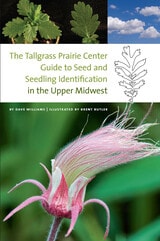
The Tallgrass Prairie Center Guide to Seed and Seedling Identification in the Upper Midwest
Dave Williams
University of Iowa Press, 2010
Settlers crossing the tallgrass prairie in the early 1800s were greeted by a seemingly endless landscape of wildflowers and grasses, one of the most diverse ecosystems on our planet. Today, although the tallgrass prairie has been reduced to a tiny percentage of its former expanse, people are working to restore and reconstruct prairie communities. This lavishly illustrated guide to seeds and seedlings, crafted by Tallgrass Prairie Center botanist Dave Williams and illustrator Brent Butler, will insure that everyone from urban gardeners to grassland managers can properly identify and germinate seventy-two species of tallgrass wildflowers and grasses in eastern North Dakota, eastern South Dakota, southwestern Minnesota, southwestern Wisconsin, northern Illinois, northwestern Indiana, Iowa, eastern Nebraska, eastern Kansas, northwestern Missouri, and eastern Oklahoma.
Williams has created a brilliant, nearly foolproof system of identification and verification. Two primary keys lead to eleven secondary keys that link to characteristic groups of tallgrass plants: seven groups for wildflowers and four groups for grasses. To identify a seedling, use the primary key to discover its place in the secondary key, then turn to that characteristic group to find your seedling. Circles on each full seedling photograph correspond to close-up photographs; triangles on these close-ups illustrate information in the text to further pinpoint identification. Drawings of leaves illuminate exact identification, and enlarged photographs of each seed provide yet another way to confirm identification.
Thousands of seeds were sprouted in the Tallgrass Prairie Center’s greenhouse to provide seedlings close in size and development to those grown in the field near the end of their first season; research and photography took place over four years. Williams’s text for each species includes a thorough description, a comparison of similar species, and guidance for germination and growth. A complete glossary supports the text, which is concise but detailed enough to be accessible to beginning prairie enthusiasts.
Anyone in the Upper Midwest who wishes to preserve the native vegetation of prairie remnants or reconstruct a tallgrass prairie of whatever size—from home gardens to schoolyards to roadsides to large acreages—will benefit from the hundreds of photographs and drawings and the precise text in this meticulously prepared guide.
The Tallgrass Prairie
An IntroductionCindy Crosby
Northwestern University Press, 2017
Like a walking tour with a literate friend and expert, Cindy Crosby's Tallgrass Prairie prepares travelers and armchair travelers for an adventure in the tallgrass. Crosby's engaging gateway assumes no prior knowledge of tallgrass landscapes, and she acquaints readers with the native plants they’ll discover there. She demystifies botanic plant names and offers engaging mnemonic tips for mastering Latin names with verve and confidence. Visitors to the prairie will learn to identify native plants using the five senses to discover what makes each plant unique or memorable. In the summer, for example, the unusual square stem of cup plant, Silphium perfoliatum, sets it apart from its neighbors. And its distinctive leaf cups water after the rain.
A gifted raconteur, Crosby tells stories about how humankind has adopted the prairie as a grocery, an apothecary, and even as a shop for love charms. Rounding out this exceptional introduction are suggestions for experiencing the American prairie, including journaling techniques and sensory experiences, tips for preparing for a hike in tallgrass landscapes, ways to integrate native prairie plants into home landscapes (without upsetting the neighbors), and a wealth of resources for further exploration.
An instant classic in the tradition of American naturalist writing, The Tallgrass Prairie will delight not only scholars and policy makers, but guests to tallgrass prairie preserves, outdoors enthusiasts and gardeners, and readers interested in American ecosystems and native plants.