Results by title

21 books match the query 'Pluralism'

cover of Around the Day in Eighty Worlds: Politics of the Pluriverse

Around the Day in Eighty Worlds

Politics of the Pluriverse

Martin Savransky

Duke University Press, 2021
In Around the Day in Eighty Worlds Martin Savransky calls for a radical politics of the pluriverse amid the ongoing devastation of the present. Responding to an epoch marked by the history of colonialism and ecological devastation, Savransky draws on the pragmatic pluralism of William James to develop what Savransky calls a “pluralistic realism”—an understanding of the world as simultaneously one and many, ongoing and unfinished, underway and yet to be made. Savransky explores the radical multifariousness of reality by weaving key aspects of James's thought together with divergent worlds and stories: of Magellan's circumnavigation, sorcery in Mozambique, God's felt presence among a group of evangelicals in California, visible spirits in Zambia, and ghosts in the wake of the 2011 tsunami in Japan. Throughout, he experiments with these storied worlds to dramatize new ways of approaching the politics of radical difference and the possibility of transforming reality. By exploring and constructing relations between James's pluralism and the ontological turn in anthropology, Savransky offers a new conceptualization of the pluriverse that fosters modes of thinking and living otherwise.
[more]
cover of Critical Understanding: The Powers and Limits of Pluralism

Critical Understanding

The Powers and Limits of Pluralism

Wayne C. Booth

University of Chicago Press, 1979

Critics will always disagree, but, maintains Wayne Booth, their disagreement need not result in critical chaos. In Critical Understanding, Booth argues for a reasoned pluralism—a criticism more various and resourceful than can be caught in any one critic's net. He relates three noted pluralists—Ronald Crane, Kenneth Burke, and M. H. Abrams—to various currently popular critical approaches. Throughout, Booth tests the abstractions of metacriticism against particular literary works, devoting a substantial portion of his discussion to works by W. H. Auden, Henry James, Oliver Goldsmith, and Anatole France.
[more]
cover of In Defense of Politics in Public Administration: A Value Pluralist Perspective

In Defense of Politics in Public Administration

A Value Pluralist Perspective

Michael W. Spicer

University of Alabama Press, 2009

Where values collide, politics guides the way.

Scholars of public administration have historically too often been disdainful towards politics in the field, viewing political activities and interests as opportunities for corruption, mismanagement, and skewed priorities. Supporters of this anti-political stance have become even more strident in recent years, many of them advancing scientific models for the study and practice of public administration and governance.

Michael Spicer argues that politics deserves to be defended as a vital facet of public administration on the grounds that it can promote moral conduct in government and in public administration, principally by bringing to the foreground the role of values in administrative practice. Politics can facilitate the resolution of conflicts that naturally arise from competing values, or conceptions of the good, while minimizing the use of force or violence. Drawing on the writings of Isaiah Berlin, Bernard Crick, and Stuart Hampshire, In Defense of Politics in Public Administration argues that value conflict is an integral part of our moral experience, both in making our own moral choices and in dealing with those whose values conflict with our own. This book is a spirited declaration of principles and a timely contribution to a dialogue that is redefining public administration, both in theory and in practice.
[more]
cover of Media Freedom and Pluralism: Media Policy Challenges in the Enlarged Europe

Media Freedom and Pluralism

Media Policy Challenges in the Enlarged Europe

Beata Klimkiewicz

Central European University Press, 2010
Addresses a critical analysis of major media policies in the European Union and Council of Europe at the period of profound changes affecting both media environments and use, as well as the logic of media policy-making and reconfiguration of traditional regulatory models. The analytical problem-related approach seems to better reflect a media policy process as an interrelated part of European integration, formation of European citizenship, and exercise of communication rights within the European communicative space. The question of normative expectations is to be compared in this case with media policy rationales, mechanisms of implementation (transposing rules from EU to national levels), and outcomes.
[more]
cover of Our America: Nativism, Modernism, and Pluralism

Our America

Nativism, Modernism, and Pluralism

Walter Benn Michaels

Duke University Press, 1997

Arguing that the contemporary commitment to the importance of cultural identity has renovated rather than replaced an earlier commitment to racial identity, Walter Benn Michaels asserts that the idea of culture, far from constituting a challenge to racism, is actually a form of racism. Our America offers both a provocative reinterpretation of the role of identity in modernism and a sustained critique of the role of identity in postmodernism.
“We have a great desire to be supremely American,” Calvin Coolidge wrote in 1924. That desire, Michaels tells us, is at the very heart of American modernism, giving form and substance to a cultural movement that would in turn redefine America’s cultural and collective identity—ultimately along racial lines. A provocative reinterpretation of American modernism, Our America also offers a new way of understanding current debates over the meaning of race, identity, multiculturalism, and pluralism.
Michaels contends that the aesthetic movement of modernism and the social movement of nativism came together in the 1920s in their commitment to resolve the meaning of identity—linguistic, national, cultural, and racial. Just as the Johnson Immigration Act of 1924, which excluded aliens, and the Indian Citizenship Act of the same year, which honored the truly native, reconceptualized national identity, so the major texts of American writers such as Cather, Faulkner, Hurston, and Williams reinvented identity as an object of pathos—something that can be lost or found, defended or betrayed. Our America is both a history and a critique of this invention, tracing its development from the white supremacism of the Progressive period through the cultural pluralism of the Twenties. Michaels’s sustained rereading of the texts of the period—the canonical, the popular, and the less familiar—exposes recurring concerns such as the reconception of the image of the Indian as a symbol of racial purity and national origins, the relation between World War I and race, contradictory appeals to the family as a model for the nation, and anxieties about reproduction that subliminally tie whiteness and national identity to incest, sterility, and impotence.
[more]
cover of Philosophical Topics 41.2: Envisioning Plurality: Feminist Perspectives on Pluralism in Ethics, Politics, and Social Theory

Philosophical Topics 41.2

Envisioning Plurality: Feminist Perspectives on Pluralism in Ethics, Politics, and Social Theory

Jean Keller

University of Arkansas Press, 2015

Contents:
Why a Feminist Volume on Pluralism? – Bonnie Mann and Jean Keller
PLURALISM ’S FAILURES AND CERTAIN CONDITIONS FOR THE POSSIBILITY OF SUCCESS
Indigenous Agencies and the Pluralism of Empire – Scott L. Pratt
What Would Philosophic Pluralism Look Like?: True Dialogue, Epistemic Credibility, Rational Parity, and Death in the University – Jennifer Lisa Vest
Asking Too Much? Civility vs. Pluralism – Alison Reiheld
Attending to Others: Simone Weil and Epistemic Pluralism – Shari Stone-Mediatore
FEMINIST PLURALISM AND RELIGIOUS WORLDVIEWS
Islamic Feminisms and Freedom – Allison Weir
Is an “Islamic Feminism” Possible?: Gender Politics in the Contemporary Islamic Republic of Iran – Paria Gashtili
Beyond the Modern/Religious Dichotomy: The Veil and Feminist Solidarity in Contemporary Turkey – Fulden Ibrahimhakkioglu
Philosophy, Religion, Race, and Queerness: A Question of Accommodation or Access – Kim Q. Hall
FEMINIST PLURALISM AND FUNDAMENTAL VALUES
Value Pluralism, Intuitions, and Reflective Equilibrium – Lisa Tessman
Radical-cum-Relation: Bridging Feminist Ethics and Native Individual Autonomy – Shay Welch
[more]
cover of Pluralism

Pluralism

William E. Connolly

Duke University Press, 2005

Over the past two decades, the renowned political theorist William E. Connolly has developed a powerful theory of pluralism as the basis of a territorial politics. In this concise volume, Connolly launches a new defense of pluralism, contending that it has a renewed relevance in light of pressing global and national concerns, including the war in Iraq, the movement for a Palestinian state, and the fight for gay and lesbian rights. Connolly contends that deep, multidimensional pluralism is the best way to promote justice and inclusion without violence. He advocates a deep pluralism—in contrast to shallow, secular pluralism—that helps to create space for different groups to bring their religious faiths into the public realm. This form of deep pluralism extends far beyond faith, encompassing multiple dimensions of social and personal lives, including household organization and sexuality.

Connolly looks at pluralism not only in light of faith but also in relation to evil, ethics, relativism, globalization, and sovereignty. In the process, he engages many writers and theorists—among them, Spinoza, William James, Henri Bergson, Marcel Proust, Gilles Deleuze, Giorgio Agamben, Talal Asad, Michael Hardt, and Antonio Negri. Pluralism is the first book in which Connolly explains the relationship between pluralism and the experience of time, and he offers readings of several films that address how time is understood, including Time Code, Far from Heaven, Waking Life, and The Maltese Falcon. In this necessary book Connolly brings a compelling, accessible philosophical critique together with his personal commitment to an inclusive political agenda to suggest how we might—and why we must—cultivate pluralism within both society and ourselves.

[more]
cover of Pluralism and Progressives: Hull House and the New Immigrants, 1890-1919

Pluralism and Progressives

Hull House and the New Immigrants, 1890-1919

Rivka Shpak Lissak

University of Chicago Press, 1989

The settlement house movement, launched at the end of the nineteenth century by men and women of the upper middle class, began as an attempt to understand and improve the social conditions of the working class. It gradually came to focus on the "new immigrants"—mainly Italians, Slavs, Greeks, and Jews—who figured so prominently in this changing working class. Hull House, one of the first and best-known settlement houses in the United States, was founded in September 1889 on Chicago's West Side by Jane Addams and Ellen G. Starr. In a major new study of this famous institution and its place in the movement, Rivka Shpak Lissak reassesses the impact of Hull House on the nationwide debate over the place of immigrants in American society.
[more]
cover of Pluralism in Theory and Practice: Richard McKeon and American Philosophy

Pluralism in Theory and Practice

Richard McKeon and American Philosophy

Eugene Garver

Vanderbilt University Press, 2000

Unknown to many, unintelligible to some, Richard McKeon (1900-1985) is considered by those familiar with his work to be among the most important of all twentieth-century philosophers. In a career that spanned seven decades, McKeon published eleven books and more than 150 articles, inspired and intimidated generations of students (among them Richard Rorty, Wayne Booth, and Paul Goodman), and received most of the honors available to an American philosopher. As a teacher and administrator at the University of Chicago, he was instrumental in founding its general education program and initiating the first interdisciplinary program in the humanities. His achievements outside the university included a major part in developing the first cultural and philosophical projects of UNESCO. Fearsome in the classroom, he is renowned for his scholarly brilliance; the problems he thought important, however, did not occupy his colleagues' attention. Ironically, they are now the very issues that present-day philosophers grapple with, namely pluralism, the relationship of philosophy to the history of philosophy, rhetoric and philosophy, the diversity of culture, and the problems of communication and community. Pluralism in Theory and Practice not only brings McKeon to the attention of contemporary philosophers and students; it also puts his theories into practice. Some of the essays explicate aspects of McKeon's thought or situate him in the context of American intellectual and practical engagement. Others take the concerns he raised as starting points for inquiries into urgent contemporary problems, or, in some cases, for reexamining McKeon's work as fertile ground for shaping the direction of new investigation.
[more]
cover of Press Freedom and Pluralism in Europe: Concepts and Conditions

Press Freedom and Pluralism in Europe

Concepts and Conditions

Edited by Andrea Czepek, Melanie Hellwig and Eva Nowak

Intellect Books, 2009

We assume that freedom of the press is guaranteed in a democratic society. But, in Press Freedom and Pluralism in Europe, researchers from twelve countries reveal that it is all too frequently a freedom that is taken for granted. In turn, they examine media systems throughout Europe and report on their conditions for independence and pluralism. Contributors to this volume discuss press freedom and diversity through several case studies involving such countries as the Baltics, Bulgaria, Poland, Romania, Finland, France, Germany, Austria, Italy, Spain, and the United Kingdom. This volume provides a critical basis from which to evaluate media freedom in the United States, and will consequently be of interest to scholars of media and communication studies.

[more]
cover of Republic on the Wire: Cable Television, Pluralism, and the Politics of New Technologies, 1948-1984

Republic on the Wire

Cable Television, Pluralism, and the Politics of New Technologies, 1948-1984

McMurria, John

Rutgers University Press, 2017
The history of cable television in America is far older than networks like MTV, ESPN, and HBO, which are so familiar to us today. Tracing the origins of cable TV back to the late 1940s, media scholar John McMurria also locates the roots of many current debates about premium television, cultural elitism, minority programming, content restriction, and corporate ownership. 
 
Republic on the Wire takes us back to the pivotal years in which media regulators and members of the viewing public presciently weighed the potential benefits and risks of a two-tiered television system, split between free broadcasts and pay cable service. Digging into rare archives, McMurria reconstructs the arguments of policymakers, whose often sincere advocacy for the public benefits of cable television were fueled by cultural elitism and the priority to maintain order during a period of urban Black rebellions. He also tells the story of the people of color, rural residents, women’s groups, veterans, seniors, and low-income viewers who challenged this reasoning and demanded an equal say over the future of television. 
 
By excavating this early cable history, and placing equality at the center of our understanding of media democracy, Republic on the Wire is a real eye-opener as it develops a new methodology for studying media policy in the past and present.  


[more]
cover of Rhetoric and Religion in the Twenty-First Century: Pluralism in a Postsecular Age

Rhetoric and Religion in the Twenty-First Century

Pluralism in a Postsecular Age

Edited by Michael-John DePalma, Paul Lynch, and Jeff Ringer

Southern Illinois University Press, 2023

Expanding the scope of religious rhetoric  

Over the past twenty-five years, the intersection of rhetoric and religion has become one of the most dynamic areas of inquiry in rhetoric and writing studies. One of few volumes to include multiple traditions in one conversation, Rhetoric and Religion in the Twenty-First Century engages with religious discourses and issues that continue to shape public life in the United States.  

This collection of essays centralizes the study of religious persuasion and pluralism, considers religion’s place in U.S. society, and expands the study of rhetoric and religion in generative ways. The volume showcases a wide range of religious traditions and challenges the very concepts of rhetoric and religion. The book’s eight essays explore African American, Buddhist, Christian, Indigenous, Islamic, and Jewish rhetoric and discuss the intersection of religion with feminism, race, and queer rhetoric—along with offering reflections on how to approach religious traditions through research and teaching. In addition, the volume includes seven short interludes in which some of the field’s most accomplished scholars recount their experiences exploring religious rhetorics and invite readers to engage these exigent lines of inquiry.  

By featuring these diverse religious perspectives, Rhetoric and Religion in the Twenty-First Century complicates the field’s emphasis on Western, Hellenistic, and Christian ideologies. The collection also offers teachers of writing and rhetoric a range of valuable approaches for preparing today’s students for public citizenship in our religiously diverse global context.  
[more]
cover of Scientific Pluralism

Scientific Pluralism

Stephen H. Kellert

University of Minnesota Press, 2006
Scientific pluralism is an issue at the forefront of philosophy of science. This landmark work addresses the question, Can pluralism be advanced as a general, philosophical interpretation of science? Scientific Pluralism demonstrates the viability of the view that some phenomena require multiple accounts. Pluralists observe that scientists present various—sometimes even incompatible—models of the world and argue that this is due to the complexity of the world and representational limitations. Including investigations in biology, physics, economics, psychology, and mathematics, this work provides an empirical basis for a consistent stance on pluralism and makes the case that it should change the ways that philosophers, historians, and social scientists analyze scientific knowledge.Contributors: John Bell, U of Western Ontario; Michael Dickson, U of South Carolina; Carla Fehr, Iowa State U; Ronald N. Giere, U of Minnesota; Geoffrey Hellman, U of Minnesota; Alan Richardson, U of British Columbia; C. Wade Savage, U of Minnesota; Esther-Mirjam Sent, U of Nijmegen.Stephen H. Kellert is professor of philosophy at Hamline University and a fellow of the Minnesota Center for Philosophy of Science. Helen E. Longino is professor of philosophy at Stanford University. C. Kenneth Waters is associate professor of philosophy and director of the Minnesota Center for Philosophy of Science.
[more]
cover of Space and Pluralism: Can Contemporary Cities Be Places of Tolerance?

Space and Pluralism

Can Contemporary Cities Be Places of Tolerance?

Stefano Moroni

Central European University Press, 2016

This book addresses the social, functional and symbolic dimensions of urban space in today's world. The twelve essays are grouped in three parts, ranging from a conceptual framework to case descriptions rich with illustrations. They provide a valuable service in exploring the nature and significance of social space and particular aspects of its contemporary distribution and contestation. The book addresses a topic that is intrinsically interdisciplinary. Questions of space are examined from a rich variety of disciplinary perspectives in a welcome range from urban planning to political philosophy, shedding a good deal of light in the process. The issues in focus include the dichotomies of public and private space, discussion of rights and duties with regard to the use of space, or conflicts over its allocation. Well reasoned and presented discussion is offered from the perspective of basic values and rights. The policy issue of institutional recognition of the specifics of (minority community) identity is raised in opposition to abstract distributive accounts of justice.
[more]
cover of The Architectonics of Meaning: Foundations of the New Pluralism

The Architectonics of Meaning

Foundations of the New Pluralism

Walter Watson

University of Chicago Press, 1993

The Architectonics of Meaning is a lucid demonstration of the purposes, methods, and implications of philosophical semantics that both supports and builds on Richard McKeon's and other noted pluralists' convictions that multiple philosophical approaches are viable. Watson ingeniously explores ways to systematize these approaches, and the result is a well-structured instrument for understanding texts. This book exemplifies both general and particular aspects of systematic pluralism, reorienting our understanding of the realms of knowing, doing, and making.
[more]
cover of The Boundaries of Pluralism: The World of the University of Michigan’s Jewish Students from 1897 to 1945

The Boundaries of Pluralism

The World of the University of Michigan’s Jewish Students from 1897 to 1945

Andrei S. Markovits & Kenneth Garner

Michigan Publishing Services, 2020

This is a highly original and intriguing book which should attract a good deal of interest. It is based on exhaustive, quite remarkable archival research and includes a sophisticated prosopographical analysis of Jewish enrollment over several decades. Most intriguing, the book unearths hitherto unknown information about the growing influence on University policy of the famously anti-Semitic Henry Ford and figures in Ford’s orbit. Despite the contentious nature of their research topic, the authors maintain a consistently detached, non-judgmental, yet intellectually incisive perspective. The result is an entirely credible, well written, often quite exciting chronicle of a minority, most of whose families had been in America for only one or two generations, striving to define themselves, and the response of the Gentile community to those aspirations. Given the centrality of immigration politics in the US and Europe at the present moment, this story has wide contemporary relevance.
Victor Lieberman,
 Raoul Wallenberg Distinguished University Professor of History, 
University of Michigan
 
This is a deeply researched and strikingly original study of Jewish students at an important place in an important time. Its focus on both the lives of the students and their institutional situation yields deep insight and new, subtle understandings of the complicated interactions of Jewish identity and anti-semitism in a state which, in those years, was the virtual capital of the latter and at a university which struggled with both. Required reading for anyone interested in this topic.
Terrence J. McDonald,
 Arthur F. Thurnau Professor, University of Michigan,
 and Director, Bentley Historical Library
[more]
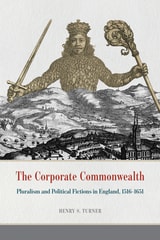
cover of The Corporate Commonwealth: Pluralism and Political Fictions in England, 1516-1651

The Corporate Commonwealth

Pluralism and Political Fictions in England, 1516-1651

Henry S. Turner

University of Chicago Press, 2016

The Corporate Commonwealth traces the evolution of corporations during the English Renaissance and explores the many types of corporations that once flourished. Along the way, the book offers important insights into our own definitions of fiction, politics, and value.    

Henry S. Turner uses the resources of economic and political history, literary analysis, and political philosophy to demonstrate how a number of English institutions with corporate associations—including universities, guilds, towns and cities, and religious groups—were gradually narrowed to the commercial, for-profit corporation we know today, and how the joint-stock corporation, in turn, became both a template for the modern state and a political force that the state could no longer contain. Through innovative readings of works by Thomas More, William Shakespeare, Francis Bacon, and Thomas Hobbes, among others, Turner tracks the corporation from the courts to the stage, from commonwealth to colony, and from the object of utopian fiction to the subject of tragic violence. A provocative look at the corporation’s peculiar character as both an institution and a person, The Corporate Commonwealth uses the past to suggest ways in which today’s corporations might be refashioned into a source of progressive and collective public action.
[more]
cover of The Global Spanish Empire: Five Hundred Years of Place Making and Pluralism

The Global Spanish Empire

Five Hundred Years of Place Making and Pluralism

Edited by Christine D. Beaule and John G. Douglass

University of Arizona Press, 2020

The Spanish Empire was a complex web of places and peoples. Through an expansive range of essays that look at Africa, the Americas, Asia, the Caribbean, and the Pacific, this volume brings a broad range of regions into conversation. The contributors focus on nuanced, comparative exploration of the processes and practices of creating, maintaining, and transforming cultural place making within pluralistic Spanish colonial communities.

The Global Spanish Empire argues that patterned variability is necessary in reconstructing Indigenous cultural persistence in colonial settings. The volume’s eleven case studies include regions often neglected in the archaeology of Spanish colonialism. The time span under investigation is extensive as well, transcending the entirety of the Spanish Empire, from early impacts in West Africa to Texas during the 1800s. The contributors examine the making of a social place within a social or physical landscape. They discuss the appearance of hybrid material culture, the incorporation of foreign goods into local material traditions, the continuation of local traditions, and archaeological evidence of opportunistic social climbing. In some cases, these changes in material culture are ways to maintain aspects of traditional culture rather than signifiers of new cultural practices.

The Global Spanish Empire tackles broad questions about Indigenous cultural persistence, pluralism, and place making using a global comparative perspective grounded in the shared experience of Spanish colonialism.

Contributors

Stephen Acabado
Grace Barretto-Tesoro
James M. Bayman
Christine D. Beaule
Christopher R. DeCorse
Boyd M. Dixon
John G. Douglass
William R. Fowler
Martin Gibbs
Corinne L. Hofman
Hannah G. Hoover
Stacie M. King
Kevin Lane
Laura Matthew
Sandra Montón-Subías
Natalia Moragas Segura
Michelle M. Pigott
Christopher B. Rodning
David Roe
Roberto Valcárcel Rojas
Steve A. Tomka
Jorge Ulloa Hung
Juliet Wiersema
[more]
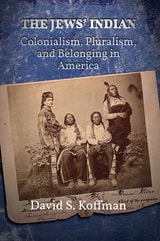
cover of The Jews’ Indian: Colonialism, Pluralism, and Belonging in America

The Jews’ Indian

Colonialism, Pluralism, and Belonging in America

Koffman, David S

Rutgers University Press, 2019

Winner of the 2020 Jordan Schnitzer Book Award in Social Science, Anthropology, and Folklore​
Honorable Mention, 2021 Saul Viener Book Prize​

The Jews’ Indian investigates the history of American Jewish relationships with Native Americans, both in the realm of cultural imagination and in face-to-face encounters. These two groups’ exchanges were numerous and diverse, proving at times harmonious when Jews’ and Natives people’s economic and social interests aligned, but discordant and fraught at other times. American Jews could be as exploitative of Native cultural, social, and political issues as other American settlers, and historian David Koffman argues that these interactions both unsettle and historicize the often triumphant consensus history of American Jewish life. Focusing on the ways Jewish class mobility and civic belonging were wrapped up in the dynamics of power and myth making that so severely impacted Native Americans, this books is provocative and timely, the first history to critically analyze Jewish participation in, and Jews’ grappling with the legacies of Native American history and the colonial project upon which America rests.

[more]
cover of The Protean Self: Human Resilience in an Age of Fragmentation

The Protean Self

Human Resilience in an Age of Fragmentation

Robert Jay Lifton

University of Chicago Press, 1999

"We are becoming fluid and many-sided. Without quite realizing it, we have been evolving a sense of self appropriate to the restlessness and flux of our time. This mode of being differs radically from that of the past, and enables us to engage in continuous exploration and personal experiment. I have named it the 'protean self,' after Proteus, the Greek sea god of many forms."—from The Protean Self
 
[more]
cover of Traveling Home: Sacred Harp Singing and American Pluralism

Traveling Home

Sacred Harp Singing and American Pluralism

Kiri Miller

University of Illinois Press, 2010

A compelling account of contemporary Sacred Harp singing, Traveling Home describes how this vibrant musical tradition brings together Americans of widely divergent religious and political beliefs. Named after the most popular of the nineteenth-century shape-note tunebooks--which employed an innovative notation system to teach singers to read music--Sacred Harp singing has been part of rural Southern life for more than 150 years.
 
In the wake of the folk revival of the 1950s and '60s, this participatory musical tradition attracted new singers from all over America. All-day "singings" from The Sacred Harp now take place across the country, creating a diverse and far-flung musical community. Meanwhile, the advent of internet discussion boards and increasing circulation of singer-produced recordings have changed the nature of traditional transmission and sharpened debates about Sacred Harp as an "authentic" form of southern musical expression. Blending historical scholarship with wide-ranging fieldwork, Kiri Miller presents an engagingly written study of a musical movement that some have christened "a quintessential expression of American democracy."
 
[more]