Results by title
16 books match the query 'Police-community relations'

A Police State
Politics and Public Safety in Minneapolis, 1945–2020Michael J. Lansing
University of Chicago Press, 2027
How the police in Minneapolis used electoral politics to accrue power and avoid accountability.
The 2020 murder of George Floyd made Minneapolis synonymous with unjust policing and the pain and outrage left in its wake. The city became ground zero for police reform in the United States—even though liberal politicians in Minnesota had promised, and delivered, police reforms for decades. Centered on professionalization, these changes inadvertently exacerbated injustice. Better training and higher standards broadened the influence of the police, who then claimed expertise in public safety. They deployed it to bargain for governmental support, even when they treated residents unfairly. Though Black, Indigenous, and gay residents resisted, the political power amassed by the police rendered real change almost impossible.
In A Police State, historian and fourth-generation Minneapolis resident Michael J. Lansing chronicles how the police became a political force in one of the nation’s most liberal cities. Lansing shows how, in the years after World War II, public safety policies that appealed to voters in the overwhelmingly white city protected and expanded police discretion. As union members, administrators, and citizens, officers shaped these policies to shield themselves and their violent actions from scrutiny. They campaigned for better wages, secured legal safeguards, resisted race-neutral policing, and elected one of their own to the mayor’s office. Ultimately, they used democratic institutions to cultivate and sustain a police state that protected white people and harmed people of color. Lansing uncovers this dysfunctional relationship between a city and its cops while illuminating a larger American story about reform, resistance, and democracy.
A significant exploration of policing politics, this book helps us understand the history that led to George Floyd’s murder—and insists that the future of community safety depends on reenvisioning the role of police in our society.
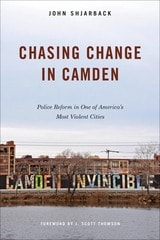
Chasing Change in Camden
Police Reform in One of America's Most Violent CitiesJohn Shjarback
Temple University Press, 2025
In Chasing Change in Camden, John Shjarback investigates how Camden’s police department re-formed and questions whether it can serve as a model for other cities. He analyzes successful policies—from innovative police training to advancements in technology—and evidence-based policing strategies.
Shjarback explains how the changes were implemented and then adjusted in response to community backlash. Chasing Change in Camden concludes with a discussion of threats to the reform and accountability efforts in both the CCPD and American policing more broadly. Ultimately, Camden’s case study offers valuable lessons for cities seeking effective police reform.
Citizens, Cops, and Power
Recognizing the Limits of CommunitySteve Herbert
University of Chicago Press, 2006
That strategy seems to make sense, but in Citizens, Cops, and Power, Steve Herbert reveals the reasons why it rarely, if ever, works. Drawing on data he collected in diverse Seattle neighborhoods from interviews with residents, observation of police officers, and attendance at community-police meetings, Herbert identifies the many obstacles that make effective collaboration between city dwellers and the police so unlikely to succeed. At the same time, he shows that residents’ pragmatic ideas about the role of community differ dramatically from those held by social theorists.
Surprising and provocative, Citizens, Cops, and Power provides a critical perspective not only on the future of community policing, but on the nature of state-society relations as well.

Crime and Justice, Volume 15
Modern PolicingEdited by Michael Tonry and Norval Morris
University of Chicago Press Journals, 1993
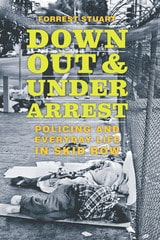
Down, Out, and Under Arrest
Policing and Everyday Life in Skid RowForrest Stuart
University of Chicago Press, 2016
Juliette, a woman he met during that time, has been stopped by police well over one hundred times, arrested upward of sixty times, and has given up more than a year of her life serving week-long jail sentences. Her most common crime? Simply sitting on the sidewalk—an arrestable offense in LA.
Why? What purpose did those arrests serve, for society or for Juliette? How did we reach a point where we’ve cut support for our poorest citizens, yet are spending ever more on policing and prisons? That’s the complicated, maddening story that Stuart tells in Down, Out and Under Arrest, a close-up look at the hows and whys of policing poverty in the contemporary United States. What emerges from Stuart’s years of fieldwork—not only with Skid Row residents, but with the police charged with managing them—is a tragedy built on mistakes and misplaced priorities more than on heroes and villains. He reveals a situation where a lot of people on both sides of this issue are genuinely trying to do the right thing, yet often come up short. Sometimes, in ways that do serious harm.
At a time when distrust between police and the residents of disadvantaged neighborhoods has never been higher, Stuart’s book helps us see where we’ve gone wrong, and what steps we could take to begin to change the lives of our poorest citizens—and ultimately our society itself—for the better.
Gangs, Politics and Dignity in Cape Town
Steffen Jensen
University of Chicago Press, 2008
After nearly fifty years of rigid segregation, the demise of the apartheid regime in South Africa and the African National Congress’s relatively peaceful assumption of power in 1994 were hailed as a miracle. But a few years into the transition, this miracle appeared increasingly threatened by crime and violence. In this compelling ethnography, Steffen Jensen focuses on a single township in Cape Town in order to explore how residents have negotiated the intersecting forces of political change and violent crime.
Jensen spent years closely observing the actions of residents both male and female, young and old, as well as gang members, police officers, and local government officials. The poisonous legacy of apartheid also comes under Jensen’s lens, as he examines the lasting effects that an official policy of racist stereotyping has had on the residents’ conceptions of themselves and their neighbors. While Gangs, Politics, and Dignity in Cape Town brims with insights into ongoing debates over policing, gangs, and local politics, Jensen also shows how people in the townships maintain their dignity in the face of hardship and danger.
How to Lose the Hounds
Maroon Geographies and a World beyond PolicingCeleste Winston
Duke University Press, 2023
Human Targets
Schools, Police, and the Criminalization of Latino YouthVictor M. Rios
University of Chicago Press, 2017
In Human Targets, Rios takes us to the streets of California, where we encounter young men who find themselves in much the same situation as fifteen-year-old Victor. We follow young gang members into schools, homes, community organizations, and detention facilities, watch them interact with police, grow up to become fathers, get jobs, get rap sheets—and in some cases get killed. What is it that sets apart young people like Rios who succeed and survive from the ones who don’t? Rios makes a powerful case that the traditional good kid/bad kid, street kid/decent kid dichotomy is much too simplistic, arguing instead that authorities and institutions help create these identities—and that they can play an instrumental role in providing young people with the resources for shifting between roles. In Rios’s account, to be a poor Latino youth is to be a human target—victimized and considered an enemy by others, viewed as a threat to law enforcement and schools, and burdened by stigma, disrepute, and punishment. That has to change.
This is not another sensationalistic account of gang bangers. Instead, the book is a powerful look at how authority figures succeed—and fail—at seeing the multi-faceted identities of at-risk youths, youths who succeed—and fail—at demonstrating to the system that they are ready to change their lives. In our post-Ferguson era, Human Targets is essential reading.
Kid Cops
What Communities Gain and Lose from Junior Police in SchoolsMai Thai
University of Chicago Press, 2026
Some might see police officers as benevolent sources of protection, but in many communities, they are often perceived as a threat due to a legacy of violent interactions and arrests for arbitrary offenses. How, then, do police sustain their presence in places where people might distrust them? In Kid Cops, sociologist Mai Thai offers one answer: junior police academies, high school programs in which police officers provide courses, mentorship, and job training to students in communities with high rates of juvenile delinquency and poverty. These school-police partnerships have expanded rapidly in the United States over the last few decades, largely in response to political unrest and police violence in the 1990s. Programs vary in their offerings, but they generally aim to ease tensions between communities and law enforcement, while also providing needed resources in neighborhoods where education and job opportunities are scarce.
Kid Cops draws on years of observations and interviews with educators, police officers, and, of course, kids. The junior police programs at each high school may have different emphases, but their common goal is for students to graduate from high school and enter college or the workforce. A second goal of the program is to cultivate a positive image of the police. Ultimately, however, Thai finds that these programs tighten the relationship between marginalized youth, schools, and the criminal justice system and strain the students’ relationships with their peers, families, and each other. These programs also distract residents from systemic issues of policing and suppress opportunities for meaningful change.
Written in an accessible tone that balances the seriousness of inequality with the playfulness of the study’s youth, Kid Cops moves beyond the narrative of detentions, suspensions, and arrests to tell a less conventional story about police in schools. It asks, does good, friendly policing exist—especially if it continues to tether low-income communities of color to the criminal justice system?
Police and the Empire City
Race and the Origins of Modern Policing in New YorkMatthew Guariglia
Duke University Press, 2023
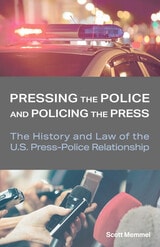
Pressing the Police and Policing the Press
The History and Law of the U.S. Press-Police RelationshipScott Memmel
University of Missouri Press, 2024
What transpired during this troubled time cast a bright light on the contemporary relationship between the press and police in the United States. The relationship between these two fundamental institutions is, however, a long and complicated one, dating back to colonial British North America. In the mid-19th century, (1830s–1850s) both the press and the police began to take their modern forms, and since then have continued to develop, routinely interacting with each other as journalists and police officers often found themselves responding to the same crimes and events. At times, members of both institutions managed to co-exist or even cooperate and made efforts to help one another, while at other times they butted heads to the point of conflict, the professional boundaries between journalists and police officers seemingly blurred.
As both the press and the police have fallen under deep scrutiny in more modern times, the present moment marks what is, perhaps, an opportune time to focus on the political, economic, social, and technological problems they face. In “Pressing the Police and Policing the Press,” Scott Memmel offers the first book-length study of the history and legal landscape of the press-police relationship. Each chapter focuses on interactions between the press and the police during a particular era, introducing relevant societal context and how both institutions evolved and responded to that context. Memmel concludes his study with recommendations on how, going forward, the press and the police might work together to tackle some of the similar issues they face and better serve the public.
Showdown in Desire
The Black Panthers Take a Stand in New OrleansOrissa Arend
University of Arkansas Press, 2009
The Policing Machine
Enforcement, Endorsements, and the Illusion of Public InputTony Cheng
University of Chicago Press, 2024
The past few years have seen Americans express passionate demands for police transformation. But even as discussion of no-knock warrants, chokeholds, and body cameras has exploded, any changes to police procedures have only led to the same outcomes. Despite calls for increased accountability, police departments have successfully stonewalled change.
In The Policing Machine, Tony Cheng reveals the stages of that resistance, offering a close look at the deep engagement strategies that NYPD precincts have developed with only subsets of the community in order to counter any truly meaningful, democratic oversight. Cheng spent nearly two years in an unprecedented effort to understand the who and how of police-community relationship building in New York City, documenting the many ways the police strategically distributed power and privilege within the community to increase their own public legitimacy without sacrificing their organizational independence. By setting up community councils that are conveniently run by police allies, handing out favors to local churches that will promote the police to their parishioners, and offering additional support to institutions friendly to the police, the NYPD, like police departments all over the country, cultivates political capital through a strategic politics that involves distributing public resources, offering regulatory leniency, and deploying coercive force. The fundamental challenge with police-community relationships, Cheng shows, is not to build them. It is that they already exist and are motivated by a machinery designed to stymie reform.
This Is Not For You
An Activist's Journey of Resistance and ResilienceRichard Brown
Oregon State University Press, 2021
The book finds Brown approaching his eightieth birthday and reflecting on his life. As he recalls his childhood in 1940s Harlem, his radicalization in the newly desegregated Air Force, and his decades of activism in one of America’s whitest cities, he questions how much longer he’ll do this work, and he wonders who, if anyone, will take his place.
This is a book about how and why to become an engaged, activist citizen, and how activists can stay grounded, no matter how deeply they immerse themselves in the work. It also offers an intimate, firsthand look at policing: what policing is and could be, how civilians can have a say, and how police can and should be responsive to and inclusive of civilian voices. This Is Not For You speaks on every page about being Black in America: about Black pride; Black history, art, and culture; and the experience of resisting white supremacy. It also stands as a much-needed counternarrative to Portlandia, telling a different story about the city and who has shaped it.
Over fifty percent of royalties earned on this book will be donated to organizations working on behalf of Black Portlanders.
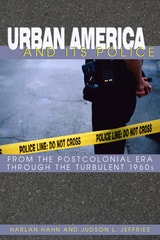
Urban America And Its Police
H Hahn
University Press of Colorado, 2003
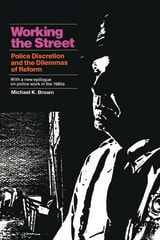
Working the Street
Police Discretion and the Dilemmas of ReformMichael K. Brown
Russell Sage Foundation, 1981