Results by title
87 books match the query 'Political Freedom' and 4 start with a
A City within a City
The Black Freedom Struggle in Grand Rapids, MichiganTodd E Robinson
Temple University Press, 2012
A City within a City examines the civil rights movement in the North by concentrating on the struggles for equality in Grand Rapids, Michigan. Historian Todd Robinson studies the issues surrounding school integration and bureaucratic reforms as well as the role of black youth activism to detail the diversity of black resistance. He focuses on respectability within the African American community as a way of understanding how the movement was formed and held together. And he elucidates the oppositional role of northern conservatives regarding racial progress.
A City within a City cogently argues that the post-war political reform championed by local Republicans transformed the city's racial geography, creating a racialized "city within a city," featuring a system of "managerial racism" designed to keep blacks in declining inner-city areas. As Robinson indicates, this bold, provocative framework for understanding race relations in Grand Rapids has broader implications for illuminating the twentieth-century African American urban experience in secondary cities.
A City within a City cogently argues that the post-war political reform championed by local Republicans transformed the city's racial geography, creating a racialized "city within a city," featuring a system of "managerial racism" designed to keep blacks in declining inner-city areas. As Robinson indicates, this bold, provocative framework for understanding race relations in Grand Rapids has broader implications for illuminating the twentieth-century African American urban experience in secondary cities.
[more]
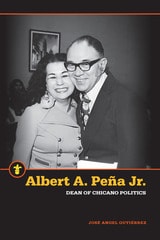
Albert A. Peña Jr.
Dean of Chicano PoliticsJosé Angel Gutiérrez
Michigan State University Press, 2017
The political and social impact that Albert A. Peña Jr. had on the lives of Mexican Americans, and later Chicanos, is by all counts immeasurable. However, in part because Chicano biography has traditionally been a neglected research area among academics generally and Chicano Studies scholars specifically, his life’s work has not featured prominently in any biographical work to date, making this volume the first of its kind. It provides a richly detailed documentation of Peña’s life and career, from blue collar worker to judge and essay writer, spanning nearly ninety years. Readers will find that at the heart of his story is a focus on grassroots organizing and politics, sharing leadership, and a commitment to social justice.
[more]
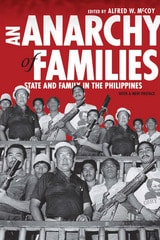
An Anarchy of Families
State and Family in the PhilippinesAlfred W. McCoy
University of Wisconsin Press, 2009
Winner of the Philippine National Book Award, this pioneering volume reveals how the power of the country’s family-based oligarchy both derives from and contributes to a weak Philippine state. From provincial warlords to modern managers, prominent Filipino leaders have fused family, politics, and business to compromise public institutions and amass private wealth—a historic pattern that persists to the present day.
Edited by Alfred W. McCoy, An Anarchy of Families explores the pervasive influence of the modern dynasties that have led the Philippines during the past century. Exemplified by the Osmeñas and Lopezes, elite Filipino families have formed a powerful oligarchy—controlling capital, dominating national politics, and often owning the media. Beyond Manila, strong men such as Ramon Durano, Ali Dimaporo, and Justiniano Montano have used “guns, goons, and gold” to accumulate wealth and power in far-flung islands and provinces. In a new preface for this revised edition, the editor shows how this pattern of oligarchic control has continued into the twenty-first century, despite dramatic socio-economic change that has supplanted the classic “three g’s” of Philippine politics with the contemporary “four c’s”—continuity, Chinese, criminality, and celebrity.
Edited by Alfred W. McCoy, An Anarchy of Families explores the pervasive influence of the modern dynasties that have led the Philippines during the past century. Exemplified by the Osmeñas and Lopezes, elite Filipino families have formed a powerful oligarchy—controlling capital, dominating national politics, and often owning the media. Beyond Manila, strong men such as Ramon Durano, Ali Dimaporo, and Justiniano Montano have used “guns, goons, and gold” to accumulate wealth and power in far-flung islands and provinces. In a new preface for this revised edition, the editor shows how this pattern of oligarchic control has continued into the twenty-first century, despite dramatic socio-economic change that has supplanted the classic “three g’s” of Philippine politics with the contemporary “four c’s”—continuity, Chinese, criminality, and celebrity.
[more]

Arms and the People
Popular Movements and the Military from the Paris Commune to the Arab SpringEdited by Mike Gonzalez and Houman Barekat
Pluto Press, 2012
Looking at a range of global historical experiences, Arms and the People examines the relationship between mass movements and military institutions. Some argue that it is impossible to achieve and protect a revolution without the support of the army, but how can the support of the army be won?
Arms and the People explores the impact of profound social polarisation on the internal cohesion of the state’s ‘armed bodies of men’ and on the contested loyalties of soldiers. The different contributors examine a series of historical moments in which a crisis in the military institution has reflected a deeper social crisis which has penetrated that institution and threatened to disable it.
With a range of international contributors who have either studied or been directly involved in such social upheavals, Arms and the People is a pioneering contribution to the study of revolutionary change and will appeal to students and academics in history, politics and sociology.
[more]