Results by title
3 books match the query 'Political Judgment'
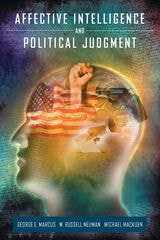
Affective Intelligence and Political Judgment
George E. Marcus, W. Russell Neuman, and Michael MacKuen
University of Chicago Press, 2000
Although the rational choice approach toward political behavior has been severely criticized, its adherents claim that competing models have failed to offer a more scientific model of political decisionmaking. This measured but provocative book offers precisely that: an alternative way of understanding political behavior based on cognitive research.
The authors draw on research in neuroscience, physiology, and experimental psychology to conceptualize habit and reason as two mental states that interact in a delicate, highly functional balance controlled by emotion. Applying this approach to more than fifteen years of election results, they shed light on a wide range of political behavior, including party identification, symbolic politics, and negative campaigning.
Remarkably accessible, Affective Intelligence and Political Judgment urges social scientists to move beyond the idealistic notion of the purely rational citizen to form a more complete, realistic model that includes the emotional side of human judgment.
[more]
Political Judgment
Structure and ProcessMilton Lodge and Kathleen M. McGraw, Editors
University of Michigan Press, 1995
An information processing approach to how citizens make important political decisions
[more]
The Concept of Political Judgment
Peter J. Steinberger
University of Chicago Press, 1993
What is good political judgment? Is it a science subject to strict standards of logic and inference, or is it more like an art, the product of intuition, feeling, or even chance? Peter J. Steinberger shows how the seemingly contradictory claims of inference and intuition are reconciled in the concept of political judgment.
Resting his argument on the larger notion of judgment itself, Steinberger develops an original model of how political judgments are made and how we justify calling some of them "good." His systematic analysis of such thinkers as Machiavelli, Kant, Gadamer, Wittgenstein, and Oakeshott introduces an original notion of judgment as "intelligent performance," incorporating both intuition and rational reconstruction.
Steinberger's conclusion—that a coherent political society must also be a judgmental one—flies in the face of much contemporary thinking.
[more]