Results by title
8 books match the query 'Political geography'
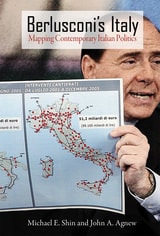
Berlusconi's Italy
Mapping Contemporary Italian PoliticsMichael E. Shin and John A. Agnew
Temple University Press, 2008
Berlusconi's Italy provides a fresh, thoroughly-informed account of how Italy's richest man came to be its political leader. Without dismissing the importance of personalities and political parties, it emphasizes the significance of changes in voting behaviors that led to the rise-and eventual fall-of Silvio Berlusconi, the millionaire media baron who became Prime Minister. Armed with new data and new analytic tools, Michael Shin and John Agnew use recently developed methods of spatial analysis, to offer a compelling new argument about contextual re-creation and mutation. They reveal that regional politics and shifting geographical voting patterns were far more important to Berlusconi's successes than the widely-credited role of the mass media, and conclude that Berlusconi's success (and later defeat) can be best understood in geographic terms.
[more]
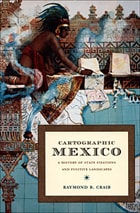
Cartographic Mexico
A History of State Fixations and Fugitive LandscapesRaymond B. Craib
Duke University Press, 2004
In Cartographic Mexico, Raymond B. Craib analyzes the powerful role cartographic routines such as exploration, surveying, and mapmaking played in the creation of the modern Mexican state in the nineteenth and early twentieth centuries. Such routines were part of a federal obsession—or “state fixation”—with determining and “fixing” geographic points, lines, and names in order to facilitate economic development and political administration. As well as analyzing the maps that resulted from such routines, Craib examines in close detail the processes that eventually generated them. Taking central Veracruz as a case in point, he shows how in the field, agrarian officials, military surveyors, and metropolitan geographers traversed a “fugitive landscape” of overlapping jurisdictions and use rights, ambiguous borders, shifting place names, and villagers with their own conceptions of history and territory. Drawing on an array of sources—including maps, letters from peasants, official reports, and surveyors’ journals and correspondence—Craib follows the everyday, contested processes through which officials attempted to redefine and codify such fugitive landscapes in struggle with the villagers they encountered in the field. In the process, he vividly demonstrates how surveying and mapmaking were never mere technical procedures: they were, and remain to this day, profoundly social and political practices in which surveyors, landowners, agrarian bureaucrats, and peasants all played powerful and complex roles.
[more]
Life, Earth, Colony
Friedrich Ratzel's Necropolitical GeographyIan Klinke
University of Michigan Press, 2023
Life, Earth, Colony explores the ideas, life, and historical significance of German zoologist turned geographer Friedrich Ratzel (1844–1904), famous for developing the foundations of geopolitical thought. Ratzel produced a remarkable body of work that revolutionized the study of space, movement, colonization, and war. He also served as a source of intellectual inspiration for national socialism, particularly through his Lebensraum (living space) concept, which understood all life as being caught in an eternal struggle for space. This book closely analyzes this radical conservative intellectual, focusing on his often-overlooked ethnography, biogeography, travel, and creative writing, and colonial activism as well as his more widely-known political geography.
Life, Earth, Colony finds that there is an as yet unexplored necropolitical impulse at the heart of Ratzel’s entire oeuvre, a preoccupation with death and dying, which had a profound impact on twentieth-century history.
Life, Earth, Colony finds that there is an as yet unexplored necropolitical impulse at the heart of Ratzel’s entire oeuvre, a preoccupation with death and dying, which had a profound impact on twentieth-century history.
[more]
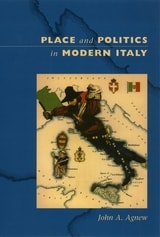
Place and Politics in Modern Italy
John A. Agnew
University of Chicago Press, 2002
How do the places where people live help structure and restructure their sociopolitical identities and interests? In this book, renowned political geographer John A. Agnew presents a theoretical model that addresses the relation of place to politics and applies it to a series of historicogeographical case studies set in modern Italy.
For Agnew, place is not just a static backdrop against which events occur, but a dynamic component of social, economic, and political processes. He shows, for instance, how the lack of a common "landscape ideal" or physical image of Italy delayed the development of a sense of nationhood among Italians after unification. And Agnew uses the post-1992 victory of the Northern League over the Christian Democrats in many parts of northern Italy to explore how parties are replaced geographically during periods of intense political change.
Providing a fresh new approach to studying the role of space and place in social change, Place and Politics in Modern Italy will interest geographers, political scientists, and social theorists.
[more]
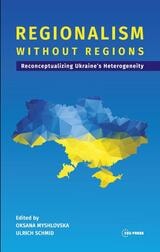
Regionalism without Regions
Reconceptualizing Ukraine's HeterogeneityUlrich Schmid
Central European University Press, 2019
This collective volume shows how Ukraine can best be understood through its regions and how the regions must be considered against the background of the nation. The overarching objective of the book is to challenge the dominance of the nation-state paradigm in the analyses of Ukraine by illustrating the interrelationship between national and regional dynamics of change.
The authors—historians, sociologists, anthropologists, economists, literary critics and linguists from Ukraine, Poland, Switzerland, Germany and the USA—explicitly go beyond the perspective of an entity defined by traditional political borders and cultural, economic, historical or religious stereotypes. The research project that led to the composition of the book combined quantitative (statistical surveys conducted across Ukraine) and qualitative (in-depth interviews and focus-group discussion) methods. The authors came to the conclusion that regionalism as a defining phenomenon of Ukraine is more prominent than the regions themselves. This approach regards Ukraine as a construct in flux where different discourses intersect, concur and eventually merge through the lenses of various disciplines and methodologies.
[more]
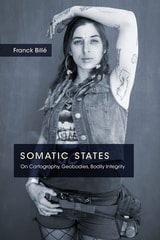
Somatic States
On Cartography, Geobodies, Bodily IntegrityFranck Billé
Duke University Press, 2025
In Somatic States, Franck Billé examines the conceptual link between the nation-state and the body, particularly the visceral and affective attachment to the state and the symbolic significance of its borders. Billé argues that corporeal analogies to the nation-state are not simply poetic or allegorical but reflect a genuine association of the individual body with the national outline—an identification greatly facilitated by the emergence of the national map. Billé charts the evolution of cartographic practices and the role that political maps have played in transforming notions of territorial sovereignty. He shows how states routinely and effectively mobilize corporeal narratives, such as framing territorial loss through metaphors of dismemberment and mutilation. Despite the current complexity of geopolitics and neoliberalism, Billé demonstrates that corporeality and bodily metaphors remain viscerally powerful because they offer a seemingly simple way to apprehend the abstract nature of the nation-state.
[more]
The Birth of Territory
Stuart Elden
University of Chicago Press, 2013
Territory is one of the central political concepts of the modern world and, indeed, functions as the primary way the world is divided and controlled politically. Yet territory has not received the critical attention afforded to other crucial concepts such as sovereignty, rights, and justice. While territory continues to matter politically, and territorial disputes and arrangements are studied in detail, the concept of territory itself is often neglected today. Where did the idea of exclusive ownership of a portion of the earth’s surface come from, and what kinds of complexities are hidden behind that seemingly straightforward definition?
The Birth of Territory provides a detailed account of the emergence of territory within Western political thought. Looking at ancient, medieval, Renaissance, and early modern thought, Stuart Elden examines the evolution of the concept of territory from ancient Greece to the seventeenth century to determine how we arrived at our contemporary understanding. Elden addresses a range of historical, political, and literary texts and practices, as well as a number of key players—historians, poets, philosophers, theologians, and secular political theorists—and in doing so sheds new light on the way the world came to be ordered and how the earth’s surface is divided, controlled, and administered.
[more]
The Political Origins of Inequality
Why a More Equal World Is Better for Us AllSimon Reid-Henry
University of Chicago Press, 2015
Inequality is the defining issue of our time. But it is not just a problem for the rich world. It is the global 1% that now owns fully half the world’s wealth—the true measure of our age of inequality. In this historical tour de force, Simon Reid-Henry rewrites the usual story of globalization and development as a story of the management of inequality. Reaching back to the eighteenth century and around the globe, The Political Origins of Inequality foregrounds the political turning points and decisions behind the making of today’s uneven societies. As it weaves together insights from the Victorian city to the Cold War, from US economic policy to Europe’s present migration crisis, a true picture emerges of the structure of inequality itself.
The problem of inequality, Reid-Henry argues, is a problem that manifests between places as well as over time. This is one reason why it cannot be resolved by the usual arguments of left versus right, bound as they are to the national scale alone. Most of all, however, it is why the level of inequality that confronts us today is indicative of a more general crisis in political thought. Modern political discourse has no place for public reason or the common good. Equality is yesterday’s dream. Yet the fact that we now accept such a world—a world that values security over freedom, special treatment over universal opportunity, and efficiency over fairness—is ultimately because we have stopped even trying in recent decades to build the political architecture the world actually requires.
Our politics has fallen out of step with the world, then, and at the every moment it is needed more than ever. Yet it is within our power to address this. Doing so involves identifying and then meeting our political responsibilities to others, not just offering them the selective charity of the rich. It means looking beyond issues of economics and outside our national borders. But above all it demands of us that we reinvent the language of equality for a modern, global world: and then institute this. The world is not falling apart. Different worlds, we all can see, are colliding together. It is our capacity to act in concert that is falling apart. It is this that needs restoring most of all.
[more]