Results by title
30 books match the query 'Political prisoners'
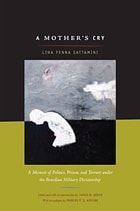
A Mother's Cry
A Memoir of Politics, Prison, and Torture under the Brazilian Military DictatorshipLina Penna Sattamini
Duke University Press, 2010
Lina Penna Sattamini describes her son’s tribulations through letters exchanged among family members, including Marcos, during the year that he was imprisoned. Her narrative is enhanced by Marcos’s account of his arrest, imprisonment, and torture. James N. Green’s introduction provides an overview of the political situation in Brazil, and Latin America more broadly, during that tumultuous era. In the 1990s, some Brazilians began to suggest that it would be best to forget the trauma of that era and move on. Lina Penna Sattamini wrote her memoir as a protest against historical amnesia. First published in Brazil in 2000, A Mother’s Cry is testimonial literature at its best. It conveys the experiences of a family united by love and determination during years of political repression.
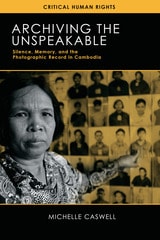
Archiving the Unspeakable
Silence, Memory, and the Photographic Record in CambodiaMichelle Caswell
University of Wisconsin Press, 2014
Winner, Waldo Gifford Leland Award, Society of American Archivists
Longlist, ICAS Book Prize, International Convention of Asia Scholars

Beyond the Wire
Former Prisoners and Conflict Transformation in Northern IrelandPeter Shirlow and Kieran McEvoy
Pluto Press, 2008
This book provides the first detailed examination of the role played by former loyalist and republican prisoners in grass roots conflict transformation work in the Northern Ireland peace process. It challenges the assumed passivity of former prisoners and ex-combatants. Instead, it suggests that such individuals and the groups which they formed have been key agents of conflict transformation. They have provided leadership in challenging cultures of violence, developed practical methods of resolving inter-communal conflict and found ways for communities to explore their troubled past. In analysing this, the authors challenge the sterile demonisation of former prisoners and the processes that maintain their exclusion from normal civic and social life.
The book is a constructive reminder of the need for full participation of both former combatants and victims in post-conflict transformation. It also lays out a new agenda for reconciliation which suggests that conflict transformation can and should begin ‘from the extremes’.
The book will be of interest to students of criminology, peace and conflict studies, law and politics, geography and sociology as well as those with a particular interest in the Northern Ireland conflict.
Carceral Afterlives
Prisons, Detention, and Punishment in Postcolonial UgandaKatherine Bruce-Lockhart
Ohio University Press, 2022
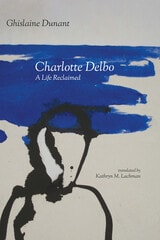
Charlotte Delbo
A Life ReclaimedGhislaine Dunant, Translated by Kathryn M. Lachman
University of Massachusetts Press, 2021
Ghislaine Dunant's unforgettable biography of Delbo, La vie retrouvée (2016), captivated French readers and was awarded the Prix Femina. Now translated into English for the first time, Charlotte Delbo: A Life Reclaimed depicts Delbo's lifelong battles as a working-class woman, as a survivor, as a leftist who broke from the Communist Party, and most of all, as a writer whose words compelled others to see.
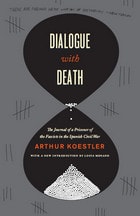
Dialogue with Death
The Journal of a Prisoner of the Fascists in the Spanish Civil WarArthur Koestler
University of Chicago Press, 2011
In 1937 during the Spanish Civil War, Arthur Koestler, a German exile writing for a British newspaper, was arrested by Nationalist forces in Málaga. He was then sentenced to execution and spent every day awaiting death—only to be released three months later under pressure from the British government. Out of this experience, Koestler wrote Darkness at Noon, his most acclaimed work in the United States, about a man arrested and executed in a Communist prison.
Dialogue with Death is Koestler’s riveting account of the fall of Málaga to rebel forces, his surreal arrest, and his three months facing death from a prison cell. Despite the harrowing circumstances, Koestler manages to convey the stress of uncertainty, fear, and deprivation of human contact with the keen eye of a reporter.
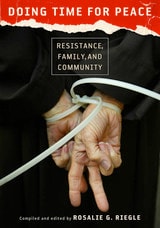
Doing Time for Peace
Resistance, Family, and CommunityRosalie G. Riegle
Vanderbilt University Press, 2013
In their own words, the narrators describe their motivations and their preparations for acts of resistance, the actions themselves, and their trials and subsequent jail time. We hear from those who do their time by caring for their families and managing communities while their partners are imprisoned. Spouses and children talk frankly of the strains on family ties that a life of working for peace in the world can cause.
The voices range from a World War II conscientious objector to those protesting the recent war in Iraq. The book includes sections on resister families, the Berrigans and Jonah House, the Plowshares Communities, the Syracuse Peace Council, and Catholic Worker houses and communities.
The introduction by Dan McKanan situates these activists in the long tradition of resistance to war and witness to peace.
Formations of Violence
The Narrative of the Body and Political Terror in Northern IrelandAllen Feldman
University of Chicago Press, 1991
"A sophisticated and persuasive late-modernist political analysis that consistently draws the reader into the narratives of the author and those of the people of violence in Northern Ireland to whom he talked. . . . Simply put, this book is a feast for the intellect"—Thomas M. Wilson, American Anthropologist
"One of the best books to have been written on Northern Ireland. . . . A highly imagination and significant book. Formations of Violence is an important addition to the literature on political violence."—David E. Schmitt, American Political Science Review
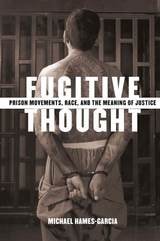
Fugitive Thought
Prison Movements, Race, And The Meaning Of JusticeMichael Hames-Garcia
University of Minnesota Press, 2004
Looks to the philosophy and experience of prisoners to reinvigorate our concepts of justice, solidarity, and freedom
In Fugitive Thought, Michael Hames-García argues that writings by prisoners are instances of practical social theory that seek to transform the world. Unlike other authors who have studied prisons or legal theory, Hames-García views prisoners as political and social thinkers whose ideas are as valuable as those of lawyers and philosophers.
As key moral terms like “justice,” “solidarity,” and “freedom” have come under suspicion in the post–Civil Rights era, political discussions on the Left have reached an impasse. Fugitive Thought reexamines and reinvigorates these concepts through a fresh approach to philosophies of justice and freedom, combining the study of legal theory and of prison literature to show how the critiques and moral visions of dissidents and participants in prison movements can contribute to the shaping and realization of workable ethical conceptions. Fugitive Thought focuses on writings by black and Latina/o lawyers and prisoners to flesh out the philosophical underpinnings of ethical claims within legal theory and prison activism.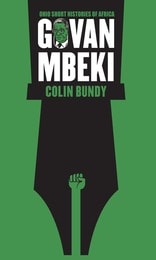
Govan Mbeki
Colin Bundy
Ohio University Press, 2012
Govan Mbeki (1910–2001) was a core leader of the African National Congress, the Communist Party, and the armed wing of the ANC during the struggle against apartheid. Known as a hard-liner, Mbeki was a prolific writer and combined in a rare way the attributes of intellectual and activist, political theorist and practitioner. Sentenced to life in prison in 1964 along with Nelson Mandela and others, he was sent to the notorious Robben Island prison, where he continued to write even as tension grew between himself, Mandela, and other leaders over the future of the national liberation movement. As one of the greatest leaders of the antiapartheid movement, and the father of Thabo Mbeki, president of South Africa from 1999 to 2008, the elder Mbeki holds a unique position in South African politics and history.
This biography by noted historian Colin Bundy goes beyond the narrative details of his long life: it analyzes his thinking, expressed in his writings over fifty years. Bundy helps establish what is distinctive about Mbeki: as African nationalist and as committed Marxist—and more than any other leader of the liberation movement—he sought to link theory and practice, ideas and action.
Drawing on exclusive interviews Bundy did with Mbeki, careful analysis of his writings, and the range of scholarship about his life, this biography is personal, reflective, thoroughly researched, and eminently readable.
I Write What I Like
Selected WritingsSteve Biko
University of Chicago Press, 2002
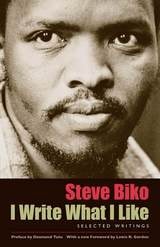
I Write What I Like contains a selection of Biko's writings from 1969, when he became the president of the South African Students' Organization, to 1972, when he was prohibited from publishing. The collection also includes a preface by Archbishop Desmond Tutu; an introduction by Malusi and Thoko Mpumlwana, who were both involved with Biko in the Black Consciousness movement; a memoir of Biko by Father Aelred Stubbs, his longtime pastor and friend; and a new foreword by Professor Lewis Gordon.
Biko's writings will inspire and educate anyone concerned with issues of racism, postcolonialism, and black nationalism.
Language, Resistance and Revival
Republican Prisoners and the Irish Language in the North of IrelandFeargal Mac Ionnrachtaigh
Pluto Press, 2013
Language, Resistance and Revival tells the untold story of the truly groundbreaking linguistic and educational developments that took place among Republican prisoners in Long Kesh prison from 1972-2000.
During a period of bitter struggle between Republican prisoners and the British state, the Irish language was taught and spoken as a form of resistance during incarceration. The book unearths this story for the first time and analyses the rejuvenating impact it had on the cultural revival in the nationalist community beyond the prison walls.
Based on unprecedented interviews, Feargal Mac Ionnrachtaigh explores a key period in Irish history through the original and 'insider' accounts of key protagonists in the contemporary Irish language revival.
Letters from Robben Island
A Selection of Ahmed Kathrada's Prison Correspondence, 1964-1989Robert D. Vassen
Michigan State University Press, 1999
Late one night in July, 1963, a South African police unit surrounded the African National Congress headquarters in Rivonia and arrested a group of Movement leaders gathered inside. Eventually eight of them, including Nelson Mandela, who was already serving a sentence, Walter Sisulu, Dennis Goldberg, Govan Mbeki, Raymond Mhlaba, Elias Motsoledi, Andrew Mangeni, and Ahmed Kathrada, were convicted of sabotage and, on June 12, 1964, sentenced to life in prison. Soon, these men became widely known as the "Rivonia Trialists." Despite their imprisonment, the Trialists played active roles in the struggle against South Africa's racist regime. Instead of being forgotten, as apartheid officials had hoped, they became enduring symbols in a struggle against injustice and racism.
Kathrada and his colleagues were classified as high security prisoners, segregated from others and closely watched. Every activity was regulated and monitored. Among the many indignities visited upon them, the prisoners were prohibited from keeping copies of incoming and outgoing correspondence. Kathrada, or "Kathy" as he is known, successfully hid both.
Letters From Robben Island contains a selection of 86 of the more than 900 pieces of correspondence Ahmed Kathrada wrote during his 26 years on Robben Island and at Pollsmoor Prison. Some were smuggled out by friends; others were written in code to hide meaning and content from prison censors. These are among his most poignant, touching, and eloquent communications. They are testimonies to Kathrada, his colleagues, and to their commitment to obtaining human dignity and freedom for all South Africans.
Preso sin Nombre, Celda sin Numero
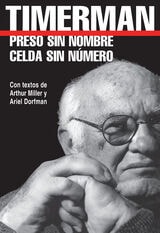
Jacobo Timerman; Con textos de Arthur Miller y Ariel Dorfman
University of Wisconsin Press, 2004
Wisconsin edition is for sale only in North America.
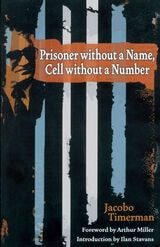
Prisoner Without a Name, Cell Without a Number
Jacobo Timerman
University of Wisconsin Press, 2002
"It ranks with Hannah Arendt's Eichmann in Jerusalem in its examination of the totalitarian mind, the role of anti-Semitism, the silence."—Eliot Fremont-Smith, Village Voice
"It is impossible to read this proud and piercing account of [Timerman's] suffering and his battles without wanting to be counted as one of Timerman's friends."—Michael Walzer, New York Review of Books
"Timerman was a living reminder that real prophets are irritants and not messengers of reassurance. He told it like it is, whether in Argentina, Israel, Europe, or the United States."—Arthur Miller
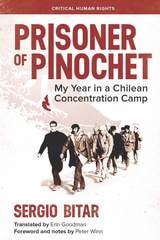
Prisoner of Pinochet
My Year in a Chilean Concentration CampSergio Bitar
University of Wisconsin Press, 2017
Prisoner of Pinochet is the gripping first-person chronicle of Bitar's year as a political prisoner before being expelled from Chile; a poignant narrative of men held captive together in a labor camp under harsh conditions, only able to guess at their eventual fate; and an insightful memoir of the momentous events of the early 1970s that led to seventeen years of bloody authoritarian rule in Chile. Available in English for the first time, this edition includes maps and photos from the 1970s and contextual notes by historian Peter Winn.
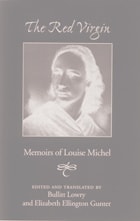
Red Virgin
Memoirs Of Louise MichelLouise Michel, edited and translated by Bullitt Lowry and Elizabeth Gunter
University of Alabama Press, 1981
Personal memoires of influential French feminist socialist and radicalist Louise Michel, a participant and observer in the Paris Commune.
Louise Michel was born illegitimate in 1830 and became a schoolmistress in Paris. She was involved in radical activities during the twilight of France’s Second Empire, and during the Franco-Prussian War of 1870 and the siege of Paris. She was a leading member of the revolutionary groups controlling Montmarte. Michel emerged as one of the leaders of the insurrection during the Paris Commune of March-May 1871; and French anarchists saw her as martyr and saint, "the Red Virgin." These are her memoires.
When the Versailles government crushed the Commune in May 1871, Michel was sentenced to exile in New Caledonia, until the general amnesty of 1880, when she returned to France and great popular acclaim and support from the working people of the country. Michel was arrested again during a demonstration in Paris in 1883 and sentenced to six years in prison. Pardoned after three years, she continued her speeches and writing, although she spent the greater part of her time from 1890 until her death in 1905 in England in self-imposed exile. It was during her prison term from 1883 to 1886 that she compiled her Memoires, now available in English.
These memoirs offer readers a view of the non-Marxist left and give an in-depth look into the development of the revolutionary spirit. The early chapters treat her childhood, the development of her revolutionary feelings, and her training as a schoolteacher. The next section describes her activities as a schoolteacher in the Haute-Marne and Paris and therefore contains much of interest on education in 19th-century Europe. Her chapters on the siege of Paris, the Commune, and her first trial show those events from the point of view of a major participant. Of particular interest is a chapter on women’s rights, which Michel saw as part of the search for the rights of all people, male and female, and not as a separate struggle.
The Red Virgin: Memoirs of Louise Michel will be useful to both scholars and students of 19th-century French history and women’s studies.
Shadow Lives
The Forgotten Women of the War on TerrorVictoria Brittain
Pluto Press, 2013
Shadow Lives reveals the unseen side of the '9/11 wars': their impact on the wives and families of men incarcerated in Guantanamo, or in prison or under house arrest in Britain and the US. Victoria Brittain shows how these families have been made socially invisible and a convenient scapegoat for the state in order to exercise arbitrary powers under the cover of the 'War on Terror'.
A disturbing exposé of the perilous state of freedom and democracy in our society, the book reveals how a culture of intolerance and cruelty has left individuals at the mercy of the security services’ unverifiable accusations and punitive punishments.
Both a j'accuse and a testament to the strength and humanity of the families, Shadow Lives shows the methods of incarceration and social control being used by the British state and gives a voice to the families whose lives have been turned upside down. In doing so it raises urgent questions about civil liberties which no one can afford to ignore.
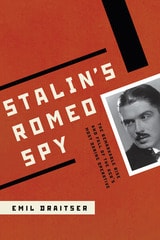
Stalin's Romeo Spy
The Remarkable Rise and Fall of the KGB's Most Daring OperativeEmil Draitser
Northwestern University Press, 2010
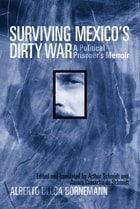
Surviving Mexico's Dirty War
A Political Prisoner's MemoirAlberto Ulloa Bornemann, edited by Arthur Schmidt and Aurora Camacho de Schmidt
Temple University Press, 2007
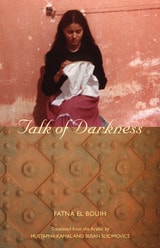
Talk of Darkness
By Fatna El Bouih
University of Texas Press, 2008
Fatna El Bouih was first arrested in Casablanca as an 18-year-old student leader with connections to the Marxist movement. Over the next decade she was rearrested, forcibly disappeared, tortured, and transferred between multiple prisons. While imprisoned, she helped organize a hunger strike, completed her undergraduate degree in sociology, and began work on a Master's degree.
Beginning with the harrowing account of her kidnapping during the heightened political tension of the 1970s, Talk of Darkness tells the true story of one woman's struggle to secure political prisoners' rights and defend herself against an unjust imprisonment.
Poetically rendered from Arabic into English by Mustapha Kamal and Susan Slyomovics, Fatna El Bouih's memoir exposes the techniques of state-instigated "disappearance" in Morocco and condemns the lack of laws to protect prisoners' basic human rights.

Tell Mother I'm in Paradise
Memoirs of a Political Prisoner in El SalvadorAna Margarita Gasteazoro, edited by Judy Blankenship and Andrew Wilson
University of Alabama Press, 2022
The life and times of Ana Margarita Gasteazoro: political activist, clandestine operative, and prisoner of conscience.
Ana Margarita Gasteazoro (1950–1993) was a Salvadoran opposition activist and renowned Amnesty International prisoner of conscience. Tell Mother I’m in Paradise:Memoirs of a Political Prisoner in El Salvador recounts her extraordinary life story. From a privileged Catholic upbringing, with time spent studying and working abroad, Ana Margarita first became a member of the legal political opposition in the late 1970s and later a clandestine operative at work against the brutal military junta.
Gasteazoro recounts her early rebellion against the strictures of conservative upper-class Salvadoran society. She spoke perfect English and discovered a talent for organizing in administrative jobs abroad and at home. As the civil war progressed, she quickly became a valued figure in the National Revolutionary Movement (MNR), a social democratic party, often representing it at international meetings. Against the backdrop of massive social oppression and the “disappearances” of thousands of opposition members, Gasteazoro began a double life as an operative in a faction of the Farabundo Martí National Liberation Front (FMLN). Multitalented and energetic, she organized safe houses for fellow activists, transported weapons and equipment, wrote scripts for an underground radio station, and produced an award-winning documentary film. But the toll on her family life and personal relationships was heavy.
Ana Margarita was disappeared in May 1981 by the infamous National Guard and endured a nightmare 11 days of interrogations, beatings, and abuse. Through international pressure and the connections of her family, her arrest was finally made public, and she was transferred to the women’s prison at Ilopango. There, she and other activists continued the political struggle through the Committee of Political Prisoners of El Salvador (COPPES). During her two years in prison, tested by hunger strikes, violence, and factional divisions, she became one of Amnesty International’s best-known prisoners of conscience. Tell Mother I’m in Paradise is a gripping story of a self-aware activist and a vital young woman’s struggle to find her own way within a deeply conservative society.
The Complete Lives of Camp People
Colonialism, Fascism, Concentrated ModernityRudolf Mrázek
Duke University Press, 2020
The Guantanamo Files
The Stories of the 774 Detainees in America's Illegal PrisonAndy Worthington
Pluto Press, 2007
Deprived of the safeguards of the Geneva Conventions, and, for the most part, sold to the Americans by their allies in Afghanistan and Pakistan, the detainees have struggled for five years to have their stories heard. Looking in detail at the circumstances of their capture, and at the coercive interrogations and unsubstantiated allegations that have been used to justify their detention. Stories of torture in Afghanistan and Guantanamo are uncovered, as well as new information about the process of 'extraordinary rendition' that underpins the US administration's 'war on terror'.
Who will speak for the 773 men who have been held in Guantanamo? This passionate and brilliantly detailed book brings their stories to the world for the first time.
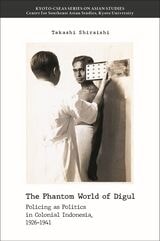
The Phantom World of Digul
Policing as Politics in Colonial Indonesia, 1926–1941Takashi Shiraishi
National University of Singapore Press, 2020
How did the government deploy political policing to achieve its policy objectives? What were the consequences and challenges for Indonesian activists? How was the government able to fashion its policing apparatus as the most potent instrument to achieve peace and order when the Great Depression hit the Indies, nationalist and communist forces were gaining strength in other places of the world, and war was coming both in Europe and Asia? This book answers those questions and more, breaking new ground for our understanding of the history of the Dutch Indies state in the early part of the twentieth century.
The Reappeared
Argentine Former Political PrisonersPark, Rebekah
Rutgers University Press, 2014
Threat
Palestinian Political Prisoners in IsraelEdited by Abeer Baker and Anat Matar
Pluto Press, 2011
Palestinian prisoners charged with security-related offences are immediately taken as a threat to Israel's security. They are seen as potential, if not actual, suicide bombers. This stereotype ignores the political nature of the Palestinian prisoners' actions and their desire for liberty.
By highlighting the various images of Palestinian prisoners in the Israel-Palestine conflict, Abeer Baker and Anat Matar chart their changing fortunes. Essays written by prisoners, ex-prisoners, Human rights defenders, lawyers and academic researchers analyse the political nature of imprisonment and Israeli attitudes towards Palestinian prisoners. These contributions deal with the prisoners' status within Palestinian society, the conditions of their imprisonment and various legal procedures used by the Israeli military courts in order to criminalise and de-politicise them. Also addressed are Israel's breaches of international treaties in its treatment of the Palestinian prisoners, practices of torture and solitary confinement, exchange deals and prospects for release.
This is a unique intervention within Middle East studies that will inspire those working in human rights, international law and the peace process.

Tomorrow Will Be Better
Surviving Nazi GermanyWalter Meyer with the assistance of Matt Valentine
University of Missouri Press, 1999
How does a young German who has been a member of the Hitler Youth and has competed in Nazi-organized athletic competitions become, over the span of two years, an eighty-pound, tuberculosis-stricken concentration camp escapee?
In this larger-than-life memoir, Walter Meyer leads readers from one harrowing moment to the next as he recounts his experiences during and after Hitler's reign. As a teenager, Meyer refused to conform to institutional rules. While serving in the Hitler Youth, he rebelled by joining a subversive group that focused its efforts on pranks against the youth organization. During World War II, Meyer was arrested, interrogated, and beaten for stealing shoes, but he received a sentence of one to four years, as opposed to the standard penalty for looting—death.
The sixteen-year-old Meyer's refusal to conform to prison regulations and his foiled escape attempts resulted in solitary confinement on several occasions. His fiery spirit eventually landed him in a Nazi work camp. Unbeknownst to his family, Meyer became a concentration camp prisoner. Transported to Ravensbrueck, he was forced to work under grueling conditions in a quarry. He struggled to reach his daily work quota so he could dine on watery broth and bits of bread. In these subhuman conditions, Meyer developed tuberculosis. Knowing he would soon die in the camp, he again plotted his escape. This time he succeeded.
Upon returning home to Duesseldorf, Meyer despaired at the destruction of his hometown. He lamented the pallor that had spread throughout the town and the country itself. After recovering his health, he regained his youthful lust for adventure. His postwar travels began with his infiltration of the Russian-occupied zone of Germany to retrieve his family's possessions. Meyer then began a whirlwind odyssey, ducking into train cars and stowing away on ships, occasionally landing in jail for traveling without a passport—from France to Spain, Belgium to Holland, and finally to South America--in pursuit of something other than the aftermath of war.
Meyer's memoir gives insight into the climate in Germany during World War II and in the defeated nation after the war. His experience as a non-Jewish survivor of the Nazi concentration camps provides an enlightening and varied perspective to the Holocaust dialogue.
Unsafe Haven
The United States, the IRA and Political PrisonersKaren McElrath
Pluto Press, 2000
Karen McElrath questions US government attempts to portray an impartial role in the Irish conflict, arguing that historical and contemporary evidence reveals otherwise. She shows that, far from being a neutral process, the success of bids for political asylum often depends on the relationship between the US and the government of the applicant’s country of origin. Drawing on exclusive interviews with Irish Republicans who have faced deportation or extradition from the United States, or who have been prosecuted in the US for politically-motivated offences, McElrath explores the links between deportation and extradition outcomes and foreign policy issues. The tools of exclusion are defined in their historical context, and the history of US extradition law is described, with particular focus on the treaties with Britain. McElrath also examines the offences for which Irish and Irish-American Republicans have been charged, discusses the various levels of support for Irish political prisoners in the US, and summarises the findings by international human rights organisations.

Voices from the Gulag
Aleksandr Solzhenitsyn
Northwestern University Press, 2010
After the publication in 1962 of One Day in the Life of Ivan Denisovich, Aleksandr Solzhenitsyn began receiving, and would continue to receive throughout his life, testimonies from fellow survivors of the gulag. Originally selected by Solzhenitsyn, the memoirs in this volume are an important addition to the literature of the Soviet gulag. Written by men from a wide variety of occupations and social classes, the writing in Voices from the Gulag lends a voice to the many ordinary people—including a circus performer, a teenage boy, and a Red Army soldier—whom a brutal system attempted to erase from memory.