Results by title
99 books match the query 'Politics and culture' and 5 start with a
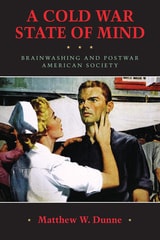
A Cold War State of Mind
Brainwashing and Postwar American SocietyMatthew W. Dunne
University of Massachusetts Press, 2013
First popularized during the 1950s, the concept of “brainwashing” is often viewed as an example of Cold War paranoia, an amusing relic of a bygone era. Yet as Matthew W. Dunne shows in this study, over time brainwashing came to connote much more than a sinister form of Communist mind control, taking on broader cultural and political meanings.
Moving beyond well-known debates over Korean War POWs and iconic cultural texts like The Manchurian Candidate, Dunne explores the impact of the idea of brainwashing on popular concerns about freedom, individualism, loyalty, and trust in authority. By the late 1950s the concept had been appropriated into critiques of various aspects of American life such as an insistence on conformity, the alleged “softening” of American men, and rampant consumerism fueled by corporate advertising that used “hidden” or “subliminal” forms of persuasion. Because of these associations and growing anxieties about the potential misuse of psychology, concerns about brainwashing contributed to a new emphasis on individuality and skepticism toward authority in the 1960s. The notion even played an unusual role in the 1968 presidential race, when Republican frontrunner George Romney's claim that he had been “brainwashed” about the Vietnam War by the Johnson administration effectively destroyed his campaign.
In addition to analyzing the evolving meaning of brainwashing over an extended period of time, A Cold War State of Mind explores the class and gender implications of the idea, such as the assumption that working-class POWs were more susceptible to mind control and that women were more easily taken in by the manipulations of advertisers.
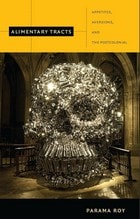
Alimentary Tracts
Appetites, Aversions, and the PostcolonialParama Roy
Duke University Press, 2010
Interpreting texts that have addressed cooking, dining, taste, hungers, excesses, and aversions in South Asia and its diaspora since the mid-nineteenth century, Roy relates historical events and literary figures to tropes of disgust, abstention, dearth, and appetite. She analyzes the fears of pollution and deprivation conveyed in British accounts of the so-called Mutiny of 1857, complicates understandings of Mohandas K. Gandhi’s vegetarianism, examines the “famine fictions” of the novelist-actor Mahasweta Devi, and reflects on the diasporic cookbooks and screen performances of Madhur Jaffrey. This account of richly visceral global modernity furnishes readers with a new idiom for understanding historical action and cultural transformation.
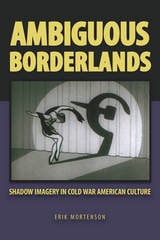
Ambiguous Borderlands
Shadow Imagery in Cold War American CultureErik Mortenson
Southern Illinois University Press, 2016
After contextualizing the postwar use of shadow imagery in the wake of the atomic bomb, Ambiguous Borderlands looks at shadows in print works, detailing the reemergence of the pulp fiction crime fighter the Shadow in the late-1950s writings of Sylvia Plath, Amiri Baraka, and Jack Kerouac. Using Freudian and Jungian conceptions of the unconscious, Mortenson then discusses Kerouac’s and Allen Ginsberg’s shared dream of a “shrouded stranger” and how it shaped their Beat aesthetic. Turning to the visual, Mortenson examines the dehumanizing effect of shadow imagery in the Cold War photography of Robert Frank, William Klein, and Ralph Eugene Meatyard. Mortenson concludes with an investigation of the use of chiaroscuro in 1950s film noir and the popular television series The Twilight Zone, further detailing how the complexities of Cold War society were mirrored across these media in the ubiquitous imagery of light and dark.
From comics to movies, Beats to bombs, Ambiguous Borderlands provides a novel understanding of the Cold War cultural context through its analysis of the image of the shadow in midcentury media. Its interdisciplinary approach, ambitious subject matter, and diverse theoretical framing make it essential reading for anyone interested in American literary and popular culture during the fifties and sixties.
Are You Entertained?
Black Popular Culture in the Twenty-First CenturySimone C. Drake and Dwan Henderson Simmons, editors
Duke University Press, 2020
Contributors. Takiyah Nur Amin, Patricia Hill Collins, Kelly Jo Fulkerson-Dikuua, Simone C. Drake, Dwan K. Henderson, Imani Kai Johnson, Ralina L. Joseph, David J. Leonard, Emily J. Lordi, Nina Angela Mercer, Mark Anthony Neal, H. Ike Okafor-Newsum, Kinohi Nishikawa, Eric Darnell Pritchard, Richard Schur, Tracy Sharpley-Whiting, Vincent Stephens, Lisa B. Thompson, Sheneese Thompson
Art and Activism
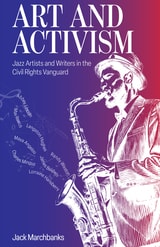
Jazz Artists and Writers in the Civil Rights VanguardJack Marchbanks
Ohio University Press, 2026
Explore how jazz legends and literary icons united art and activism, shaping the civil rights movement and transforming American culture during the pivotal period between 1955 and 1965.
Art and Activism explores the powerful, symbiotic relationships among artists such as Nina Simone, Abbey Lincoln, and Lena Horne and their literary counterparts—Lorraine Hansberry, Maya Angelou, and Langston Hughes. These creative figures positioned themselves as cultural thought leaders within the evolving civil rights movement. While the Jim Crow South was the movement’s operational front, Jack Marchbanks argues that New York City’s intellectual, cultural, and fundraising communities functioned as its strategic command center.
Readers who admire jazz legends like Duke Ellington, Dave Brubeck, Miles Davis, and Charles Mingus—and those fascinated by prominent African American writers like James Baldwin and Ralph Ellison—will discover how these artists intertwined their work with the civil rights struggle. The book examines their involvement in pivotal confrontations and their connections with key leaders such as the Reverend Dr. Martin Luther King Jr., Daisy Bates, Ella Baker, and Malcolm X.
By illuminating the intersection of art and activism, this study offers a fresh perspective on the pivotal decade from 1955 to 1965. It is an essential resource for undergraduate courses and an engaging read for anyone seeking to understand the civil rights era through a cultural lens.