Results by title
10 books match the query 'Politics and war'
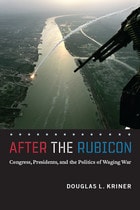
After the Rubicon
Congress, Presidents, and the Politics of Waging WarDouglas L. Kriner
University of Chicago Press, 2010
When the United States goes to war, the nation’s attention focuses on the president. As commander in chief, a president reaches the zenith of power, while Congress is supposedly shunted to the sidelines once troops have been deployed abroad. Because of Congress’s repeated failure to exercise its legislative powers to rein in presidents, many have proclaimed its irrelevance in military matters.
After the Rubicon challenges this conventional wisdom by illuminating the diverse ways in which legislators influence the conduct of military affairs. Douglas L. Kriner reveals that even in politically sensitive wartime environments, individual members of Congress frequently propose legislation, hold investigative hearings, and engage in national policy debates in the public sphere. These actions influence the president’s strategic decisions as he weighs the political costs of pursuing his preferred military course.
Marshalling a wealth of quantitative and historical evidence, Kriner expertly demonstrates the full extent to which Congress materially shapes the initiation, scope, and duration of major military actions and sheds new light on the timely issue of interbranch relations.
Beyond the Quagmire
New Interpretations of the Vietnam WarGeoffrey W. Jensen
University of North Texas Press, 2019
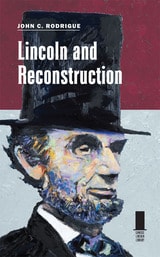
Lincoln and Reconstruction
John C. Rodrigue
Southern Illinois University Press, 2013
Although Abraham Lincoln dominates the literature on the American Civil War, he remains less commonly associated with reconstruction. Previous scholarly works touch on Lincoln and reconstruction, but they tend either to speculate on what Lincoln might have done after the war had he not been assassinated or to approach his reconstruction plans merely as a means of winning the war. In this thought-provoking study, John C. Rodrigue offers a succinct but significant survey of Lincoln’s wartime reconstruction initiatives while providing a fresh interpretation of the president’s plans for postwar America.
Revealing that Lincoln concerned himself with reconstruction from the earliest days of his presidency, Rodrigue details how Lincoln’s initiatives unfolded, especially in the southern states where they were attempted. He explores Lincoln’s approach to various issues relevant to reconstruction, including slavery, race, citizenship, and democracy; his dealings with Congressional Republicans, especially the Radicals; his support for and eventual abandonment of colonization; his dealings with the border states; his handling of the calls for negotiations with the Confederacy as a way of reconstructing the Union; and his move toward emancipation and its implications for his approach to reconstruction.
As the Civil War progressed, Rodrigue shows, Lincoln’s definition of reconstruction transformed from the mere restoration of the seceded states to a more fundamental social, economic, and political reordering of southern society and of the Union itself. Based on Lincoln’s own words and writings as well as an extensive array of secondary literature, Rodrigue traces the evolution of Lincoln’s thinking on reconstruction, providing new insight into a downplayed aspect of his presidency.
Parity and War
Evaluations and Extensions of The War LedgerJacek Kugler and Douglas Lemke, Editors
University of Michigan Press, 1996
Power, Institutions, and Leadership in War and Peace
Lessons from Peru and Ecuador, 1995–1998By David R. Mares and David Scott Palmer
University of Texas Press, 2012
In January 1995, fighting broke out between Ecuadorian and Peruvian military forces in a remote section of the Amazon. It took more than three years and the interplay of multiple actors and factors to achieve a definitive peace agreement, thus ending what had been the region's oldest unresolved border dispute. This conflict and its resolution provide insights about other unresolved and/or disputed land and sea boundaries which involve almost every country in the Western Hemisphere.
Drawing on extensive field research at the time of the dispute and during its aftermath, including interviews with high-ranking diplomats and military officials, Power, Institutions, and Leadership in War and Peace is the first book-length study to relate this complex border dispute and its resolution to broader theories of conflict. The findings emphasize an emerging leadership approach in which individuals are not mere captives of power and institutions. In addition, the authors illuminate an overlap in national and international arenas in shaping effective articulation, perception, and selection of policy.
In the “new” democratic Latin America that emerged in the late 1970s through the early 1990s, historical memory remains influential in shaping the context of disputes, in spite of presumed U.S. post–Cold War influence. This study offers important, broader perspectives on a hemisphere still rife with boundary disputes as a rising number of people and products (including arms) pass through these borderlands.
Prisoners of Their Premises
How Unexamined Assumptions Lead to War and Other Policy DebaclesGeorge C. Edwards III
University of Chicago Press, 2022
Why do accomplished and stable leaders frequently make calamitous decisions with devastating consequences for their countries—and other nations? We debate debacles such as the American involvement in Vietnam, seeking to understand why leaders pursued disastrous policies. In Prisoners of Their Premises, George C. Edwards III argues that the failure of leaders to examine their premises—the assumptions they make about the world and situation they are dealing with—cause them to ignore real problems or pursue policies that, in costly ways, deal with problems that are different than they think or simply don’t exist. Edwards looks at the role of premises in identifying (or ignoring) a problem in a series of case studies that range from strategic decisions in World War I and the Korean War to the wars in Vietnam and Iraq. Too often, unexamined premises color initial decisions to pursue a policy and shape the strategies leaders employ to achieve their goals, with grave consequences for their countries, organizations, and potentially the world. Timely and important, Prisoners of Their Premises demonstrates the real costs leaders incur by failing to question their assumptions.

The Economics of Killing
How the West Fuels War and Poverty in the Developing WorldVijay Mehta
Pluto Press, 2012
Globalisation has created an interconnected world, but has not diminished violence, militarism and inequality. The Economics of Killing describes how the power of global elites, entrenched under globalisation, has created a deadly cycle of violence.
In this groundbreaking work, Vijay Mehta shows how attempts at peaceful national development are routinely blocked by Western powers. He locates the 2008 financial crisis in US attempts to block China's model of development. He shows how Europe and the US conspire with regional dictators to prevent countries from developing advanced industries, and how this system has fed terrorism.
Mehta argues that a different world is possible, based on policies of disarmament, demilitarisation and sustainable development. This original and thought-provoking book will be of great interest to anyone concerned about the consequences of endless war fuelled by the West.
The Wartime President
Executive Influence and the Nationalizing Politics of ThreatWilliam G. Howell, Saul P. Jackman, and Jon C. Rogowski
University of Chicago Press, 2013
For the first time, William G. Howell, Saul P. Jackman, and Jon C. Rogowski systematically analyze the question. Congress, they show, is more likely to defer to the president’s policy preferences when political debates center on national rather than local considerations. Thus, World War II and the post-9/11 wars in Afghanistan and Iraq significantly augmented presidential power, allowing the president to enact foreign and domestic policies that would have been unattainable in times of peace. But, contrary to popular belief, there are also times when war has little effect on a president’s influence in Congress. The Vietnam and Gulf Wars, for instance, did not nationalize our politics nearly so much, and presidential influence expanded only moderately.
Built on groundbreaking research, The Wartime President offers one of the most significant works ever written on the wartime powers presidents wield at home.
War and Rights
The Impact of War on Political and Civil RightsDavid L. Rousseau
University of Michigan Press, 2021
Warfare in Europe contributed to the development of the modern state. In response to external conflict, state leaders raised armies and defended borders. The centralization of power, the development of bureaucracies, and the integration of economies all maximized revenue to support war. But how does a persistent external threat affect the development of a strong state? The “Garrison State” hypothesis argues that states that face a severe security threat will become autocracies. Conversely, the “Extraction School,” argues that warfare indirectly promotes the development of democratic institutions.
Execution of large-scale war requires the mobilization of resource and usually reluctant populations. In most cases, leaders must extend economic or political rights in exchange for resolving the crisis. Large-scale warfare thus expands political participation in the long run. The authors use empirical statistical modeling to show that war decreases rights in the short term, but the longer and bigger a war gets, the rights of the citizenry expand with the conflict. The authors test this argument through historical case studies—Imperial Russia, Austro-Hungarian Dual Monarchy, African Americans in World War I and II, and the Tirailleurs Senegalese in World War I—through the use of large-N statistical studies—Europe 1900–50 and Global 1893–2011—and survey data. The results identify when, where, and how war can lead to the expansion of political rights.
Warfare and the Dynamics of Political Control
Edited by Brian R. Billman
University of Arizona Press, 2025
Warfare and the Dynamics of Political Control draws on a wealth of interdisciplinary perspectives to explore how conflict shapes the establishment and maintenance of political institutions, from small-scale societies to expansive empires. The book examines the material and ideological factors that drive warfare, the organization of combatants, the ways leaders use violence to consolidate power, and how groups resist political domination in times of conflict. By posing critical questions about the efficacy of strategies and the varied outcomes of conflict-driven power struggles, this volume offers profound insights into the dynamics of political control throughout history.
Bringing together case studies from diverse regions and time periods, Warfare and the Dynamics of Political Controlilluminates the multifaceted nature of political violence. The volume includes discussions of human sacrifice, slave-taking, ideological signaling, and military strategy and tactics. The case studies reveal how different forms of political violence influence societal structures. From the fortifications of the Māori in New Zealand to the city walls of early historic India, each contribution provides a detailed analysis of how warfare has been used to both to challenge and to establish political hierarchies. Featuring examples from small foraging communities to large empires across various regions and time periods, the book offers a wide-ranging exploration of how different groups have used and resisted political violence.
This essential work contributes to our understanding of the intersections between conflict and political power, making it a vital resource for scholars of anthropology, archaeology, political science, and history.