Results by title
192 books match the query 'Popular music' and 12 start with a
A Change Is Gonna Come
Music, Race & the Soul of AmericaCraig Werner
University of Michigan Press, 2006
—Notes
"No one has written this way about music in a long, long time. Lucid, insightful, with real spiritual, political, intellectual, and emotional grasp of the whole picture. A book about why music matters, and how, and to whom."
—Dave Marsh, author of Louie, Louie and Born to Run: The Bruce Springsteen Story
"This book is urgently needed: a comprehensive look at the various forms of black popular music, both as music and as seen in a larger social context. No one can do this better than Craig Werner."
—Henry Louis Gates, Jr., W.E.B. Du Bois Professor of the Humanities, Harvard University
"[Werner has] mastered the extremely difficult art of writing about music as both an aesthetic and social force that conveys, implies, symbolizes, and represents ideas as well as emotion, but without reducing its complexities and ambiguities to merely didactic categories."
—African American Review
A Change Is Gonna Come is the story of more than four decades of enormously influential black music, from the hopeful, angry refrains of the Freedom movement, to the slick pop of Motown; from the disco inferno to the Million Man March; from Woodstock's "Summer of Love" to the war in Vietnam and the race riots that inspired Marvin Gaye to write "What's Going On."
Originally published in 1998, A Change Is Gonna Come drew the attention of scholars and general readers alike. This new edition, featuring four new and updated chapters, will reintroduce Werner's seminal study of black music to a new generation of readers.
Craig Werner is Professor of Afro-American Studies at the University of Wisconsin, and author of many books, including Playing the Changes: From Afro-Modernism to the Jazz Impulse and Up Around the Bend: An Oral History of Creedence Clearwater Revival. His most recent book is Higher Ground: Stevie Wonder, Aretha Franklin, Curtis Mayfield, and the Rise and Fall of American Soul.
A Day for the Hunter, a Day for the Prey
Popular Music and Power in HaitiGage Averill
University of Chicago Press, 1997
Averill explores such diverse genres as Haitian jazz, troubadour traditions, Vodou-jazz, konpa, mini-djaz, new generation, and roots music. He examines the complex interaction of music with power in contexts such as honorific rituals, sponsored street celebrations, Carnival, and social movements that span the political spectrum.
With firsthand accounts by musicians, photos, song texts, and ethnographic descriptions, this book explores the profound manifestations of power and song in the day-to-day efforts of ordinary Haitians to rise above political repression.

A Kiss across the Ocean
Transatlantic Intimacies of British Post-Punk and US LatinidadRichard T. Rodríguez
Duke University Press, 2022
A Respectable Spell
Transformations of Samba in Rio de JaneiroCarlos Sandroni
University of Illinois Press, 2021
Incisive and comprehensive, A Respectable Spell tells the compelling story of an iconic Brazilian musical genre.
A&R Pioneers
Architects of American Roots Music on RecordBrian Ward
Vanderbilt University Press, 2018
A&R Pioneers offers the first comprehensive account of the diverse group of men and women who pioneered artists-and-repertoire (A&R) work in the early US recording industry. In the process, they helped create much of what we now think of as American roots music. Resourceful, innovative, and, at times, shockingly unscrupulous, they scouted and signed many of the singers and musicians who came to define American roots music between the two world wars. They also shaped the repertoires and musical styles of their discoveries, supervised recording sessions, and then devised marketing campaigns to sell the resulting records. By World War II, they had helped redefine the canons of American popular music and established the basic structure and practices of the modern recording industry. Moreover, though their musical interests, talents, and sensibilities varied enormously, these A&R pioneers created the template for the job that would subsequently become known as "record producer."
Without Ralph Peer, Art Satherley, Frank Walker, Polk C. Brockman, Eli Oberstein, Don Law, Lester Melrose, J. Mayo Williams, John Hammond, Helen Oakley Dance, and a whole army of lesser known but often hugely influential A&R representatives, the music of Bessie Smith and Bob Wills, of the Carter Family and Count Basie, of Robert Johnson and Jimmie Rodgers may never have found its way onto commercial records and into the heart of America's musical heritage. This is their story.
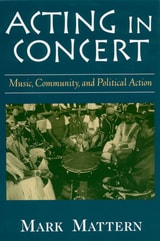
Acting in Concert
Music, Community, and Political ActionMattern, Mark
Rutgers University Press, 1998
More than just entertainment, Mattern argues that popular music can serve as a social glue for bringing together a multitude of voices that might otherwise remain silent, and that political action through music can increase the potential for relatively marginalized people to choose and determine their own fate.
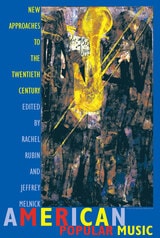
American Popular Music
New Approaches to the Twentieth CenturyRachel Rubin
University of Massachusetts Press, 2001
Designed as a broad introductory survey, and written by experts in the field, this book examines the rise of American music over the past hundred years — the period in which that music came into its own and achieved unprecedented popularity. Beginning with a look at music as a business, eleven essays explore a variety of popular musical genres, including Tin Pan Alley, blues, jazz, country, gospel, rhythm and blues, rock and roll, folk, rap, and Mexican American corridos. Reading these essays, we come to see that the forms created by one group often appeal to, and are in turn influenced by, other groups—across lines of race, ethnicity, class, gender, region, and age. The chapters speak to one another, arguing for the primacy of such concepts as minstrelsy, urbanization, hybridity, and crossover as the most powerful tools for understanding American popular music. Moving beyond outdated music-industry categories and misleading genre labels, while acknowledging the complexities of the market, the book recovers and reinforces the essential blackness of much popular music—even a presumably white form like country and western. In addition to Rachel Rubin and Jeffrey Melnick, contributors include Reebee Garofalo, Geoffrey Jacques, Kip Lornell, Mark Anthony Neal, Millie Rahn, David Sanjek, James Smethurst, Elijah Wald, and Gail Hilson Woldu.
American Popular Music
Readings From the Popular Press Volume 2: The Age of RockTimothy E. Scheurer
University of Wisconsin Press, 1989

American Popular Music
Readings From the Popular Press Volume I: The Nineteenth-Century Tin Pan AlleyTimothy E. Scheurer
University of Wisconsin Press, 1989
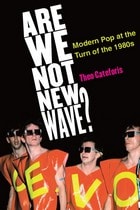
Are We Not New Wave?
Modern Pop at the Turn of the 1980sTheo Cateforis
University of Michigan Press, 2011
“Are We Not New Wave? is destined to become the definitive study of new wave music.”
—Mark Spicer, coeditor of Sounding Out Pop
New wave emerged at the turn of the 1980s as a pop music movement cast in the image of punk rock’s sneering demeanor, yet rendered more accessible and sophisticated. Artists such as the Cars, Devo, the Talking Heads, and the Human League leapt into the Top 40 with a novel sound that broke with the staid rock clichés of the 1970s and pointed the way to a more modern pop style.
In Are We Not New Wave? Theo Cateforis provides the first musical and cultural history of the new wave movement, charting its rise out of mid-1970s punk to its ubiquitous early 1980s MTV presence and downfall in the mid-1980s. The book also explores the meanings behind the music’s distinctive traits—its characteristic whiteness and nervousness; its playful irony, electronic melodies, and crossover experimentations. Cateforis traces new wave’s modern sensibilities back to the space-age consumer culture of the late 1950s/early 1960s.
Three decades after its rise and fall, new wave’s influence looms large over the contemporary pop scene, recycled and celebrated not only in reunion tours, VH1 nostalgia specials, and “80s night” dance clubs but in the music of artists as diverse as Rihanna, Lady Gaga, Miley Cyrus, and the Killers.
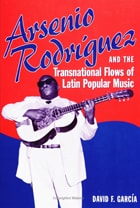
Arsenio Rodríguez and the Transnational Flows of Latin Popular Music
David F. García
Temple University Press, 2006
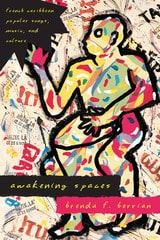
Awakening Spaces
French Caribbean Popular Songs, Music, and CultureBrenda F. Berrian
University of Chicago Press, 2000
Based on personal interviews and discussions of song texts, Berrian shows how these musicians express their feelings about current and past events, about themselves, their islands, and the French. Through their lyrical themes, these songs create metaphorical "spaces" that evoke narratives of desire, exile, subversion, and Creole identity and experiences. Berrian opens up these spaces to reveal how the artists not only engage their listeners and effect social change, but also empower and identify themselves. She also explores the music as it relates to the art of drumming, and to genres such as African American and Latin jazz and reggae. With Awakening Spaces, Berrian adds fresh insight into the historical struggles and arts of the French Caribbean.