Results by title
7 books match the query 'Postcolonial'
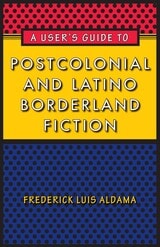
A User's Guide to Postcolonial and Latino Borderland Fiction
By Frederick Luis Aldama
University of Texas Press, 2009
Why are so many people attracted to narrative fiction? How do authors in this genre reframe experiences, people, and environments anchored to the real world without duplicating "real life"? In which ways does fiction differ from reality? What might fictional narrative and reality have in common—if anything?
By analyzing novels such as Arundhati Roy's The God of Small Things, Amitav Ghosh's The Glass Palace, Zadie Smith's White Teeth, and Hari Kunzru's The Impressionist, along with selected Latino comic books and short fiction, this book explores the peculiarities of the production and reception of postcolonial and Latino borderland fiction. Frederick Luis Aldama uses tools from disciplines such as film studies and cognitive science that allow the reader to establish how a fictional narrative is built, how it functions, and how it defines the boundaries of concepts that appear susceptible to limitless interpretations.
Aldama emphasizes how postcolonial and Latino borderland narrative fiction authors and artists use narrative devices to create their aesthetic blueprints in ways that loosely guide their readers' imagination and emotion. In A User's Guide to Postcolonial and Latino Borderland Fiction, he argues that the study of ethnic-identified narrative fiction must acknowledge its active engagement with world narrative fictional genres, storytelling modes, and techniques, as well as the way such fictions work to move their audiences.
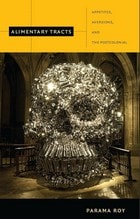
Alimentary Tracts
Appetites, Aversions, and the PostcolonialParama Roy
Duke University Press, 2010
Interpreting texts that have addressed cooking, dining, taste, hungers, excesses, and aversions in South Asia and its diaspora since the mid-nineteenth century, Roy relates historical events and literary figures to tropes of disgust, abstention, dearth, and appetite. She analyzes the fears of pollution and deprivation conveyed in British accounts of the so-called Mutiny of 1857, complicates understandings of Mohandas K. Gandhi’s vegetarianism, examines the “famine fictions” of the novelist-actor Mahasweta Devi, and reflects on the diasporic cookbooks and screen performances of Madhur Jaffrey. This account of richly visceral global modernity furnishes readers with a new idiom for understanding historical action and cultural transformation.
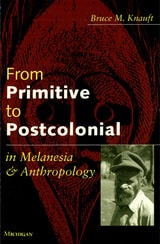
From Primitive to Postcolonial in Melanesia and Anthropology
Bruce M. Knauft
University of Michigan Press, 1999
Laws of the Postcolonial
Eve Darian-Smith and Peter Fitzpatrick, Editors
University of Michigan Press, 1999
In perceptions of Western law there is an enduring disparity between law's pervasive power and its fragility. Many of these essays provide graphic accounts of law's tremendous shaping power in that massive occidental movement which settled and unsettled the globe. These accounts point to the West's encompassing and transforming of other peoples and other legal systems in ways which constitute and confirm the West in its own self-creation. Other essays deal with situations "within" the West which show how its identity is created, sustained, and also challenged in a constant reference to those contrary "others" which a powerful law has shaped and transformed. This challenge comes not least from the resistance of those "others" --resistances that profoundly disrupt the West and its law, revealing them as fractured at the seemingly confident core of their own self-constitution.
Contributors include Antony Anghie, Rolando Gaete, Alan Norrie, Dianne Otto, Paul Passavant, Jeannine Perdy, Colin Perrin, Annelise Riles, Roshan de Silva, and John Strawson, in addition to the editors.
Eve Darian-Smith is Assistant Professor of Anthropology, University of California, Santa Barbara. Peter Fitzpatrick is Professor of Law, Queen Mary and Westfield College, University of London.
The Open Veins of the Postcolonial
Afrodescendants and RacismsEdited by Inocência Mata and Iolanda Évora
Tagus Press, 2022

The Postcolonial and the Global
Revathi Krishnaswamy
University of Minnesota Press, 2007
This interdisciplinary work brings the humanities and social sciences into dialogue by examining issues such as globalized capital, discourses of antiterrorism, and identity politics. Essayists from the fields of postcolonial studies and globalization theory address the ethical and pragmatic ramifications of opposing interpretations of these issues and, for the first time, seek common ground.
Contributors: Pal Ahluwalia, U of California, San Diego; Arjun Appadurai, New School U; Geoffrey Bowker, Santa Clara U; Timothy Brennan, U of Minnesota; Ruth Buchanan, U of British Columbia; Verity Burgmann, U of Melbourne; Pheng Cheah, U of California, Berkeley; Inderpal Grewal, U of California, Irvine; Ramon Grosfoguel, U of California, Berkeley; Barbara Harlow, U of Texas, Austin; Anouar Majid, U of New England; John McMurtry, U of Guelph; Walter D. Mignolo, Duke U; Sundhya Pahuja, U of Melbourne; R. Radhakrishnan, U of California, Irvine; Ileana Rodriguez, Ohio State U; E. San Juan, Philippine Forum, New York; Saskia Sassen, U of Chicago; Ella Shohat, New York U; Leslie Sklair, London School of Economics; Robert Stam, New York U; Madina Tlostanova, Russian Peoples’ Friendship U; Harish Trivedi, U of Delhi.
Revathi Krishnaswamy is associate professor of English at San Jose State University.
John C. Hawley is professor and chair of English at Santa Clara University.
We Are Not South African
Mediating National Identity in a Postcolonial and Postapartheid StateRachel Lara van der Merwe
Rutgers University Press, 2026
We Are Not South African explores how national identity functions as a colonial tool of communication, control, and power. Author Rachel Lara van der Merwe examines how humans and the planet are integrally shaped by the idea of the nation and speculates on how different sociopolitical imaginaries, instead of the nation, could inform ways of being-together in the world.
Linking national identity to colonialism, the book broadens the idea of the nation to include its impact on all forms of life, human and more-than-human. Van der Merwe builds her argument on three central observations: that nations are made up of conflicting and fractured imaginaries, not unified, cohesive ones; the nation is divisive by nature, tracing back to its colonial origins; and the nation, along with the state, exploits both humans and more-than-humans. In order to build a more just and sustainable planetary society, she argues, liberation from such colonial formations is vital. In response, the book asks, How could we reimagine how we organize our societies through values of relationality and mutual care rather than rigid borders? What sociopolitical imaginaries do we need, or already possess, that might inform new configurations of community?