138 books match the query 'Postcolonialism' and 16 start with a
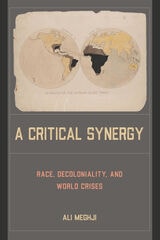
cover of A Critical Synergy: Race, Decoloniality, and World Crises

A Critical Synergy

Race, Decoloniality, and World Crises

Meghji, Ali

Temple University Press, 2023

Practitioners of decolonial theory and critical race theory (CRT) often use one or the other, but not both. In his provocative book, A Critical Synergy, Ali Meghji suggests using the two theories in tandem rather than attempting to hierarchize or synthesize them. Doing so allows for the study of social phenomena in a way that captures their global and historical roots, while acknowledging their local, national, and contemporary particularities.

The differences between decolonial thought and CRT, Meghji insists, does not necessarily imply one approach is stronger. Rather, he asserts, they often provide alternative but not incompatible viewpoints of the same social problem. Meghji presents case studies of capitalism, the COVID-19 pandemic, climate crisis, and twenty-first-century far-right populism to show that with both theories, we can understand more, as insights may be lost by using only one.

Meghji is not calling for a universal theoretical synthesis in A Critical Synergy, but rather a practice that can help open sociology and social science to the tradition of pluriversality much more broadly.
[more]
cover of A Decolonial Feminism

A Decolonial Feminism

Francoise Verges

Pluto Press, 2021
For too long feminism has been co-opted by the forces they seek to dismantle. In this powerful manifesto, Francoise Verges argues that feminists should no longer be accomplices of capitalism, racism, colonialism and imperialism: it is time to fight the system that created the boss, built the prisons and polices women’s bodies. A Decolonial Feminism grapples with the central issues in feminist debates today: from Eurocentrism and whiteness, to power, inclusion and exclusion. Delving into feminist and anti-racist histories, Verges also assesses contemporary activism, movements and struggles, including #MeToo and the Women's Strike. Centring anticolonialism and anti-racism within an intersectional Marxist feminism, the book puts forward an urgent demand to free ourselves from the capitalist, imperialist forces that oppress us.
[more]
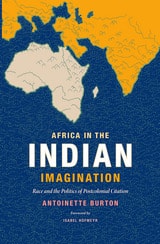
cover of Africa in the Indian Imagination: Race and the Politics of Postcolonial Citation

Africa in the Indian Imagination

Race and the Politics of Postcolonial Citation

Antoinette Burton

Duke University Press, 2016

In Africa in the Indian Imagination Antoinette Burton reframes our understanding of the postcolonial Afro-Asian solidarity that emerged from the 1955 Bandung conference. Afro-Asian solidarity is best understood, Burton contends, by using friction as a lens to expose the racial, class, gender, sexuality, caste, and political tensions throughout the postcolonial global South. Focusing on India's imagined relationship with Africa, Burton historicizes Africa's role in the emergence of a coherent postcolonial Indian identity. She shows how—despite Bandung's rhetoric of equality and brotherhood—Indian identity echoed colonial racial hierarchies in its subordination of Africans and blackness. Underscoring Indian anxiety over Africa and challenging the narratives and dearly held assumptions that presume a sentimentalized, nostalgic, and fraternal history of Afro-Asian solidarity, Burton demonstrates the continued need for anti-heroic, vexed, and fractious postcolonial critique. 
 
[more]
cover of African Intellectuals and Decolonization

African Intellectuals and Decolonization

Nicholas M. Creary

Ohio University Press, 2012
Decades after independence for most African states, the struggle for decolonization is still incomplete, as demonstrated by the fact that Africa remains associated in many Western minds with chaos, illness, and disorder. African and non-African scholars alike still struggle to establish the idea of African humanity, in all its diversity, and to move Africa beyond its historical role as the foil to the West. As this book shows, Africa’s decolonization is an ongoing process across a range of fronts, and intellectuals—both African and non-African—have significant roles to play in that process. The essays collected here examine issues such as representation and retrospection; the roles of intellectuals in the public sphere; and the fundamental question of how to decolonize African knowledges. African Intellectuals and Decolonization outlines ways in which intellectual practice can serve to de-link Africa from its global representation as a debased, subordinated, deviant, and inferior entity. ContributorsLesley Cowling, University of the Witwatersrand Nicholas M. Creary, University at Albany Marlene De La Cruz, Ohio University Carolyn Hamilton, University of Cape Town George Hartley, Ohio University Janet Hess, Sonoma State University T. Spreelin McDonald, Ohio University Ebenezer Adebisi Olawuyi, University of Ibadan Steve Odero Ouma, University of Nairobi Oyeronke Oyewumi, State University of New York at Stony Brook Tsenay Serequeberhan, Morgan State University
[more]
cover of After Independence: Making and Protecting the Nation in Postcolonial and Postcommunist States

After Independence

Making and Protecting the Nation in Postcolonial and Postcommunist States

Lowell W. Barrington, Ed.

University of Michigan Press, 2006

The majority of the existing work on nationalism has centered on its role in the creation of new states. After Independence breaks new ground by examining the changes to nationalism after independence in seven new states. This innovative volume challenges scholars and specialists to rethink conventional views of ethnic and civic nationalism and the division between primordial and constructivist understandings of national identity.

"Where do nationalists go once they get what they want? We know rather little about how nationalist movements transform themselves into the governments of new states, or how they can become opponents of new regimes that, in their view, have not taken the self-determination drive far enough. This stellar collection contributes not only to comparative theorizing on nationalist movements, but also deepens our understanding of the contentious politics of nationalism's ultimate product--new countries."
--Charles King, Chair of the Faculty and Ion Ratiu Associate Professor, Georgetown University School of Foreign Service

"This well-integrated volume analyzes two important variants of nationalism-postcolonial and postcommunist-in a sober, lucid way and will benefit students and scholars alike."
--Zvi Gitelman, University of Michigan


Lowell W. Barrington is Associate Professor of Political Science, Marquette University.
[more]
cover of After Spanish Rule: Postcolonial Predicaments of the Americas

After Spanish Rule

Postcolonial Predicaments of the Americas

Mark Thurner and Andrés Guerrero, eds.

Duke University Press, 2003

Insisting on the critical value of Latin American histories for recasting theories of postcolonialism, After Spanish Rule is the first collection of essays by Latin Americanist historians and anthropologists to engage postcolonial debates from the perspective of the Americas. These essays extend and revise the insights of postcolonial studies in diverse Latin American contexts, ranging from the narratives of eighteenth-century travelers and clerics in the region to the status of indigenous intellectuals in present-day Colombia. The editors argue that the construction of an array of singular histories at the intersection of particular colonialisms and nationalisms must become the critical project of postcolonial history-writing.

Challenging the universalizing tendencies of postcolonial theory as it has developed in the Anglophone academy, the contributors are attentive to the crucial ways in which the histories of Latin American countries—with their creole elites, hybrid middle classes, subordinated ethnic groups, and complicated historical relationships with Spain and the United States—differ from those of other former colonies in the southern hemisphere. Yet, while acknowledging such differences, the volume suggests a host of provocative, critical connections to colonial and postcolonial histories around the world.

Contributors
Thomas Abercrombie
Shahid Amin
Jorge Cañizares-Esguerra
Peter Guardino
Andrés Guerrero
Marixa Lasso
Javier Morillo-Alicea
Joanne Rappaport
Mauricio Tenorio-Trillo
Mark Thurner
[more]
cover of After the Imperial Turn: Thinking with and through the Nation

After the Imperial Turn

Thinking with and through the Nation

Antoinette Burton, ed.

Duke University Press, 2003

From a variety of historically grounded perspectives, After the Imperial Turn assesses the fate of the nation as a subject of disciplinary inquiry. In light of the turn toward scholarship focused on imperialism and postcolonialism, this provocative collection investigates whether the nation remains central, adequate, or even possible as an analytical category for studying history. These twenty essays, primarily by historians, exemplify cultural approaches to histories of nationalism and imperialism even as they critically examine the implications of such approaches.
While most of the contributors discuss British imperialism and its repercussions, the volume also includes, as counterpoints, essays on the history and historiography of France, Germany, Spain, and the United States. Whether looking at the history of the passport or the teaching of history from a postnational perspective, this collection explores such vexed issues as how historians might resist the seduction of national narratives, what—if anything—might replace the nation’s hegemony, and how even history-writing that interrogates the idea of the nation remains ideologically and methodologically indebted to national narratives. Placing nation-based studies in international and interdisciplinary contexts, After the Imperial Turn points toward ways of writing history and analyzing culture attentive both to the inadequacies and endurance of the nation as an organizing rubric.

Contributors. Tony Ballantyne, Antoinette Burton, Ann Curthoys, Augusto Espiritu, Karen Fang, Ian Christopher Fletcher, Robert Gregg, Terri Hasseler, Clement Hawes, Douglas M. Haynes, Kristin Hoganson, Paula Krebs, Lara Kriegel, Radhika Viyas Mongia, Susan Pennybacker, John Plotz, Christopher Schmidt-Nowara, Heather Streets, Hsu-Ming Teo, Stuart Ward, Lora Wildenthal, Gary Wilder
[more]
cover of Against War: Views from the Underside of Modernity

Against War

Views from the Underside of Modernity

Nelson Maldonado-Torres

Duke University Press, 2008

Nelson Maldonado-Torres argues that European modernity has become inextricable from the experience of the warrior and conqueror. In Against War, he develops a powerful critique of modernity, and he offers a critical response combining ethics, political theory, and ideas rooted in Christian and Jewish thought. Maldonado-Torres focuses on the perspectives of those who inhabit the underside of western modernity, particularly Jewish, black, and Latin American theorists. He analyzes the works of the Jewish Lithuanian-French philosopher and religious thinker Emmanuel Levinas, the Martiniquean psychiatrist and political thinker Frantz Fanon, and the Catholic Argentinean-Mexican philosopher, historian, and theologian Enrique Dussel.

Considering Levinas’s critique of French liberalism and Nazi racial politics, and the links between them, Maldonado-Torres identifies a “master morality” of dominion and control at the heart of western modernity. This master morality constitutes the center of a warring paradigm that inspires and legitimizes racial policies, imperial projects, and wars of invasion. Maldonado-Torres refines the description of modernity’s war paradigm and the Levinasian critique through Fanon’s phenomenology of the colonized and racial self and the politics of decolonization, which he reinterprets in light of the Levinasian conception of ethics. Drawing on Dussel’s genealogy of the modern imperial and warring self, Maldonado-Torres theorizes race as the naturalization of war’s death ethic. He offers decolonial ethics and politics as an antidote to modernity’s master morality and the paradigm of war. Against War advances the de-colonial turn, showing how theory and ethics cannot be conceived without politics, and how they all need to be oriented by the imperative of decolonization in the modern/colonial and postmodern world.
[more]
cover of Alimentary Tracts: Appetites, Aversions, and the Postcolonial

Alimentary Tracts

Appetites, Aversions, and the Postcolonial

Parama Roy

Duke University Press, 2010

In Alimentary Tracts Parama Roy argues that who eats and with whom, who starves, and what is rejected as food are questions fundamental to empire, decolonization, and globalization. In crucial ways, she suggests, colonialism reconfigured the sensorium of colonizer and colonized, generating novel experiences of desire, taste, and appetite as well as new technologies of the embodied self. For colonizers, Indian nationalists, diasporic persons, and others in the colonial and postcolonial world orders, the alimentary tract functioned as an important corporeal, psychoaffective, and ethicopolitical contact zone, in which questions of identification, desire, difference, and responsibility were staged.

Interpreting texts that have addressed cooking, dining, taste, hungers, excesses, and aversions in South Asia and its diaspora since the mid-nineteenth century, Roy relates historical events and literary figures to tropes of disgust, abstention, dearth, and appetite. She analyzes the fears of pollution and deprivation conveyed in British accounts of the so-called Mutiny of 1857, complicates understandings of Mohandas K. Gandhi’s vegetarianism, examines the “famine fictions” of the novelist-actor Mahasweta Devi, and reflects on the diasporic cookbooks and screen performances of Madhur Jaffrey. This account of richly visceral global modernity furnishes readers with a new idiom for understanding historical action and cultural transformation.
[more]
cover of Ambition and Adjustment: The Making and Unmaking of Postcolonial Development in Africa

Ambition and Adjustment

The Making and Unmaking of Postcolonial Development in Africa

Priya Lal

University of Chicago Press, 2026

How the best intentions of African socialism became the useful tools of capitalism.

In the mid-twentieth century, skilled labor was seen as the key to national development. For newly independent African countries, this posed a formidable challenge: to build thriving economies, they needed to rapidly educate workers. As it turns out, that wasn’t their only obstacle.

Ambition and Adjustment reveals how responses to this human capital problem from the political left and right converged in unlikely ways to block Africa’s postcolonial progress. Focusing on nation-building projects in Zambia and Tanzania, Priya Lal recounts how the first generations of Africa’s professional class faced pressures on all sides—from foreign planners prioritizing economic growth and from local socialists decrying higher education and professionalization as wasteful and elitist. When African development stalled, international institutions like the World Bank took up parts of both approaches, justifying structural adjustment programs that defunded African universities and hospitals in the name of social equity. Indeed, Lal shows that neoliberal austerity in the 1990s was packaged in Africa’s socialist narratives from the 1960s.

By unearthing this forgotten history, Ambition and Adjustment upends traditional accounts of postcolonial development, exposing how socialism and capitalism both conflicted and overlapped to shape Africa’s trajectory since independence.
[more]
cover of American Tropics: Articulating Filipino America

American Tropics

Articulating Filipino America

Allan Punzalan Isaac

University of Minnesota Press, 2006
In 1997, when the New York Times described Filipino American serial killer Andrew Cunanan as appearing “to be everywhere and nowhere,” Allan Punzalan Isaac recognized confusion about the Filipino presence in the United States, symptomatic of American imperialism’s invisibility to itself. In American Tropics, Isaac explores American fantasies about the Philippines and other “unincorporated” parts of the U.S. nation that obscure the contradictions of a democratic country possessing colonies.Isaac boldly examines the American empire’s images of the Philippines in turn-of-the-century legal debates over Puerto Rico, Progressive-era popular literature set in Latin American borderlands, and midcentury Hollywood cinema staged in Hawai‘i and the Pacific islands. Isaac scrutinizes media coverage of the Cunanan case, Boy Scout adventure novels, and Hollywood films such as The Real Glory (1939) and Blue Hawaii (1961) to argue that territorial sites of occupation are an important part of American identity. American Tropics further reveals the imperial imagination’s role in shaping national meaning in novels such as Carlos Bulosan’s America Is in the Heart (1946) and Jessica Hagedorn’s Dogeaters (1990), Filipino American novels forced to articulate the empire’s enfolded but disavowed borders.Tracing the American empire from the beginning of the twentieth century to Philippine liberation and the U.S. civil rights movement, American Tropics lays bare Filipino Americans’ unique form of belonging marked indelibly by imperialism and at odds with U.S. racial politics and culture.Allan Punzalan Isaac is assistant professor of English at Wesleyan University.
[more]
cover of An Imagined America: Language, Literacy, Identity, and Coloniality at Syrian Protestant College, 1866–1920

An Imagined America

Language, Literacy, Identity, and Coloniality at Syrian Protestant College, 1866–1920

Lisa Arnold

University Press of Colorado, 2026

An Imagined America presents a historical, transnational, translingual, and decolonial perspective on questions of identity, literacy, language, culture, and citizenship. In examining a variety of English- and Arabic-language archival documents from the founding of Syrian Protestant College in 1866 (today the American University of Beirut) until the fall of the Ottoman Empire in 1920, Lisa R. Arnold shows how transnational and translingual negotiations among faculty, students, and administrators, as well as the local and regional community, produced a tenuous and sometimes unsettling vision of America for foreigners and locals alike. As her account shows, transnational and translingual discourses provide the backdrop and motive for the assertion of coloniality in contexts of literacy education such as that of Syrian Protestant College. An Imagined America allows scholars and educators in rhetoric and writing studies, education, and related fields to consider how literacy education in English has, and often continues to, construct an imagined America that is both grounded on and reproduces colonial epistemology. Such constructions work to uphold exclusionary practices that are all too vivid in our world today.


[more]
cover of Aníbal Quijano: Foundational Essays on the Coloniality of Power

Aníbal Quijano

Foundational Essays on the Coloniality of Power

Anibal Quijano. Edited by Walter D. Mignolo, Rita Segato, and Catherine E. Walsh

Duke University Press, 2024
The Peruvian sociologist Aníbal Quijano is widely considered to be a foundational figure of the decolonial perspective grounded in three basic concepts: coloniality, coloniality of power, and the colonial matrix of power. His decolonial theorizations of these three concepts have transformed the principles and assumptions of the very idea of knowledge, impacted the social sciences and humanities, and questioned the myth of rationality in natural sciences. The essays in this volume encompass nearly thirty years of Quijano’s work, bringing them to an English-reading audience for the first time. This volume is not simply an introduction to Quijano’s work; it achieves one of his unfulfilled goals: to write a book that contains his main hypotheses, concepts, and arguments. In this regard, the collection encourages a fuller understanding and broader implementation of the analyses and concepts that he developed over the course of his long career. Moreover, it demonstrates that the tools for reading and dismantling coloniality originated outside the academy in Latin America and the former Third World.
[more]
cover of Asia as Method: Toward Deimperialization

Asia as Method

Toward Deimperialization

Kuan-Hsing Chen

Duke University Press, 2010

Centering his analysis in the dynamic forces of modern East Asian history, Kuan-Hsing Chen recasts cultural studies as a politically urgent global endeavor. He argues that the intellectual and subjective work of decolonization begun across East Asia after the Second World War was stalled by the cold war. At the same time, the work of deimperialization became impossible to imagine in imperial centers such as Japan and the United States. Chen contends that it is now necessary to resume those tasks, and that decolonization, deimperialization, and an intellectual undoing of the cold war must proceed simultaneously. Combining postcolonial studies, globalization studies, and the emerging field of “Asian studies in Asia,” he insists that those on both sides of the imperial divide must assess the conduct, motives, and consequences of imperial histories.

Chen is one of the most important intellectuals working in East Asia today; his writing has been influential in Taiwan, South Korea, Hong Kong, Japan, Singapore, and mainland China for the past fifteen years. As a founding member of the Inter-Asia Cultural Studies Society and its journal, he has helped to initiate change in the dynamics and intellectual orientation of the region, building a network that has facilitated inter-Asian connections. Asia as Method encapsulates Chen’s vision and activities within the increasingly “inter-referencing” East Asian intellectual community and charts necessary new directions for cultural studies.
[more]
cover of At Penpoint: African Literatures, Postcolonial Studies, and the Cold War

At Penpoint

African Literatures, Postcolonial Studies, and the Cold War

Monica Popescu

Duke University Press, 2020
In At Penpoint Monica Popescu traces the development of African literature during the second half of the twentieth century to address the intertwined effects of the Cold War and decolonization on literary history. Popescu draws on archival materials from the Soviet-sponsored Afro-Asian Writers Association and the CIA-funded Congress for Cultural Freedom alongside considerations of canonical literary works by Ayi Kwei Armah, Ngũgĩ wa Thiong'o, Ousmane Sembène, Pepetela, Nadine Gordimer, and others. She outlines how the tensions between the United States and the Soviet Union played out in the aesthetic and political debates among African writers and intellectuals. These writers decolonized aesthetic canons even as superpowers attempted to shape African cultural production in ways that would advance their ideological and geopolitical goals. Placing African literature at the crossroads of postcolonial theory and studies of the Cold War, Popescu provides a new reassessment of African literature, aesthetics, and knowledge production.
[more]
cover of At the Risk of Being Heard: Identity, Indigenous Rights, and Postcolonial States

At the Risk of Being Heard

Identity, Indigenous Rights, and Postcolonial States

Bartholomew Dean and Jerome M. Levi, Editors

University of Michigan Press, 2003

Leading experts in the analysis of ethnicity and indigenous rights explore the questions of why and how the circumstances of indigenous peoples are improving in some places of the world, while their human rights continue to be abused in others. Drawing on case studies from Asia, Africa, Australia, and the Americas, chapters explore how political organization, natural resource management, economic development, and conflicting definitions over cultural, linguistic, religious, and territorial identity have informed indigenous strategies for empowerment.
Combining rich ethnographic descriptions with clear theoretical analyses, At the Risk of Being Heard considers the paradoxical challenges and opportunities confronting indigenous peoples at the dawn of the twenty-first century. In the face of state-sanctioned violence, indigenous peoples encounter considerable risks when asserting their rights, especially to self-determination. Yet, if they remain silent or absent from new arenas of power, hiding in marginalized homelands or cultural practices, they risk being invisible to those allies that would aid them in their struggles for survival.
At the Risk of Being Heard offers needed insights for individuals working on issues of governance, sustainable development, resource management, globalization, and indigenous affairs. It will undoubtedly appeal to undergraduate and graduate students in anthropology, sociology, history, political science, peace studies, and to those students in courses that explore relationships among postcolonial states, indigenous peoples, and human rights.
Bartholomew Dean is Assistant Professor of Anthropology, University of Kansas. Jerome M. Levi is Associate Professor of Anthropology, Carleton College.
[more]