Results by title
10 books match the query 'Pottery & Ceramics'
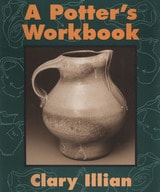
A Potter's Workbook
Clary Illian
University of Iowa Press, 1999
In A Potter's Workbook, renowned studio potter and teacher Clary Illian presents a textbook for the hand and the mind. Her aim is to provide a way to see, to make, and to think about the forms of wheel-thrown vessels; her information and inspiration explain both the mechanics of throwing and finishing pots made simply on the wheel and the principles of truth and beauty arising from that traditional method.
Each chapter begins with a series of exercises that introduce the principles of good form and good forming for pitchers, bowls, cylinders, lids, handles, and every other conceivable functional shape. Focusing on utilitarian pottery created on the wheel, Illian explores sound, lively, and economically produced pottery forms that combine an invitation to mindful appreciation with ease of use. Charles Metzger's striking photographs, taken under ideal studio conditions, perfectly complement her vigorous text.
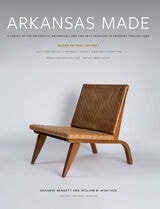
Arkansas Made, Volume 1
A Survey of the Decorative, Mechanical, and Fine Arts Produced in Arkansas through 1950Swannee Bennett
University of Arkansas Press, 2020
Arkansas Made is the culmination of Historic Arkansas Museum’s exhaustive investigations into the history of the state’s material culture. Decades of meticulous research have resulted in this exciting two-volume survey of cabinetmakers, silversmiths, potters, fine artists, quilters, and other artisans working in communities all over the state.
The work of the artisans documented here has been the driving force of Historic Arkansas Museum’s mission to collect and preserve Arkansas’s creative legacy and rich artistic traditions. Artisans from across Arkansas’s rich cultural landscape come to life among the colorful quilts, playful temperance jugs, and inventive effigies included in Volume I. Readers will delight not only in the striking full-color images but also in the stories that weave them together across time and region to create a lively picture of art and artisanship in a state too little celebrated for its creative output.
Quilts and Textiles • Ceramics • Silver •Weaponry • Furniture • Vernacular Architecture • Native American Art
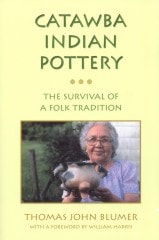
Catawba Indian Pottery
The Survival of a Folk TraditionThomas John Blumer, with a foreword by William L. Harris
University of Alabama Press, 2004
Traces the craft of pottery making among the Catawba Indians of North Carolina from the late 18th century to the present
When Europeans encountered them, the Catawba Indians were living along the river and throughout the valley that carries their name near the present North Carolina-South Carolina border. Archaeologists later collected and identified categories of pottery types belonging to the historic Catawba and extrapolated an association with their protohistoric and prehistoric predecessors.
In this volume, Thomas Blumer traces the construction techniques of those documented ceramics to the lineage of their probable present-day master potters or, in other words, he traces the Catawba pottery traditions. By mining data from archives and the oral traditions of contemporary potters, Blumer reconstructs sales circuits regularly traveled by Catawba peddlers and thereby illuminates unresolved questions regarding trade routes in the protohistoric period. In addition, the author details particular techniques of the representative potters—factors such as clay selection, tool use, decoration, and firing techniques—which influence their styles.
Clay
The History and Evolution of Humankind’s Relationship with Earth’s Most Primal ElementSuzanne Staubach
University Press of New England, 2013
Corpus Vasorum Antiquorum, Fascicule 10
Athenian Red-Figure Column and Volute KratersDespoina Tsiafakis
J. Paul Getty Trust, The, 2019
This new fascicule of the CVA—the tenth issued by the J. Paul Getty Museum and the first ever to be published open access—presents a selection of Attic red-figure column and volute kraters ranging from 520 to 510 BCE through the early fourth century BCE. Among the works included are a significant dinoid volute krater and a volute krater with the Labors of Herakles that is attributed to the Kleophrades Painter.
The free online edition of this open-access catalogue is available at www.getty.edu/publications/cva10/. Also available are free PDF, EPUB, and Kindle/MOBI downloads of the book, CSV and JSON downloads of the object data, and JPG downloads of the catalogue images.

Guy Wolff
Master Potter in the GardenSuzanne Staubach
University Press of New England, 2013
Measuring the Flow of Time
The Works of James A. Ford, 1935-1941James A. Ford, edited by R. Lee Lyman and Michael J. O'Brien
University of Alabama Press, 1999
This collection of Ford's works focuses on the development of ceramic chronology—a key tool in Americanist archaeology.
Pottery Analysis
A SourcebookPrudence M. Rice
University of Chicago Press, 1987
Stability and Change in Guale Indian Pottery, A.D. 1300-1702
Rebecca Saunders
University of Alabama Press, 2000
Through a comprehensive study of changing pottery attributes, Saunders documents the clash of Spanish and Native American cultures in the 16th-century southeastern United States.
By studying the ceramic traditions of the Guale Indians, Rebecca Saunders provides evidence of change in Native American lifeways from prehistory through European contact and the end of the Mission period. The Guale were among the first southeastern groups to come into contact with Spanish and French colonists, and they adapted various strategies in order to ensure their own social survival. That adaptation is reflected, Saunders shows, in the changing attributes of pottery recovered on archaeological sites on the coasts of Georgia and Florida.
Saunders traces the evolution of Guale pottery from the late prehistoric Irene phase through the Mission period at the three archaeological sites. She uses both technological and stylistic attributes to monitor change, paying particular attention to changes in execution and frequency of the filfot cross—a stylized cross that is a symbol of Guale cosmology. The frequency of this symbol in different ceramic components, according to Saunders, is a measure of change in the worldview of the missionized Guale. Although the symbol abruptly changed after the first Spanish contact, it showed remarkable stability through the Mission period, suggesting that traditional craft training and production remained strong despite high mortality rates and frequent relocation.
Only after 1684, when the Guale were relocated to Amelia Island in present-day Florida, did the use of the cross motif decline, suggesting that the Guale who remained in Spanish territory may have conceived of their place in the cosmos differently from their forebears or their contemporaries who fled to the interior.
Woodland Potters and Archaeological Ceramics of the North Carolina Coast
Joseph M. Herbert
University of Alabama Press, 2009
Pottery types, composed of specific sets of attributes, have long been defined for various periods and areas of the Atlantic coast, but their relationships and meanings have not been explicitly examined. In exploring these relationships for the North Carolina coast, this work examines the manner in which pottery traits cross-cut taxonomic types, tests the proposition that communities of practice existed at several scales, and questions the fundamental notion of ceramic types as ethnic markers.
Ethnoarchaeological case studies provide a means of assessing the mechanics of how social structure and gender roles may have affected the transmission of pottery-making techniques and how socio-cultural boundaries are reflected in the distribution of ceramic traditions. Another very valuable source of information about past practices is replication experimentation, which provides a means of understanding the practical techniques that lie behind the observable traits, thereby improving our understanding of how certain techniques may have influenced the transmission of traits from one potter to another. Both methods are employed in this study to interpret the meaning of pottery as an indicator of social activity on the North Carolina coast.