Results by title
194 books match the query 'Practice' and 10 start with a

A Catholic Approach to Literacy for Struggling Students
Connecting Philosophy and PracticeMargaret G. Walsh
Catholic University of America Press, 2025

Abortion at Work
Ideology and Practice in a Feminist ClinicSimonds, Wendy
Rutgers University Press, 1996
These are the questions that drive Wendy Simonds' Abortion at Work. Simonds documents the ways in which workers at a feminist clinic construct compelling feminist visions, and also watch their ideals fall short in practice. Simonds interprets these women's narratives to get at how abortion works on feminism, and to show what feminism can gain by rethinking abortion utilizing these activists' terms. In thoroughly engaging prose, Simonds frames her analysis with a moving account of her own personal understanding of the issues.
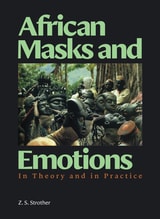
African Masks and Emotions
In Theory and in PracticeZ. S. Strother
J. Paul Getty Trust, The, 0
In this groundbreaking book, Z. S. Strother, inspired by dialogues with African masquerade patrons and performers, disputes assumptions that masks universally hide, reveal, or transform.
In Western European languages, the word mask exerts a powerful presence as a figure of speech. To masquerade is to pretend to be someone or something one is not. By extension, unmasking is a heroic metaphor for exposing a hidden truth. In this volume, art historian Z. S. Strother counters that narrative, using African case studies to offer an alternative vision of masquerading. She explores the aesthetic emotions aroused by masks, or more precisely, by “dances of masks”: joy, wonder, awe, fear, and the release of laughing out loud. She also investigates the uncanny—a sensation of “delicious shiveriness” triggered when familiar spaces and individuals become strange and changeable. Inspired by Strother’s studies in DR Congo, African Masks and Emotions takes a comparative perspective and moves emotion from the periphery to the center of analysis.
Reflecting Getty's commitment to open content, African Masks and Emotions is available for free download in ePub and PDF formats at: https://www.getty.edu/publications-reports/item/2F27A4. This paperback edition is available for sale for readers who wish to have a bound reference copy.

Agricultural Development in Japan
The Land Improvement District in Concept and PracticeGil Latz
University of Chicago Press, 1989
American Archival Studies
Readings in Theory and PracticeRandall C. Jimerson
Society of American Archivists, 2000

Anarchy Alive!
Anti-Authoritarian Politics From Practice to TheoryUri Gordon
Pluto Press, 2008
Anarchist politics are at the heart of today’s most vibrant and radical social movements. From squatted social centres and community gardens to acts of sabotage and raucous summit blockades, anarchist groups and networks are spreading an ethos of direct action, non-hierarchical organizing and self-liberation that has redefined revolutionary struggle for the 21st century.
Anarchy Alive! is a fascinating, in-depth look at the practice and theory of contemporary anarchism. Uri Gordon draws on his activist experience and on interviews, discussions and a vast selection of recent literature to explore the activities, cultures and agendas shaping today’s explosive anti-authoritarian revival. Anarchy Alive! also addresses some of the most tense debates in the contemporary movement, using a theory based on practice to provocatively reshape anarchist discussions of leadership, violence, technology and nationalism.
This is the ideal book for anyone looking for a fresh, informed and critical engagement with anarchism, as a mature and dynamic political force in the age of globalisation.

Antidumping Law and Practice
A Comparative StudyJohn H. Jackson and Edwin A. Vermulst, Editors
University of Michigan Press, 1990
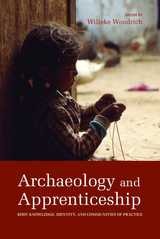
Archaeology and Apprenticeship
Body Knowledge, Identity, and Communities of PracticeEdited by Willeke Wendrich
University of Arizona Press, 2012
Apprenticeship is broadly defined as the transmission of culture through a formal or informal teacher–pupil relationship. This collection invites a wide discussion, citing case studies from all over the world and yet focuses the scholarship into a concise set of contributions. The chapters in this volume demonstrate how archaeology can benefit greatly from the understanding of the social dimensions of knowledge transfer. This book also examines apprenticeship in archaeology against a backdrop of sociological and cognitive psychology literature, to enrich the understanding of the relationship between material remains and enculturation.
Each of the authors in this collection looks specifically at how material remains can reveal several specific aspects of ancient cultures: What is the human potential for learning? How do people learn? Who is teaching? Why are they learning? What are the results of such learning? How do we recognize knowledge transfer in the archaeological record? These fundamental questions are featured in various forms in all chapters of the book. With case studies from the American Southwest, Alaska, Egypt, Ancient Greece, and Mesopotamia, this book will have broad appeal for scholars—particularly those concerned with cultural transmission and traditions of learning and education—all over the world.

Asylum
The Concept and the PracticeRanjana Khanna
Duke University Press, 2026

Autonomous Underwater Vehicles
Design and practiceFrank Ehlers
The Institution of Engineering and Technology, 2020