Results by title
9 books match the query 'Prague (Czech Republic)'
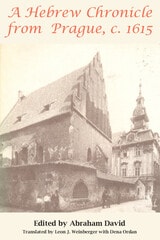
A Hebrew Chronicle from Prague, C. 1615
Abraham David
University of Alabama Press, 1993
"This slender anonymous work, spanning 1389 to 1611, presents the priorities and concerns of a Jewish community straddling the late medieval and early modern periods. Ample footnotes and explanations provide the lay reader with sufficient background to understand the references to historical events and figures, to ideologies and to institutions. A comprehensive introduction presents the realities of Prague and Bohemia, as well as offering a helpful discussion of the chronicle and other contemporary Jewish accounts."
—Conservative Jewish Quarterly
"In about 1615 an anonymous Jew from Prague composed a short Hebrew chronicle to recount 'the expulsions, miracles, and other occurrences befalling [the Jews] in Prague and the other lands of our long exile.' Abraham David discovered the manuscript [and] added glosses, historical notes, and an introduction. . . . The chronicle, with its brief annual entries, is not a continuous narrative, but does give a feeling of immediacy, like a newspaper."
—Polin: Studies in Polish Jewry
Castle and Cathedral
Longing for the Sacred in a Skeptical AgeBruce R. Berglund
Central European University Press, 2017
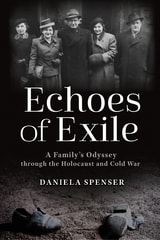
Echoes of Exile
A Family’s Odyssey through the Holocaust and Cold WarDaniela Spenser
University of Alabama Press, 2025
A sweeping exploration of survival, resilience, and the fate of one family amid Europe’s most turbulent century.
Echoes of Exile reveals the seismic disruptions of twentieth-century European history through the intimate lens of one family’s struggle to survive. Setting out to record the life of her mother, Ruth, Daniela Spenser unearthed personal facts and stories that additionally illuminate the shared traumas and experiences of millions of Czech, Polish, and German Jews who died in the Holocaust, as well as the stories of those who survived and lived under Communism and the Cold War. Her resulting work is a fascinating hybrid that combines family letters and interviews with deeply researched political history spanning from the collapse of the Austro-Hungarian Empire to the fall of the Berlin Wall.
Spenser’s fascinating work reveals the difficult choices her mother and family faced, the tests to their loves and loyalties, and the lingering scars of exile. More than a family history, it weaves personal and historical narratives with mundane and momentous threads to create a fresh, distinctive fabric. Spenser recovers fragments of the past that contribute to a map of the present and possibilities for the future. An engrossing account of survival, resilience, and the enduring human spirit amid the maelstrom of Europe’s savage twentieth century, Echoes of Exile will interest readers who value firsthand accounts of significant events and who seek to understand the complexities of survival, identity, and political change through intimate, lived experiences.
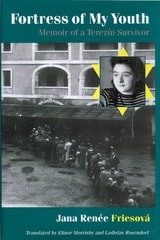
Fortress of My Youth
Memoir of a Terezín SurvivorJana Renée Friesová
University of Wisconsin Press, 2011
Jana Renée Friesová was fifteen when she was imprisoned by the Nazis in the Czech ghetto town of Terezín. Her memoir tells the poignantly familiar story of a young girl who, even under the most abominable circumstances, engages in intense adolescent friendships, worries with her companions over her looks, and falls in love.
Anne Frank’s diary ends with deportation to a concentration camp; Fortress of My Youth, in contrast, takes the reader deep into the horrors of daily life in a camp that were faced by a young girl and her family. But Friesová also tells of love, joy, sacrifice, and the people who shared in the most profound experiences of her life.
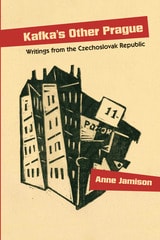
Kafka’s Other Prague
Writings from the Czechoslovak RepublicAnne Jamison
Northwestern University Press, 2018
Franz Kafka was born in Prague, a bilingual city in the Habsburg Empire. He died a citizen of Czechoslovakia. Yet Kafka was not Czech in any way he himself would have understood. He could speak Czech, but, like many Prague Jews, he was raised and educated and wrote in German. Kafka critics to date have had little to say about the majority language of his native city or its “minor literature,” as he referred to it in a 1913 journal entry. Kafka’s Other Prague explains why Kafka’s later experience of Czech language and culture matters.
Bringing to light newly available archival material, Anne Jamison’s innovative study demonstrates how Czechoslovakia’s founding and Kafka’s own dramatic political, professional, and personal upheavals altered his relationship to this “other Prague.” It destabilized Kafka’s understanding of nationality, language, gender, and sex—and how all these issues related to his own writing.
Kafka’s Other Prague juxtaposes Kafka’s German-language work with Czechoslovak Prague’s language politics, intellectual currents, and print culture—including the influence of his lover and translator, the journalist Milena Jesenská—and shows how this changed cultural and linguistic landscape transformed one of the great literary minds of the last century.
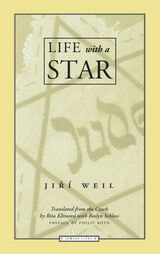
Life with a Star
Jiri Weil
Northwestern University Press, 1998
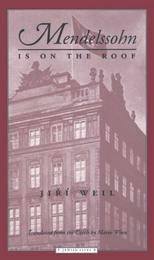
Mendelssohn Is on the Roof
Jiri Weil
Northwestern University Press, 1998
Thus begins a story of disarming simplicity that traces the transformation of ordinary lives in Nazi-occupied Prague. Death abetted by the petty malevolence of Nazi functionaries wins all the battles but ultimately loses the war, defeated by the fragile flowering of courage and defiance.
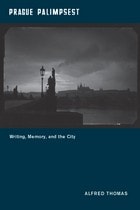
Prague Palimpsest
Writing, Memory, and the CityAlfred Thomas
University of Chicago Press, 2010
A city of immense literary mystique, Prague has inspired writers across the centuries with its beauty, cosmopolitanism, and tragic history. Envisioning the ancient city in central Europe as a multilayered text, or palimpsest, that has been constantly revised and rewritten—from the medieval and Renaissance chroniclers who legitimized the city’s foundational origins to the modernists of the early twentieth century who established its reputation as the new capital of the avant-garde—Alfred Thomas argues that Prague has become a paradoxical site of inscription and effacement, of memory and forgetting, a utopian link to the prewar and pre-Holocaust European past and a dystopia of totalitarian amnesia.
Considering a wide range of writers, including the city’s most famous son, Franz Kafka, Prague Palimpsest reassesses the work of poets and novelists such as Bohumil Hrabal, Milan Kundera, Gustav Meyrink, Jan Neruda, Vítĕzslav Nezval, and Rainer Maria Rilke and engages with other famous authors who “wrote” Prague, including Guillaume Apollinaire, Ingeborg Bachmann, Albert Camus, Paul Celan, and W. G. Sebald. The result is a comparative, interdisciplinary study that helps to explain why Prague—more than any other major European city—has haunted the cultural and political imagination of the West.
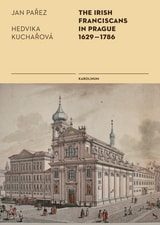
The Irish Franciscans in Prague 1629-1786
Jan Parez and Hedvika Kucharová
Karolinum Press, 2015
Dealing with a hitherto largely neglected theme, Parez and Kucharová attempt to place the Franciscan College within Bohemian history and to document the activities of its members. This wealth of historical material from the Czech archives, presented in English for the first time, will be of great aid for international researchers, particularly those interested in Bohemia or the Irish diaspora.