Results by title
2 books match the query 'Pregnant'
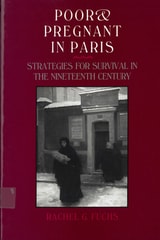
Poor and Pregnant in Paris
Strategies for Survival in the Nineteenth CenturyRachel G Fuchs
Rutgers University Press, 1992
Rachel Fuchs shows how poor urban women in Paris negotiated their environment, and in some respects helped shape it, in their attempt to cope with their problems of poverty and pregnancy. She reveals who the women were and provides insight into the nature of their work and living arrangements. With dramatic detail, and drawing on actual court testimonies, Fuchs portrays poor women's childbirth experiences, their use of charity and welfare, and their recourse to abortion and infanticide as desperate alternatives to motherhood.
Fuchs also provides a comprehensive description of philanthropic and welfare institutions and outlines the relationship between the developing welfare state and official conceptions of womanhood. She traces the evolution of a new morality among policymakers in which secular views, medical hygiene, and a new focus on the protection of children replaced religious morality as a driving force in policy formation.
Combining social, intellectual, and medical history, this study of poor mothers in nineteenth-century society illuminates both class and gender relations in Paris, and illustrates the connection between social policy and the way ordinary women lived their lives.
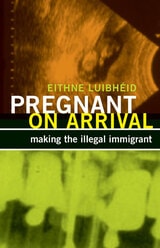
Pregnant on Arrival
Making the Illegal ImmigrantEithne Luibhéid
University of Minnesota Press, 2013
“State alert as pregnant asylum seekers aim for Ireland.” “Country Being Held Hostage by Con Men, Spongers, and Those Taking Advantage of the Maternity Residency Policy.” From 1997 to 2004, headlines such as these dominated Ireland’s mainstream media as pregnant immigrants were recast as “illegals” entering the country to gain legal residency through childbirth. As immigration soared, Irish media and politicians began to equate this phenomenon with illegal immigration that threatened to destroy the country’s social, cultural, and economic fabric.
Pregnant on Arrival explores how pregnant immigrants were made into paradigmatic figures of illegal immigration, as well as the measures this characterization set into motion and the consequences for immigrants and citizens. While focusing on Ireland, Eithne Luibhéid’s analysis illuminates global struggles over the citizenship status of children born to immigrant parents in countries as diverse as the United States, Hong Kong, and elsewhere. Scholarship on the social construction of the illegal immigrant calls on histories of colonialism, global capitalism, racism, and exclusionary nation building but has been largely silent on the role of nationalist sexual regimes in determining legal status. Eithne Luibhéid turns to queer theory to understand how pregnancy, sexuality, and immigrants’ relationships to prevailing sexual norms affect their chances of being designated as legal or illegal.
Pregnant on Arrival offers unvarnished insight into how categories of immigrant legal status emerge and change, how sexual regimes figure prominently in these processes, and how efforts to prevent illegal immigration ultimately redefine nationalist sexual norms and associated racial, gender, economic, and geopolitical hierarchies.