Results by title
12 books match the query 'Prejudice'
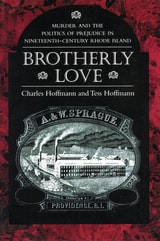
Brotherly Love
Murder and the Politics of Prejudice in Nineteenth-Century Rhode IslandCharles Hoffmann
University of Massachusetts Press, 1993
Brotherly Love is a graphic reconstruction of the crime, its social and economic background, and the subsequent trials. The story reveals the antagonism between native-born Yankees, who commanded great power, and the growing number of Irish Catholic immigrants, most of whom worked in the textile mills. Indeed, the economic, political, and religious dimensions of the conflict are all evident in the trials.
The authors argue persuasively that the Gordons were victims of bigotry and circumstantial evidence, serving as convenient scapegoats to appease a community outraged over the murder of its wealthiest citizen. In telling the story of this notorious case, Brotherly Love reveals the politics of prejudice in nineteenth-century New England as played out in community and courtroom.
Force Of Prejudice
On Racism and Its DoublesPierre-Andre Taguieff
University of Minnesota Press, 2001
Can humanity escape segregating behavior or master the tendency to exclusion? Where does the force of prejudice come from? How might one conceive the philosophical foundations of an effective antiracism? Pursuing these questions, Pierre-André Taguieff puts forward a powerful thesis: that racism has evolved from an argument about races, naturalizing inequality between "biologically" defined groups on the basis of fear of the other, to an argument about cultures, naturalizing historical differences and justifying exclusion. Correspondingly, he shows how antiracism must adopt the strategy that fits the variety of racism it opposes.
Looking at racial and racist theories one by one and then at their antiracist counterparts, Taguieff traces an intellectual genealogy of differentialist and inegalitarian ways of thinking. Already viewed as an essential work of reference in France, The Force of Prejudice is an invaluable tool for identifying and understanding both racism and its antidote in our day.
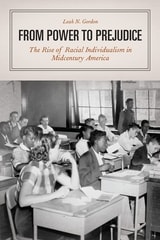
From Power to Prejudice
The Rise of Racial Individualism in Midcentury AmericaLeah N. Gordon
University of Chicago Press, 2015
To answer these questions, From Power to Prejudice examines American academia—both black and white—in the 1940s and ’50s. Gordon presents four competing visions of “the race problem” and documents how an individualistic paradigm, which presented white attitudes as the source of racial injustice, gained traction. A number of factors, Gordon shows, explain racial individualism’s postwar influence: individuals were easier to measure than social forces; psychology was well funded; studying political economy was difficult amid McCarthyism; and individualism was useful in legal attacks on segregation. Highlighting vigorous midcentury debate over the meanings of racial justice and equality, From Power to Prejudice reveals how one particular vision of social justice won out among many contenders.
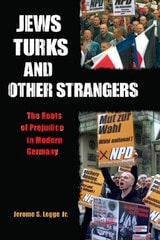
Jews, Turks, and Other Strangers
Roots of Prejudice in Modern GermanyJerome S. Legge, Jr.
University of Wisconsin Press, 2003
Scholarly, objective, insightful, and analytical, Jews, Turks, and Other Strangers studies the causes of prejudice against Jews, foreign workers, refugees, and emigrant Germans in contemporary Germany. Using survey material and quantitative analyses, Legge convincingly challenges the notion that German xenophobia is rooted in economic causes. Instead, he sees a more complex foundation for German prejudice, particularly in a reunified Germany where perceptions of the "other" sometimes vary widely between east and west, a product of a traditional racism rooted in the German past. By clarifying the foundations of xenophobia in a new German state, Legge offers a clear and disturbing picture of a conflicted country and a prejudice that not only affects Jews but also fuels a larger, anti-foreign sentiment.
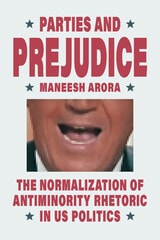
Parties and Prejudice
The Normalization of Antiminority Rhetoric in US PoliticsManeesh Arora
University of Chicago Press, 2025
An essential guide to how the interactions between social norms, party politics, and expressions of prejudice are driving contemporary politics.
Antiminority rhetoric in American politics has grown more overt. What were once fringe comments on Stormfront have now become typical campaign appeals from many mainstream politicians. If there was ever a doubt, this is a poignant reminder that the boundaries of what is “acceptable” and “unacceptable” to say and do are fluid and socially enforced.
In Parties and Prejudice, Maneesh Arora offers a broad framework for understanding this new political terrain. Arora argues that the interaction between social norms and party politics determines what the political consequence of prejudicial speech will be. He illuminates this nuanced relationship by showing that norms vary based on the targeted minority group and the intended audience.
Drawing on experiments, survey data, news coverage, and real-world examples, Parties and Prejudice examines the distinctive ways that egalitarian/inegalitarian norms have developed—within each party—for Black, Muslim, and LGBTQ+ Americans. It is essential reading for understanding Donald Trump’s rise to power, the modern conservative agenda (including opposition to critical race theory and transgender rights), and threats to the development of a multiracial democracy.

Prejudice and Pride
LGBT Activist Stories from Manchester and BeyondLGBT North West
Intellect Books, 2015
LGBT activist and civil rights history from the 1960s to the 2000s has had a huge impact on our social and political landscape in the UK, yet much of this history remains hidden.
Prejudice and Pride: LGBT Activist Stories from Manchester and Beyond explores aspects of LGBT activist history. It covers educational activism, youth work activism, and the history of the LGBT Centre in Manchester.
Through personal stories of activists, heard and recorded by young people from LGBT Youth North West, the book explores the "wibbly wobbly" nature of people's histories. It reveals how they interlink in surprising and creative ways to form the current landscape of both prejudice and pride. Also contains exercises for interpreting and ideas for collecting activist histories within youth work.

Presumption
An Entertainment: A Sequel to Pride and PrejudiceJulia Barrett
University of Chicago Press, 1995
"An elegant emulation and continuation of Pride and Prejudice. . . . Jointly composed by two admirers of Jane Austen, the book often achieves crisp replication of her style. . . . Presumption shows how sequel-writing can, like parody, be a sharp exercise in literary appreciation."—Peter Kemp, Times Literary Supplement
Julia Barrett is a pseudonym for Julia Braun Kessler and Gabrielle Donnelly.
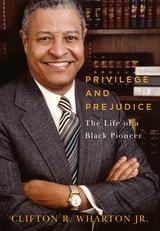
Privilege and Prejudice
The Life of a Black PioneerClifton R. Wharton
Michigan State University Press, 2015
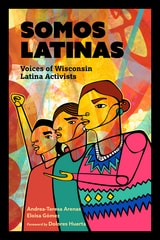
Somos Latinas
Voices of Wisconsin Latina ActivistsAndrea-Teresa Arenas
Wisconsin Historical Society Press, 2018
Celebrated Latina civil rights activist Dolores Huerta once said, “Every moment is an organizing opportunity, every person a potential activist, every minute a chance to change the world.” These are the stories of some of the Latina activists from Wisconsin who have lived Huerta’s words. Somos Latinas shares the powerful narratives of 25 activists—from outspoken demonstrators to collaborative community-builders to determined individuals working for change behind the scenes—providing proof of the long-standing legacy of Latina activism throughout Wisconsin.
Somos Latinas draws on activist interviews conducted as part of the Somos Latinas Digital History Project, housed at the Wisconsin Historical Society, and looks deep into the life and passion of each woman. Though Latinas have a rich history of community activism in the state and throughout the country, their stories often go uncelebrated. Somos Latinas is essential reading for scholars, historians, activists, and anyone curious about how everyday citizens can effect change in their communities.
The Company We Keep
Interracial Friendships and Romantic Relationships from Adolescence to AdulthoodGrace Kao
Russell Sage Foundation, 2019
While research on interracial social ties has often focused on whites and blacks, Hispanics are the largest minority group and Asian Americans are the fastest growing racial group in the United States. The Company We Keep examines friendships and romantic relationships among blacks, whites, Hispanics, and Asian Americans to better understand the full spectrum of contemporary race relations. Using data from the National Longitudinal Study of Adolescent to Adult Health, the authors explore the social ties of more than 15,000 individuals from their first survey responses as middle and high school students in the mid-1990s through young adulthood nearly fifteen years later. They find that while approval for interracial marriages has increased and is nearly universal among young people, interracial friendships and romantic relationships remain relatively rare, especially for whites and blacks. Black women are particularly disadvantaged in forming interracial romantic relationships, while Asian men are disadvantaged in the formation of any romantic relationships, both as adolescents and as young adults. They also find that people in same-sex romantic relationships are more likely to have partners from a different racial group than are people in different-sex relationships. The authors pay close attention to how the formation of interracial friendships and romantic relationships depends on opportunities for interracial contact. They find that the number of students choosing different-race friends and romantic partners is greater in schools that are more racially diverse, indicating that school segregation has a profound impact on young people’s social ties.
Kao, Joyner, and Balistreri analyze the ways school diversity and adolescent interracial contact intersect to lay the groundwork for interracial relationships in young adulthood. The Company We Keep provides compelling insights and hope for the future of living and loving across racial divides.
To Heal the Scourge of Prejudice
The Life and Writings of Hosea EastonHosea Easton
University of Massachusetts Press, 1999
How did racial prejudice originate and why has it been so deeply rooted in American culture? What have been the long-term effects of prejudice on the intellectual, communal, and psychological resources of African Americans? How might the nightmare of racial domination be truly brought to an end? Still pertinent today, these were among the key questions addressed more than a century and a half ago by Hosea Easton (1799–1837), an important yet long neglected activist and intellectual.
A black minister from New England, Easton rose to prominence during the 1820s and 1830s by joining in the struggle of free African Americans to resist southern slavery and secure racial equality. From this experience he developed a deep understanding of the problem of "race" in the United States and became a trenchant critic of white supremacy and its devastating consequences. This volume brings back into print the only extended writings of Easton that have survived into our time: his insightful, almost prescient A Treatise on the Intellectual Character, and the Civil and Political Condition of the Colored People of the U. States, first published in 1837; and his passionate 1828 Thanksgiving Day “Address.” The book also provides a biographical portrait of Easton and his family, drawn from primary documents as well as secondary sources in the areas of biography, genealogy, and social history.
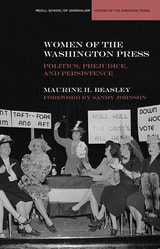
Women of the Washington Press
Politics, Prejudice, and PersistenceMaurine H. Beasley
Northwestern University Press, 2012
Women of the Washington Press argues that for nearly two centuries women journalists have persisted in their efforts to cover politics in the nation’s capital in spite of blatant prejudice and restrictive societal attitudes. They have been held back by the difficulties of combining two competing roles – those of women and journalists. As a group they have not agreed among themselves on feminist goals, while declaring that they aspire to be seen as professional journalists, not as advocates of a particular ideology. Still, they have brought a different perspective to the news, as they have fought hard to prove that they are capable of covering political issues just like male journalists. Over the years women have networked with each other and carved out areas of expertise – such as reporting of politically-oriented social events and coverage of first ladies – that men disdained, while they pressed to gain entrance to sex-segregated institutions like the National Press Club. Attempting to merge the personal and the political, they have raised issues like sexual harassment that men journalists left untouched. At a point today where they represent about half of accredited correspondents, women still face shifting barriers that make it difficult to combine the roles of both women and journalists in Washington, but they are continuing to broaden the definition of political journalism.