Results by title
10 books match the query 'Preserving'
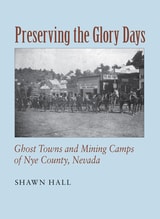
Preserving The Glory Days
Ghost Towns And Mining Camps Of Nye County, NevadaShawn Hall
University of Nevada Press, 1999
Nye County is Nevada’s largest and least populated county, but it is also the site of many of the state’s most colorful ghost towns and mining camps. The county’s economy throughout its history has been largely based on its mines--first, exploiting veins of gold and silver, and more recently deposits of raw materials for modern industry, such as molybdenum and barite. It was here that famous boomtowns like Tonopah and Rhyolite sprang up after the discovery of nearby lodes brought in rushes of prospectors and the merchants who supported them. But the county includes many smaller, shorter-lived camps and numerous abandoned stagecoach and railroad stops associated with defunct mining operations.This book offers a lively, informative record of Nevada’s isolated interior. Hall first published a guide to Nye County’s ghost towns in 1981. Since then, he has continued his research into the county’s past and has uncovered much new information and corrected some errors. To prepare this revised and greatly expanded edition, he revisited all 175 sites recorded earlier and has added more than 20 previously unlisted sites.
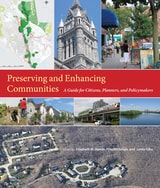
Preserving and Enhancing Communities
A Guide for Citizens, Planners, and PolicymakersElisabeth M. Hamin
University of Massachusetts Press, 2007
This book starts from the premise that each community chooses its future every day, through the incremental decisions made by planning and zoning boards and other citizen volunteers, as well as professional staff. The challenge is to ensure that these decisions support the preservation of what is special about the community, while still fostering necessary and appropriate growth.
In this volume, twenty-nine experts from a variety of fields describe in very practical terms the “community preservation” approach to these issues. As opposed to the top-down regulatory mechanisms that are sometimes used to manage growth, the contributors favor a more flexible, locally based approach that has proven successful in Massachusetts and elsewhere. They show how residents can be empowered to become involved in local decision-making, building coalitions and expressing their views on a wide range of issues, such as zoning, water and land protection, transportation, historic preservation, economic diversity, affordable housing, and reuse of brown-fields. When done properly, development can enhance the sense of place and provide needed homes and jobs. Done improperly, it can generate sprawl and a multitude of problems.
Preserving and Enhancing Communities will be particularly useful to members of planning and other regulatory boards, as well as students of community planning. The book covers not just typical ways of doing things, but also the full spectrum of innovative and emerging practices. Each chapter includes illustrations and case studies, some from Massachusetts and many from other states. The volume concludes with a set of indicators that communities can use to track their progress in community preservation and enhancement.
Preserving the Sacred
Historical Perspectives on the Ojibwa MidewiwinMichael Angel
University of Manitoba Press, 2002
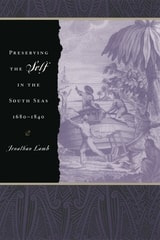
Preserving the Self in the South Seas, 1680-1840
Jonathan Lamb
University of Chicago Press, 2001
Lamb contends that European exploration of the South Seas was less confident and mindful than we have assumed. It was, instead, conducted in moods of distraction and infatuation that were hard to make sense of and difficult to narrate, and it prompted reactions among indigenous peoples that were equally passionate and irregular. Preserving the Self in the South Seas also examines these common crises of exploration in the context of a metropolitan audience that eagerly consumed narratives of the Pacific while doubting their truth. Lamb considers why these halting and incredible journals were so popular with the reading public, and suggests that they dramatized anxieties and bafflements rankling at the heart of commercial society.
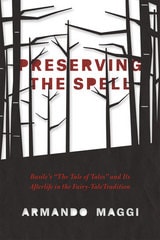
Preserving the Spell
Basile's "The Tale of Tales" and Its Afterlife in the Fairy-Tale TraditionArmando Maggi
University of Chicago Press, 2015
If we want to rediscover the power of fairy tales—as Armando Maggi thinks we should—we need to discover a new mythic lens, a new way of approaching and understanding, and thus re-creating, the transformative potential of these stories. In Preserving the Spell, Maggi argues that the first step is to understand the history of the various traditions of oral and written narrative that together created the fairy tales we know today. He begins his exploration with the ur-text of European fairy tales, Giambattista Basile’s The Tale of Tales, then traces its path through later Italian, French, English, and German traditions, with particular emphasis on the Grimm Brothers’ adaptations of the tales, which are included in the first-ever English translation in an appendix. Carrying his story into the twentieth century, Maggi mounts a powerful argument for freeing fairy tales from their bland contemporary forms, and reinvigorating our belief that we still can find new, powerfully transformative ways of telling these stories.
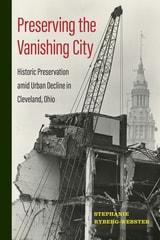
Preserving the Vanishing City
Historic Preservation amid Urban Decline in Cleveland, OhioStephanie Ryberg-Webster
Temple University Press, 2023
Stephanie Ryberg-Webster uncovers the motivations, strategies, and constraints driving Cleveland’s historic preservation sector, led by the public-sector Cleveland Landmarks Commission, nonprofit Cleveland Restoration Society, and a cadre of advocates. She sheds light on the ways in which preservationists confronted severe, escalating, and sustained urban decline, which plagued Cleveland, a prototypical rust-belt industrial city.
Preserving the Vanishing City chronicles the rise of the historic preservation profession in Cleveland and provides six case studies about targeted projects and neighborhood efforts, including industrial heritage, housing preservation and restoration, commercial district revitalization, securing local historic district designations, as well as grassroots organizing, coalition building, and partnerships. Ryberg-Webster also addresses the complexities of historic preservation within the context of rapid racial change in Cleveland’s neighborhoods.
A comprehensive history of preservation within the context of one city’s urban decline, Preserving the Vanishing Cityrecounts the successes, failures, and creative strategies employed to save Cleveland’s built environment.
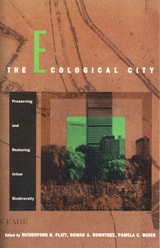
The Ecological City
Preserving and Restoring Urban BiodiversityRutherford H. Platt
University of Massachusetts Press, 1994
Interdisciplinary in content as well as approach, this collection of original essays takes a fresh look at the ecology of urban communities. Written by experts from a variety of professions—academic researchers, private and public program managers, and citizen activists—the book explores issues of geography, ecology, landscape architecture, urban forestry, law, and environmental education. Contributions include broad overviews of common problems a well as detailed case studies of specific programs.
Although several contributors are natural scientists, the book focuses on matters of public policy and public-private collaboration. The aim is not only to assess the impact of increasing urbanization on biodiversity, but also to propose new ways of preserving and restoring the balance between the natural and the built environment through planning and design.

The Locavore’s Kitchen
A Cook’s Guide to Seasonal Eating and PreservingMarilou K. Suszko
Ohio University Press, 2011
More and more Americans are becoming dedicated locavores, people who prefer to eat locally grown or produced foods and who enjoy the distinctive flavors only a local harvest can deliver. The Locavore’s Kitchen invites readers to savor homegrown foods that come from the garden, the farm stand down the road, or local farmers’ markets through cooking and preserving the freshest ingredients.
In more than 150 recipes that highlight seasonal flavors, Marilou K. Suszko inspires cooks to keep local flavors in the kitchen year round. From asparagus in the spring to pumpkins in the fall, Suszko helps readers learn what to look for when buying seasonal homegrown or locally grown foods as well as how to store fresh foods, and which cooking methods bring out fresh flavors and colors. Suszko shares tips and techniques for extending seasonal flavors with detailed instructions on canning, freezing, and dehydrating and which methods work best for preserving texture and flavor.
The Locavore’s Kitchen is an invaluable reference for discovering the delicious world of fresh, local, and seasonal foods.
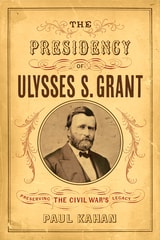
The Presidency of Ulysses S. Grant
Preserving the Civil War's LegacyPaul Kahan
Westholme Publishing, 2025
On December 5, 1876, President Ulysses S. Grant transmitted his eighth and final message to Congress. In reviewing his tenure as president, Grant proclaimed, “Mistakes have been made,” though he assured Congress, his administration’s “failures have been errors of judgment, not of intent.” Until recently, scholars have portrayed Grant as among the country’s worst chief executives. Though the scholarly consensus about Grant’s presidency is changing, the general public knows little, if anything, about his two terms, other than their outsized reputation for corruption. While scandals are undoubtedly part of the story, there is more to Grant’s presidency: Grant faced the Panic of 1873, the severest economic depression in U.S. history, defeated the powerful Senator Charles Sumner on the annexation of Cuba, and deftly avoided war with Spain while laying the groundwork for the “special relationship” between Great Britain and the United States. Grant’s efforts to ensure justice for African Americans and American Indians, however, were undercut by his own decisions and by the contradictory demands of the various constituencies that made up the Republican Party.
In The Presidency of Ulysses S. Grant: Preserving the Civil War’s Legacy, historian Paul Kahan focuses on the unique political, economic, and cultural forces unleashed by the Civil War and how Grant addressed these issues during his tumultuous two terms as chief executive. A timely reassessment, The Presidency of Ulysses S. Grant sheds new light on the business of politics in the decade after the Civil War and portrays an energetic and even progressive executive whose legacy has been overshadowed by both his wartime service and his administration’s many scandals.
The Wisconsin Historical Society
Collecting, Preserving, and Sharing Stories Since 1846John Zimm
Wisconsin Historical Society Press, 2014