Results by title
8 books match the query 'Princes'

Hamlet
William Shakespeare
Arizona Center for Medieval and Renaissance Studies, 2021
Lovers of Shakespeare’s language take heart: Lisa Peterson’s translation of Hamlet into contemporary American English was guided by the principle of “First, do no harm.” Leaving the most famous parts of Hamlet untouched, Peterson untied the language knots that can make the rest of the play difficult to understand in a single theatrical viewing. Peterson’s translation makes Hamlet accessible to new audiences, drawing out its timeless themes while helping to contextualize "To be, or not to be: that is the question," and “Something is rotten in the state of Denmark,” so that contemporary audiences can feel their full weight.
This translation of Hamlet was written as part of the Oregon Shakespeare Festival’s Play On! project, which commissioned new translations of thirty-nine Shakespeare plays. These translations present work from "The Bard" in language accessible to modern audiences while never losing the beauty of Shakespeare’s verse. Enlisting the talents of a diverse group of contemporary playwrights, screenwriters, and dramaturges from diverse backgrounds, this project reenvisions Shakespeare for the twenty-first century. These volumes make these works available for the first time in print—a new First Folio for a new era.
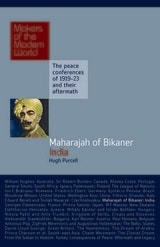
Maharajah of Bikaner
IndiaHugh Purcell
Haus Publishing, 2010
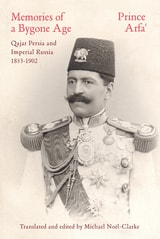
Memories of a Bygone Age
Qajar Persia and Imperial Russia 1853-1902Prince Arfa
Gingko, 2016
Prince Arfa writes with arresting wit about the deadly intrigues of the Qajar court. Lamentingly, but resolutely, he chronicles the decline of Iran from a once great empire to an almost bankrupt, lawless state, in which social unrest is channelled and exploited by the clergy. He describes the complex interactions between Iran and Europe, including an account of Naser-od-Din Shah’s profligate visits to Britain and France; the splendor and eccentricities of the doomed Tsar Nicholas II’s court; the Tsar’s omen-laden coronation; and his own favor with the Tsarina, who would grant him concessions on matters of vital importance to his country. The result is a memoir of extraordinary political intrigue.

Peddlers and Princes
Social Development and Economic Change in Two Indonesian TownsClifford Geertz
University of Chicago Press, 1968
"Peddlers and Princes is, like much of Geertz's other writing, eminently rewarding . . . Case study and broader theory are brought together in an illuminating marriage."—Donald Hindley, Annals of The American Academy of Political and Social Science
"What makes the book fascinating is the author's capacity to relate his anthropological findings to questions of central concern to the economist . . . "—H. G. Johnson, Journal of Political Economy

Pericles
William Shakespeare
Arizona Center for Medieval and Renaissance Studies, 2023
Shakespeare’s romance Pericles follows Pericles, the Prince of Tyre, on a series of adventures across the Mediterranean Sea. Navigating one heroic challenge after another, Pericles strives to be reunited with his wife and child. Ellen McLaughlin’s translation of Pericles illuminates Shakespeare’s text, untangling syntax and bringing forth the poetry of the verse. An encounter between the contemporary and the iconic, this translation brings the play to life as audiences would have experienced it in Shakespeare’s time.
This translation of Pericles was written as part of the Oregon Shakespeare Festival’s Play On! project, which commissioned new translations of thirty-nine Shakespeare plays. These translations present work from “The Bard” in language accessible to modern audiences while never losing the beauty of Shakespeare’s verse. Enlisting the talents of a diverse group of contemporary playwrights, screenwriters, and dramaturges from diverse backgrounds, this project reenvisions Shakespeare for the twenty-first century. These volumes make these works available for the first time in print—a new First Folio for a new era.
Princes and Political Cultures
The New Tiberian Senatorial DecreesGreg Rowe
University of Michigan Press, 2002

Princes, Peasants, and Other Polish Selves
Ethnicity in American LiteratureThomas Gladsky
University of Massachusetts Press, 0
The Princes of Naranja
An Essay in Anthrohistorical MethodBy Paul Friedrich
University of Texas Press, 1987
In this groundbreaking study, Paul Friedrich looks closely at the strong men of the Tarascan Indian village of Naranja: their leadership, friendship, kinship, and violent local politics (over a time depth of one generation), and ways to understand such phenomena. What emerges is an acutely observed portrait of the men who form the very basis of the grass-roots power structure in Mexico today.
Of interest to historians, sociologists, and political scientists, as well as Latin Americanists and anthropologists, The Princes of Naranja is a sequel to Friedrich's now classic Agrarian Revolt in a Mexican Village. It begins with biographical character studies of seven leaders—peasant gunmen, judges, politicos; here the book will grip the reader and provoke strong emotional response, from laughter to horror. A middle section places these "princes" in relation to each other, and to the contexts of village society and the larger entities of which it forms a part. Friedrich's synthesis of anthropology, local (mainly oral) history, macrohistory, microsociology, psychology, and literature gives new insight into the structure of Mexican politics from the local level up, and provides a model for other scholars doing analogous work in other parts of the world, especially in the developing world. The concluding section raises vital questions about the dynamic relations between the fieldworker, fieldwork, field notes, the villagers, the writing of a fieldwork-based book, and, implicitly, the audience for such books.