Results by title
2 books match the query 'Probst, Peter'
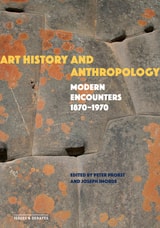
Art History and Anthropology
Modern Encounters, 1870–1970Peter Probst
J. Paul Getty Trust, The, 2023
An in-depth and nuanced look at the complex relationship between two dynamic fields of study.
While today we are experiencing a revival of world art and the so-called global turn of art history, encounters between art historians and anthropologists remain rare. Even after a century and a half of interactions between these epistemologies, a skeptical distance prevails with respect to the disciplinary other. This volume is a timely exploration of the roots of this complex dialogue, as it emerged worldwide in the colonial and early postcolonial periods, between 1870 and 1970.
Exploring case studies from Australia, Austria, Brazil, France, Germany, and the United States, this volume addresses connections and rejections between art historians and anthropologists—often in the contested arena of “primitive art.” It examines the roles of a range of figures, including the art historian–anthropologist Aby Warburg, the modernist artist Tarsila do Amaral, the curator-impresario Leo Frobenius, and museum directors such as Alfred Barr and René d’Harnoncourt. Entering the current debates on decolonizing the past, this collection of essays prompts reflection on future relations between these two fields.
[more]
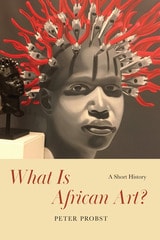
What Is African Art?
A Short HistoryPeter Probst
University of Chicago Press, 2022
A history of the evolving field of African art.
This book examines the invention and development of African art as an art historical category. It starts with a simple question: What do we mean when we talk about African art? By confronting the historically shifting answers to this question, Peter Probst identifies “African art” as a conceptual vessel that manifests wider societal transformations.
What Is African Art? covers three key stages in the field’s history. Starting with the late nineteenth through the mid-twentieth centuries, the book first discusses the colonial formation of the field by focusing on the role of museums, collectors, and photography in disseminating visual cultures as relations of power. It then explores the remaking of the field at the dawn of African independence with the shift toward contemporary art and the rise of Black Atlantic studies in the 1970s and 1980s. Finally, it examines the post- and decolonial reconfiguration of the field driven by questions of representation, repair, and restitution.
[more]