Results by title
33 books match the query 'Professional ethics'
AIDS
Crisis in Professional Ethicsedited by Elliot D. Cohen and Michael Davis
Temple University Press, 1994
Do patients have the right to know their physician's HIV status?
Can a dentist refuse treatment to an HIV-positive patient?
How do educators determine whether to allow an HIV-positive child to attend school, and if they do, should the parents of other children be informed?
Should a counselor break confidentiality by disclosing to a wife that her husband is infected with HIV?
This collection of original essays carefully examines the difficult moral choices the AIDS pandemic has presented for many professionals—physicians, nurses, dentists, teachers and school administrators, business managers, psychotherapists, lawyers, clergy, journalists, and politicians. In the workplace, problems posed by HIV and AIDS have led to a reexamination of traditional codes of ethics. Providing systematic and reasoned discussions, the authors explore the moral, legal, and ethical issues involved in the reconsideration of policies, standards of conduct, and the practicality of balancing personal and professional ethics.
Contributors: Albert Flores, Joan C. Callahan, Jill Powell, Kenneth Kipnis, Al Gini, Howard Cohen, Martin Gunderson, Joseph A. Edelheit, Michael Pritchard, Vincent J. Samar, Sohair ElBaz, William Pardue, and the editors.
Acquisitions
Core Concepts and PracticesJesse Holden
American Library Association, 2016
Advocacy and Awareness for Archivists
Kathleen D. Roe
Society of American Archivists, 2019

Anthropology Goes to War
Professional Ethics and Counterinsurgency in ThailandEric Wakin
University of Wisconsin Press, 1998
Now back in print, Eric Wakin's Anthropology Goes to War is the first comprehensive study of what became known as the Thailand Controversy—and a timely reminder of a debate whose echoes may be heard in our own time.

Archival Values
Essays in Honor of Mark A. GreeneChristine Weideman
Society of American Archivists, 2019

Archival Values
Essays in Honor of Mark A. GreeneChristine Weideman
American Library Association, 2019
Archival Virtue
Relationship, Obligation, and the Just ArchivesScott Cline
Society of American Archivists, 2021
Archives Power
Randall C. Jimerson
American Library Association, 2009
Beyond Banned Books
Defending Intellectual Freedom throughout Your LibraryKristin Pekoll
American Library Association, 2019
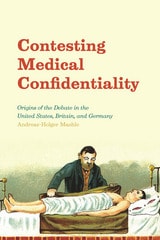
Contesting Medical Confidentiality
Origins of the Debate in the United States, Britain, and GermanyAndreas-Holger Maehle
University of Chicago Press, 2016
In Contesting Medical Confidentiality, Andreas-Holger Maehle travels back to the origins of this increasingly relevant issue. He offers the first comparative analysis of professional and public debates on medical confidentiality in the United States, Britain, and Germany during the late nineteenth and early twentieth centuries, when traditional medical secrecy first came under pressure from demands of disclosure in the name of public health. Maehle structures his study around three representative questions of the time that remain salient today: Do physicians have a privilege to refuse court orders to reveal confidential patient details? Is there a medical duty to report illegal procedures to the authorities? Should doctors breach confidentiality in order to prevent the spread of disease? Considering these debates through a unique historical perspective, Contesting Medical Confidentiality illuminates the ethical issues and potentially grave consequences that continue to stir up public debate.
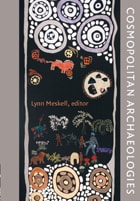
Cosmopolitan Archaeologies
Lynn Meskell, ed.
Duke University Press, 2009
The contributors describe various forms of cosmopolitan engagement involving sites that span the globe. They take up the links between conservation, natural heritage and ecology movements, and the ways that local heritage politics are constructed through international discourses and regulations. They are attentive to how communities near heritage sites are affected by archaeological fieldwork and findings, and to the complex interactions that local communities and national bodies have with international sponsors and universities, conservation agencies, development organizations, and NGOs. Whether discussing the toll of efforts to preserve biodiversity on South Africans living near Kruger National Park, the ways that UNESCO’s global heritage project universalizes the ethic of preservation, or the Open Declaration on Cultural Heritage at Risk that the Archaeological Institute of America sent to the U.S. government before the Iraq invasion, the contributors provide nuanced assessments of the ethical implications of the discursive production, consumption, and governing of other people’s pasts.
Contributors. O. Hugo Benavides, Lisa Breglia, Denis Byrne, Chip Colwell-Chanthaphonh, Alfredo González-Ruibal, Ian Hodder, Ian Lilley, Jane Lydon, Lynn Meskell, Sandra Arnold Scham
Cultural Humility
David A. Hurley, Sarah R. Kostelecky, and Lori Townsend
American Library Association, 2022
Cultural humility is emerging as a preferred approach to diversity, equity, and inclusion (DEI) efforts within librarianship. At a time when library workers are critically examining their professional practices, cultural humility offers a potentially transformative framework of compassionate accountability; it asks us to recognize the limits to our knowledge, reckon with our ongoing fallibility, educate ourselves about the power imbalances in our organizations, and commit to making change. This Special Report introduces the concept and outlines its core tenets. As relevant to those currently studying librarianship as it is to long-time professionals, and applicable across multiple settings including archives and museums, from this book readers will
- learn why cultural humility offers an ideal approach for navigating the spontaneous interpersonal interactions in libraries, whether between patrons and staff or amongst staff members themselves;
- understand how it intersects with cultural competence models and critical race theory;
- see the ways in which cultural humility’s awareness of and commitment to challenging inequitable structures of power can act as a powerful catalyst for community engagement;
- come to recognize how a culturally humble approach supports DEI work by acknowledging the need for mindfulness in day-to-day interactions;
- reflect upon cultural humility’s limitations and the criticisms that some have leveled against it; and
- take away concrete tools for undertaking and continuing such work with patience and hope.
Ethics for Records and Information Management
Norman A. Mooradian
American Library Association, 2018
The scope and reach of information, driven by the explosive growth of information technologies and content types, has expanded dramatically over the past 30 years. The consequences of these changes to records and information management (RIM) professionals are profound, necessitating not only specialized knowledge but added responsibilities. RIM professionals require a professional ethics to guide them in their daily practice and to form a basis for developing and implementing organizational policies, and Mooradian’s new book provides a rigorous outline of such an ethics. Taking an authoritative principles/rules based approach to the subject, this book comprehensively addresses
- the structure of ethics, outlining principles, moral rules, judgements, and exceptions;
- ethical reasoning, from meaning and logic to dilemmas and decision methods;
- the ethical core of RIM, discussing key topics such as organizational context, the positive value of accountability, conflicts of interest, and confidentiality;
- important ethical concerns like copyright and intellectual property, whistleblowing, information leaks, disclosure, and privacy; and
- the relationship between RIM ethics and information governance.
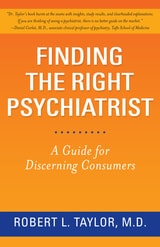
Finding the Right Psychiatrist
A Guide for Discerning ConsumersRobert L. Taylor, M.D.
Rutgers University Press, 2014
Combining over forty years of experience as a practicing psychiatrist with an insider’s perspective of current psychiatric practice, Dr. Robert Taylor provides invaluable guidance to persons considering psychiatric treatment or contemplating a change of doctor in an effort to find better treatment. Cautioning readers against settling for a psychiatrist who views psychodrugs as the treatment, Dr. Taylor provides specific suggestions for avoiding the growing number of psychiatrists who write scripts automatically.
In recent decades, psychiatric care has been overly reliant on psychodrugs. Patient diagnoses are being seriously questioned. Finding the Right Psychiatrist encourages people to seek care from a complete psychiatrist—one able and willing to pursue matters of mind and brain/body, rather than settling on psychodrugs as the main treatment.
Throughout the book, readers learn about the proper uses and limits of psychiatric diagnosis. Dr. Taylor carefully outlines an individualized approach to psychiatric care guided more by a patient’s particular problems and situation than by diagnoses that often mislead more than help. He provides a realistic appraisal of psychiatric medications: what they can and cannot do as well, a discussion of mind work tools, traits of effective psychiatrists, suggestions for how to deal with common insurance company obstacles, and an explanation of the confusing politics of psychiatry.
An indispensable resource for anyone seeking psychiatric help or tasked with advising someone of what to look for in a doctor, Finding the Right Psychiatrist gives hope and guidance to those searching for complete and personalized care.
View a three minute video of Dr. Robert L. Taylor speaking about Finding the Right Psychiatrist.
Guide to Ethics in Acquisitions
Wyoma vanDuinkerken
American Library Association, 2015
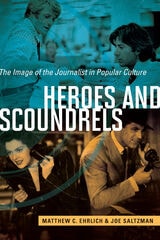
Heroes and Scoundrels
The Image of the Journalist in Popular CultureMatthew C. Ehrlich and Joe Saltzman
University of Illinois Press, 2015
Drawing on portrayals of journalists in television, film, radio, novels, comics, plays, and other media, Matthew C. Ehrlich and Joe Saltzman survey how popular media has depicted the profession across time. Their creative use of media artifacts provides thought-provoking forays into such fundamental issues as how pop culture mythologizes and demythologizes key events in journalism history and how it confronts issues of race, gender, and sexual orientation on the job.
From Network to The Wire, from Lois Lane to Mikael Blomkvist, Heroes and Scoundrels reveals how portrayals of journalism's relationship to history, professionalism, power, image, and war influence our thinking and the very practice of democracy.
Hopeful Visions, Practical Actions
Cultural Humility in Library WorkEdited by Sarah R. Kostelecky, Lori Townsend, and David A. Hurley
American Library Association, 2023
- how Indigenous adages can be tools for reflection and guidance in developing cultural humility;
- the experiences of two Black librarians who are using cultural humility to change the profession;
- new perspectives on core concepts of customer service;
- rethinking policies and practices in libraries both large and small;
- using cultural humility in approaching collection development and creating resource guides;
- what cultural humility can look like for a tribal librarian working in a tribal college library; and
- reflecting on cultural humility itself and where it is going.
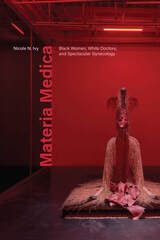
Materia Medica
Black Women, White Doctors, and Spectacular GynecologyNicole N. Ivy
Duke University Press, 2026
Moral Stealth
How "Correct Behavior" Insinuates Itself into Psychotherapeutic PracticeArnold Goldberg
University of Chicago Press, 2007
A psychiatrist writes a letter to a journal explaining his decision to marry a former patient. Another psychiatrist confides that most of his friends are ex-patients. Both practitioners felt they had to defend their behavior, but psychoanalyst Arnold Goldberg couldn’t pinpoint the reason why. What was wrong about the analysts’ actions?
In Moral Stealth, Goldberg explores and explains that problem of “correct behavior.” He demonstrates that the inflated and official expectations that are part of an analyst’s training—that therapists be universally curious, hopeful, kind, and purposeful, for example—are often of less help than simple empathy amid the ambiguous morality of actual patient interactions. Being a good therapist and being a good person, he argues, are not necessarily the same.
Drawing on case studies from his own practice and from the experiences of others, as well as on philosophers such as John Dewey, Slavoj Žižek, and Jürgen Habermas, Goldberg breaks new ground and leads the way for therapists to understand the relationship between private morality and clinical practice.
Morality, Responsibility, and the University
Studies in Academic Ethicsedited by Steven M. Cahn
Temple University Press, 1992
Our Enduring Values Revisited
Librarianship in an Ever-Changing WorldMichael Gorman
American Library Association, 2015
Our Enduring Values
Librarianship in the 21st CenturyMichael Gorman
American Library Association, 2000
Professional Ethics and Primary Care Medicine
Beyond Dilemmas and DecorumHarmon L. Smith and Larry R. Churchill
Duke University Press, 1986
Reinventing Reference
How Public, Academic, and School Libraries Deliver Value in the Age of GoogleVibiana Bowman Cvetkovic
American Library Association, 2014
Risqué Business
Breastaurants in American CultureTy Matejowsky
University of Alabama Press, 2025
Risqué Business serves up the breastaurant industry, where food service, sex appeal, identity, and gender politics mix.
Risqué Business explores the rise and ongoing cultural reckoning of “breastaurants”: sports bar–style restaurants like Hooters and Twin Peaks, which have long relied on the sexualized presentation of female servers to attract a mostly straight, male clientele. Ty Matejowsky, professor of anthropology at the University of Central Florida, is uniquely positioned in America’s foundational, breastaurant-saturated landscape. From this vantage, he offers a well-balanced account that draws on pop culture, media analysis, and contemporary gender politics. He delivers a smart, layered analysis of how breastaurants commodify youth and femininity, uphold retrograde masculinity, and serve as symbolic battlegrounds in today's highly charged political environments including America's deeply polarized Red State/Blue State divide.
With case studies, cultural critique, and a critical lens on labor and sexuality, Matejowsky reveals how these restaurants are more than just risqué marketing gimmicks. They reflect deeper anxieties about gender, identity, and the uneasy fusion of sex and service in American consumer culture. Risqué Business is a high-spirited study of an industry that thrives at the intersection of appetite and identity.
Scientific Characters
Rhetoric, Politics, and Trust in Breast Cancer ResearchLisa Keränen
University of Alabama Press, 2010

Spoils of the Kingdom
Clergy Misconduct and Religious CommunityAnson Shupe
University of Illinois Press, 2006
Drawing on case evidence, Shupe employs classical and modern social exchange theories to explain the institutional dynamics of clergy misconduct. He argues that there is an implicit contract of reciprocity and compliance between congregants and religious leaders that, when amplified by the charismatic awe often associated with religious authorities, can lead to misconduct.

The Calling of Education
"The Academic Ethic" and Other Essays on Higher EducationEdward Shils
University of Chicago Press, 1997
Edward Shils understood the university as a great symphonic conductor comprehends the value of each instrument and section, both separately and in cooperation. The Calling of Education offers Shils's insightful perspective on problems that are no less pressing than when he first confronted them.
Edward Shils (1910-1995) was distinguished service professor in the Committee on Social Thought and the department of sociology at the University of Chicago. Among his many books published by the University of Chicago Press are Portraits: A Gallery of Intellectuals and the three-volume Selected Papers of Edward Shils.

The Librarian Stereotype
Deconstructing Perceptions AndMiriam Rigby
Assoc of College & Research Libraries, 2014
The Socially Responsive Self
Social Theory and Professional EthicsLarry May
University of Chicago Press, 1996
Applying his theory of responsibility to professional ethics, May contends that current methods of professional socialization should be changed so that professionals are not expected to ignore considerations of personal well-being, family, or community. For instance, lawyers should not place client loyalty above concerns for the common good; doctors should not place the physical well-being of patients above their mental and spiritual well-being; scientists and engineers should not feel obliged to blow the whistle on fraud and corruption unless their professional groups protect them from retaliation.
This book should prove provocative reading for philosophers, political scientists, social theorists, professionals of many stripes, and ethicists.

True Stories of Censorship Battles in America's Libraries
Valerie Nye
American Library Association, 2012
Intellectual freedom is a core value of librarianship, but fighting to keep controversial materials on the shelves can sometimes feel like a lonely battle. And not all censorship controversies involve the public objecting to a book in the collection—libraries are venues for displays and meetings, and sometimes library staff themselves are tempted to preemptively censor a work. Those facing censorship challenges can find support and inspiration in this book, which compiles dozens of stories from library front lines. Edifying and enlightening, this collection
- Tells the stories of librarians who withstood difficult circumstances to champion intellectual freedom
- Touches on prickly issues such as age-appropriateness, some librarians' temptation to preemptively censor, sensitive cultural expressions, and criminality in the library
- Presents case studies of defenses that were unsuccessful, so librarians facing similar challenges can learn from these defeats
There are fewer situations more stressful in a librarian's professional life than being personally confronted with a demand to remove a book from the shelves or not knowing how to respond to other kinds of censorship challenges. Reading this book will help fortify and inform those in the fray.
Wolves within the Fold
Religious Leadership and Abuses of PowerShupe, Anson
Rutgers University Press, 1998
The power of religion as a symbolic, salvationÐpromising enterprise resides in its authority to create and shape reality for believers and command their obedience. This power can inspire tremendous acts of human kindness, charity, compassion, and hope. But witch hunts, inquisitions, crusades, and pogroms show us how religious authority can be used for far darker purposes. This abuse of power by religious authorities at the expense of their followers is termed clergy malfeasance by editor Anson Shupe and examined by the contributors to Wolves within the Fold.
The essays provide an innovative examination of behavior that is sometimes illegal and always unethical, sometimes punished but often not. Topics range from a cultural study of Aum Shinrikyo, the Japanese apocalyptic group now infamous for releasing lethal gas into the Tokyo subway system, to a sociological analysis of financial scandals among evangelical religious groups. Groups analyzed include the Roman Catholic Church, Protestant denominations, televangelists, and the Hare Krishnas.
Working, Shirking, and Sabotage
Bureaucratic Response to a Democratic PublicJohn Brehm and Scott Gates
University of Michigan Press, 1999