Results by title
40 books match the query 'Property'
A Thousand Pieces of Paradise
Landscape and Property in the Kickapoo ValleyLynne Heasley
University of Wisconsin Press, 2012
A Thousand Pieces of Paradise is an ecological history of property and a cultural history of rural ecosystems set in one of the Midwest’s most historically significant regions, the Kickapoo River Valley. Whether examining the national war on soil erosion, Amish migration, a Corps of Engineers dam project, or Native American land claims, Lynne Heasley traces the history of modern American property debates. Her book holds powerful lessons for rural communities seeking to reconcile competing values about land and their place in it.

Black Property Owners in the South, 1790-1915
Loren Schweninger
University of Illinois Press, 1990
Building a Revolutionary State
The Legal Transformation of New York, 1776-1783Howard Pashman
University of Chicago Press, 2018
Building a Revolutionary State looks closely at one state, New York, to understand the broader question of how legal structures emerged from an insurgency. By examining law as New Yorkers experienced it in daily life during the war, Pashman reconstructs a world of revolutionary law that prevailed during America’s transition to independence. In doing so, Pashman explores a central paradox of the revolutionary era: aggressive enforcement of partisan property rules actually had stabilizing effects that allowed insurgents to build legal institutions that enjoyed popular support. Tracing the transformation from revolutionary disorder to legal order, Building a New Revolutionary State gives us a radically fresh way to understand the emergence of new states.
Colonial Lives of Property
Law, Land, and Racial Regimes of OwnershipBrenna Bhandar
Duke University Press, 2018
Commodity & Propriety
Competing Visions of Property in American Legal Thought, 1776-1970Gregory S. Alexander
University of Chicago Press, 1997
In demonstrating how the understanding of property as a private basis for the public good has competed with the better-known market-oriented conception, Alexander radically rewrites the history of property, with significant implications for current political debates and recent Supreme Court decisions.
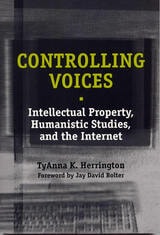
Controlling Voices
Intellectual Property, Humanistic Studies, and the InternetTyAnna K. Herrington. Foreword by Jay David Bolter
Southern Illinois University Press, 2001
TyAnna K. Herrington explains current intellectual property law and examines the effect of the Internet and ideological power on its interpretation. Promoting a balanced development of our national culture, she advocates educators’ informed participation in ensuring egalitarian public access to information. She discusses the control of information and the creation of knowledge in terms of the way control functions under current property law.
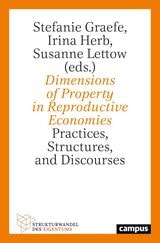
Dimensions of Property in Reproductive Economies
Practices, Structures, and DiscoursesEdited by Irina Herb, Stefanie Graefe, and Susanne Lettow
Campus Verlag, 2024
Besides reshaping human generativity, reproductive technologies such as IVF, egg donation, and surrogacy give rise to whole new value-creation systems and forms of ownership of the human body. The project is designed as a philosophical and sociological dual project with the aim of exploring discursive, institutional, and subjective processes of doing property in transnational economies of reproduction. It focuses, on the one hand, on bioethical problems surrounding ownership of the human body and, on the other hand, on patterns of interpretation and practices employed by various players in the context of the transnational propertization of human ova in Germany and Spain.
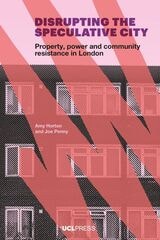
Disrupting the Speculative City
Property, Power and Community Resistance in LondonAmy Horton and Joe Penny
University College London, 2024
Disrupting the Speculative City tells the story of how the Haringey Development Vehicle community coalition, defeated one of the most ambitious programs of state-led gentrification in London. Drawing on the accounts of those at the heart of local statecraft and grassroots organizations, and analyzing crucial developments in property investment, this book explores a significant and inspirational success for campaigners in London, where social cleansing has become the default outcome of redevelopment.

From Property to Family
American Dog Rescue and the Discourse of CompassionAndrei S. Markovits and Katherine N. Crosby
University of Michigan Press, 2014
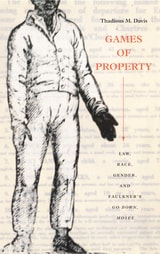
Games of Property
Law, Race, Gender, and Faulkner's Go Down, MosesThadious M. Davis
Duke University Press, 2003
Gender, Work and Property
An Ethnographic Study of Value in a Spanish VillageNancy Konvalinka
Campus Verlag, 2013
Havings
Steps Towards a New Economic Philosophy of Property and BeyondCarsten Herrmann-Pillath
Campus Verlag, 2025
Rethinking the foundations of ownership, Havings confronts conventional notions of property by introducing a radical new framework. Moving beyond the ideological constraints of capitalism and socialism, Carsten Herrmann-Pillath investigates how “having” can reshape economic and legal thought. Through an analysis of appropriation and assignment alongside possession and ownership, the book redefines the structures that govern our relationships with material and immaterial assets.
Through a blend of economic theory, sociology, and philosophy, Havings presents two compelling cases that demonstrate the real-world implications of this shift in perspective. The final chapter offers a daring vision for a post-capitalist economic system grounded in the multidimensionality of having. A thought-provoking read for those interested in economics, law, and social sciences, this work opens up new pathways for reimagining economic systems and property rights in an era of increasing inequality and global transformation.
Institutional Foundations of Impersonal Exchange
Theory and Policy of Contractual RegistriesBenito Arruñada
University of Chicago Press, 2012
Benito Arruñada aims to avoid such failures by deepening our understanding of both the value of registries and the organizational requirements for constructing them. Presenting a theory of how registries strengthen property rights and reduce transaction costs, he analyzes the major trade-offs and proposes principles for successfully building registries in countries at different stages of development. Arruñada focuses on land and company registries, explaining the difficulties they face, including current challenges like the subprime mortgage crisis in the United States and the dubious efforts made in developing countries toward universal land titling. Broadening the account, he extends his analytical framework to other registries, including intellectual property and organized exchanges of financial derivatives. With its nuanced presentation of the theoretical and practical implications, Institutional Foundations of Impersonal Exchange significantly expands our understanding of how public registries facilitate economic growth.

Making Peace With Property
Traces of Post-Conflict ColombiaMeghan L. Morris
Duke University Press, 2027
Northern Lights
Essays in Private Law in Memory of Professor David Carey MillerDouglas Bain, Roderick R.M. Paisley, Andrew R. Simpson and Nikola J.M. Tait
Aberdeen University Press, 2018
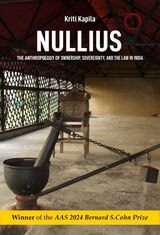
Nullius
The Anthropology of Ownership, Sovereignty, and the Law in IndiaKriti Kapila
HAU, 2022
Nullius is an award-winning anthropological account of the troubled status of ownership in India and its consequences for our understanding of sovereignty and social relations. Though property rights and ownership are said to be a cornerstone of modern law, in the Indian case they are often a spectral presence. Kapila offers a detailed study of paradigms where proprietary relations have been erased, denied, misappropriated.
The book examines three forms of negation, where the Indian state de facto adopted doctrines of terra nullius (in the erasure of indigenous title), res nullius (in acquiring museum objects), and, controversially, corpus nullius (in denying citizens ownership of their bodies under biometrics). The result is a pathbreaking reconnection of questions of property, exchange, dispossession, law, and sovereignty.
Nullius is the winner of the 2024 Bernard S. Cohn Prize, Association of Asian Studies.
Optional Law
The Structure of Legal EntitlementsIan Ayres
University of Chicago Press, 2005
Ayres identifies flaws in the current system and shows how option theory can radically expand and improve the ways that lawmakers structure legal entitlements. An option-based system, Ayres shows, gives parties the option to purchase—or the option to sell—the relevant legal entitlement. Choosing to exercise a legal option forces decisionmakers to reveal information about their own valuation of the entitlement. And, as with auctions, entitlements in option-based law naturally flow to those who value them the most. Seeing legal entitlements through this lens suggests a variety of new entitlement structures from which lawmakers might choose. Optional Law provides a theory for determining which structure is likely to be most effective in harnessing parties' private information.
Proposing a practical approach to the foundational question of how to allocate and protect legal rights, Optional Law will be applauded by legal scholars and professionals who continue to seek new and better ways of fostering both equitable and efficient legal rules.
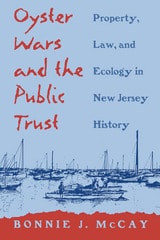
Oyster Wars and the Public Trust
Property, Law, and Ecology in New Jersey HistoryBonnie J. McCay
University of Arizona Press, 1998
Bonnie McCay now puts that doctrine in perspective by tracing the history of attempts to defend common resources against privatization. She tells of conflicts in New Jersey communities over the last two centuries: how fishermen dependent on common-use rights employed poaching, piracy, and test cases to protect their stake in tidal resources, and how oyster planters whose businesses depended on the enclosure of marine commons engineered test cases of their own to seek protection for their claims.
McCay presents some of the most significant cases relating to fishing and waterfront development, describing how the oyster wars were fought on the waters and in the court rooms—and how the public trust doctrine was sometimes reinterpreted to support private interests. She explores the events and people behind the proceedings and addresses the legal, social, and ecological issues these cases represent.
Oyster Wars and the Public Trust is an important study of contested property rights from an anthropological perspective that also addresses significant issues in political ecology, institutional economics, environmental history, and the evolution of law. It contributes to our understanding of how competing claims to resources have evolved in the United States and shows that making nature a commodity remains a moral problem even in a market-driven economy.
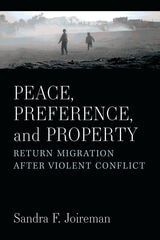
Peace, Preference, and Property
Return Migration after Violent ConflictSandra F. Joireman
University of Michigan Press, 2022
Growing numbers of people are displaced by war and violent conflict. In Ukraine, Afghanistan, Ethiopia, Myanmar, Syria, and elsewhere violence pushes civilian populations from their homes and sometimes from their countries, making them refugees. In previous decades, millions of refugees and displaced people returned to their place of origin after conflict or were resettled in countries in the Global North. Now displacements last longer, the number of people returning home is lower, and opportunities for resettlement are shrinking. More and more people spend decades in refugee camps or displaced within their own countries, raising their children away from their home communities and cultures. In this context, international policies encourage return to place of origin.
Using case studies and first-person accounts from interviews and fieldwork in post-conflict settings such as Uganda, Liberia, and Kosovo, Sandra F. Joireman highlights the divergence between these policies and the preferences of conflict-displaced people. Rather than looking from the top down, at the rights that people have in international and domestic law, the perspective of this text is from the ground up—examining individual and household choices after conflict. Some refugees want to go home, some do not want to return, some want to return to their countries of origin but live in a different place, and others are repatriated against their will when they have no other options. Peace, Preference, and Property suggests alternative policies that would provide greater choice for displaced people in terms of property restitution and solutions to displacement.
Philodemus, On Property Management
Voula Tsouna
SBL Press, 2013
Politics and Property Rights
The Closing of the Open Range in the Postbellum SouthShawn Everett Kantor
University of Chicago Press, 1998
In this original study, Kantor uses economic analysis to show that, contrary to traditional historical interpretation, this conflict was centered on anticipated benefits from fencing livestock rather than on class, cultural, or ideological differences. Kantor proves that the stock law brought economic benefits; at the same time, he analyzes why the law's adoption was hindered in many areas where it would have increased wealth. This argument illuminates the dynamics of real-world institutional change, where transactions are often costly and where some inefficient institutions persist while others give way to economic growth.
Post-Communist Restitution and the Rule of Law
Csongor Kuti
Central European University Press, 2009
Power / Knowledge / Land
Contested Ontologies of Land and Its Governance in AfricaLaura A. German
University of Michigan Press, 2022
The 2008 outcry over the “global land grab” made headlines around the world, leading to a sustained interest in the dynamics and fate of customary land among both academics and development practitioners. In Power/Knowledge/Land, author Laura German profiles the consolidation of a global knowledge regime surrounding land and its governance within international development circles in the decade following this outcry, and the growing enrollment of previously antagonistic actors within it. Drawing theoretical insights on the inseparability of power and knowledge, German reveals the dynamics of knowledge practices that have enabled the longstanding project of commodifying customary land – and the more contemporary interests in acquiring and financializing it – to be advanced and legitimated by capturing the energies of socially progressive forces. By bringing theories of change from the emergent land governance orthodoxy into dialogue with the ethnographic evidence from across the African continent and beyond, concepts masquerading as universal and self-evident truths are provincialized, and their role in commodifying customary land and entrenching colonial futurities put on display. In doing so, the volume brings wider academic debates surrounding productive forms of power into the heart of the land grab debate, while enhancing their accessibility to a wider audience.
Power/Knowledge/Land takes current scholarly debates surrounding land grabs beyond their theoretical moorings in critical agrarian studies, political economy and globalization into contemporary debates surrounding the politics of knowledge—from theories of coloniality to ontological anthropology, thereby enabling new dynamics of the phenomenon to be revealed. The book deploys a pioneering epistemology integrating deconstructionist approaches (to reveal the tactics, truth claims and ontological assumptions of global knowledge brokers), with systematic qualitative reviews and comparative study (to contrast these dominant constructs with the evidence and reveal alternative ways of knowing “land” and practicing “security” from the ethnographic literature). This helps to reveal the Western and modernist biases in the narratives that have been advanced about women, custom, and security, revealing how the coloniality of knowledge works to grease the wheels of land takings by advancing highly provincialized constructs aligned with western interests as universal truths.
Private Property and the Limits of American Constitutionalism
The Madisonian Framework and Its LegacyJennifer Nedelsky
University of Chicago Press, 1990
Property, Substance, and Effect
Anthropological Essays on Persons and ThingsMarilyn Strathern
HAU, 2022
Property, Substance, and Effect draws on Marilyn Strathern’s longstanding interest in the reification of social relations. If the world is shrinking in terms of resources and access to them, it is expanding in terms of new candidates for proprietorship. How new relations are brought into being is among the many questions about property, ownership, and knowledge that these essays bring together.
Twenty years have not diminished the interest in the book’s opening challenge: if one were inventing a method of enquiry by which to configure the complexity of social life, one might wish to invent something like the anthropologist’s ethnographic practice. A wide range of studies deliberately brings into conversation claims people make on one another through relations imagined in the form of body-substance along with the increasing visibility of conceptual or intellectual work as property. Whether one lives in Papua New Guinea or Great Britain, categories of knowledge are being dissolved and reformed at a tempo that calls for reflection—and for the kind of lateral reflection afforded through the “ethnographic effect.”
Reinterpreting Property
Margaret Jane Radin
University of Chicago Press, 1994
Departing from traditional libertarian and economic theories of property, Margaret Jane Radin argues that the law should take into account nonmonetary personal value attached to property—and that some things, such as bodily integrity, are so personal they should not be considered property at all. Gathered here are pieces ranging from Radin's classic early essay on property and personhood to her recent works on governmental "taking" of private property.
Margaret Jane Radin is professor of law at Stanford University. She is the author of over twenty-five articles on legal and political theory.
Romance and the Erotics of Property
Mass-Market Fiction for WomenJan Cohn
Duke University Press, 1988
Cohn argues that a full understanding of the contemporary romance requires an investigation of its literary and historical sources and analogues. Three principal sources are examined in the context of women's history in bourgeois society. Pride and Prejudice, Jane Erye, and Gone With the Wind demonstrate the development of romance fiction's themes, yet in all three the central love story is complicated by issues of property, the sign of male power. Jan Cohn further considers the development of the genre n the fictions of Harriet Lewis and May Agnes Fleming, prolific and popular American romance writers of the late nineteenth century who developed the role of the villain, thereby bringing into focus the sexual and economic struggles faced by the heroine.
Romance and the Erotics of Property sets romance fiction against a historic and literary background, arguing that contemporary romance disguises as tales of love the subversive fantasies of female appropriation and male property and power.
Sentient Lands
Indigeneity, Property, and Political Imagination in Neoliberal ChilePiergiorgio Di Giminiani
University of Arizona Press, 2018
Sentient Lands is a historically grounded ethnography of the Mapuche people’s engagement with state-run reconciliation and land-restitution efforts. Piergiorgio Di Giminiani analyzes environmental relations, property, state power, market forces, and indigeneity to illustrate how land connections are articulated, in both landscape experiences and land claims. Rather than viewing land claims as simply bureaucratic procedures imposed on local understandings and experiences of land connections, Di Giminiani reveals these processes to be disputed practices of world making.
Ancestral land formation is set in motion by the entangled principles of Indigenous and legal land ontologies, two very different and sometimes conflicting processes. Indigenous land ontologies are based on a relation between two subjects—land and people—both endowed with sentient abilities. By contrast, legal land ontologies are founded on the principles of property theory, wherein land is an object of possession that can be standardized within a regime of value. Governments also use land claims to domesticate Indigenous geographies into spatial constructs consistent with political and market configurations.
Exploring the unexpected effects on political activism and state reparation policies caused by this entanglement of Indigenous and legal land ontologies, Di Giminiani offers a new analytical angle on Indigenous land politics.
State Trading in the Twenty-First Century
The World Trade Forum, Volume 1Thomas Cottier and Petros C. Mavroidis, Editors
University of Michigan Press, 1998
The City after Property
Abandonment and Repair in Postindustrial DetroitSara Safransky
Duke University Press, 2023

The Culture of Property
The Crisis of Liberalism in Modern BritainJordanna Bailkin
University of Chicago Press, 2004
Drawing on court transcripts, gallery archives, exhibition reviews, private correspondence—and a striking series of cartoons and photographs—The Culture of Property traverses the history of gender, material culture, urban life, colonialism, Irish and Scottish nationalism, and British citizenship. This fascinating book challenges recent scholarship in museum studies in light of ongoing culture wars. It should be required reading for cultural policy makers, museum professionals, and anyone interested in the history of art and Britain.
The Global Debate over Constitutional Property
Lessons for American Takings JurisprudenceGregory S. Alexander
University of Chicago Press, 2006
A society’s traditions and culture, Alexander argues, have a much greater effect on property rights. Laws must aim, then, to change cultural ideas of property, rather than deem whether one has the right to own it. Ultimately, Alexander builds a strong case for improving American takings law by borrowing features from the laws of other countries—particularly those laws based on the idea that owning property not only confers rights, but also entails responsibilities to society as a whole.
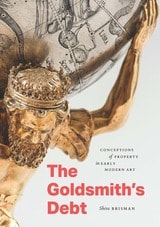
The Goldsmith's Debt
Conceptions of Property in Early Modern ArtShira Brisman
University of Chicago Press, 2026
In the sixteenth century, German goldsmiths played a unique role in articulating property claims and social values. These artisans shaped precious metals into visible expressions of domination, subordination, and obligation. The objects they crafted played a major role in the practices of exchange and inheritance that were reconfiguring a tumultuous economic landscape. Cities commissioned goldsmiths to transform revenue into goblets that could be given as diplomatic gifts or reconverted into currency in times of war, and courts used serving implements as promises of credit.
With The Goldsmith’s Debt, art historian Shira Brisman offers the first book-length study of the Nuremberg goldsmith Christoph Jamnitzer (1563–1618), who created elaborate gilded silver drinking cups that he crafted into unexpected forms, with designs ranging from racialized heads to mining scenes. Considering how works of art can shape a social order, Brisman explores what Jamnitzer’s etchings and goblets reveal about how goldsmiths shared ideas and how their patrons used commissioned works to legitimize their claims over land and the rights of others. Drawing on a range of textual and material evidence—including commentaries on Roman and customary laws, wills and civic statutes, printed designs, and firsthand study of lidded cups in dozens of major European institutions—this unprecedented study places the goldsmith at the heart of the era’s arguments about how people and lands should be subjugated. Brisman reveals the insidious side of these objects that were often used to advance socially conservative agendas, and she presents radical proposals for addressing inequity in the world of ornament prints.
The Grasping Hand
"Kelo v. City of New London" and the Limits of Eminent DomainIlya Somin
University of Chicago Press, 2015
In this detailed study of one of the most controversial Supreme Court cases in modern times, Ilya Somin argues that Kelo was a grave error. Economic development and “blight” condemnations are unconstitutional under both originalist and most “living constitution” theories of legal interpretation. They also victimize the poor and the politically weak for the benefit of powerful interest groups and often destroy more economic value than they create. Kelo itself exemplifies these patterns. The residents targeted for condemnation lacked the influence needed to combat the formidable government and corporate interests arrayed against them. Moreover, the city’s poorly conceived development plan ultimately failed: the condemned land lies empty to this day, occupied only by feral cats. The Supreme Court’s unpopular ruling triggered an unprecedented political reaction, with forty-five states passing new laws intended to limit the use of eminent domain. But many of the new laws impose few or no genuine constraints on takings. The Kelo backlash led to significant progress, but not nearly as much as it may have seemed.
Despite its outcome, the closely divided 5-4 ruling shattered what many believed to be a consensus that virtually any condemnation qualifies as a public use under the Fifth Amendment. It also showed that there is widespread public opposition to eminent domain abuse. With controversy over takings sure to continue, The Grasping Hand offers the first book-length analysis of Kelo by a legal scholar, alongside a broader history of the dispute over public use and eminent domain and an evaluation of options for reform.
The Grasping Hand
"Kelo v. City of New London" and the Limits of Eminent DomainIlya Somin
University of Chicago Press, 2015
In this detailed study of one of the most controversial Supreme Court cases in modern times, Ilya Somin argues that Kelo was a grave error. Economic development and “blight” condemnations are unconstitutional under both originalist and most “living constitution” theories of legal interpretation. They also victimize the poor and the politically weak for the benefit of powerful interest groups and often destroy more economic value than they create. Kelo itself exemplifies these patterns. The residents targeted for condemnation lacked the influence needed to combat the formidable government and corporate interests arrayed against them. Moreover, the city’s poorly conceived development plan ultimately failed: the condemned land lies empty to this day, occupied only by feral cats. The Supreme Court’s unpopular ruling triggered an unprecedented political reaction, with forty-five states passing new laws intended to limit the use of eminent domain. But many of the new laws impose few or no genuine constraints on takings. The Kelo backlash led to significant progress, but not nearly as much as it may have seemed.
Despite its outcome, the closely divided 5-4 ruling shattered what many believed to be a consensus that virtually any condemnation qualifies as a public use under the Fifth Amendment. It also showed that there is widespread public opposition to eminent domain abuse. With controversy over takings sure to continue, The Grasping Hand offers the first book-length analysis of Kelo by a legal scholar, alongside a broader history of the dispute over public use and eminent domain and an evaluation of options for reform.
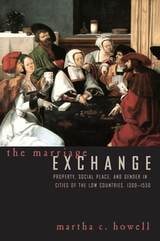
The Marriage Exchange
Property, Social Place, and Gender in Cities of the Low Countries, 1300-1550Martha C. Howell
University of Chicago Press, 1998
Based on extensive research in this archive, this book reveals how these documents were produced in a centuries-long effort to regulate—and ultimately to redefine—property and gender relations. At the center of the transformation was a shift from a marital property regime based on custom to one based on contract. In the former, a widow typically inherited her husband's property; in the latter, she shared it with or simply held it for his family or offspring. Howell asks why the law changed as it did and assesses the law's effects on both social and gender meanings but she insists that the reform did not originate in general dissatisfaction with custom or a desire to disempower widows. Instead, it was born in a complex economic, social and cultural history during which Douaisiens gradually came to think about both property and gender in new ways.
The Political Economy of Distributism
Property, Liberty, and the Common GoodAlexander William Salter
Catholic University of America Press, 2023
Transforming Peasants, Property and Power
The Collectivization of Agriculture in Romania, 1949–1962Dorin Dobrincu
Central European University Press, 2009

Why We Can't Have Nice Things
Social Media’s Influence on Fashion, Ethics, and PropertyMinh-Ha T. Pham
Duke University Press, 2022

Wildlife as Property Owners
A New Conception of Animal RightsKaren Bradshaw
University of Chicago Press, 2020