Results by title
29 books match the query 'Fame'
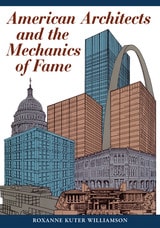
American Architects and the Mechanics of Fame
By Roxanne Kuter Williamson
University of Texas Press, 1991
Why does one talented individual win lasting recognition in a particular field, while another equally talented person does not? While there are many possible reasons, one obvious answer is that something more than talent is requisite to produce fame. The "something more" in the field of architecture, asserts Roxanne Williamson, is the association with a "famous" architect at the moment he or she first receives major publicity or designs the building for which he or she will eventually be celebrated.
In this study of more than six hundred American architects who have achieved a place in architectural histories, Williamson finds that only a small minority do not fit the "right person–right time" pattern. She traces the apprenticeship connection in case studies of Louis Sullivan, Frank Lloyd Wright, Henry Hobson Richardson, the firm of McKim, Mead & White, Latrobe and his descendants, the Bulfinch and Renwick Lines, the European immigrant masters, and Louis Kahn.
Although she acknowledges and discusses the importance of family connections, the right schools, self-promotion, scholarships, design competition awards, and promotion by important journals, Williamson maintains that the apprenticeship connection is the single most important predictor of architectural fame. She offers the intriguing hypothesis that what is transferred in the relationship is not a particular style or approach but rather the courage and self-confidence to be true to one's own vision. Perhaps, she says, this is the case in all the arts.
American Architects and the Mechanics of Fame is sure to provoke thought and comment in architecture and other creative fields.
Celebrity And Power
Fame and Contemporary CultureP. David Marshall
University of Minnesota Press, 1997
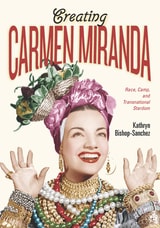
Creating Carmen Miranda
Race, Camp, and Transnational StardomKathryn Bishop-Sanchez
Vanderbilt University Press, 2016
This final performance in many ways exemplified the power of Carmen Miranda. The actress, singer, and dancer pursued a relentless mission to demonstrate the provocative theatrical force of her cultural roots in Brazil. Armed with bare-midriff dresses, platform shoes, and her iconic fruit-basket headdresses, Miranda stole the show in films like That Night in Rio and The Gang's All Here. For American film audiences, her life was an example of the exoticism of a mysterious, sensual South America. For Brazilian and Latin American audiences, she was an icon. For the gay community, she became a work of art personified and a symbol of courage and charisma.
In Creating Carmen Miranda, Kathryn Bishop-Sanchez takes the reader through the myriad methods Miranda consciously used to shape her performance of race, gender, and camp culture, all to further her journey down the road to becoming a legend.
English Theatrical Anecdotes, 1660-1800
Heather Ladd
University of Delaware Press, 2022

Fame and Fandom
Functioning On and OfflineCelia Lam
University of Iowa Press, 2022
In case studies including Supernatural, Harry Styles, YouTube influencers, film location sites, Keanu Reeves, and celebrities as fans, readers find new approaches to fan/celebrity encounters and parasocial relationships. This is the go-to volume on the symbiotic relationship between fame and fandom.
Fame, Money, and Power
The Rise of Peisistratos and "Democratic" Tyranny at AthensB. M. Lavelle
University of Michigan Press, 2005
--David Tandy, University of Tennessee
"Well researched and engaging, [Fame, Money, and Power] painstakingly builds [its] case for how the various phases of Peisistratos's career developed."
--Tony Podlecki, University of British Columbia
The Athenian "golden age" occurred in the fifth century B.C.E. and was attributed to their great achievements in art, literature, science, and philosophy. However, the most important achievement of the time was the political movement from tyranny to democracy. Though tyranny is thought to be democracy's opposite and deadly enemy, that is not always the case. In Fame, Money, and Power, Brian Lavelle states that the perceived polarity between tyranny and democracy does not reflect the truth in this instance.
The career of the tyrant Peisistratos resembles the careers and successes of early democratic soldier-politicians. As with any democratic political system, Peisistratos' governance depended upon the willingness of the Athenians who conceded governance to him. This book attempts to show how the rise of Peisistratos fits into an essentially democratic system already entrenched at Athens in the earlier sixth century B.C.E.
Emerging from the apparent backwater of eastern Attika, Peisistratos led the Athenians to victory over their neighbors, the Megarians, in a long, drawn out war. That victory earned him great popularity from the Athenians and propelled him along the road to monarchy. Yet, political success at Athens, even as Solon implies in his poems, depended upon the enrichment of the Athenian d?mos, not just fame and popularity. Peisistratos tried and failed two times to "root" his tyranny, his failures owing to a lack of sufficient money with which to appease the demos. Exiled from Athens, he spent the next ten years amassing money to enrich the Athenians and power to overcome his enemies. He then sustained his rule by grasping the realities of Athenian politics. Peisistratos' tyrannies were partnerships with the d?mos, the first two of which failed. His final formula for success, securing more money than his opponents possessed and then more resources for enriching the d?mos, provided the model for future democratic politicians of Athens who wanted to obtain and keep power in fifth-century Athens.

Indigenous Celebrity
Entanglements with FameJennifer Adese
University of Manitoba Press, 2021
Infamous Bodies
Early Black Women’s Celebrity and the Afterlives of RightsSamantha Pinto
Duke University Press, 2020
Just Like Us
Digital Debates on Feminism and FameCaitlin E. Lawson
Rutgers University Press, 2023
Look at Me!
The Fame Motive from Childhood to DeathOrville Gilbert Brim
University of Michigan Press, 2010
Four million adults in the United States say that becoming famous is the most important goal in their lives. In any random sampling of one hundred American adults, two will have fame as their consuming desire. What motivates those who set fame as their priority, where did the desire come from, how does the pursuit of fame influence their lives, and how is it expressed? Based on the research of Orville Gilbert Brim, award-winning scholar in the field of child and human development, Look at Me! answers those questions.
Look at Me! examines the desire to be famous in people of all ages, backgrounds, and social status and how succeeding or failing affects their lives and their personalities. It explores the implications of the pursuit of fame throughout a person's lifetime, covering the nature of the desire; fame, money, and power; the sources of fame; how people find a path to fame; the kinds of recognition sought; creating an audience; making fame last; and the resulting, often damaged, life of the fame-seeker.
In our current age of celebrity fixation and reality television, Brim gives us a social-psychological perspective on the origins of this pervasive desire for fame and its effects on our lives.
"Look at Me! is a fascinating in-depth study of society's obsession with fame. If you ever wondered what it's like to be famous, why fame comes to some and is sought by others, it's all here . . ."
---Jeffrey L. Bewkes, Chairman and CEO, Time Warner
"In a voice filled with wisdom and insight, daring and self-reflection, Orville Brim masterfully traces the developmental origins and trajectory of fame. Look at Me! lets us see---with new eyes---the cultural priorities and obsessions that feed our individual hunger and appetites. A rare and rewarding book."
---Sara Lawrence-Lightfoot, Emily Hargroves Fisher Professor of Education at Harvard University and author of Respect and The Third Chapter
Orville Gilbert Brim has had a long and distinguished career. He is the former director of the John D. and Catherine T. MacArthur Foundation Research Network on Successful Midlife Development, former president of the Foundation for Child Development, former president of the Russell Sage Foundation, and author and coauthor of more than a dozen books about human development, intelligence, ambition, and personality.
Cover image ©iStockphoto.com/susib
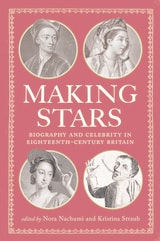
Making Stars
Biography and Celebrity in Eighteenth-Century BritainNora Nachumi
University of Delaware Press, 2022
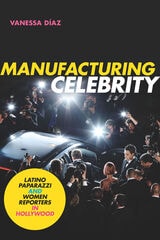
Manufacturing Celebrity
Latino Paparazzi and Women Reporters in HollywoodVanessa Diaz
Duke University Press, 2020
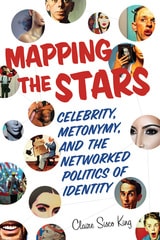
Mapping the Stars
Celebrity, Metonymy, and the Networked Politics of IdentityClaire Sisco King
The Ohio State University Press, 2023
King considers three stars with popular and controversial personas: Norman Rockwell, Will Smith, and Kim Kardashian. Working in very different contexts and with very different public images, these figures nonetheless share a consistent, if not conspicuous, interest in celebrity as a construct. Offering intertextual readings of their public images across such sites as movie posters, magazines, cinema, and social media—and deploying rhetorical theories of metonymy (a linguistic device linking signifiers by shared associations)—King argues that these stars’ self-reflexive attention to the processes by which celebrity is created and constrained creates opportunities for reframing public discourse about what it means to be famous and what it means to be a person.
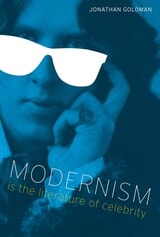
Modernism Is the Literature of Celebrity
By Jonathan Goldman
University of Texas Press, 2011
The phenomenon of celebrity burst upon the world scene about a century ago, as movies and modern media brought exceptional, larger-than-life personalities before the masses. During the same era, modernist authors were creating works that defined high culture in our society and set aesthetics apart from the middle- and low-brow culture in which celebrity supposedly resides. To challenge this ingrained dichotomy between modernism and celebrity, Jonathan Goldman offers a provocative new reading of early twentieth-century culture and the formal experiments that constitute modernist literature's unmistakable legacy. He argues that the literary innovations of the modernists are indeed best understood as a participant in the popular phenomenon of celebrity.
Presenting a persuasive argument as well as a chronicle of modernism's and celebrity's shared history, Modernism Is the Literature of Celebrity begins by unraveling the uncanny syncretism between Oscar Wilde's writings and his public life. Goldman explains that Wilde, in shaping his instantly identifiable public image, provided a model for both literary and celebrity cultures in the decades that followed. In subsequent chapters, Goldman traces this lineage through two luminaries of the modernist canon, James Joyce and Gertrude Stein, before turning to the cinema of mega-star Charlie Chaplin. He investigates how celebrity and modernism intertwine in the work of two less obvious modernist subjects, Jean Rhys and John Dos Passos. Turning previous criticism on its head, Goldman demonstrates that the authorial self-fashioning particular to modernism and generated by modernist technique helps create celebrity as we now know it.

Natural Born Celebrities
Serial Killers in American CultureDavid Schmid
University of Chicago Press, 2005
David Schmid provides a historical account of how serial killers became famous and how that fame has been used in popular media and the corridors of the FBI alike. Ranging from H. H. Holmes, whose killing spree during the 1893 Chicago World's Fair inspired The Devil in the White City, right up to Aileen Wuornos, the lesbian prostitute whose vicious murder of seven men would serve as the basis for the hit film Monster, Schmid unveils a new understanding of serial killers by emphasizing both the social dimensions of their crimes and their susceptibility to multiple interpretations and uses. He also explores why serial killers have become endemic in popular culture, from their depiction in The Silence of the Lambs and The X-Files to their becoming the stuff of trading cards and even Web sites where you can buy their hair and nail clippings.
Bringing his fascinating history right up to the present, Schmid ultimately argues that America needs the perversely familiar figure of the serial killer now more than ever to manage the fear posed by Osama bin Laden since September 11.
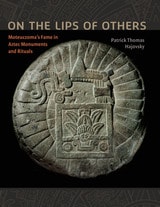
On the Lips of Others
Moteuczoma's Fame in Aztec Monuments and RitualsBy Patrick Thomas Hajovsky
University of Texas Press, 2015
Moteuczoma, the last king who ruled the Aztec Empire, was rarely seen or heard by his subjects, yet his presence was felt throughout the capital city of Tenochtitlan, where his deeds were recorded in hieroglyphic inscriptions on monuments and his command was expressed in highly refined ritual performances. What did Moteuczoma’s “fame” mean in the Aztec world? How was it created and maintained? In this innovative study, Patrick Hajovsky investigates the king’s inscribed and spoken name, showing how it distinguished his aura from those of his constituencies, especially other Aztec nobles, warriors, and merchants, who also vied for their own grandeur and fame. While Tenochtitlan reached its greatest size and complexity under Moteuczoma, the “Great Speaker” innovated upon fame by tying his very name to the Aztec royal office.
As Moteuczoma’s fame transcends Aztec visual and oral culture, Hajovsky brings together a vast body of evidence, including Nahuatl language and poetry, indigenous pictorial manuscripts and written narratives, and archaeological and sculptural artifacts. The kaleidoscopic assortment of sources casts Moteuczoma as a divine king who, while inheriting the fame of past rulers, saw his own reputation become entwined with imperial politics, ideological narratives, and eternal gods. Hajovsky also reflects on posthumous narratives about Moteuczoma, which created a very different sense of his fame as a conquered subject. These contrasting aspects of fame offer important new insights into the politics of personhood and portraiture across Aztec and colonial-period sources.

Spectacular Disappearances
Celebrity and Privacy, 1696-1801Julia H. Fawcett
University of Michigan Press, 2016
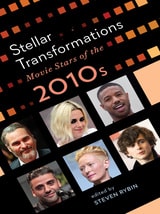
Stellar Transformations
Movie Stars of the 2010sSteven Rybin
Rutgers University Press, 2022
The Agriculture Hall of Fame
StoriesAndrew Malan Milward
University of Massachusetts Press, 2012
These powerful stories limn the complexities and dilemmas of life in Kansas, a state at “the center of the center of America,” as a billboard in one story announces. Andrew Malan Milward explores the less visible aspects of the Kansas experience—where its agrarian past comes into conflict with the harsh present reality of drugs, fundamentalism, and corporatism, relegating its agrarian identity to museums and amusement parks.
Presented in a triptych, the stories in Milward's debut collection range across a varied terrain, from tumbledown rural barns to modern urban hospitals, revealing the secrets contained therein.
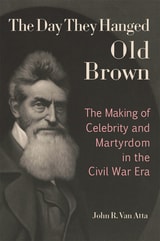
The Day They Hanged Old Brown
The Making of Celebrity and Martyrdom in the Civil War EraJohn R. Van Atta
University of Missouri Press, 2025
Brown’s lifespan covered most of the period between the Revolution and the Civil War, a time of the still-early beginnings of the United States. Only then had his kind of “celebrity” started to matter. From different economic and moral perspectives, politically aware Americans clashed over different visions for the future of the country. At that time, any disruptive figure might be taken as a barometer of the progress or the decline of the republic. A function of the widely varying newspapers and magazines of that day, celebrity offered Americans an angle of vision, happily or not, as to who they were or were becoming or believed themselves to be—as if by a mirror reflection.
In The Day They Hanged Old Brown, John Van Atta examines the creation of celebrity in John Brown’s time and how it differed from modern day perceptions. Yet, as applicable as the concept of celebrity is in this case, the story of Brown’s notoriety represents far more. To his admirers, Brown was not merely a celebrity; he was a hero and, after his sacrificial death, a martyr. Not all celebrities rise to such levels. This book traces the meaning of heroism and martyrdom—as well as the opposite side of that coin, villainy—and suggests that John Brown’s story and legacy helped to redefine these concepts for many Americans during the era of the Civil War, before modern historians began to deliberate him.
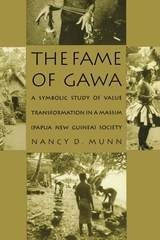
The Fame of Gawa
A Symbolic Study of Value Transformation in a Massim SocietyNancy D. Munn
Duke University Press, 1992
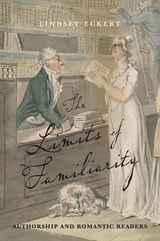
The Limits of Familiarity
Authorship and Romantic ReadersLindsey Eckert
Bucknell University Press, 2022
What did Wordsworth wear, and where did he walk? Who was Byron’s new mistress, and how did his marriage fare? Answers—sometimes accurate, sometimes not—were tantalizingly at the ready in the Romantic era, when confessional poetry, romans à clef, personal essays, and gossip columns offered readers exceptional access to well-known authors. But at what point did familiarity become overfamiliarity? Widely recognized as a social virtue, familiarity—a feeling of emotional closeness or comforting predictability—could also be dangerous, vulgar, or boring. In The Limits of Familiarity, Eckert persuasively argues that such concerns shaped literary production in the Romantic period. Bringing together reception studies, celebrity studies, and literary history to reveal how anxieties about familiarity shaped both Romanticism and conceptions of authorship, this book encourages us to reflect in our own fraught historical moment on the distinction between telling all and telling all too much.
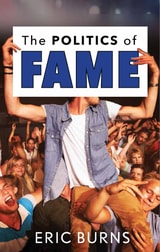
The Politics of Fame
Burns, Eric
Rutgers University Press, 2019
In search of answers, cultural historian Eric Burns delves deep into the biographies of some of the most famous figures in American history, from Benjamin Franklin to Fanny Kemble, Elvis Presley to Gene Tierney, and Michael Jordan to Oprah Winfrey. Through these case studies, he considers the evolution of celebrity throughout the ages. More controversially, he questions the very status of fame in the twenty-first century, an era in which thousands of minor celebrities have seen their fifteen minutes in the spotlight.
The Politics of Fame is a provocative and entertaining look at the lives and afterlives of America’s most beloved celebrities as well as the mad devotion they inspired. It raises important questions about what celebrity worship reveals about the worshippers—and about the state of the nation itself
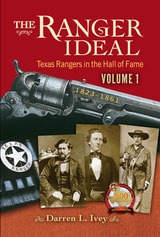
The Ranger Ideal Volume 1
Texas Rangers in the Hall of Fame, 1823-1861Darren L. Ivey
University of North Texas Press, 2017

The Ranger Ideal Volume 2
Texas Rangers in the Hall of Fame, 1874-1930Darren L. Ivey
University of North Texas Press, 2018
The Ranger Ideal Volume 3
Texas Rangers in the Hall of Fame, 1898-1987Darren L. Ivey
University of North Texas Press, 2021
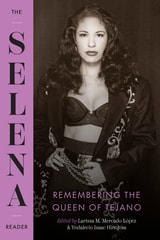
The Selena Reader
Remembering the Queen of TejanoEdited by Larissa M. Mercado-López and Yndalecio Isaac Hinojosa
University of Texas Press, 2026
A literary collection honoring and memorializing Selena, the Queen of Tejano.
Thirty years after her death, Selena Quintanilla-Pérez remains a cherished figure of Mexican American popular culture, her music and celebrity resounding across the decades. This unique collection of creative and scholarly works traces Selena’s lasting impact as an entertainer and focal point of community and identity.
Assembling essays, memoir, short stories, and poems, The Selena Reader memorializes a beloved singer while also exploring the politics and personal meaning of what we remember. Selena’s devoted admirers tell us what they took from her lyrics and stage presence, the official and fan tributes, and the media and products she inspired. In one essay, Tejana coming-of-age is sharply refracted through the prism of Selena’s art and social status. Another piece considers how Selena’s body and distinctive clothing have shaped the author’s sense of queer self. Honey Avila (aka Honey Andrews), the renowned Selena impersonator, shares vivid recollections of her hero. A father and daughter describe how their conversations about Selena changed their relationship and contributed to Chicana feminist consciousness in their lives. All told, this anthology amplifies the gratitude of generations who have loved, and learned from, Selena.
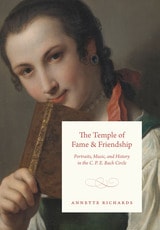
The Temple of Fame and Friendship
Portraits, Music, and History in the C. P. E. Bach CircleAnnette Richards
University of Chicago Press, 2020
One of the most celebrated German composers of the eighteenth century, C. P. E. Bach spent decades assembling an extensive portrait collection of some four hundred music-related items—from oil paintings to engraved prints. The collection was dispersed after Bach’s death in 1788, but with Annette Richards’s painstaking reconstruction, the portraits once again present a vivid panorama of music history and culture, reanimating the sensibility and humor of Bach’s time. Far more than a mere multitude of faces, Richards argues, the collection was a major part of the composer’s work that sought to establish music as an object of aesthetic, philosophical, and historical study.
The Temple of Fame and Friendship brings C. P. E. Bach’s collection to life, giving readers a sense of what it was like for visitors to tour the portrait gallery and experience music in rooms thick with the faces of friends, colleagues, and forebears. She uses the collection to analyze the “portraitive” aspect of Bach’s music, engaging with the influential theories of Swiss physiognomist Johann Caspar Lavater. She also explores the collection as a mode of cultivating and preserving friendship, connecting this to the culture of remembrance that resonates in Bach’s domestic music. Richards shows how the new music historiography of the late eighteenth century, rich in anecdote, memoir, and verbal portrait, was deeply indebted to portrait collecting and its negotiation between presence and detachment, fact and feeling.
Women, Celebrity, and Literary Culture between the Wars
By Faye Hammill
University of Texas Press, 2007
As mass media burgeoned in the years between the first and second world wars, so did another phenomenon—celebrity. Beginning in Hollywood with the studio-orchestrated transformation of uncredited actors into brand-name stars, celebrity also spread to writers, whose personal appearances and private lives came to fascinate readers as much as their work. Women, Celebrity, and Literary Culture between the Wars profiles seven American, Canadian, and British women writers—Dorothy Parker, Anita Loos, Mae West, L. M. Montgomery, Margaret Kennedy, Stella Gibbons, and E. M. Delafield—who achieved literary celebrity in the 1920s and 1930s and whose work remains popular even today.
Faye Hammill investigates how the fame and commercial success of these writers—as well as their gender—affected the literary reception of their work. She explores how women writers sought to fashion their own celebrity images through various kinds of public performance and how the media appropriated these writers for particular cultural discourses. She also reassesses the relationship between celebrity culture and literary culture, demonstrating how the commercial success of these writers caused literary elites to denigrate their writing as "middlebrow," despite the fact that their work often challenged middle-class ideals of marriage, home, and family and complicated class categories and lines of social discrimination.
The first comparative study of North American and British literary celebrity, Women, Celebrity, and Literary Culture between the Wars offers a nuanced appreciation of the middlebrow in relation to modernism and popular culture.