Results by title
31 books match the query 'Protestant churches'
A Colonial Lexicon
Of Birth Ritual, Medicalization, and Mobility in the CongoNancy Rose Hunt
Duke University Press, 1999
Relying on archival research in England and Belgium, as well as fieldwork in the Congo, Hunt reconstructs an ethnographic history of a remote British Baptist mission struggling to survive under the successive regimes of King Leopold II’s Congo Free State, the hyper-hygienic, pronatalist Belgian Congo, and Mobutu’s Zaire. After exploring the roots of social reproduction in rituals of manhood, she shows how the arrival of the fast and modern ushered in novel productions of gender, seen equally in the forced labor of road construction and the medicalization of childbirth. Hunt focuses on a specifically interwar modernity, where the speed of airplanes and bicycles correlated with a new, mobile medicine aimed at curbing epidemics and enumerating colonial subjects. Fascinating stories about imperial masculinities, Christmas rituals, evangelical humor, colonial terror, and European cannibalism demonstrate that everyday life in the mission, on plantations, and under a strongly Catholic colonial state was never quite what it seemed. In a world where everyone was living in translation, privileged access to new objects and technologies allowed a class of “colonial middle figures”—particularly teachers, nurses, and midwives—to mediate the evolving hybridity of Congolese society. Successfully blurring conventional distinctions between precolonial, colonial, and postcolonial situations, Hunt moves on to discuss the unexpected presence of colonial fragments in the vibrant world of today’s postcolonial Africa.
With its close attention to semiotics as well as sociology, A Colonial Lexicon will interest specialists in anthropology, African history, obstetrics and gynecology, medical history, religion, and women’s and cultural studies.
A Peaceful Conquest
Woodrow Wilson, Religion, and the New World OrderCara Lea Burnidge
University of Chicago Press, 2016
With A Peaceful Conquest, Cara Lea Burnidge presents the most detailed analysis yet of how Wilson’s religious beliefs affected his vision of American foreign policy, with repercussions that lasted into the Cold War and beyond. Framing Wilson’s intellectual development in relationship to the national religious landscape, and paying greater attention to the role of religion than in previous scholarship, Burnidge shows how Wilson’s blend of Southern evangelicalism and social Christianity became a central part of how America saw itself in the world, influencing seemingly secular policy decisions in subtle, lasting ways. Ultimately, Burnidge makes a case for Wilson’s religiosity as one of the key drivers of the emergence of the public conception of America’s unique, indispensable role in international relations.
As the presidential election cycle once again raises questions of America’s place in the world, A Peaceful Conquest offers a fascinating excavation of its little-known roots.
American Mainline Religion
Its Changing Shape and FutureWade Clark Roof and William McKinney
Rutgers University Press, 1987
"American Mainline Religion" provides a new "mapping" of the families of American religion and the underlying social, cultural, and demographic forces that will reshape American religion in the century to come. Going beyond the headlines in daily newspapers, Roof and McKinney document the decline of the Protestant establishment, the rise of a more assimilated and public-minded Roman Catholicism, the place of black Protestantism and Judaism, and the resurgence of conservative Protestantism as a religious and cultural force.
Avenues of Faith
Shaping the Urban Religious Culture of Richmond, Virginia, 1900–1929Samuel C. Shepherd Jr
University of Alabama Press, 2001
By examining six mainline white denominations—Episcopalians, Methodists, Presbyterians, Baptists, Disciples of Christ, and Lutherans—Samuel C. Shepherd Jr. emphasizes the extent to which the city fostered religious diversity, even as “blind spots” remained regarding Catholics, African Americans, Mormons, and Jews. Shepherd explores such topics as evangelism, interdenominational cooperation, the temperance campaign, the Sunday school movement, the international peace initiatives, and the expanding role of lay people of both sexes. He also notes the community’s widespread rejection of fundamentalism, a religious phenomenon almost automatically associated with the South, and shows how it nurtured social reform to combat a host of urban problems associated with public health, education, housing, women’s suffrage, prohibition, children, and prisons.
In lucid prose and with excellent use of primary sources, Shepherd delivers a fresh portrait of Richmond Protestants who embraced change and transformed their community, making it an active, progressive religious center of the New South.
Competing Kingdoms
Women, Mission, Nation, and the American Protestant Empire, 1812–1960Barbara Reeves-Ellington, Kathryn Kish Sklar, and Connie A. Shemo, eds.
Duke University Press, 2010
An international and interdisciplinary group of scholars, the contributors bring under-utilized evidence from U.S. and non-U.S. sources to bear on the study of American women missionaries abroad and at home. Focusing on women from several denominations, they build on the insights of postcolonial scholarship to incorporate the agency of the people among whom missionaries lived. They explore how people in China, the Congo Free State, Egypt, India, Japan, Ndebeleland (colonial Rhodesia), Ottoman Bulgaria, and the Philippines perceived, experienced, and negotiated American cultural expansion. They also consider missionary work among people within the United States who were constructed as foreign, including African Americans, Native Americans, and Chinese immigrants. By presenting multiple cultural perspectives, this important collection challenges simplistic notions about missionary cultural imperialism, revealing the complexity of American missionary attitudes toward race and the ways that ideas of domesticity were reworked and appropriated in various settings. It expands the field of U.S. women’s history into the international arena, increases understanding of the global spread of American culture, and offers new concepts for analyzing the history of American empire.
Contributors: Beth Baron, Betty Bergland, Mary Kupiec Cayton, Derek Chang, Sue Gronewold, Jane Hunter, Sylvia Jacobs, Susan Haskell Khan, Rui Kohiyama, Laura Prieto, Barbara Reeves-Ellington, Mary Renda, Connie A. Shemo, Kathryn Kish Sklar, Ian Tyrrell, Wendy Urban-Mead
Dogma and Ecumenism
Vatican II and Karl Barth's 'Ad Limina Apostolorum'Matthew Levering
Catholic University of America Press, 2020
Domestic Frontiers
Gender, Reform, and American Interventions in the Ottoman Balkans and the Near EastBarbara Reeves-Ellington
University of Massachusetts Press, 2013
During the nineteenth and early twentieth centuries, American Protestant missionaries attempted to export their religious beliefs and cultural ideals to the Ottoman Empire. Seeking to attract Orthodox Christians and even Muslims to their faith, they promoted the paradigm of the “Christian home” as the foundation of national progress. Yet the missionaries' efforts not only failed to win many converts but also produced some unexpected results.
Drawing on a broad range of sources—Ottoman, Bulgarian, Russian, French, and English—Barbara Reeves-Ellington tracks the transnational history of this little-known episode of American cultural expansion. She shows how issues of gender and race influenced the missionaries' efforts as well as the complex responses of Ottoman subjects to American intrusions into their everyday lives. Women missionaries—married and single—employed the language of Christian domesticity and female moral authority to challenge the male-dominated hierarchy of missionary society and to forge bonds of feminist internationalism. At the same time, Orthodox Christians adapted the missionaries' ideology to their own purposes in developing a new strain of nationalism that undermined Ottoman efforts to stem growing sectarianism within their empire. By the beginning of the twentieth century, as some missionaries began to promote international understanding rather than Protestantism, they also paved the way for future expansion of American political and commercial interests.
God's Businessmen
Entrepreneurial Evangelicals in Depression and WarSarah Ruth Hammond
University of Chicago Press, 2017
The evangelical embrace of conservatism is a familiar feature of the contemporary political landscape. What’s less well-known, however, is that the connection predates the Reagan revolution, going all the way back to the Depression and World War II. Evangelical businessmen at the time were quite active in opposing the New Deal—on both theological and economic grounds—and in doing so claimed a place alongside other conservatives in the public sphere. Like previous generations of devout laymen, they self-consciously merged their religious and business lives, financing and organizing evangelical causes with the kind of visionary pragmatism that they practiced in the boardroom.
In God’s Businessmen, Sarah Ruth Hammond explores not only these men’s personal trajectories but also those of the service clubs and other institutions that, like them, believed that businessmen were God’s instrument for the Christianization of the world. Hammond presents a capacious portrait of the relationship between the evangelical business community and the New Deal—and in doing so makes important contributions to American religious history, business history, and the history of the American state.
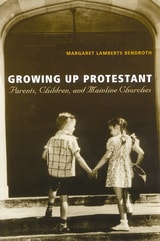
Growing Up Protestant
Parents, Children and Mainline ChurchesMargaret Lamberts Bendroth
Rutgers University Press, 2002
Home and family are key, yet relatively unexplored, dimensions of religion in the contemporary United States. American cultural lore is replete with images of saintly nineteenth-century American mothers and their children. During the twentieth century, however, the form and function of the American family have changed radically, and religious beliefs have evolved under the challenges of modernity. As these transformations took place, how did religion manage to “fit” into modern family life?
In this book, Margaret Lamberts Bendroth examines the lives and beliefs of white, middle-class mainline Protestants (principally northern Presbyterians, Baptists, Methodists, and Congregationalists) who are theologically moderate or liberal. Mainliners have pursued family issues for most of the twentieth century, churning out hundreds of works on Christian childrearing. Bendroth’s book explores the role of family within a religious tradition that sees itself as America’s cultural center. In this balanced analysis, the author traces the evolution of mainliners’ roles in middle-class American culture and sharpens our awareness of the ways in which the mainline Protestant experience has actually shaped and reflected the American sense of self.
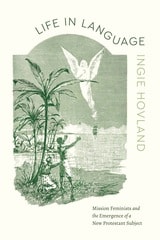
Life in Language
Mission Feminists and the Emergence of a New Protestant SubjectIngie Hovland
University of Chicago Press, 2025
The language of the Bible is a powerful lens through which many Protestants understand themselves and their world, and its prohibitions on women’s speech pose complicated challenges to women. Nevertheless, women frequently serve as vocal leaders in Protestant organizations, including the early twentieth-century Norwegian Mission Society. In Life in Language, Ingie Hovland offers a unique biography of Henny Dons, a leader of the society’s so-called mission feminists, that grapples with ways Protestant women crafted innovative, expansive self-understandings through Christian language. More than their male peers, the mission feminists turned to religious speech to express material, as well as heavenly, desires for paid work, voting rights, and more, and Hovland argues that these experiments in women speaking, reading, writing, and listening paved the way for a new way of being in the world.
Native Evangelism in Central Mexico
By Hugo G. Nutini and Jean F. Nutini
University of Texas Press, 2014
Evangelical Christianity is Mexico’s fastest-growing religious movement, with about ten million adherents today. Most belong to Protestant denominations introduced from the United States (e.g., Jehovah’s Witnesses, Seventh-day Adventists), but perhaps as many as 800,000 are members of homegrown, “native” evangelical sects. These native Mexican sects share much with the American denominations of which they are spinoffs. For instance, they are Trinitarian, Anabaptist, and Millenarian; they emphasize a personal relationship with God, totally rejecting intermediation by saints; and they insist that they are the only true Christians. Beyond that, each native sect has its distinctive characteristics.
This book focuses on two sharply contrastive native evangelical sects in Central Mexico: Amistad y Vida (Friendship and Life) and La Luz del Mundo (The Light of the World). The former, founded in 1982, now has perhaps 120,000 adherents nationwide. It is nonhierarchical, extremely egalitarian, and has no dogmatic directives. It is a cheerful religion that emphasizes charity, community service, and personal kindness as the path to salvation. It attracts new members, mainly from the urban middle class, through personal example rather than proselytizing. La Luz del Mundo, founded in 1926, now has about 350,000 members in Mexico and perhaps one million in the hemisphere. It is hierarchically organized and demands total devotion to the sect’s founder and his son, who are seen as direct links to Jesus on Earth. It is a proselytizing sect that recruits mainly among the urban poor by providing economic benefits within the congregations, but does no community service as such.
Based on ten years of fieldwork (1996–2006) and contextualized by nearly fifty years of anthropological study in the region, Native Evangelism in Central Mexico presents the first ethnography of Mexico’s native evangelical congregations.
One State Under God
A History of Religion in TexasJoseph L. Locke
University of Texas Press, 2026
A broad and accessible history of religion in Texas, from prehistory to the present.
From sprawling megachurches to religious billboards and towering steel crosses, religion quite literally looms over Texas. Christian nationalism determines the state’s politics and, every school day, more than five million Texas children pledge allegiance to “one state under God.” But it wasn’t always this way.
In this wide-ranging chronicle, Joseph Locke uncovers the breadth of Texas’s religious history, from Indigenous painters of cosmological cave art and Spanish invaders who constructed missions to irreligious Anglo colonists, freethinking frontiersmen, Tejano folk saints, evangelical culture warriors, and Muslim immigrants. Locke traces the state’s religious transformations across the centuries, bringing them to life through his depiction of compelling figures, like enslaved preacher Anderson Edwards, fighting fundamentalist J. Frank Norris, and celebrated humanitarian Sister Norma Pimentel, and gripping moments, such as the murder of atheist newspaperman William Cowper Brann and the siege of the Branch Davidian compound in Waco. Comprehensive, fast-paced, and highly readable, One State Under God reveals how the Lone Star State’s spiritual path was blazed.
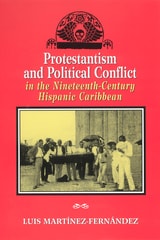
Protestantism and Political Conflict in the Ninteenth-Century Hispanic Caribbean
Martínez-Fernández, Luis
Rutgers University Press, 2001
Catholicism has long been recognized as one of the major forces shaping the Hispanic Caribbean (Cuba, Puerto Rico, and the Dominican Republic) during the nineteenth century, but the role of Protestantism has not been fully explored. Protestantism and Political Conflict in the Nineteenth-Century Hispanic Caribbean traces the emergence of Protestantism in Cuba and Puerto Rico during a crucial period of national consolidation involving both social and political struggle. Using a comparative framework, Martínez-Fernández looks at the ways in which Protestantism, though officially “illegal” for most of the century, established itself, competed with Catholicism, and took differing paths in Cuba and Puerto Rico.
One of the book’s main goals is to trace the links between religion and politics, particularly with regard to early Protestant activities. Protestants encountered a complex social, economic, and political landscape both in Cuba and in Puerto Rico and soon found that their very presence, coupled with their demands for freedom of worship and burial rights, involved them in a series of interrelated struggles in which the Catholic Church was embroiled along with the other main forces of the period—the peasantry, the agrarian bourgeoisie, the mercantile bourgeoisie, and the colonial state. While the established Catholic Church increasingly identified with the conservative, pro-slavery, and colonialist causes, newly arrived Protestants tended to be nationalistic and to pursue particular economic activities—such as cigar exportation in Cuba and the sugar industry in Puerto Rico. The author argues that the early Protestant communities reflected the socio-cultural milieus from which they emerged and were profoundly shaped by the economic activities of their congregants. This influence, in turn, shaped not only the congregations’ composition, but also their political and social orientations.

Protestantism and Politics in Eastern Europe and Russia
The Communist and Post-Communist ErasSabrina P. Ramet, ed.
Duke University Press, 1993
Based on extensive field research, including interviews with notable figures in the Protestant churches in the region, the essays in this volume address broad topics such as the church's involvment in environmentalism, pacifism, and other dissident movements, as well as issues particular to Russia, Poland, Czechoslovakia, East Germany, (1949–1989), Hungary, Yugoslavia (1945-1991), Bulgaria, and Romania. The final volume in the three-volume work "Christianity Under Stress," Protestantism and Politics in Eastern Europe and Russia will prove invaluable to anyone hoping to understand not only the workings of religion under Communism, but the historical and contemporary interactions of church and state in general.
Contributors. Paul Bock, Lawrence Klippenstein, Paul Mojzes, Earl A. Pope, Joseph Pungur, Sabrina Petra Ramet, Walter Sawatsky, N. Gerald Shenk, Gerd Stricker, Sape A. Zylstra
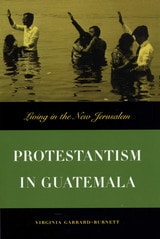
Protestantism in Guatemala
Living in the New JerusalemBy Virginia Garrard-Burnett
University of Texas Press, 1998
Guatemala has undergone an unprecedented conversion to Protestantism since the 1970s, so that thirty percent of its people now belong to Protestant churches, more than in any other Latin American nation. To illuminate some of the causes of this phenomenon, Virginia Garrard-Burnett here offers the first history of Protestantism in a Latin American country, focusing specifically on the rise of Protestantism within the ethnic and political history of Guatemala.
Garrard-Burnett finds that while Protestant missionaries were early valued for their medical clinics, schools, translation projects, and especially for the counterbalance they provided against Roman Catholicism, Protestantism itself attracted few converts in Guatemala until the 1960s. Since then, however, the militarization of the state, increasing public violence, and the "globalization" of Guatemalan national politics have undermined the traditional ties of kinship, custom, and belief that gave Guatemalans a sense of identity, and many are turning to Protestantism to recreate a sense of order, identity, and belonging.
Recovering the Margins of American Religious History
The Legacy of David Edwin Harrell Jr.B. Dwain Waldrep
University of Alabama Press, 2012
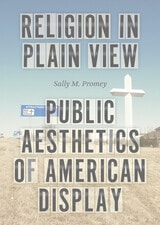
Religion in Plain View
Public Aesthetics of American DisplaySally M. Promey
University of Chicago Press, 2024
In Religion in Plain View, Sally M. Promey analyzes religion’s visible saturation of American public space and the histories that shaped this exhibitionary aesthetics. In street art, vehicle décor, signs, monuments, architecture, zoning policy, and more, Promey exposes American display’s merger of evangelicalism, capitalism, and imperialism. From this convergence, display materializes a distinctly American drive to advertise, claim territory, invalidate competitors, and fabricate a tractable national heritage. Charting this aesthetics’ strategic work as a Protestant technology of White nation formation, Religion in Plain View offers a dynamic critique of the ways public display perpetuates deeply ingrained assumptions about the proper shape of life and land in the United States.
Religion, Order, and Law
David Little
University of Chicago Press, 1984
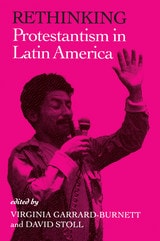
Rethinking Protestantism in Latin America
David Stoll
Temple University Press, 1993
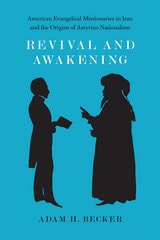
Revival and Awakening
American Evangelical Missionaries in Iran and the Origins of Assyrian NationalismAdam H. Becker
University of Chicago Press, 2015
American evangelicals arrived in Iran in the 1830s. Becker examines how these missionaries, working with the “Nestorian” Church of the East—an Aramaic-speaking Christian community in the borderlands between Qajar Iran and the Ottoman Empire—catalyzed, over the span of sixty years, a new national identity. Instructed at missionary schools in both Protestant piety and Western science, this indigenous group eventually used its newfound scriptural and archaeological knowledge to link itself to the history of the ancient Assyrians, which in time led to demands for national autonomy. Exploring the unintended results of this American attempt to reform the Orient, Becker paints a larger picture of religion, nationalism, and ethnic identity in the modern era.
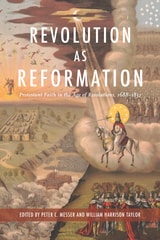
Revolution as Reformation
Protestant Faith in the Age of Revolutions, 1688–1832Edited by Peter C. Messer and William Harrison Taylor
University of Alabama Press, 2021
Essays that explore how Protestants responded to the opportunities and perils of revolution in the transatlantic age
Revolution as Reformation: Protestant Faith in the Age of Revolutions, 1688–1832 highlights the role that Protestantism played in shaping both individual and collective responses to revolution. These essays explore the various ways that the Protestant tradition, rooted in a perpetual process of recalibration and reformulation, provided the lens through which Protestants experienced and understood social and political change in the Age of Revolutions. In particular, they call attention to how Protestants used those changes to continue or accelerate the Protestant imperative of refining their faith toward an improved vision of reformed religion.
The editors and contributors define faith broadly: they incorporate individuals as well as specific sects and denominations, and as much of “life experience” as possible, not just life within a given church. In this way, the volume reveals how believers combined the practical demands of secular society with their personal faith and how, in turn, their attempts to reform religion shaped secular society.
The wide-ranging essays highlight the exchange of Protestant thinkers, traditions, and ideas across the Atlantic during this period. These perspectives reveal similarities between revolutionary movements across and around the Atlantic. The essays also emphasize the foundational role that religion played in people’s attempts to make sense of their world, and the importance they placed on harmonizing their ideas about religion and politics. These efforts produced novel theories of government, encouraged both revolution and counterrevolution, and refined both personal and collective understandings of faith and its relationship to society.
Sing Them Over Again to Me
Hymns and Hymnbooks in AmericaEdited by Mark A. Noll and Edith L. Blumhofer
University of Alabama Press, 2006
Hymns and hymnbooks as American historical and cultural icons.
This work is a study of the importance of Protestant hymns in defining America and American religion. It explores the underappreciated influence of hymns in shaping many spheres of personal and corporate life as well as the value of hymns for studying religious life. Distinguishing features of this volume are studies of the most popular hymns (“Amazing Grace,” “O, For a Thousand Tongues to Sing,” “All Hail the Power of Jesus’ Name”), with attention to the ability of such hymns to reveal, as they are altered and adapted, shifts in American popular religion. The book also focuses attention on the role hymns play in changing attitudes about race, class, gender, economic life, politics, and society.
Singing the Lord's Song in a Strange Land
Hymnody in the History of North American ProtestantismEdith L. Blumhofer
University of Alabama Press, 2008
Music and song are important parts of worship, and hymns have long played a central role in Protestant cultural history. This book explores the ways in which Protestants have used and continue to use hymns to clarify their identity and define their relationship with America and to Christianity. Representing seven groups—Baptists, Presbyterians, Lutherans, Mennonites, Holiness, Hispanics, and Evangelicals—the nine essays reveal how hymns have helped immigrants to establish new identities, contributed to the body of worship resources, and sustained ethnic identity.
Individual essays address the music of the Old-Fashioned Revival Hour, America’s longest running and most successful independent radio program; singing among Swedish evangelicals in America; the German hymn tradition as transformed by Mennonite immigrants; the ways hymnody reinforces themes of the Wesleyan holiness movement; the history of Mercer’s Cluster (1810), a southern hymnal that gave voice to slaves, women, and native Americans; and the Presbyterian hymnal tradition in Canada formed by Scottish immigrants.
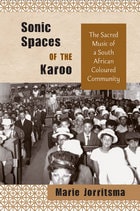
Sonic Spaces of the Karoo
The Sacred Music of a South African Coloured CommunityMarie Jorritsma
Temple University Press, 2011
Sonic Spaces of the Karoo is a pioneering study of the sacred music of three coloured (the apartheid designation for people "not white or native") people's church congregations in the rural town of Graaff-Reinet, South Africa. Jorritsma's fieldwork involves an investigation of the choruses, choir music, and hymns of the Karoo region to present a history of the people's traditional, religious, and cultural identity in song. This music is examined as part of a living archive preserved by the community in the face of a legacy of slavery and colonial as well as apartheid oppression.
Jorritsma's findings counteract a lingering stereotype that coloured music is inferior to European or African music and that coloured people should not or do not have a cultural identity. Sonic Spaces of the Karoo seeks to eradicate that bias and articulate a more legitimate place for these people in the contemporary landscape of South Africa.
Southern Churches in Crisis Revisited
Samuel S. Hill
University of Alabama Press, 1999
Hill’s landmark work in southern religious history returns to print updated and expanded—and compellingly relevant.
In 1966, Samuel S. Hill’s Southern Churches in Crisis argued that southern Protestantism, a cornerstone of white southern society and culture, was shirking its moral duty by refusing to join in the fight for racial justice. Hill predicted that the church was risking its standing in southern society and that it would ultimately decline in influence and power. A groundbreaking study at the time, Hill’s book helped establish southern religious history as a field of scholarly inquiry. Three decades later, Southern Churches in Crisis continues to be widely read, quoted, and cited.
In Southern Churches in Crisis Revisited, which reprints the 1966 text in full, Hill reexamines his earlier predictions in an introductory essay that also describes how the study of religion in the South has become a major field of scholarly inquiry. Hill skillfully engages his critics by integrating new perspectives and recent scholarship. He suggests new areas for exploration and provides a selected bibliography of key studies in southern religious history published in the three decades subsequent to the original appearance of this groundbreaking work.
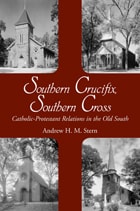
Southern Crucifix, Southern Cross
Catholic-Protestant Relations in the Old SouthAndrew Henry Stern
University of Alabama Press, 2012
In sharp contrast to many long-standing presumptions about mistrust or animosity between these two groups, this study proposes that Catholic and Protestant interactions in the South were characterized more by cooperation than by conflict.

THE AMERICAN QUEST FOR THE PRIMITIVE CHURCH
Richard T. Hughes
University of Illinois Press, 1988
The Divided Mind of Protestant America, 1880-1930
Ferenc M. Szasz
University of Alabama Press, 1982
The Divided Mind of Protestant America is a documented overview of American Protestantism in American culture from beginning to end. It discusses liberal-fundamentalist tensions in America and the role of mainline Protestantism, evangelicalism, and fundamentalism in American culture.
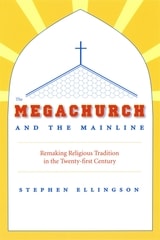
The Megachurch and the Mainline
Remaking Religious Tradition in the Twenty-first CenturyStephen Ellingson
University of Chicago Press, 2007
Religious traditions provide the stories and rituals that define the core values of church members. Yet modern life in America can make those customs seem undesirable, even impractical. As a result, many congregations refashion church traditions so they may remain powerful and salient. How do these transformations occur? How do clergy and worshipers negotiate which aspects should be preserved or discarded?
Focusing on the innovations of several mainline Protestant churches in the San Francisco Bay Area, Stephen Ellingson’s The Megachurch and the Mainline provides new understandings of the transformation of spiritual traditions. For Ellingson, these particular congregations typify a new type of Lutheranism—one which combines the evangelical approaches that are embodied in the growing legion of megachurches with American society’s emphasis on pragmatism and consumerism. Here Ellingson provides vivid descriptions of congregations as they sacrifice hymns in favor of rock music and scrap traditional white robes and stoles for Hawaiian shirts, while also making readers aware of the long history of similar attempts to Americanize the Lutheran tradition.
This is an important examination of a religion in flux—one that speaks to the growing popularity of evangelicalism in America.
The Modernist Impulse in American Protestantism
William R. Hutchison
Duke University Press, 1992
The Protestant Ethic Revisited
Philip S. Gorski
Temple University Press, 2013
In The Protestant Ethic Revisited, pioneering sociologist Philip Gorski revisits the question raised by Max Weber in The Protestant Ethic and the Spirit of Capitalism about how the Christian West was reshaped by world-changing energies of the Calvinist movement. Gorski not only considers the perennial debate about religion and capitalism, but he also devotes particular attention to the influence of Calvinism on the political development of the West.
The Protestant Ethic Revisited is a masterful new collection of Gorski's essays on religion and comparative historical sociology. Reflecting the aim of much of Gorski's work, this anthology shows how nationalism, secularism, politics, and religion in public life are either older—or less stable—than previously thought.