Results by title
10 books match the query 'Proust'
Fiction Refracts Science
Modernist Writers from Proust to BorgesAllen Thiher
University of Missouri Press, 2005
Fiction Rivals Science
The French Novel from Balzac to ProustAllen Thiher
University of Missouri Press, 2001
In Fiction Rivals Science, Allen Thiher describes the epistemic rivalry that the major nineteenth-century French novelists felt in dealing with science. After brief considerations of Stendhal, Thiher focuses on the four most important "realist" novelists in France: Balzac, Flaubert, Zola, and, going into the twentieth century, Proust. According to Thiher, each of these novelists considered himself to be in competition with science to make the novel an instrument for knowledge.
The first chapter sets forth the understanding of science that dominated the early nineteenth century in order to make it plausible that literary minds, throughout the nineteenth century, thought that they could not only rival science, but even make positive contributions to knowledge. The Newtonian paradigm that had dominated the Enlightenment was slowly being challenged by new developments both in physics and in nonphysical sciences such as biology. Especially in biology the development of a scientific discourse using narrative temporality favored the idea that novelists could also use fiction to construct discourses that advanced knowledge.
Balzac wanted to construct a natural history of society and correct the chemical theory of his time. Flaubert drew upon medicine and physiology for the rhetoric of his realist fiction. Zola used unsuccessful medical paradigms for his doctrine of heredity, and models drawn from thermodynamics to describe the relation of the individual to societal forces. Finally, Proust drew upon thinkers such as Poincar‚ to elaborate an epistemology that put an end to the rivalry novelists might feel with scientists. Proust located certain knowledge within the realm of human subjectivity while granting the power of laws to rule over the contingent realm of physical reality, in which, after Poincar‚, neither mathematics nor Newton was any longer a source of absolute certainty. Proust's novel is thus the last great realist work of the nineteenth century and the first modernist work of consciousness taking itself as the object of knowledge.
By demonstrating that the great French realist novelists dealt with many of the same problems as did the scientists of the nineteenth century, Fiction Rivals Science attempts to show how culture unites literary and scientific inquiry into knowledge. Providing a new interpretation of the development of literary realism, this important new work will be welcomed not only by literary scholars, but by historians of science and culture as well.
Proust And Signs
The Complete TextGilles Deleuze
University of Minnesota Press, 2003
In a remarkable instance of literary and philosophical interpretation, the incomparable Gilles Deleuze reads Marcel Proust’s work as a narrative of an apprenticeship—more precisely, the apprenticeship of a man of letters. Considering the search to be one directed by an experience of signs, in which the protagonist learns to interpret and decode the kinds and types of symbols that surround him, Deleuze conducts us on a corollary search—one that leads to a new understanding of the signs that constitute A la recherche du temps perdu.
In Richard Howard’s graceful translation, augmented with an essay that Deleuze added to a later French edition, Proust and Signs is the complete English version of this work. Admired as an imaginative and innovative study of Proust and as one of Deleuze’s more accessible works, Proust and Signs stands as the writer’s most sustained attempt to understand and explain the work of art.
Proust in Perspective
VISIONS AND REVISIONSEdited by Armine Kotin Mortimer and Katherine Kolb
University of Illinois Press, 2002
In nineteen original essays, a foreword by Jean–Yves Tadié, and an introduction by editors Armine Kotin Mortimer and Katherine Kolb, this volume guides readers through the dense weave of Proust's fiction and correspondence. The essays take us into the realm of Proustian language–-as quotation, metaphor, and memory–-and into art history and musical ideology, connecting the art of words with the words of art. They explore the interface of history and fiction, the mysteries of the text's evolution, and the dilemmas of its publication. They present the revelations of genetic criticism and the surprises of gender analysis.
Taken together, these essays conjure a multifaceted profile of Proust–-his work, life, character, and influence–-and of new directions in Proust scholarship today. With compelling rigor and infectious enthusiasm, Proust in Perspective conveys the magnitude of Proust's continuing appeal.
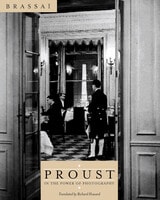
Proust in the Power of Photography
Brassaï
University of Chicago Press, 2001
Drawing on his own experience as a photographer and author, Brassaï discovers a neglected aspect of Proust's interests, offering us a fascinating study of the role of photography both in Proust's oeuvre and in early-twentieth-century culture. Brassaï shows us how Proust was excessively interested in possessing portraits of his acquaintances and how the process by which he remembered and wrote was quite similar to the ways in which photographs register and reveal life's images. This book-beautifully translated by Richard Howard-features previously obscure photographs from Brassaï's High Society series and offers a rare glimpse into two of France's most fascinating artistic minds.
Proust, Mann, Joyce in the Modernist Context, Second Edition
Gerald Gillespie
Catholic University of America Press, 2010
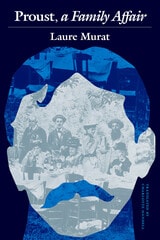
Proust, a Family Affair
Laure Murat
University of Chicago Press, 0
A personal take on Proust’s In Search of Lost Time, written by a woman born into the aristocratic world it describes.
Proust’s In Search of Lost Time is many things: a staggering literary achievement, an evocation of an elite milieu, a complex reckoning with memory. For Laure Murat, it was also a map of the world into which she was born—the world of the French Aristocracy. Descended from French nobility on both sides, Murat saw the châteaux and balls of In Search of Lost Time as the backdrop to her own family story, understood anew through Proust’s eyes.
In this beautiful book, Murat explores both the oppressive constraints of the aristocratic life and the fluidity and linguistic virtuosity of Proust’s astonishing seven-volume novel, which shifts focus from codes of behavior to the experience of living. In Proust, a Family Affair, Murat celebrates the emancipating power of literature and the rewards of paying close attention to a text that may, in turn, provoke a close and loving attendance to the self.
Originally published in French, Proust, a Family Affair has won the Prix Médicis and was shortlisted for France’s most coveted literary award, the Prix Goncourt. This readable, moving translation into English by Charlotte Mandell will appeal to lovers of Proust and to all readers who appreciate personal explorations of literary masterpieces.
Textual Awareness
A Genetic Study of Late Manuscripts by Joyce, Proust, and MannDirk Van Hulle
University of Michigan Press, 2004
A key issue in both textual criticism and the so-called crisis of the novel is the tension between the finished and the unfinished. After a theoretical examination of the relationship between genetic and textual criticism, Dirk Van Hulle uses the three case studies to show how?at each stage in the writing process?the text still had the potential of becoming something entirely different; how and why these geneses proceeded the way they did; how Joyce, Proust, and Mann allowed contingencies to shape their work; how these authors recycled the words of their critics in order to inoculate their works against them; how they shaped an intertextual dimension through the processing of source texts and reading notes; and how text continually generated more text.
Van Hulle's exploration of process sheds new light on the remarkable fact that so many modernist authors protected their manuscripts, implying both the authors' urge to grasp everything and their awareness of the dangers of their encyclopedic projects. Textual Awareness offers new insights into the artificiality of the artifact?the novel?that are relevant to the study of literary modernism in general and the study of James Joyce, Marcel Proust, and Thomas Mann in particular.
Dirk Van Hulle is Assistant Professor of English and German Literature, University of Antwerp.
The Timelessness of Proust
Charles R. Embry
St. Augustine's Press, 2016
Marcel Proust’s À la recherche du temps perdu—In Search of Lost Time—is one of the most important and influential novels of the modern era. In recent decades, Proust has enjoyed a new surge of critical attention, as well as a sustained growth in readership—well beyond that of other prose masters of twentieth century modernism such as Joyce, Woolf, Kafka, and Beckett. The MLA Bibliography presently lists over 3,000 citations to scholarly works devoted to Proust’s novel, and if one Googles “Proust,” the number of hits exceeds 2,000,000.
The temporal nature of human existence and consciousness is one of the many themes explored in In Search of Lost Time, and it is this dimension of Proust’s work that unifies this collection of essays that grew from a roundtable discussion entitled “The Timelessness of Proust” conducted at the 31st annual meeting of the Eric Voegelin Society. The collection includes the following essays:
“In Search of Lost Time: Biographies of Consciousness,” Charles R. Embry
“Proust, Transcendence, and Metaxic Existence,” Glenn Hughes
“The Normative Flow of Consciousness and the Self: A Philosophical Meditation on
Proust’s In Search of Lost Time,” Thomas J. McPartland;
“Imprisonment and Freedom: Resisting and Embracing the Tension of Existence in
Marcel Proust’s In Search of Lost Time,” Paulette Kidder;
“Proust’s Luminous Memory and L’Homme Éternel: The Quest for Limitless Meaning,”
Michael Henry
“Unsought Revelations of Eternal Reality in Eliot’s Four Quartets and Proust’s In Search
of Lost Time,” Glenn Hughes
Persons who are interested not only in the philosophical importance of literary masterworks and in how the philosophical thought of Eric Voegelin may illuminate them, but also in letting Proust serve as a guide in the exploration and understanding of their own lives, will find these essays to be of lasting interest and value.
The Weather in Proust
Eve Kosofsky Sedgwick
Duke University Press, 2012