Results by title
9 books match the query 'Providence'

A Belief in Providence
A Life of Saint Theodora GuerinJulie Young
Indiana Historical Society Press, 2007
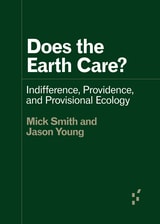
Does the Earth Care?
Indifference, Providence, and Provisional EcologyMick Smith
University of Minnesota Press, 2022
Rethinking our relationship with Earth in a time of environmental emergency
The world is changing. Progress no longer has a future but any earlier sense of Earth as “providential” seems of merely historical interest. The apparent absence of Earthly solicitude is a symptom and consequence of these successive Western modes of engagement with the Earth, now exemplified in global capitalism. Within these constructs, Earth can only appear as constitutively indifferent to the fate of all its inhabitants. The “provisional ecology” outlined in Does the Earth Care?—drawing on a variety of literary and philosophical sources from Richard Jefferies and Robert Macfarlane to Martin Heidegger and Gaia theory—fundamentally challenges that assumption, while offering an Earthly alternative to either cold realism or alienated despair in the face of impending ecological disaster.
Forerunners is a thought-in-process series of breakthrough digital works. Written between fresh ideas and finished books, Forerunners draws on scholarly work initiated in notable blogs, social media, conference plenaries, journal articles, and the synergy of academic exchange. This is gray literature publishing: where intense thinking, change, and speculation take place in scholarship.
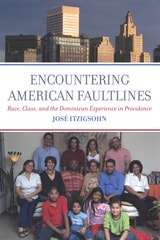
Encountering American Faultlines
Race, Class, and the Dominican Experience in ProvidenceJose Itzigsohn
Russell Sage Foundation, 2009
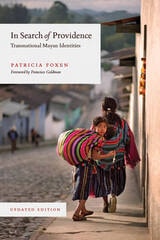
In Search of Providence
Transnational Mayan Identities, Updated EditionPatricia Foxen
Vanderbilt University Press, 2020
In the mid-1990s, Patricia Foxen traveled back and forth between the Guatemalan highlands and Providence, Rhode Island, to understand the migration paths of K'iche' Mayan Indians who had fled the Guatemalan civil war to work in the factories and fisheries of New England. More than two decades later, many Mayans are still migrating to the US. As Foxen argues, the recent surge in Mayan border crossings must be contextualized within both the longer history of violence, marginality, and exclusion that has long led Guatemala's Indigenous populations to be "survivors on the move," as well as contemporary push factors such as climate change and growing inequality that have forced people from their communities.
And yet one of the most significant drivers of continued emigration today, ironically, is the very culture of migration (described in the book) that has accelerated social change within many Indigenous communities, setting in motion a complex series of economic and cultural shifts that have compelled a continuous movement of people and generations to the US. Reading this story in 2020—at a time of massive growth in flows of irregular migrations around the world—can help us better understand the highly complex set of factors that propel long-term migrations and that shape transnational communities on both sides of the border.
In Search of Providence offers a layered, historically grounded perspective that speaks to the local specificity behind the migration experience in order to point to the universal themes and contradictions of contemporary global displacements.
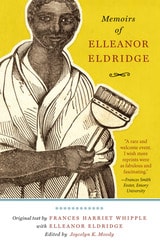
Memoirs of Elleanor Eldridge
Frances H. Whipple
West Virginia University Press, 2013
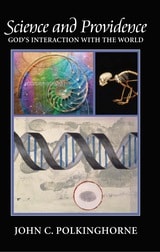
Science and Providence
God's Interaction with the WorldJohn C. Polkinghorne
Templeton Press, 2005
Internationally renowned priest-scientist Dr. John C. Polkinghorne examines whether a personal, interacting God is a credible concept in today's scientific age. Encouraging the belief that there is a compatibility between the insights of science and the insights of religion, this book, previously published in the United Kingdom, focuses on the viewpoint that the world is one in which both human beings and God have the freedom to act.
A modern understanding of the physical world is applied to questions of prayer and providence, such as: Do miracles happen? Can prayer change anything? Why does evil exist? Why does God allow suffering? Why does God need us to ask him?
God's involvement in time is considered, from both a temporal and an eternal perspective. The roles of incarnation and sacrament are discussed in terms of whether or not they have a credible place in today's worldview. And the Final Anthropic Principle (FAP) is presented, with its attempt at a physical eschatology, showing it to be an inadequate basis for hope. Real hope can reside only with God, Polkinghorne concludes.
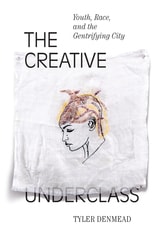
The Creative Underclass
Youth, Race, and the Gentrifying CityTyler Denmead
Duke University Press, 2019
The Precious Birthright
Black Leaders and the Fight to Vote in Antebellum Rhode IslandCJ Martin
University of Massachusetts Press, 2024
In 1842, Black Rhode Islanders secured a stunning victory, a success rarely seen in antebellum America: they won the right to vote. Amid heightened public discourse around shifting ideas of race, citizenship, and political rights, they methodically deconstructed the arguments against their enfranchisement, exposing the arbitrariness of the color line in delineating citizenship rights and choosing the perfect moments in which to act forcefully. At the head of this movement, a cohort of prominent business and community members formed an early example of a Black leadership class in the US.
CJ Martin draws upon a wealth of sources—including personal correspondences, government and organizational documents, tax records, and petitions—to argue that Black leaders employed a unique combination of agitation and accommodation to ensure the success of the movement. By investigating their tactics, Martin deepens the story of how race played a crucial role in American citizenship, and by focusing on Black leadership, he relates this history through the people who lived it—who thought, debated, petitioned, and enacted their own liberation. Telling the story of a fight that was as important to the pioneers of interracial democracy as it was for the civil rights activists of the twentieth century, The Precious Birthright provides new insight into the larger story of Black freedom.
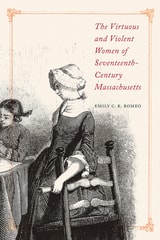
The Virtuous and Violent Women of Seventeenth-Century Massachusetts
Emily C.K. Romeo
University of Massachusetts Press, 2020
Dismantling the image of the peaceful and serene colonial goodwife and countering the assumption that New England was inherently less violent than other regions of colonial America, Emily C. K. Romeo offers a revealing look at acts of violence by Anglo-American women in colonial Massachusetts, from the everyday to the extraordinary. Using Essex County as a case study, Romeo deftly utilizes seventeenth- and eighteenth-century sources to demonstrate that Puritan women, both “virtuous” and otherwise, learned to negotiate the shifting boundaries between acceptable and unacceptable violence in their daily lives and communities.
The Virtuous and Violent Women of Seventeenth-Century Massachusetts shows that more dramatic violence by women—including infanticide, the scalping of captors during the Indian Wars, and even witchcraft accusations—was not necessarily intended to challenge the structures of authority but often sprung from women's desire to protect property, safety, and standing for themselves and their families. The situations in which women chose to flout powerful social conventions and resort to overt violence expose the underlying, often unspoken, priorities and gendered expectations that shaped this society.