Results by title

7 books match the query 'Psychologists'
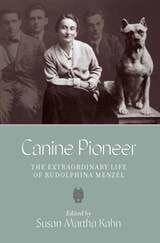
cover of Canine Pioneer: The Extraordinary Life of Rudolphina Menzel

Canine Pioneer

The Extraordinary Life of Rudolphina Menzel

Edited by Susan Martha Kahn

Brandeis University Press, 2022

An insightful look at the life and legacy of a pioneer cynologist between Europe and Israel.
 
Rudolphina Menzel (née Waltuch, 1891–1973), was a Viennese-born, Jewish scientist whose pioneering research on canine psychology, development, and behavior fundamentally shaped the ways dogs came to be trained, cared for, and understood. Between the two world wars, Menzel was known throughout Europe as one of the foremost breeders and trainers of police dogs and served as a sought-after consultant at Kummersdorf, the German military dog training institute in Berlin. She was also a fervent Zionist who was responsible for inventing the canine infrastructure in what came to be the State of Israel and for training hundreds of dogs to protect Jewish lives and property in pre-state Palestine. Teaching Jews to like dogs and training dogs to serve Jews became Menzel’s unique kind of Zionist mission. Detailed and insightful, Canine Pioneer: The Extraordinary Life of Rudolphina Menzel brings to light an important piece of history.
 
 
[more]
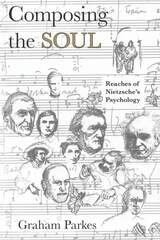
cover of Composing the Soul: Reaches of Nietzsche's Psychology

Composing the Soul

Reaches of Nietzsche's Psychology

Graham Parkes

University of Chicago Press, 1994

Nietzsche wrote in Ecce Homo (1888), "That a psychologist without equal speaks from my writings—this is perhaps the first insight gained by a good reader. . . . Who among the philosophers before me was in any way a psychologist? Before me there simply was no psychology."

Composing the Soul is the first study to pay sustained attention to this pronouncement and to examine the contours of Nietzsche's psychology in the context of his life and psychological makeup. Beginning with essays from Nietzsche's youth, Graham Parkes shows the influence of such figures as Goethe, Byron, and Emerson on Nietzsche's formidable and multiple talents. Parkes goes on to chart the development of Nietzsche's psychological ideas in terms of the imagery, drawn from the dialogues of Plato as well as from Nietzsche's own quasi-mystical experiences of nature, in which he spoke of the soul. Finally, Parkes analyzes Nietzsche's most revolutionary idea—that the soul is composed of multiple "drives," or "persons," within the psyche. The task for Nietzsche's psychology, then, was to identify and order these multiple persons within the individual—to compose the soul.

Featuring all new translations of quotations from Nietzsche's writings, Composing the Soul reveals the profundity of Nietzsche's lifelong personal and intellectual struggles to come to grips with the soul. Extremely well-written, this landmark work makes Nietzsche's life and ideas accessible to any reader interested in this much misunderstood thinker.
[more]
cover of Ethical Excellence: Philosophers, Psychologists, and Real-Life Exemplars Show Us How to Achieve It

Ethical Excellence

Philosophers, Psychologists, and Real-Life Exemplars Show Us How to Achieve It

Heidi M. Giebel

Catholic University of America Press, 2021

Why do some people achieve ethical excellence while others fail? For example, how did Gloria Lewis overcome a lifetime of difficulty and go on to found a non-profit focused on feeding the homeless while Danny Starrett, despite a seemingly ideal childhood, became a rapist and murderer? Why did some Germans rescue their Jewish neighbors while others stood by? One recent study found that four personal variables, taken together, differentiated Nazi-era bystanders from rescuers with startling 96.1% accuracy: social responsibility, altruistic moral reasoning, empathic concern, and risk-taking—traits related to ethical excellences (virtues) like justice, benevolence, and courage. Drawing from the combined wisdom of classical Socratic and Confucian philosophy, recent work in psychology, and the lived experience of recognized moral heroes, the book focuses on how each of us can work toward ethical excellence, becoming more like Lewis and neighbor-rescuers than like Starrett and Nazi-era bystanders. The ancient Socratic and Confucian philosophical traditions offer surprisingly sophisticated advice regarding moral education. Because research in psychology helps us assess the feasibility of cultivating virtue in ourselves and those we influence, Ethical Excellence focuses on combining sound philosophical analysis of ethical virtue and related concepts with relevant empirical research on how these concepts are manifested and developed in everyday practice. Willpower, for example, contributes to development of temperance or moderation, grit relates to perseverance, and empathy is connected to benevolence. Finally, the study of ethically exceptional people—moral heroes or exemplars—serves as living proof that ethical excellence is possible, and exemplars can provide inspiration to attempt it ourselves and guidance regarding how to do so successfully. Relevant stories and excerpts from the author’s own interviews with award-winning ethical exemplars complement the use of philosophical virtue theory and psychological research on virtue-relevant practice. Together, these three approaches—philosophy, psychology, and biography—help to triangulate” ethical excellence and its achievement, presenting a much clearer and more complete picture than we can get from any one of these methods alone.
[more]
cover of Love In A Time Of Hate

Love In A Time Of Hate

Hollander, Nancy Caro

Rutgers University Press, 1997
"First, we are going to kill all of the subversives; then their collaborators; then their sympathizers; then the indifferent; and finally, the timid". -- General Iberico Manuel Saint-Jean, governor of Buenos Aires province, 1977Nancy Caro Hollander profiles ten Argentine, Chilean, and Uruguayan psychologists and psychoanalysts who experienced firsthand, and later strove to comprehend, the crushing political and social oppression that occurred under the military dictatorships in these countries during the 1970s and 1980s.She recounts how psychoanalysts employed what she calls "liberation psychology" to understand the systematic exploitation suffered by the populace under fiercely repressive regimes and then to help themselves and others to confront and survive a culture of intimidation, coercion, and torture. As Hollander writes in the introduction, the men and women profiled "have striven to understand the interrelationship between alienated personal existence and social relations, between individual anomie and social oppression, and between individual mental health and collective empowerment".-- Introduction to liberation psychology, a new psychological methodology.-- Examination of psychological effects of state terror.
[more]
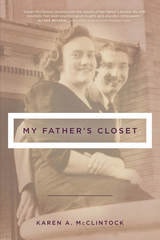
cover of My Father’s Closet

My Father’s Closet

Karen McClintock

The Ohio State University Press, 2017

“Karen McClintock reconstructs the details of her father’s double life with novelistic flair, keen psychological insight, and graceful compassion.” —Alison Bechdel

Thirty years after her father’s death, Karen McClintock sets out to find the gay father she never really knew. As we follow the unraveling family secret, we find ourselves drawn into her story as they stumble into infidelity, grieve heartbreaking losses, and remain loyal in love.

Set in Columbus, Ohio, My Father’s Closet tells the story of how just before the war, McClintock’s parents fell in love and married, while overseas in Germany the man whom she believes became her father’s lover was concealing his Jewish and gay identities in order to escape to America. A set of her father’s journals, letters her parents sent to each other during the Second World War, and a mysterious painting all lead her toward the truth about her gay father. McClintock weaves a complex secret into the fabric of lives we truly care about. And in the process, she leads us out of her father’s closet.

This gripping memoir captures the longing children feel for a distant or hidden parent and taps into the complexity of human connection and abandonment. The characters are resilient and vibrant. The hidden lovers, the nosey neighbors, and surprise lovers all show up. In the end, this extraordinary family finds ways to connect and freedom to love. Anyone who grew up with a family secret will appreciate the dynamics afoot in this fast-paced and compelling story. 
[more]
cover of Shock Therapy: Psychology, Precarity, and Well-Being in Postsocialist Russia

Shock Therapy

Psychology, Precarity, and Well-Being in Postsocialist Russia

Tomas Matza

Duke University Press, 2018
After the collapse of the Soviet Union, Russia witnessed a dramatic increase in psychotherapeutic options, which promoted social connection while advancing new forms of capitalist subjectivity amid often-wrenching social and economic transformations. In Shock Therapy Tomas Matza provides an ethnography of post-Soviet Saint Petersburg, following psychotherapists, psychologists, and their clients as they navigate the challenges of post-Soviet life. Juxtaposing personal growth and success seminars for elites with crisis counseling and remedial interventions for those on public assistance, Matza shows how profound inequalities are emerging in contemporary Russia in increasingly intimate ways as matters of selfhood. Extending anthropologies of neoliberalism and care in new directions, Matza offers a profound meditation on the interplay between ethics, therapy, and biopolitics, as well as a sensitive portrait of everyday caring practices in the face of the confounding promise of postsocialist democracy.
[more]
cover of Wm & H'ry: Literature, Love, and the Letters between Wiliam and Henry James

Wm & H'ry

Literature, Love, and the Letters between Wiliam and Henry James

J. C. Hallman

University of Iowa Press, 2013

Readers generally know only one of the two famous James brothers. Literary types know Henry James; psychologists, philosophers, and religion scholars know William James. In reality, the brothers’ minds were inseparable, as the more than eight hundred letters they wrote to each other reveal. In this book, J. C. Hallman mines the letters for mutual affection and influence, painting a moving portrait of a relationship between two extraordinary men. Deeply intimate, sometimes antagonistic, rife with wit, and on the cutting edge of art and science, the letters portray the brothers’ relationship and measure the manner in which their dialogue helped shape, through the influence of their literary and intellectual output, the philosophy, science, and literature of the century that followed.

William and Henry James served as each other’s muse and critic. For instance, the event of the death of Mrs. Sands illustrates what H’ry never stated: even if the “matter” of his fiction was light, the minds behind it lived and died as though it was very heavy indeed. He seemed to best understand this himself only after Wm fully fleshed out his system. “I can’t now explain save by the very fact of the spell itself . . . that [Pragmatism] cast upon me,” H’ry wrote in 1907. “All my life I have . . . unconsciously pragmatised.”

Wm was never able to be quite so gracious in return. In 1868, he lashed out at the “every day” elements of two of H’ry’s early stories, and then explained: “I have uttered this long rigmarole in a dogmatic manner, as one speaks, to himself, but of course you will use it merely as a mass to react against in your own way, so that it may serve you some good purpose.” He believed he was doing H’ry a service as he criticized a growing tendency toward “over-refinement” or “curliness” of style. “I think it ought to be of use to you,” he wrote in 1872, “to have any detailed criticism fm even a wrong judge, and you don’t get much fm. any one else.” For the most part, H’ry agreed. “I hope you will continue to give me, when you can, your free impression of my performance. It is a great thing to have some one write to one of one’s things as if one were a 3d person & you are the only individual who will do this.” 
[more]