Results by title
18 books match the query 'Psychology of Religion'
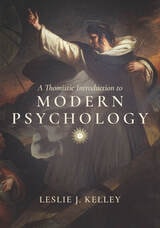
A Thomistic Introduction to Modern Psychology
Leslie Kelley
Catholic University of America Press, 2026
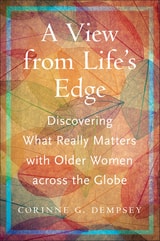
A View from Life's Edge
Discovering What Really Matters with Older Women Across the GlobeCorinne G. Dempsey
Rutgers University Press, 2026
Speaking with nearly one hundred women over the age of eighty in four locations—northern Iceland, south India, a retirement community in California, and a convent in upstate New York—Corinne G. Dempsey finds that, as we near life’s end, we gain clarity about what really matters in life. Women’s stories and reflections, in which sorrow and loss are central to a life well lived, help to expand our sense of what it means to be human.
Drawing on the paradoxical wisdom of world religions and mystical traditions to frame late-life tendencies across cultures, Dempsey portrays these accounts as a corrective to mainstream values that defeat and diminish us. Dempsey encourages us to turn away from ageist fears rather than denying life’s inevitable end. Learning from older women’s perspectives, we might move their edge-of-life views closer to the center.
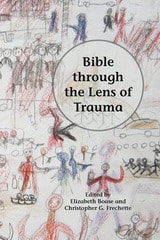
Bible through the Lens of Trauma
Elizabeth Boase
SBL Press, 2016
Explore emerging trends in trauma studies and biblical interpretation
In recent years there has been a surge of interest in trauma, trauma theory, and its application to the biblical text. This collection of essays explores the usefulness of using trauma theory as a lens through which to read the biblical texts. Each of the essays explores the concept of how trauma might be defined and applied in biblical studies. Using a range of different but intersection theories of trauma, the essays reflect on the value of trauma studies for offering new insights into the biblical text. Including contributions from biblical scholars, as well as systematic and pastoral theologians, this book provides a timely critical reflection on this emerging discussion.
Features:

Coming of Age in Jewish America
Bar and Bat Mitzvah ReinterpretedPatricia Keer Munro
Rutgers University Press, 2016
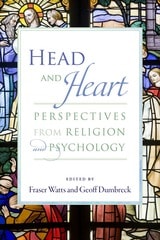
Head and Heart
Perspectives from Religion and PsychologyFraser Watts
Templeton Press, 2013
The fact that this distinction has been so persistent makes it an important area of study. Head and Heart: Perspectives from Religion and Psychology takes an inter-disciplinary approach, linking the thinking of theologians and philosophers with theory and research in present-day psychology. The tradition of using framing questions that have been developed in theology and philosophy can now be brought into dialogue with scientific approaches developed within cognitive psychology and neuroscience. Though these scientific approaches have not generally used the terms “head” and “heart,” they have arrived at a similar distinction in other ways. There is a notable convergence upon the realization that humans have two modes of cognition at their disposal that correspond to “head” and “heart.” The time is therefore ripe to bring the approaches of theology and science in to dialogue—an important dialogue that has been heretofore neglected.
Memory and Identity in Ancient Judaism and Early Christianity
A Conversation with Barry SchwartzTom Thatcher
SBL Press, 2014
Essential reading for scholars and students interested in sociology and biblical studies
In this collection scholars of biblical texts and rabbinics engage the work of Barry Schwartz, Professor Emeritus in the Department of Sociology at the University of Georgia. Schwartz provides an introductory essay on the study of collective memory. Articles that follow integrate his work into the study of early Jewish and Christian texts. The volume concludes with a response from Schwartz that continues this warm and fruitful dialogue between fields.
Features:
- Articles that integrate the study of collective memory and social psychology into religious studies
- Essays from Barry Schwartz
- Theories applied rather than left as abstract principles
Neuromatic
Or, A Particular History of Religion and the BrainJohn Lardas Modern
University of Chicago Press, 2021
In Neuromatic, religious studies scholar John Lardas Modern offers a sprawling examination of the history of the cognitive revolution and current attempts to locate all that is human in the brain, including spirituality itself. Neuromatic is a wildly original take on the entangled histories of science and religion that lie behind our brain-laden present: from eighteenth-century revivals to the origins of neurology and mystic visions of mental piety in the nineteenth century; from cyberneticians, Scientologists, and parapsychologists in the twentieth century to contemporary claims to have discovered the neural correlates of religion.
What Modern reveals via this grand tour is that our ostensibly secular turn to the brain is bound up at every turn with the religion it discounts, ignores, or actively dismisses. In foregrounding the myths, ritual schemes, and cosmic concerns that have accompanied idealizations of neural networks and inquiries into their structure, Neuromatic takes the reader on a dazzling and disturbing ride through the history of our strange subservience to the brain.
On the Psychotheology of Everyday Life
Reflections on Freud and RosenzweigEric L. Santner
University of Chicago Press, 2001
Santner's crucial innovation in this new study is to bring the theological notion of revelation into a broadly psychoanalytic field, where it can be understood as a force that opens the self to everyday life and encourages accountability within the larger world. Revelation itself becomes redefined as an openness toward what is singular, enigmatic, even uncanny about the Other, whether neighbor or stranger, thereby linking a theory of drives and desire to a critical account of sociality. Santner illuminates what it means to be genuinely open to another human being or culture and to share and take responsibility for one's implication in the dilemmas of difference.
By bringing Freud and Rosenzweig together, Santner not only clarifies in new and surprising ways the profound connections between psychoanalysis and the Judeo-Christian tradition, he makes the resources of both available to contemporary efforts to rethink concepts of community and cross-cultural communication.
Psychoanalytic Mediations between Marxist and Postcolonial Reading of the Bible
Tat-siong Benny Liew
SBL Press, 2016
The first sustained conversation between Marxism, postcolonialism, and psychoanalysis in biblical studies
This volume pursues critical readings of the Bible that put psychoanalysis into conversation with Marxist and postcolonial criticism. In these essays psychoanalysis provides a way to mediate between Marxism's materialist groundings and postcolonialism's resistance against empire. The essays in the volume illuminate the way empire has shaped the biblical text by looking at the biblical texts' silences, ruptures, oversights, over-emphases, and inexplicable elements. These details are read as symptoms of a set of oppressive material relations that shaped and continue to haunt the text in the ascendancy of the text in the name of the West.
Features:
- Essays and responses from multiple perspectives and geographical locations, including Africa, Australia, Oceania, Latin America, and North America
- Psychoanalysis that considers how the traumas of colonialism manifest both materially and psychically
- Close readings of biblical texts
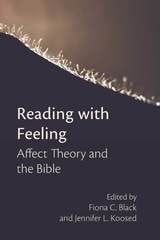
Reading with Feeling
Affect Theory and the BibleFiona C. Black
SBL Press, 2019
Essays with a methodological and metacritical focus
The psychological approach known as affect theory focuses on bodily feelings—depression, happiness, disgust, love—and can illuminate both texts and their interpretations. In this collection of essays scholars break new ground in biblical interpretation by deploying a range of affect-theoretical approaches in their interpretations of texts. Contributors direct their attention to the political, social, and cultural formation of emotion and other precognitive forces as a corrective to more traditional historical-critical methods and postmodern approaches. The inclusion of response essays results in a rich transdisciplinary dialog, with, for example, history, classics, and philosophy. Fiona C. Black, Amy C. Cottrill, Rhiannon Graybill, Jennifer L. Koosed, Joseph Marchal, Robert Seesengood, Ken Stone, and Jay Twomey engage a range of texts from biblical, to prayers, to graphic novels. Erin Runions and Stephen D. Moore’s responses push the conversation in new fruitful directions.
Features
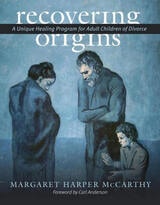
Recovering Origins
A Unique Healing Program for Adult Children of DivorceMargaret Harper McCarthy
Catholic University of America Press, 2021
Resilience and the virtue of fortitude
Aquinas in Dialogue with the Psychosocial SciencesCraig Steven Titus
Catholic University of America Press, 2006
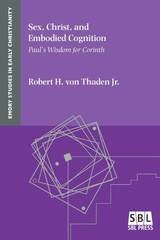
Sex, Christ, and Embodied Cognition
Paul's Wisdom for CorinthRobert H. von Thaden Jr.
SBL Press, 2017
A sociorhetorical analysis of First Corinthians
Robert H. von Thaden Jr.'s sociorhetorical analysis examines Paul's construction of sexual Christian bodies in First Corinthians by utilizing new insights from conceptual integration (blending) theory about the embodied processes of meaning making. Paul's teaching about proper sexual behavior in this letter is best viewed as an example of early Christian wisdom discourse. This discourse draws upon apocalyptic and priestly cognitive frames to increase the rhetorical force of the argument. Reading Paul's argument through the lens of rhetorical invention, von Thaden demonstrates that Paul first attempts to show the Corinthians why sexual immorality is the worst of all bodily sins before shifting rhetorical focus to explain to them how they can best avoid this infraction against the body of Christ.
Features:
- A programmatic application of conceptual integration theory using a sociorhetorical mode of interpretation
- A vivid account of key aspects of conceptual integration theory and how they function in sociorhetorical interpretation
- A detailed application of these strategies to interpret 1 Corinthians 1-4; 6:12-7:7
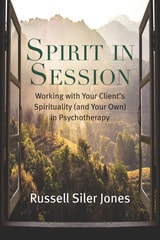
Spirit in Session
Working with Your Client’s Spirituality (and Your Own) in PsychotherapyRussell Siler Jones
Templeton Press, 2019
Spirituality is an important part of many clients’ lives. It can be a resource for stabilization, healing, and growth. It can also be the cause of struggle and even harm. More and more therapists—those who consider themselves spiritual and those who do not—recognize the value of addressing spirituality in therapy and increasing their skill for engaging it ethically and effectively.
In this immensely practical book, Russell Siler Jones helps therapists feel more competent and confident about having spiritual conversations with clients. With a refreshing, down-to-earth style, he describes how to recognize the diverse explicit and implicit ways spirituality can appear in psychotherapy, how to assess the impact spirituality is having on clients, how to make interventions to maximize its healthy impact and lessen its unhealthy impact, and how therapists can draw upon their own spirituality in ethical and skillful ways. He includes extended case studies and clinical dialogue so readers can hear how spirituality becomes part of case conceptualization and what spiritual conversation actually sounds like in psychotherapy.
Jones has been a therapist for nearly 30 years and has trained therapists in the use of spirituality for over a decade. He writes about a complex topic with an elegant simplicity and provides how-to advice in a way that encourages therapists to find their own way to apply it.
Spirit in Session is a pragmatic guide that therapists will turn to again and again as they engage their clients in one of the most meaningful and consequential dimensions of human experience.
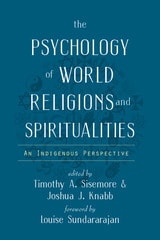
The Psychology of World Religions and Spiritualities
An Indigenous PerspectiveTimothy A. Sisemore
Templeton Press, 2020
With this goal in mind, editors Timothy Sisemore and Joshua Knabb have made one of the world’s major religions the subject of a separate chapter. In addition, they have arranged for each chapter to be written by a psychologist who practices—or is culturally connected with—that religion. This marks the book’s unique contribution to the field: it is the product of people who have lived the world’s religions, not merely studied them. By taking such a respectful approach, the book promotes an appreciation for the ways that religious belief animates, inspires, and instructs its adherents. Moreover, the indigenous point-of-view of these essays will help scholars identify their own biases when researching religious groups, allowing them to produce more accurate and holistic analyses.
Psychologists understand that religion and spirituality provide meaning and purpose to billions of people around the globe. But the actual experience of these beliefs eludes the grasp of the reductionistic methods of science. With this resource at their side, psychologists in academic and clinical settings will be equipped to understand religious experience from the bottom-up, and honor the beliefs and practices of the people they are trying to help.
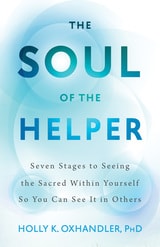
The Soul of the Helper
Seven Stages to Seeing the Sacred within Yourself So You Can See It in OthersHolly K. Oxhandler
Templeton Press, 2025
In their devotion to the well-being of others, caregivers routinely put their own well-being last and can unintentionally burn themselves out physically, emotionally, and spiritually. Their self-neglect, paired alongside a deep desire to help others, has the potential to stir up feelings of anger and resentment, leading to a sense of guilt and shame. They often believe that if they were to grant themselves any rest or grace, they would be at risk of failing in their duty.
In The Soul of the Helper, Dr. Holly K. Oxhandler shows caregivers and fellow helpers a more self-compassionate way to cope with their overwhelming responsibilities and to attend to their own needs, particularly when it comes to their mental health and spiritual journey. She invites them to pause and realize that if they let their personal resources run dry, they cannot possibly care for others as fully as they wish. In fact, their efforts are likely to cause more harm than good.
With a background in spiritually-integrated mental health, Dr. Oxhandler teaches helpers a seven-step process to slow down and reconnect with the stillness within themselves. It is in this space of stillness that Oxhandler guides helpers to reconnect with the “sacred spark” within their soul. By allowing themselves to enter that stillness, caregivers will recognize that they, too, are worthy of care. And with that realization, they will see anew the sacred spark that dwells inside everyone else, especially within those they’re helping.
As a social worker, researcher, and person of faith, Dr. Oxhandler writes in a warm and welcoming style, shares many relatable stories, and widens her scope to include believers of all faiths and spiritual traditions. Her book is for caregivers everywhere who sense the sacred spark within them saying, in effect: “Come to me, all you who are weary and burdened, and I will give you rest.”
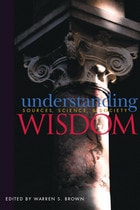
Understanding Wisdom
Sources & Science Spiritual PrinciplesWarren, Jr. Brown
Templeton Press, 2000
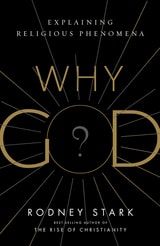
Why God?
Explaining Religious PhenomenaRodney Stark
Templeton Press, 2017
Defining religion over the past century has, ironically, led to theories that exclude belief in God, proposing that all systems of thought concerning the meaning of life are religions. Of course, this makes it impossible to distinguish the village priest from the village atheist, or Communism from Catholicism. Worse yet, it makes all religious behavior irrational, presuming that, for example, people knowingly pray to an empty sky.
Renowned sociologist of religion Rodney Stark offers a comprehensive, decisive, God-centered theory of religion in his book, Why God: Explaining Religious Phenomena. While his intent is not to insist that God exists, Stark limits religions to systems of thought based on belief in supernatural beings—to Gods. With this God-focused theory, Stark explores the entire range of religious topics, including the rise of monotheism, the discovery of sin, causes of religious hostility and conflict, and the role of revelations.
Each chapter of Why God? builds a comprehensive framework, starting with the foundations of human motivations and ending with an explanation of why most people are religious. Stark ultimately settles what religion is, what it does, and why it is a universal feature of human societies.
Why God? is a much needed guide for anyone who wants a thorough understanding of religion and our relationship to it, as well as a firm refutation to those who think religion can exist without the divine.