Results by title
8 books match the query 'Punk culture'
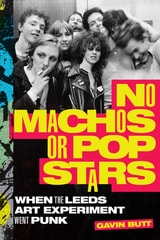
No Machos or Pop Stars
When the Leeds Art Experiment Went PunkGavin Butt
Duke University Press, 2022

Politics as Sound
The Washington, DC, Hardcore Scene, 1978-1983Shayna L. Maskell
University of Illinois Press, 2021
A fascinating analysis of a punk rock hotbed, Politics as Sound tells the story of how a generation created music that produced--and resisted--politics and power.
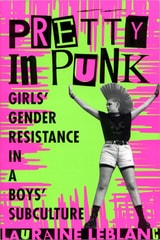
Pretty in Punk
Girl's Gender Resistance in a Boy's SubcultureLeblanc, Lauraine
Rutgers University Press, 1999
Pretty in Punk combines autobiography, interviews, and sophisticated analysis to create the first insider’s examination of the ways punk girls resist gender roles and create strong identities.
Why would an articulate, intelligent, thoughtful young women shave off most of her hair, dye the remainder green, shape it into a mohawk, and glue it onto her head? What attracts girls to male-dominated youth subcultures like the punk movement? What role does the subculture play in their perceptions of themselves, and in their self-esteem? How do girls reconcile a subcultural identity that is deliberately coded “masculine” with the demands of femininity?
Research has focused on the ways media and cultural messages victimize young women, but little attention has been paid to the ways they resist these messages. In Pretty in Punk, Lauraine Leblanc examines what happens when girls ignore these cultural messages, parody ideas of beauty, and refuse to play the games of teenage femininity. She explores the origins and development of the punk subculture, the processes by which girls decide to “go punk,” patterns of resistance to gender norms, and tactics girls use to deal with violence and harassment.
Pretty in Punk takes readers into the lives of girls living on the margins of contemporary culture. Drawing on interviews with 40 girls and women between the ages of 14-37, Leblanc examines the lives of her subjects, illuminating their forms of rebellion and survival. Pretty in Punk lets readers hear the voices of these women as they describe the ways their constructions of femininity—from black lipstick to slamdancing—allow them to reject damaging cultural messages and build strong identities. The price they pay for resisting femininity can be steep—girls tell of parental rejection, school expulsion, institutionalization, and harassment. Leblanc illuminates punk girls’ resistance to adversity, their triumphs over tough challenges, and their work to create individual identities in a masculine world.

Punk and Revolution
Seven More Interpretations of Peruvian RealityShane Greene
Duke University Press, 2016
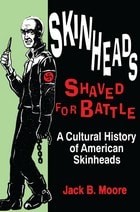
Skinheads Shaved For Battle
A Cultural History of American SkinheadsJack Moore
University of Wisconsin Press, 1993
This book describes who American skinheads are, how they have developed within larger youth group scenes, their ideas and activities, the role of music in their formation and development, how they have been perceived by the media in America, and what damage they have done in American society. Jack B. Moore focuses on the cultural history of this group in America during the 1980s and suggests that while they were originally a minor distraction on the punk scene, they have grown into a dangerous and far more politically engaged source of hate thought and crime.

Some Wear Leather, Some Wear Lace
The Worldwide Compendium of Postpunk and Goth in the 1980sAndi Harriman and Marloes Bontje
Intellect Books, 2014
A book about the music, the individual, and the creativity of a worldwide community rather than theoretical definitions of a subculture, Some Wear Leather, Some Wear Lace considers a subject not often covered by academic books. Whether you were part of the scene or are just fascinated by different modes of expression, this book will transport you to another time and place.
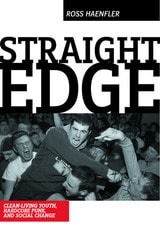
Straight Edge
Hardcore Punk, Clean Living Youth, and Social ChangeHaenfler, Ross
Rutgers University Press, 2006
Straight edge is a clean-living youth movement that emerged from the punk rock subculture in the early 1980s. Its basic tenets promote a drug-free, tobacco-free, and sexually responsible lifestyle—tenets that, on the surface, seem counter to those typical of teenage rebellion. For many straight-edge kids, however, being clean and sober was (and still is) the ultimate expression of resistance—resistance to the consumerist and self-indulgent ethos that defines mainstream U.S. culture.
In this first in-depth sociological analysis of the movement, Ross Haenfler follows the lives of dozens of straight-edge youths, showing how for these young men and women, and thousands of others worldwide, the adoption of the straight-edge doctrine as a way to better themselves evolved into a broader mission to improve the world in which they live. Straight edge used to signify a rejection of mind-altering substances and promiscuous sex, yet modern interpretations include a vegetarian (or vegan) diet and an increasing involvement in environmental and political issues.
The narrative moves seamlessly between the author’s personal experiences and theoretical concerns, including how members of subcultures define “resistance,” the role of collective identity in social movements, how young men experience multiple masculinities in their quest to redefine manhood, and how young women establish their roles in subcultures. This book provides fresh perspectives on the meaning of resistance and identity in any subculture.

Without Masters
Autogestión, Anarchist Ethics, and Mexico City PunkLivia K. Stone
Duke University Press, 2026