Results by title
13 books match the query 'Purpose'
Campus with Purpose
Building a Mission-Driven CampusStephen Lehmkuhle
Rutgers University Press, 2021

Dismembering the Whole
Composition and Purpose of Judges 19-21Cynthia Edenburg
SBL Press, 2016
A fresh literary analysis of political polemic in the Bible
The Book of Judges ends with a bizarre narrative of sex and violence that starts with a domestic tiff and ends with the decimation of a tribe that is restored by means of abduction and rape. Cynthia Edenburg applies a fresh literary analysis, recent understandings of historical linguistics, and historical geography in her exploration of the origin of the anti-Benjamin polemic found in Judges 19–21, the growth and provenance of the book of Judges, and the shape of the Deuteronomistic History. Her study exposes how Judges 19–21 function as political polemic reflecting not the pre-monarchic period but instead the historical realities of the settlement of Benjamin during the Babylonian and Persian period.
Features:
- Methodological discussions that open each chapter
- Charts and tables
- Engagement with current research produced by scholars from around the world
Evidence Of Purpose
Scientists Discover The CreatorJohn Marks Templeton
Templeton Press, 1996
Hustles for Humanists
Build a Business with PurposeErica Machulak
Rutgers University Press, 2025
As a humanities professional, your skills are in demand. Despite the challenges of a competitive job market, the unique skill set that you possess is highly transferable to various industries and roles. Knowing how to position your creativity, knowledge and empathy is vital for achieving meaningful employment and professional growth.
Hustles for Humanists provides a detailed roadmap for humanities professionals who want to leverage their valuable skills to find or create meaningful work. Drawing from her experiences as an academic turned entrepreneur, Erica Machulak gives practical advice on how to connect with your core values, market yourself, build relationships with clients, and negotiate fair compensation.
This is an essential field guide for finding work that aligns with the core values of your humanities scholarship and practice. It demonstrates how the professional strengths of the humanities can be drawn upon to create fairer, more just and equitable entrepreneurial approaches – whether you’re launching a business, job hunting, or looking for inspiration. Hustles for Humanists helps you unlock the value of your humanities practice and explore exciting new pathways to achieving economic stability both within and beyond academia.
Just Vibrations
The Purpose of Sounding GoodWilliam Cheng
University of Michigan Press, 2016
Modern academic criticism bursts with what Eve Kosofsky Sedgwick once termed paranoid readings—interpretative feats that aim to prove a point, persuade an audience, and subtly denigrate anyone who disagrees. Driven by strategies of negation and suspicion, such rhetoric tends to drown out softer-spoken reparative efforts, which forego forceful argument in favor of ruminations on pleasure, love, sentiment, reform, care, and accessibility.
Just Vibrations: The Purpose of Sounding Good calls for a time-out in our serious games of critical exchange. Charting the divergent paths of paranoid and reparative affects through illness narratives, academic work, queer life, noise pollution, sonic torture, and other touchy subjects, William Cheng exposes a host of stubborn norms in our daily orientations toward scholarship, self, and sound. How we choose to think about the perpetration and tolerance of critical and acoustic offenses may ultimately lead us down avenues of ethical ruin—or, if we choose, repair. With recourse to experimental rhetoric, interdisciplinary discretion, and the playful wisdoms of childhood, Cheng contends that reparative attitudes toward music and musicology can serve as barometers of better worlds.
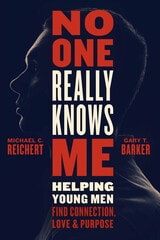
No One Really Knows Me
Helping Young Men Find Connection, Love, and PurposeMichael C. Reichert and Gary Barker
University of Chicago Press, 2027
Counters common and harmful myths about manhood today and offers recommendations for what young men really need as they mature.
From the “manosphere” and LooksMaxxers to Proud Boys, it increasingly feels these days like the kids—particularly the boys—are not all right. Social expectations around what masculinity means are in flux, while algorithms push out misogynist content with no regard for its radicalizing effects. In 2023 and again in 2025, a representative survey of 2,000 American men aged 18-23 found that over two-thirds agreed with the statement: “No one really knows me.” This dramatic finding revealed the failure of American boyhood to account for young men’s full humanity and equip them with the skills, relationships, and support needed for success in these modern times.
In No One Really Knows Me, psychologists Michael C. Reichert and Gary Barker seek to uncover the root causes of and solutions to our contemporary crisis of masculinity. Based on single and group interviews and a wealth of survey data, including their own national survey of 2,000 men ages 18 to 45 from a broad range of economic, racial, and social backgrounds, their findings were clear: across the board, men are struggling to build the social networks they desperately need for health and success. Underlying this failure is a set of historic, pernicious myths that continue to dominate boyhood and shape the imaginations of boys in families, schools, and relationships. Reichert and Barker use each chapter to highlight one myth of masculinity, offer data from their own research and practice to debunk it, and then present life-changing, evidence-based alternatives.
Young men today are in quite a different position than they were a generation ago. As he emerges from boyhood on his way to manhood, each young man needs to be grounded in emotionally open connections, deep relationships with people who have his back, and opportunities to engage with purpose. This book shows us how we can provide young men with surer footing for their passage to adulthood.
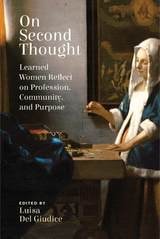
On Second Thought
Learned Women Reflect on Profession, Community, and PurposeLuisa Del Giudice
University of Utah Press, 2017
In these dynamic essays, thirteen wise women review their lives for meaning and purpose, striving to integrate both head and heart. They consider how their spiritual paradigms have shaped their vocations as teachers, scholars, guides, mentors, and advocates and how these roles have been integral to their life’s work, not merely to their work life. With courageous and insightful testimonies they narrate the intersecting relationships of work, family, students, patients, and colleagues, weaving them together rather than compartmentalizing them. Challenges inside and outside the academy and other professional settings are revealed, to tell of suffering and transformation, to tally hard-earned life lessons and to share wisdom achieved.
Lives and words are gathered and generously shared, allowing these women to make sense of their own lives while mentoring a wider circle of younger and older readers alike. These “travel tales” of journeys through knowledge and self-knowledge will inform, challenge, surprise, entertain, and inspire.
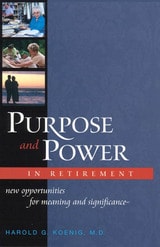
Purpose & Power In Retirement
New Opportunities for Meaning and SignificanceHarold Koenig
Templeton Press, 2003
Eighty million baby boomers are heading toward retirement. Some are retiring now, either out of choice or because they have been laid off. Others will work for a few more years until their retirement plans kick in, until they feel they can retire, or until they're forced to retire. Whatever their age at retirement, they will have better health and live longer than their parents. And each of them will face these questions:
•Do I want a reason to get up in the morning and be excited about the day ahead?•Do I still want to make a difference in the world?
They need a vision—a goal that takes into account their experience, wisdom, strengths, and limitations, and gives purpose to their lives.
Dr. Harold G. Koenig, with expertise in the fields of geriatrics, mental health, and religion, explains that the notion of retirement was in fact a marketing tool developed in the post–World War II period. Continuing today, society's image of retirement is based largely on myths, such as: things will get better when you retire—you'll be able to do everything you wanted to but couldn't when you worked. In fact, these beliefs can be harmful, leading to emotional issues, identity crises, and problems with physical health.
Citing current scientific and medical research, Koenig illustrates how having a purpose motivates and energizes people in their retirement years. He presents a step-by-step guide to identifying a goal toward which they can strive. And he shows how striving for that goal in itself brings meaning, satisfaction, and a sense of reward to retirement years.
"Finding purpose is more urgent than ever during the retirement years, when the search for purpose becomes one of the deepest of human longings," says Koenig. His Purpose and Power in Retirement is an invaluable resource for everyone heading toward retirement, and for anyone seeking meaning in life.
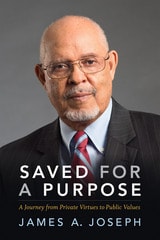
Saved for a Purpose
A Journey from Private Virtues to Public ValuesJames A. Joseph
Duke University Press, 2015
In an engaging and personal style, Joseph shows how his commitment to applying moral and ethical principles to large groups and institutions played out in his work in the civil rights movement in Alabama and as a college chaplain in California in the turbulent 1960s. His time later as vice president of the Cummins Engine Company provided an opportunity to promote corporate ethics, and his tenure as Under Secretary of the Interior in the Carter Administration underscored the difficulty and weight of making the right decisions while balancing good policy analysis with transcendent moral principles.
In 1996 President Clinton selected Joseph to become the United States Ambassador to South Africa. His recollections of working with Nelson Mandela, whom he describes as a noble and practical politician, and his observations about what he learned from Desmond Tutu and others about reconciliation contain some of the book’s most poignant passages.
Saved for a Purpose is unique, as Joseph combines his insights from working to integrate values into America’s public and private sectors with his long engagement with ethics as an academic discipline and as a practical guide for social behavior. Ultimately, it reflects Joseph’s passionate search for values that go beyond the personal to include the ethical imperatives that should be applied to the communal.
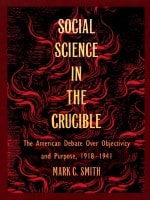
Social Science in the Crucible
The American Debate over Objectivity and Purpose, 1918–1941Mark C. Smith
Duke University Press, 1994
Mark C. Smith first provides a historical overview of the controversy over the nature and future of the social sciences in early twentieth-century America and, then through a series of intellectual biographies, offers an intensive study of the work and lives of major figures who participated in this debate. Using an extensive range of materials, from published sources to manuscript collections, Smith examines "objectivists"—economist Wesley Mitchell and political scientist Charles Merriam—and the more "purposive thinkers"—historian Charles Beard, sociologist Robert Lynd, and political scientist and neo-Freudian Harold Lasswell. He shows how the debate over objectivity and social purpose was central to their professional and personal lives as well as to an understanding of American social science between the two world wars. These biographies bring to vivid life a contentious moment in American intellectual history and reveal its significance in the shaping of social science in this country.
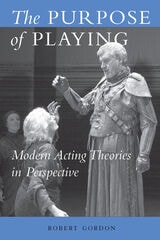
The Purpose of Playing
Modern Acting Theories in PerspectiveRobert Gordon
University of Michigan Press, 2006
“This analysis of major movements and figures from the early nineteenth century to the present is clear, thorough, and penetrating, and its scope across periods, countries, and styles is impressive.”
--Xerxes Mehta, University of Maryland-Baltimore County
Robert Gordon is Reader in Drama, Goldsmiths College, University of London.
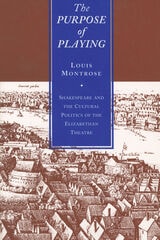
The Purpose of Playing
Shakespeare and the Cultural Politics of the Elizabethan TheatreLouis Montrose
University of Chicago Press, 1996
Montrose first locates the public and professional theater within the ideological and material framework of Elizabethan culture. He considers the role of the professional theater and theatricality in the cultural transformation that was concurrent with religious and socio-political change, and then concentrates upon the formal means by which Shakespeare's Elizabethan plays called into question the absolutist assertions of the Elizabethan state. Drawing dramatic examples from the genres of tragedy and history, Montrose finally focuses his cultural-historical perspective on A Midsummer Night's Dream.
The Purpose of Playing elegantly demonstrates how language and literary imagination shape cultural value, belief, and understanding; social distinction and interaction; and political control and contestation.
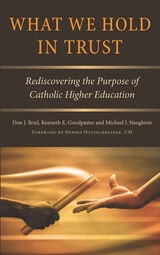
What We Hold in Trust
Rediscovering the Purpose of Catholic Higher EducationDon Briel
Catholic University of America Press, 2021