Results by title

2 books match the query 'Quincy'
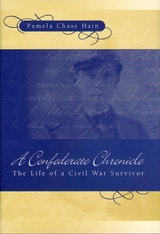
cover of A Confederate Chronicle: The Life of a Civil War Survivor

A Confederate Chronicle

The Life of a Civil War Survivor

Pamela Chase Hain

University of Missouri Press, 2005
A Confederate Chronicle presents the remarkable life of Thomas L. Wragg, who served in both the Confederate army and navy and endured incarceration as a prisoner of war. After the war, he undertook a series of jobs, eventually becoming a physician. In 1889, he died tragically at the hands of a man who mistakenly thought he was defending his family’s honor. Pamela Chase Hain uses Wragg’s letters home to his family, friends, and fiancée, as well as his naval notebook and newspaper articles, to give readers direct insight into his life and the lives of those around him.
The son of a respected Savannah physician, Wragg was born into a life of wealth and privilege. A nonconscripted soldier, he left home at eighteen to join the front lines in Virginia. From there, he sent letters home describing the maneuverings of General Joseph E. Johnston’s army in and around Harpers Ferry and Winchester, culminating with the Battle of Bull Run.
In the fall of 1862, Wragg joined the Confederate Navy and trained on the ironclad CSS Georgia before transferring to the CSS Atlanta. Hain uses the notebook that he kept during his training in ordnance and gunnery to provide a rare glimpse into the naval and artillery practices at the time. This notebook also provides evidence of a fledgling Confederate naval “school” prior to the one established on the James River on the CSS Patrick Henry.
The crew of the unfortunate Atlanta was captured on the ship’s maiden voyage, and evidence in the Wragg family papers suggests the capture was not the result of bad luck, as has been claimed. Wragg and the other officers were sent to Fort Warren Prison in Boston Harbor for fifteen months. Wragg’s POW letters reveal the isolation and sense of abandonment the prisoners felt as they waited in hopes of an exchange. The correspondence between Wragg and his fiancée, Josie, after the war illustrates not only the mores of nineteenth-century courtship but also the difficulty of adjustment that many Confederate war veterans faced.
Sadly, Wragg’s life was cut short after he became a successful doctor in Quincy, Florida. Cover-up and intrigue by influential citizens prevented Wragg’s wife from bringing the murderer to justice. A Confederate Chronicle offers an unprecedented look at how the Civil War affected the gentry class of the South. It gives readers a personal view into one man’s struggle with the chaos of life during and after the war, as well as into the struggles of the general society.
[more]
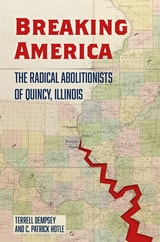
cover of Breaking America: The Radical Abolitionists of Quincy, Illinois

Breaking America

The Radical Abolitionists of Quincy, Illinois

Terrell Dempsey

University of Missouri Press, 2026

In this engaging new work, Terrell Dempsey and Patrick Hotle draw from newly discovered and underutilized primary sources to craft a detailed narrative history of the rise of a group of radical abolitionists in Quincy, Illinois, and the outsized, if mostly overlooked, influence they had on the dissolution of the Union.

The story begins with the 1830 arrival in Marion County, Missouri, of Dr. David Nelson, a Presbyterian minister and supporter of the American Colonization Society. After hearing a speech by Theodore B. Weld, Nelson was converted to the abolitionist cause and went on to recruit Elijah Lovejoy into the region’s nascent anti-slavery movement. Nelson’s activities resulted in the creation of an active anti-abolitionist organization in Northeast Missouri that ended up running him out of the state and across the river to Quincy, Illinois, at the same time Lovejoy sought shelter in Alton, Illinois.

In Quincy, Nelson and a group of like-minded moderate anti-slavery activists opened a manual labor school called the Mission Institute. Following the murder of Lovejoy by a pro-slavery mob, a small band of abolitionists at the Mission Institute became radicalized and decided to aid enslaved people in their quest for freedom. After three of these abolitionists were captured in Missouri and sentenced to twelve years in prison, others at the Mission Institute published a call for the Illinois Anti-Slavery Society to organize an underground railroad in Illinois. The Society officially committed to assisting enslaved people to escape slavery in May of 1842, which triggered a hostile reaction from enslavers in Missouri who went on to organize patrols, seek stricter state laws, and attempt to sabotage the underground railroad in neighboring Illinois.

In Breaking America, Dempsey and Hotle demonstrate the impact of the Quincy abolitionists on the later Dred Scott cases. The authors trace a sequence of revivals, public meetings, daring escapes, over-reactions, judicial decisions, and violence, providing a roadmap for how Missouri judicial opinion changed from “once free, always free” to “once a slave, always a slave” under Missouri Law. Breaking America is an important new addition to the history of abolitionism, the Dred Scott decision, and the eventual dissolution of the Union. 

[more]