Results by title
25 books match the query 'Real'

Constructions of the Real
Intersections of Documentary-based Film Practice and TheoryEdited by Christine Rogers, Kim Munro, Liz Burke, and Catherine Gough-Brady
Intellect Books, 2023
Constructions of the Real gathers a wide range of writing from nonfiction and documentary filmmakers from around the world who undertake theoretically informed practice and think through making. The filmmakers and writers featured here explore the rich space between the academy and industry, and they reflect on, interrogate, and explicate their filmmaking practices in relation to questions of form, content, and process. Engaging with current debates about the role of creative scholarship, the contributors make a powerful claim for nonfiction filmmaking as a knowledge-making practice for revealing, critiquing, and interpreting the world.
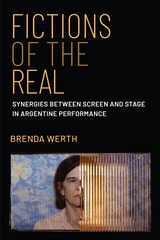
Fictions of the Real
Synergies Between Screen and Stage in Argentine PerformanceBrenda Werth
University of Michigan Press, 2026
Brenda Werth’s Fictions of the Real traces the transformation of “the real” and its transnational conceptualization by Argentine artists in the twenty-first century, focusing on artists who engage in both documentary theater and filmmaking. Werth places the work of Lola Arias, Romina Paula, Federico León, Mariano Pensotti, and Grupo Krapp in dialogue with the distinct but intertwined lineages of theater and film, exploring the intermedial dimensions of these artists’ theatrical work, resonances in their documentary films, and the transmedial relationships between their documentary plays and films. Focusing on the dynamic and shifting context of Argentina between 1998 and 2023, a period roughly bookmarked by the economic crisis of 2001 and the COVID-19 pandemic, this book explores how these artists disrupt the relations of power and counter political manipulation with their own evocative fictions of the real as they engage in the roles of translators, curators, researchers, archivists, and collaborators.
Governing Visions of the Real
The National Film Unit and Griersonian Documentary Film in Aotearoa/New ZealandLars Weckbecker
Intellect Books, 2015
HAWTHORNE AND THE REAL
BICENTENNIAL ESSAYSMILLICENT BELL
The Ohio State University Press, 2005
Contributors:
- Millicent Bell
- Nina Baym
- Michael T. Gilmore
- Leland S. Person
- David Leverenz
- Larry J. Reynolds
- Lawrence Buell
- Rita K. Gollin
- John Carlos Row
- Brenda Wineapple
Haunting Violations
Feminist Criticism and the Crisis of the "Real"Edited by Wendy S. Hesford and Wendy Kozol
University of Illinois Press, 2000
Feminist critics place a premium on the "real" stories told by the victimized and the oppressed. Haunting Violations offers a corrective to such uncritical acceptance of the "real" in confessional, testimonial, and ethnographic narratives. Through close readings of a wide variety of texts, contributors argue that depictions of the "real" are inherently performative, crafted within the limits and in the interests of specific personal, political, or social projects.
Haunting Violations explores the inseparability of discourse and politics in quasi-autobiographical works such as I, Rigoberta Menchú and When Heaven and Earth Changed Places. Contributors consider how the Sri Lankan Mother's Front movement exploits the sanctity of the maternal and how multiple political purposes on both sides bleed through government "documentary" photographs of Japanese-American concentration camp internees. This volume also investigates how South Asian feminists use the authority of their personal experience to critique the film Mississippi Masala and how realist narratives, such as Janet Campbell Hale's autobiographical Bloodlines, Margie Strosser's documentary film Rape Stories, and Shekur Kapur's film Bandit Queen, reexamine how assumptions about power and trauma are embedded in the promise of the real.
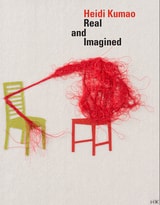
Heidi Kumao
Real and ImaginedHeidi Kumao
Michigan Publishing Services, 2022
For over thirty years, Kumao has developed an expanded art practice that includes animations, video installations, photographs, machine art, and fabric works that give physical form to the intangible parts of our lives: our emotions, psychological states, memories, thinking patterns. Her hybrid artworks have included electromechanical girl’s legs that “misbehave,” video installations about surviving confinement, surreal, experimental stop motion puppet animations, performative staged photographs, and hand crafted cinema machines.
She has exhibited her award-winning artwork in solo and group exhibitions nationally and internationally including the Art Science Museum Singapore, Centre de Cultura Contemporània de Barcelona, the Museum of Image and Sound (São Paulo) and the Museum of Modern Art in Buenos Aires. Her work is in permanent and private collections including the Houston Museum of Fine Arts, Arizona State University Art Museum, the Philadelphia Museum of Art and the Exploratorium in San Francisco. She has received fellowships and grants from the Guggenheim Foundation, the Creative Capital Foundation, and the National Endowment for the Arts. She is a professor at the Stamps School of Art & Design at the University of Michigan, Ann Arbor.
This exhibition catalogue marks the first significant publication on Kumao’s work and includes a selection of works from across her career. It includes written contributions by: Srimoyee Mitra, curator and Director of the Stamps Gallery and NYC-based art critic; Wendy Vogel; an interview between the artist and writer Lynn Love; and poems by the Ruth Lilly Poetry Prize Award winner Marilyn Chin.
Invitation to Law and Society, Second Edition
An Introduction to the Study of Real LawKitty Calavita
University of Chicago Press, 2016
With this second edition of Invitation to Law and Society, Calavita brings up to date what is arguably the leading introduction to this exciting, evolving field of inquiry and adds a new chapter on the growing law and cultural studies movement.
Invitation to Law and Society, Second Edition
An Introduction to the Study of Real LawKitty Calavita
University of Chicago Press, 2016
Law and society is a rapidly growing field that turns the conventional view of law as mythical abstraction on its head. Kitty Calavita brilliantly brings to life the ways in which law is found not only in statutes and courtrooms but in our institutions and interactions, while inviting readers into conversations that introduce the field’s dominant themes and most lively disagreements. Deftly interweaving scholarship with familiar examples, Calavita shows how scholars in the discipline are collectively engaged in a subversive exposé of law’s public mythology. While surveying prominent issues and distinctive approaches to both law as it is written and actual legal practices, as well as the law’s potential as a tool for social change, this volume provides a view of law that is more real but just as compelling as its mythic counterpart.
With this second edition of Invitation to Law and Society, Calavita brings up to date what is arguably the leading introduction to this exciting, evolving field of inquiry and adds a new chapter on the growing law and cultural studies movement.
Invitation to Law and Society
An Introduction to the Study of Real LawKitty Calavita
University of Chicago Press, 2010
Law and Society is a rapidly-growing interdisciplinary field that turns on its head the conventional, idealized view of the “Law” as a magisterial abstraction. Kitty Calavita’s Invitation to Law and Society brilliantly brings to life the ways in which law shapes and manifests itself in the institutions and interactions of human society, while inviting the reader into conversations that introduce the field’s dominant themes and most lively disagreements.
Deftly interweaving scholarship with familiar personal examples, Calavita shows how scholars in the discipline are collectively engaged in a subversive exposé of law’s public mythology. While surveying prominent issues and distinctive approaches to the use of the law in everyday life, as well as its potential as a tool for social change, this volume provides a view of law that is more real but just as compelling as its mythic counterpart. In a field of inquiry that has long lacked a sophisticated yet accessible introduction to its ways of thinking, Invitation to Law and Society will serve as an engaging and indispensible guide.
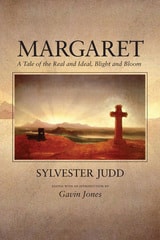
Margaret
A Tale of the Real and Ideal, Blight and BloomSylvester Judd
University of Massachusetts Press, 2009
Praised at the time as the most emphatically “American” book ever written, Margaret is a breathtaking combination of female bildungsroman, utopian novel, and historical romance. First published in 1845, Sylvester Judd's novel centers on the fictional New England village of Livingston, where the young Margaret Hart strives to escape the poverty and vice of her surroundings by learning from a mysterious teacher, the “Master,” and by entwining herself with the powers of nature. But when Margaret's brother is tried and hanged for murder, this rural community collapses, forcing Margaret to face the temptations of an urban underworld and to confront the intrigue of her family history. Margaret is the story of a young woman's attempt to create a new social order, founded on beauty and truth, in a land plagued by violence, debauchery, and political instability.
As Gavin Jones points out in his new introduction, Margaret perhaps stands alone in its creation of a female character who grows in social rather than domestic power. The novel also remains unique in its exploration of transcendental philosophy in novelistic form. Part eco-criticism, part seduction novel, part temperance tract, and part social history, Margaret is a virtual handbook for understanding the literary culture of mid-nineteenth-century America, the missing piece in puzzling out connections between writers such as Hawthorne, Melville, Whitman, and Thoreau.
Margaret was widely read and deeply influential on both British and American writers throughout the nineteenth century but controversial for its representations of alcoholism and capital punishment. Judd's novel remains resonant for today's readers as it overturns conventional views of the literary representation of women and the origins of the American Renaissance.
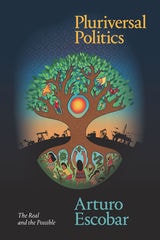
Pluriversal Politics
The Real and the PossibleArturo Escobar
Duke University Press, 2020
Practising the Real on the Contemporary Stage
José Antonio Sánchez
Intellect Books, 2014
Real to Reel
Lidia Yuknavitch
University of Alabama Press, 2003
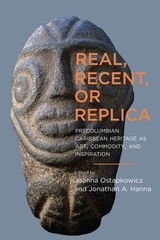
Real, Recent, or Replica
Precolumbian Caribbean Heritage as Art, Commodity, and InspirationEdited by Joanna Ostapkowicz and Jonathan A. Hanna
University of Alabama Press, 2021
A CHOICE OUTSTANDING ACADEMIC TITLE, 2022
Examines the largely unexplored topics in Caribbean archaeology of looting of heritage sites, fraudulent artifacts, and illicit trade of archaeological materials
Real, Recent, or Replica: Precolumbian Caribbean Heritage as Art, Commodity, and Inspiration is the first book-length study of its kind to highlight the increasing commodification of Caribbean Precolumbian heritage. Amerindian art, including “Taíno” art, has become highly coveted by collectors, spurring a prolific and increasingly sophisticated black market of forgeries, but also contemporary artistic engagement, openly appreciated as modern artworks taking inspiration from the past. The contributors to this volume contend with difficult subject matter including the continued looting of archaeological sites in the region, the seismic increase of forgeries, and the imbalance of power and economic relations between the producers and consumers of neo-Amerindian art.
The case studies document the considerable time depth of forgeries in the region (since the late nineteenth century), address the policies put in place by Caribbean governments and institutions to safeguard national patrimony, and explore the impact looted and forged artifacts have on how museums and institutions collect and ultimately represent the Caribbean past to their audiences. Overall, the volume emphasizes the continued desire for the “authentic” Precolumbian artifact, no matter the cost. It provides insights for archaeologists, museum professionals, art historians, and collectors to combat illegal trade and support communities in creating sustainable heritage industries.
Reality Squared
Televisual Discourse on the RealFriedman, James
Rutgers University Press, 2002
“Reality Squared develops the scholarly discussion of the aesthetic of realism, documentary conventions, and modes of television broadcasting, in sophisticated new directions. Friedman’s historical perspective is especially valuable since so much discussion of the new aesthetic of realism on television fails to take into account similar trends throughout television history.”—Ellen Seiter, professor of communication, University of California at San Diego
“Reality Squared offers a rich variety of insights into the way television and new media make us believe in the worlds they represent. Spanning across the decades of early live TV to contemporary digital culture, this volume is an important history, not only of media but alsoof our perception of reality itself.”—Lynn Spigel, University of Southern California and author of Welcome to the Dreamhouse
Through the 1980s and 1990s, the television industry and its critics have identified and promoted the re-emergence of “reality-based” television. During the past two decades, this type of programming has come to play a major role in both production decisions and network strategy. At the beginning of the twenty-first century, viewers’ desire for “reality TV” shows no signs of diminishing, as evidenced by the meteoric rise of shows such as Who Wants to be a Millionaire, Survivor, and MTV’s Real World.
Although debates concerning the relationship between representational media and reality have occupied scholars and artists for quite some time, a surprisingly small number of books have examined this subject. As the title suggests, Reality Squared examines the representation of reality within the squared televisual viewing frame, as
well as the exponential growth of these representational programs on broadcast, cable TV, and even beyond, to the worldwide web. The contributors approach the issues surrounding television and reality from a wide range of theoretical and methodological perspectives. Topics include: the internet, the impact of global news events, weather predictions on the Weather Channel, and the representation of criminality on America’s
Most Wanted. This diverse volume contributes to the ongoing conversation about reality and representation, history and fiction, text and context, and the “inside” and “outside” of that box we call television.
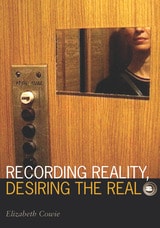
Recording Reality, Desiring the Real
Elizabeth Cowie
University of Minnesota Press, 2010
Cowie claims that, as a radical film form, documentary has been a way for filmmakers to acknowledge historical and contemporary realities by presenting images of these realities. If documentary is the desire to know reality through its images and sounds, she asks, what kind of speaking (and speaking about) emerges in documentary, and how are we engaged by it? In considering this and other questions, Cowie examines a range of noteworthy films, including Spike Lee’s When the Levees Broke, John Huston’s Let There Be Light, and Milica Tomic’s Portrait of My Mother.
Recording Reality, Desiring the Real stakes documentary’s central place in cinema as both an art form and a form of social engagement, which together create a new understanding of spectatorship.
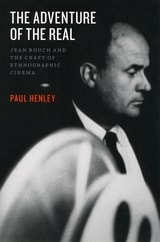
The Adventure of the Real
Jean Rouch and the Craft of Ethnographic CinemaPaul Henley
University of Chicago Press, 2009
Though relatively unsung in the English-speaking world, Jean Rouch (1917–2004) was a towering figure of ethnographic cinema. Over the course of a fifty-year career, he completed over one hundred films, both documentary and fiction, and exerted an influence far beyond academia. Exhaustively researched yet elegantly written, The Adventure of the Real is the first comprehensive analysis of his practical filmmaking methods.
Rouch developed these methods while conducting anthropological research in West Africa in the 1940s–1950s. His innovative use of unscripted improvisation by his subjects had a profound impact on the French New Wave, Paul Henley reveals, while his documentary work launched the genre of cinema-vérité. In addition to tracking Rouch’s pioneering career, Henley examines the technical strategies, aesthetic considerations, and ethical positions that contribute to Rouch’s cinematographic legacy. Featuring over one hundred and fifty images, The Adventure of the Real is an essential introduction to Rouch’s work.

The Grit of the Real
Toward a Semiotics Against GeontopowerElizabeth A. Povinelli
Duke University Press, 2027
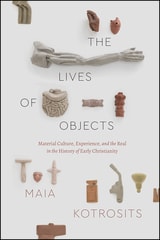
The Lives of Objects
Material Culture, Experience, and the Real in the History of Early ChristianityMaia Kotrosits
University of Chicago Press, 2020
Maia Kotrosits offers a fresh perspective on objects, looking beyond physical material to consider how collective imagination shapes the formation of objects and the experience of reality. Bringing a psychoanalytic approach to the analysis of material culture, she examines objects of attachment—relationships, ideas, and beliefs that live on in the psyche—and illustrates how people across time have anchored value systems to the materiality of life. Engaging with classical studies, history, anthropology, and literary, gender, and queer studies, Kotrosits shows how these disciplines address historical knowledge and how an expanded definition of materiality can help us make connections between antiquity and the contemporary world.
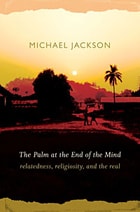
The Palm at the End of the Mind
Relatedness, Religiosity, and the RealMichael Jackson
Duke University Press, 2009
Through sixty-one beautifully crafted essays based on sojourns in Europe, West Africa, the United States, Australia, and New Zealand, and taking his cue from Wallace Stevens’s late poem, “Of Mere Being,” Jackson explores a range of experiences where “the palm at the end of the mind” stands “beyond thought,” on “the edge of space,” “a foreign song.” Moments of crisis as well as everyday experiences in cafés, airports, and offices disclose the subtle ways in which a single life shades into others, the boundaries between cultures become blurred, fate unfolds through genealogical time, elective affinities make their appearance, and different values contend.
The Real and the Sacred
Picturing Jesus in Nineteenth-Century FictionJefferson J. A. Gatrall
University of Michigan Press, 2014
The Real, the True, and the Told
Postmodern Historical Narrative and the Ethics of RepresentationEric L. Berlatsky
The Ohio State University Press, 2011
Theatre of the Real
Yeats, Beckett, and SondheimGina Masucci MacKenzie
The Ohio State University Press, 2008
Unraveling the Real
The Fantastic in Spanish-American FiccionesAuthored by Cynthia Duncan
Temple University Press, 2010
In literary and cinematic fictions, the fantastic blurs the lines between reality and fantasy. Lacking a consensus on definition, critics often describe the fantastic as supernatural, or similar to, but quite different from fantasy, science fiction, and magical realism.
In Unraveling the Real Cynthia Duncan provides a new theoretical framework for discussing how the fantastic explores both metaphysical and socially relevant themes in Spanish American fictions. Duncan deftly shows how authors and artists have used this literary genre to convey marginalized voices as well as critique colonialism, racism, sexism, and classism. Selecting examples from the works of such noted writers as Jorge Luis Borges, Julio Cortázar, and Carlos Fuentes, among others, she shows how capacious the concept is, and why it eludes standard definition.
Challenging the notion that the fantastic is escapist in nature, Unraveling the Real shows how the fantastic has been politically engaged throughout the twentieth century, often questioning what is real or unreal. Presenting a mirror image of reality, the fantastic does not promoting a utopian parallel universe but rather challenges the way we think about the world around us and the cultural legacy of colonialism.
Up Against the Real
Black Mask from Art to ActionNadja Millner-Larsen
University of Chicago Press, 2023
With Up Against the Real, Nadja Millner-Larsen offers the first comprehensive study of the group Black Mask and its acrimonious relationship to the New York art world of the 1960s. Cited as pioneers of now-common protest aesthetics, the group’s members employed incendiary modes of direct action against racism, colonialism, and the museum system. They shut down the Museum of Modern Art, fired blanks during a poetry reading, stormed the Pentagon in an antiwar protest, sprayed cow’s blood at the secretary of state, and dumped garbage into the fountain at Lincoln Center. Black Mask published a Dadaist broadside until 1968, when it changed its name to Up Against the Wall Motherfucker (after line in a poem by Amiri Baraka) and came to classify itself as “a street gang with analysis.” American activist Abbie Hoffman described the group as “the middle-class nightmare . . . an anti-media phenomenon simply because their name could not be printed.”
Up Against the Real examines how and why the group ultimately rejected art in favor of what its members deemed “real” political action. Exploring this notorious example of cultural activism that rose from the ruins of the avant-garde, Millner-Larsen makes a critical intervention in our understanding of political art.