Results by title
14 books match the query 'Rabbinical literature'
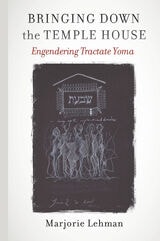
Bringing Down the Temple House
Engendering Tractate YomaMarjorie Lehman
Brandeis University Press, 2022
While the use of feminist analysis as a methodological lens is not new to the study of Talmudic literature or to the study of individual tractates, this book demonstrates that such an intervention with the Babylonian Talmud reveals new perspectives on the rabbis’ relationship with the temple and its priesthood. More specifically, through the relationships most commonly associated with home, such as those of husband-wife, father-son, mother-son, and brother-brother, the rabbis destabilize the temple bayit (or temple house). Moving beyond the view that the temple was replaced by the rabbinic home, and that rabbinic rites reappropriate temple practices, a feminist approach highlights the inextricable link between kinship, gender, and the body, calling attention to the ways the rabbis deconstruct the priesthood so as to reconstruct themselves.
Confronting Vulnerability
The Body and the Divine in Rabbinic EthicsJonathan Wyn Schofer
University of Chicago Press, 2010
While imparting their ethical lessons, rabbinic texts often employ vivid images of death, aging, hunger, defecation, persecution, and drought. In Confronting Vulnerability, Jonathan Wyn Schofer carefully examines these texts to find out why their creators thought that human vulnerability was such a crucial tool for instructing students in the development of exemplary behavior.
These rabbinic texts uphold virtues such as wisdom and compassion, propound ideal ways of responding to others in need, and describe the details of etiquette. Schofer demonstrates that these pedagogical goals were achieved through reminders that one’s time on earth is limited and that God is the ultimate master of the world. Consciousness of death and of divine accounting guide students to live better lives in the present. Schofer’s analysis teaches us much about rabbinic pedagogy in late antiquity and also provides inspiration for students of contemporary ethics. Despite their cultural distance, these rabbinic texts challenge us to develop theories and practices that properly address our frailties rather than denying them.
Conversion
Miriam Bodian
Rutgers University Press, 2026
Covenant of Blood
Circumcision and Gender in Rabbinic JudaismLawrence A. Hoffman
University of Chicago Press, 1995
In the rabbinic system, Hoffman argues, circumcision was neither a birth ritual nor the beginning of the human life cycle, but a rite of covenantal initiation into a male "life line." Although the evolution of the rite was shaped by rabbinic debates with early Christianity, the Rabbis shared with the church a view of blood as providing salvation. Hoffman examines the particular significance of circumcision blood, which, in addition to its salvific role, contrasted with menstrual blood to symbolize the gender dichotomy within the rabbinic system. His analysis of the Rabbis' views of circumcision and menstrual blood sheds light on the marginalization of women in rabbinic law. Differentiating official mores about gender from actual practice, Hoffman surveys women's spirituality within rabbinic society and examines the roles mothers played in their sons' circumcisions until the medieval period, when they were finally excluded.
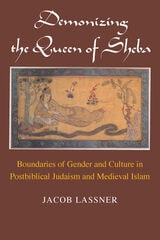
Demonizing the Queen of Sheba
Boundaries of Gender and Culture in Postbiblical Judaism and Medieval IslamJacob Lassner
University of Chicago Press, 1993
The Bible presents the Queen of Sheba's encounter with King Solomon as a diplomatic mission: the queen comes "to test him with hard questions," all of which he answers to her satisfaction; she then praises him and, after an exchange of gifts, returns to her own land. By the Middle Ages, Lassner demonstrates, the focus of the queen's visit had shifted from international to sexual politics. The queen was now portrayed as acting in open defiance of nature's equilibrium and God's design. In these retellings, the authors humbled the queen and thereby restored the world to its proper condition.
Lassner also examines the Islamization of Jewish themes, using the dramatic accounts of Solomon and his female antagonist as a test case of how Jewish lore penetrated the literary imagination of Muslims. Demonizing the Queen of Sheba thus addresses not only specialists in Jewish and Islamic studies, but also those concerned with issues of cultural transmission and the role of gender in history.
Going West
Migrating Personae and Construction of the Self in Rabbinic CultureReuven Kiperwasser
SBL Press, 2021
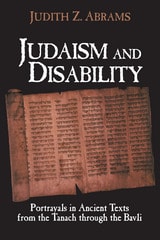
Judaism and Disability
Portrayals in Ancient Texts from the Tanach through the BavliJudith Z. Abrams
Gallaudet University Press, 1998
In Judaism and Disability, the archaic portrayals of mentally ill, mentally retarded, physically affected, deaf, blind, and other disabled people reflect the sharp contrast they presented compared to the unchanging Judaic ideal of the “perfect priest.” All of these sources describe this perfection as embodied in a person who is male, free, unblemished, with da’at (cognition that can be communicated), preferably learned, and a priest. The failure to have da’at stigmatized disabled individuals, who were also compromised by the treatment they received from nondisabled people, who were directing and constraining.
As the Judaic ideal transformed from the bodily perfection of the priest in the cult to intellectual prowess in the Diaspora, a parallel change of attitudes toward disabled persons gradually occurred. The reduced emphasis upon physical perfection as a prerequisite for a relationship with God eventually enabled the enfranchisement of some disabled people and other minorities. Scholars, students, and other readers will find the engrossing process disclosed in Judaism and Disability one that they can apply to a variety of other disciplines.
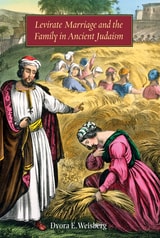
Levirate Marriage and the Family in Ancient Judaism
Dvora E. Weisberg
Brandeis University Press, 2009
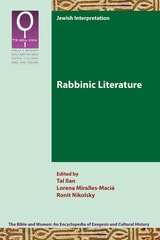
Rabbinic Literature
Tal Ilan
SBL Press, 2022
This volume in the Bible and Women series is devoted to rabbinic literature from late Jewish antiquity to the early Middle Ages. Fifteen contributions feature different approaches to the question of biblical women and gender and encompass a wide variety of rabbinic corpora, including the Mishnah-Tosefta, halakhic and aggadic midrashim, Talmud, and late midrash. Some essays analyze biblical law and gender relations as they are reflected in the rabbinic sages’ argumentation, while others examine either the rabbinic portrayal of a certain woman or a group of women or the role of biblical women in a specific rabbinic context. Contributors include Judith R. Baskin, Yuval Blankovsky, Alexander A. Dubrau, Cecilia Haendler, Tal Ilan, Gail Labovitz, Moshe Lavee, Lorena Miralles-Maciá, Ronit Nikolsky, Susanne Plietzsch, Natalie C. Polzer, Olga I. Ruiz-Morell, Devora Steinmetz, Christiane Hannah Tzuberi, and Dvora Weisberg.
Studies in Rabbinic Narratives, Volume 1
Jeffrey L. Rubenstein
SBL Press, 2021
Explore new theoretical tools and lines of analysis of rabbinic stories
Rabbinic literature includes hundreds of stories and brief narrative traditions. These narrative traditions often take the form of biographical anecdotes that recount a deed or event in the life of a rabbi. Modern scholars consider these narratives as didactic fictions—stories used to teach lessons, promote rabbinic values, and grapple with the tensions and conflicts of rabbinic life. Using methods drawn from literary and cultural theory, including feminist, structuralist, Marxist, and psychoanalytic methods, contributors analyze narratives from the Babylonian Talmud, midrash, Mishnah, and other rabbinic compilations to shed light on their meanings, functions, and narrative art. Contributors include Julia Watts Belser, Beth Berkowitz, Dov Kahane, Jane L. Kanarek, Tzvi Novick, James Adam Redfield, Jay Rovner, Jeffrey L. Rubenstein, Zvi Septimus, Dov Weiss, and Barry Scott Wimpfheimer.
The Birth of Doubt
Confronting Uncertainty in Early Rabbinic LiteratureMoshe Halbertal
SBL Press, 2020
A systematic attempt to understand the rabbinic world through its approach to confronting uncertainty
In the history of halakhah, the treatment of uncertainty became one of the most complex fields of intense study. In his latest book, Moshe Halbertal focuses on examining the point of origin of the study of uncertainty in early rabbinic literature, including the Mishnah, Tosefta, and halakhic midrashim. Halbertal explores instructions concerning how to behave in situations of uncertainty ranging from matters of ritual purity, to lineage and marriage, to monetary law, and to the laws of forbidden foods. This examination of the rules of uncertainty introduced in early rabbinic literature reveals that these rules were not aimed at avoiding but rather at dwelling in the midst of uncertainty, thus rejecting the sectarian isolationism that sought to minimize a community’s experience of and friction with uncertainty.
Features:
- A thorough investigation of the principles concerning how to behave in cases of uncertainty
- An examination of two distinct modes for coping with uncertainty
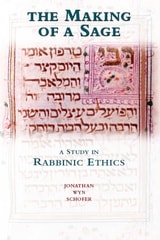
The Making of a Sage
A Study in Rabbinic EthicsJonathan Wyn Schofer
University of Wisconsin Press, 2005
Jonathan Schofer offers the first theoretically framed examination of rabbinic ethics in several decades. Centering on one large and influential anthology, The Fathers According to Rabbi Nathan, Jonathan Schofer situates that text within a broader spectrum of rabbinic thought, while at the same time bringing rabbinic thought into dialogue with current scholarship on the self, ethics, theology, and the history of religions.
Notable Selection, Jordan Schnitzer Book Award for Philosophy and Jewish Thought, Association for Jewish Studies
The Sacred Encounter
Jewish Perspectives on SexualityRabbi Lisa Grushcow, Dphil
Central Conference of American Rabbis, 2014
This wide-ranging anthology takes a close look at the breadth of human sexuality from a Jewish perspective. The essays begin with a look at biblical and rabbinic views on sexuality and then proceed to explorations of sexuality at different moments in the life cycle, sexuality and the marital model, diverse expressions of sexuality, examples of sexuality education, the nexus of sexuality and theology, and the challenges of contemporary sexual ethics. The Sacred Encounter is a thought-provoking and important Jewish resource. Perfect for personal study or for high school or adult classes.
The Stranger within Your Gates
Converts and Conversion in Rabbinic LiteratureGary G. Porton
University of Chicago Press, 1994
The Stranger within Your Gates analyzes virtually every reference to converts in the full corpus of rabbinic literature. The intellectual dilemma that converts posed for classical Judaism played itself out in discussions of marriage, religious practice, inheritance of property, and much else. Reviewing the rabbinic literature text by text, Porton exposes the rabbis' frequently ambivalent and ambiguous views.
The Stranger within Your Gates is the only examination of conversion in rabbinic literature to draw upon the full scope of contemporary anthropological and sociological studies of conversion. It is also unique in its focus on the opinions of the community into which the convert enters, rather than on the testimony of the convert. By approaching data with new methods, Porton heightens our understanding of conversion and the nature of the People of Israel in rabbinic literature.