Results by title
4 books match the query 'Racial Democracy'
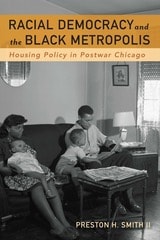
Racial Democracy and the Black Metropolis
Housing Policy in Postwar ChicagoPreston H. Smith II
University of Minnesota Press, 2012
“The African American community.” “The black position.” In accounts of black politics after the Second World War, these phrases reflect how the African American perspective generally appeared consistent, coherent, and unified. In Racial Democracy and the Black Metropolis, Preston H. Smith II examines housing debates in Chicago that go beyond black and white politics, and he shows how class and factional conflicts among African Americans actually helped to reproduce stunning segregation along economic lines.
Class and factional conflicts were normal in the rough-and-tumble world of land use politics. They are, however, often not visible in accounts of the postwar fight against segregation. Smith outlines the ideological framework that black civic leaders in Chicago used to formulate housing policy, both within and outside the black community, to reveal a surprising picture of leaders who singled out racial segregation as the source of African Americans’ inadequate housing rather than attacking class inequalities. What are generally presented as black positions on housing policy in Chicago, Smith makes clear, belonged to the black elite and did not necessarily reflect black working-class participation or interests.
This book details how black civic leaders fought racial discrimination in ways that promoted—or at least did not sacrifice—their class interests in housing and real estate struggles. And, as Smith demonstrates, their accommodation of the real estate practices and government policy of the time has had a lasting effect: it contributed to a legacy of class segregation in the housing market in Chicago and major metropolitan areas across the country that is still felt today.
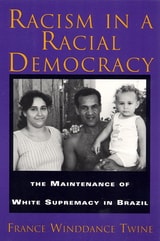
Racism in a Racial Democracy
The Maintenance of White Supremacy in BrazilTwine, Francine Winddance
Rutgers University Press, 1997
In Racism in a Racial Democracy, France Winddance Twine asks why Brazilians, particularly Afro-Brazilians, continue to have faith in Brazil's "racial democracy" in the face of pervasive racism in all spheres of Brazilian life. Through a detailed ethnography, Twine provides a cultural analysis of the everyday discursive and material practices that sustain and naturalize white supremacy.
This is the first ethnographic study of racism in southeastern Brazil to place the practices of upwardly mobile Afro-Brazilians at the center of analysis. Based on extensive field research and more than fifty life histories with Afro- and Euro-Brazilians, this book analyzes how Brazilians conceptualize and respond to racial disparities. Twine illuminates the obstacles Brazilian activists face when attempting to generate grassroots support for an antiracist movement among the majority of working class Brazilians. Anyone interested in racism and antiracism in Latin America will find this book compelling.
"Twine offers one of the most sophisticated analyses to date of the intransigence of Brazilian racism. Her nuanced account of the complex interplay of gender, race, and class is particularly exciting. This book will have a powerful impact not only on the field of Brazilian racial studies, but on the whole burgeoning literature on the African Diaspora." -- Howard Winant, author of Racial Conditions: Politics, Theory, Comparisons
"A revealing and sharply observed dissection of how racism works 'on the ground' in Brazil." -- George Reid Andrews, author of Blacks and Whites in Sao Paulo, Brazil, 1888-1988
Sites of Slavery
Citizenship and Racial Democracy in the Post–Civil Rights ImaginationSalamishah Tillet
Duke University Press, 2012
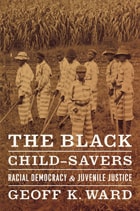
The Black Child-Savers
Racial Democracy and Juvenile JusticeGeoff K. Ward
University of Chicago Press, 2012
At once an inspiring story about the shifting boundaries of race, citizenship, and democracy in America and a crucial look at the nature of racial inequality, The Black Child Savers is a stirring account of the stakes and meaning of social justice.