Results by title
3 books match the query 'Racial justice in education'
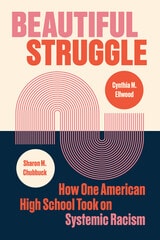
Beautiful Struggle
How One American High School Took on Systemic RacismSharon M. Chubbuck and Cynthia M. Ellwood
University of Chicago Press, 2026
An in-depth look at how one high school addressed racial inequality head-on.
The new superintendent stood before the faculty of “Oakmont High,” a large, diverse public school, and spoke a cold truth about American education. He described seeing the vibrant mix of students in the school’s hallways disperse into racially segregated classrooms when the bell rang. The fact was that students were sorted into tracks—supposedly race-neutral, “ability-based” pathways—that led to sharply unequal experiences and opportunities throughout high school and often their whole lives. “Why is it fair for white kids to have a better education than Black kids?” the superintendent asked his faculty. “It’s racism pure and simple, and it’s going to stop!”
Racial inequality persists because racism is systemic, baked into countless interlacing beliefs, practices, and structures that make up the way we do school. Tracking is one of many such practices. In Beautiful Struggle, Sharon M. Chubbuck and Cynthia M. Ellwood examine eleven years of transformation by administrators, teachers, students, and others as they tackled systemic racism head-on, starting with tracking. The people of OHS encountered intense resistance and made extraordinary inroads. They fought inequality with hard conversations and concrete steps. They dramatically increased Black and brown students’ access to rich, rigorous learning from the moment students entered as freshmen. They questioned and restructured the interconnected web of policy and practices in every aspect of the school. Students themselves propelled major changes in academic opportunity and the very culture of the school.
Chubbuck and Ellwood argue that taking on racial inequality requires an unrelenting focus on racial justice, challenging systems on every front, broad collective leadership across race and role, and the will to navigate difference and conflict. The story within Beautiful Struggle offers a hopeful though sobering path forward.
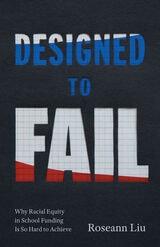
Designed to Fail
Why Racial Equity in School Funding Is So Hard to AchieveRoseann Liu
University of Chicago Press, 2024
For people who care about urban school districts like Philadelphia’s, addressing the challenges that these schools face often boils down to the need for more money. But why are urban districts that serve Black and Brown students still so perennially underfunded compared to majority-white ones? Why is racial equity in school funding so hard to achieve?
In Designed to Fail, Roseann Liu provides an inside look at the Pennsylvania state legislature and campaigns for fair funding to show how those responsible for the distribution of school funding work to maintain the privileges of majority-white school districts. Liu analyzes how colorblind policies, political structures, and the maintenance of the status quo by people in power perpetuate wide and deepening racial disparities in education funding. Taking a lesson from community organizers fighting for a racially equitable school funding system, Liu’s work is a bold call to address structural racism at the root and organize from a place of abundant justice.
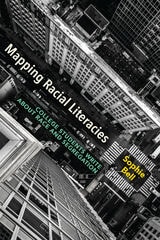
Mapping Racial Literacies
College Students Write about Race and SegregationSophie R. Bell
Utah State University Press, 2020
This textual ethnography embeds early college students’ writing in deep historical and theoretical contexts and looks for new ways that their writing contributes to and reshapes contemporary understandings of how US and global citizens are thinking about race. The book is a teaching narrative, tracing a teaching journey that considers student writing not only in the moments it is assigned but also in continual revisions of the course, making it a useful tool in helping college-age students see, explore, and articulate the role of race in determining their life experiences and opportunities.
Sophie Bell’s work narrates the experiences of a white teacher making mistakes in teaching about race and moving forward through those mistakes, considering that process valuable and, in fact, necessary. Providing a model for future scholars on how to carve out a pedagogically responsive identity as a teacher, Mapping Racial Literacies contributes to the scholarship on race and writing pedagogy and encourages teachers of early college classes to bring these issues front and center on the page, in the classroom, and on campus.