Results by title
13 books match the query 'Rebels'
Bondmen and Rebels
A Study of Master-Slave Relations in AntiguaDavid Barry Gaspar
Duke University Press, 1985
Dangerous Spirit of Liberty
The Politics of Slaves and Rebels in Early America and the West Indies, 1688-1748Justin James Pope
University of Missouri Press, 2024
Dangerous Spirit of Liberty's distinguishing feature is its focus on the role of communication in the development of a rebellious early eighteenth-century Atlantic. Most historians of slavery have presupposed that slave unrest was confined to small locales in the first half of the eighteenth century. In fact, slaves found ways to share news across provinces to great effect. Benefiting from research in the archives of Great Britain, Spain, Barbados, Bermuda, Jamaica, Antigua, the U.S. Virgin Islands, and the mainland United States, the book reveals new evidence of slave communication networks and shows how people of African ancestry shared rumors of emancipation and rebellion in this period. Slaves laboring in colonial commerce and working aboard ships helped foster an increasingly restive Black community. Banished slaves, convicted conspirators accused of plotting insurrection, carried their experiences with them in exile to neighboring colonies. By reconstructing the path of news, the book reveals rumors and reports that particularly resonated among slaves in the early eighteenth century.
Devils and Rebels
The Making of Hawthorne's Damned PoliticsLarry J. Reynolds
University of Michigan Press, 2010
"An outstanding combination of literary interpretation and cultural and historical context that will be an important addition to the critical literature on Hawthorne."
---Nina Baym, University of Illinois
"It is difficult to imagine a more timely book than Devils and Rebels. Examining the role of the public intellectual and writer during a time of political conflict and war, Reynolds takes up his charges with great precision and historical finesse. What particularly distinguishes this book is its attention to the ways in which one of this country's most important authors struggled to resist the waves of political extremism and patriotic hysteria that swept around him."
---Jeffrey Steele, University of Wisconsin—Madison
Widely condemned even in his own time, Nathaniel Hawthorne's views on abolitionism and slavery are today frequently characterized by scholars as morally reprehensible. Devils and Rebels explores the historical and biographical record to reveal striking evidence of the author's true political values---values grounded in pacifism and resistant to the kind of binary thinking that could lead to violence and war.
The book offers fresh readings of not only Hawthorne's four major romances but also some of his less familiar works like "Legends of the Province House," The Whole History of Grandfather's Chair, Journal of an African Cruiser, The Life of Franklin Pierce, and "Septimius Felton." Reynolds argues that Hawthorne---whether in his politics or his art---drew upon racialized imagery from America's past revolution and war on witchcraft to create a politics of quiet imagination, alert to the ways in which New England righteousness could become totalitarian by imposing its narrow view of the world on others.
Meticulously researched and cogently argued, this groundbreaking work demonstrates the need to examine perspectives and values from beyond the New England region when studying the literary history of the American Renaissance and illuminates the difficulties faced by public intellectuals during times of political strife---an issue as relevant today as it was some one hundred and fifty years ago.
Larry J. Reynolds is Thomas Franklin Mayo Professor of Liberal Arts and Professor of English at Texas A&M University. His previous books include A Historical Guide to Nathaniel Hawthorne, National Imaginaries, American Identities: The Cultural Work of American Iconography, and European Revolutions and the American Literary Renaissance as well as an edition of the European writings of Margaret Fuller.
New Jack Jocks
Rebels, Race, And The American AthleteLarry Platt
Temple University Press, 2003

Rebels and Outliers
Real Stories of the American WestJohn M Glionna
University of Nevada Press, 2025
This vibrant collection invites readers to journey through the rugged landscapes and tight-knit communities that define the American West. Along the way, you’ll meet individuals whose grit, resilience, and pioneering spirit embody the heart of this region’s legacy.
A captivating follow-up to Glionna’s 2022 book, Outback Nevada: Real Stories of the Silver State, Rebels and Outliers is a testament to the untamed, enduring character of the people who call the West home.
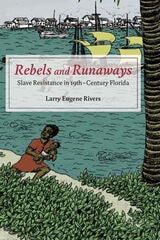
Rebels and Runaways
Slave Resistance in Nineteenth-Century FloridaLarry Eugene Rivers
University of Illinois Press, 2013
Against a smoldering backdrop of violence, this study analyzes the various degrees of slave resistance--from the perspectives of both slave and master--and how they differed in various regions of antebellum Florida. In particular, Rivers demonstrates how the Atlantic world view of some enslaved blacks successfully aided their escape to freedom, a path that did not always lead North but sometimes farther South to the Bahama Islands and Caribbean. Identifying more commonly known slave rebellions such as the Stono, Louisiana, Denmark (Telemaque) Vesey, Gabriel, and the Nat Turner insurrections, Rivers argues persuasively that the size, scope, and intensity of black resistance in the Second Seminole War makes it the largest sustained slave insurrection ever to occur in American history.
Meticulously researched, Rebels and Runaways offers a detailed account of resistance, protest, and violence as enslaved blacks fought for freedom.
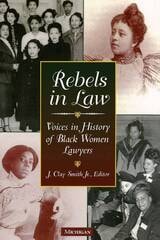
Rebels in Law
Voices in History of Black Women LawyersJ. Clay Smith, Jr., Editor
University of Michigan Press, 2000
The essays demonstrate the involvement of black women lawyers in important public issues of our time and show them addressing the sensitive subjects of race, equality, justice and freedom. Drawing together many writings that have never been published or have been published in obscure journals or newspapers, Rebels in Law is a groundbreaking study. In addition, it offers historical background information on each writer and on the history of black women lawyers. Providing an opportunity to study the origins of black women as professionals, community leaders, wives, mothers, and feminists, it will be of interest to scholars in the fields of law, history, political science, sociology, black studies and women's studies.
J. Clay Smith, Jr., is Professor of Law, Howard University Law School. He was formerly a member of the United States Equal Employment Opportunity Commission, Dean of Howard University Law School, and President of the Washington Bar Association. He is the author of Emancipation: The Making of the Black Lawyer, 1844-1944 and numerous articles.
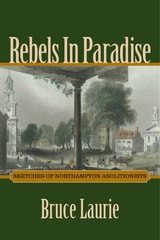
Rebels in Paradise
Sketches of Northampton AbolitionistsBruce Laurie
University of Massachusetts Press, 2014
Long ago dubbed the “Paradise of America,” Northampton, Massachusetts, is also known as the home of visionaries—from the Reverend Jonathan Edwards, father of the First Great Awakening, to George W. Benson, brother-in-law of William Lloyd Garrison and a founder of the utopian Northampton Association for Education and Industry. During the mid-nineteenth century the town became a center of political abolitionism and a hub in the Underground Railroad. In this book, Bruce Laurie profiles five rebellious figures who launched Northampton's abolitionist movement—Sylvester Judd Jr., John Payson Williston, David Ruggles, Henry Sherwood Gere, and Erastus Hopkins. Through their individual stories he traces the evolution of the antislavery movement in western Massachusetts and links it to broader developments in economics, civil life, and political affairs.
Northampton's abolitionists were a heterodox group, yet most were intrepid devotees of democracy and racial equality, idealists who enjoyed genuine friendships and political alliances with African Americans. Several even took the bold step of hiring African Americans in their businesses. They avoided the doctrinal rivalries that sometimes troubled the antislavery movement in other places, skillfully steering clear of the xenophobic nativism that infected Massachusetts politics in the mid–1850s and divided the Republican Party at large. Although a prohibitionist faction disrupted the Northampton abolitionist movement for a time, the leaders prevailed on the strength of their personal prestige and political experience, making the seat of Hampshire County what one of them called an abolitionist “stronghold.”
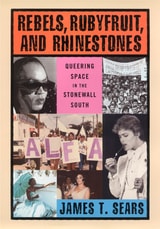
Rebels, Rubyfruit, and Rhinestones
Queering Space in the Stonewall SouthSears, James T.
Rutgers University Press, 2001
Rebels
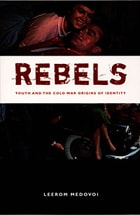
Youth and the Cold War Origins of IdentityLeerom Medovoi
Duke University Press, 2005
Alongside the young rebel, the contemporary concept of identity emerged in the 1950s. It was in that decade that “identity” was first used to define collective selves in the politicized manner that is recognizable today: in terms such as “national identity” and “racial identity.” Medovoi traces the rapid absorption of identity themes across many facets of postwar American culture, including beat literature, the young adult novel, the Hollywood teen film, early rock ‘n’ roll, black drama, and “bad girl” narratives. He demonstrates that youth culture especially began to exhibit telltale motifs of teen, racial, sexual, gender, and generational revolt that would burst into political prominence during the ensuing decades, bequeathing to the progressive wing of contemporary American political culture a potent but ambiguous legacy of identity politics.

Slaves, Peasants, and Rebels
Reconsidering Brazilian SlaveryStuart B. Schwartz
University of Illinois Press, 1992
Once preoccupied with Brazilian slavery as an economic system, historians shifted their attention to examine the nature of life and community among enslaved people. Stuart B. Schwartz looks at this change while explaining why historians must continue to place their ethnographic approach in the context of enslavement as an oppressive social and economic system. Schwartz demonstrates the complexity of the system by reconsidering work, resistance, kinship, and relations between enslaved persons and peasants. As he shows, enslaved people played a role in shaping not only their lives but Brazil’s institutionalized system of slavery by using their own actions and attitudes to place limits on slaveholders.
A bold analysis of changing ideas in the field, Slaves, Peasants, and Rebels provides insights on how the shifting power relationship between enslaved people and slaveholders reshaped the contours of Brazilian society.
The Mark of Rebels
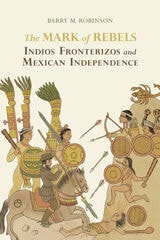
Indios Fronterizos and Mexican IndependenceBarry M. Robinson
University of Alabama Press, 2016
Explores social and cultural transformations among the indigenous communities of western Mexico, especially the indios fronterizos (Frontier Indians), preceding and during the struggle for independence
In The Mark of Rebels Barry Robinson offers a new look at Mexican Independence from the perspective of an indigenous population caught in the heart of the struggle. During the conquest and settlement of Mexico’s Western Sierra Madre, Spain’s indigenous allies constructed an indio fronterizo identity for their ethnically diverse descendants. These communities used their special status to maintain a measure of autonomy during the colonial era, but the cultural shifts of the late colonial period radically transformed the relationship between these indios fronterizos and their neighbors.
Marshalling an extensive array of archival material from Mexico, the United States, and Spain, Robinson shows that indio fronterizo participation in the Mexican wars of independence grafted into the larger Hidalgo Revolt through alignment with creole commanders. Still, a considerable gulf existed between the aims of indigenous rebels and the creole leadership. Consequently, the privileges that the indios fronterizos sought to preserve continued to diminish, unable to survive either the late colonial reforms of the Spanish regime or creole conceptions of race and property in the formation of the new nation-state.
This story suggests that Mexico’s transition from colony to nation can only be understood by revisiting the origins of the colonial system and by recognizing the role of Spain’s indigenous allies in both its construction and demolition. The study relates events in the region to broader patterns of identity, loyalty, and subversion throughout the Americas, providing insight into the process of mestizaje that is commonly understood to have shaped Latin America. It also foreshadows the popular conservatism of the nineteenth century and identifies the roots of post-colonial social unrest.
This book provides new context for scholars, historians, ethnographers, anthropologists, and anyone interested in the history of Mexico, colonization, Native Americans, and the Age of Revolutions.
Writing Pancho Villa's Revolution
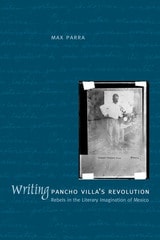
Rebels in the Literary Imagination of MexicoBy Max Parra
University of Texas Press, 2006
The 1910 Mexican Revolution saw Francisco "Pancho" Villa grow from social bandit to famed revolutionary leader. Although his rise to national prominence was short-lived, he and his followers (the villistas) inspired deep feelings of pride and power amongst the rural poor. After the Revolution (and Villa's ultimate defeat and death), the new ruling elite, resentful of his enormous popularity, marginalized and discounted him and his followers as uncivilized savages. Hence, it was in the realm of culture rather than politics that his true legacy would be debated and shaped.
Mexican literature following the Revolution created an enduring image of Villa and his followers. Writing Pancho Villa's Revolution focuses on the novels, chronicles, and testimonials written from 1925 to 1940 that narrated Villa's grassroots insurgency and celebrated—or condemned—his charismatic leadership. By focusing on works by urban writers Mariano Azuela (Los de abajo) and Martín Luis Guzmán (El águila y la serpiente), as well as works closer to the violent tradition of northern Mexican frontier life by Nellie Campobello (Cartucho), Celia Herrera (Villa ante la historia), and Rafael F. Muñoz (¡Vámonos con Pancho Villa!), this book examines the alternative views of the revolution and of the villistas. Max Parra studies how these works articulate different and at times competing views about class and the cultural "otherness" of the rebellious masses. This unique revisionist study of the villista novel also offers a deeper look into the process of how a nation's collective identity is formed.