Results by title
27 books match the query 'Recipes'
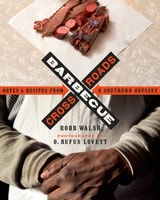
Barbecue Crossroads
Notes and Recipes from a Southern OdysseyBy Robb Walsh
University of Texas Press, 2013
In stories, recipes, and photographs, James Beard Award–winning writer Robb Walsh and acclaimed documentary photographer O. Rufus Lovett take us on a barbecue odyssey from East Texas to the Carolinas and back. In Barbecue Crossroads, we meet the pitmasters who still use old-fashioned wood-fired pits, and we sample some of their succulent pork shoulders, whole hogs, savory beef, sausage, mutton, and even some barbecued baloney. Recipes for these and the side dishes, sauces, and desserts that come with them are painstakingly recorded and tested.
But Barbecue Crossroads is more than a cookbook; it is a trip back to the roots of our oldest artisan food tradition and a look at how Southern culture is changing. Walsh and Lovett trace the lineage of Southern barbecue backwards through time as they travel across a part of the country where slow-cooked meat has long been part of everyday life. What they find is not one story, but many. They visit legendary joints that don’t live up to their reputations—and discover unknown places that deserve more attention. They tell us why the corporatizing of agriculture is making it difficult for pitmasters to afford hickory wood or find whole hogs that fit on a pit.
Walsh and Lovett also remind us of myriad ways that race weaves in and out of the barbecue story, from African American cooking techniques and recipes to the tastes of migrant farmworkers who ate their barbecue in meat markets, gas stations, and convenience stores because they weren’t welcome in restaurants. The authors also expose the ways that barbecue competitions and TV shows are undermining traditional barbecue culture. And they predict that the revival of the community barbecue tradition may well be its salvation.
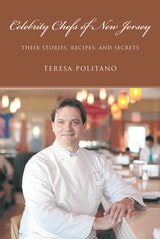
Celebrity Chefs of New Jersey
Their Stories, Recipes, and SecretsTeresa Politano
Rutgers University Press, 2010
Not so long ago, perhaps even just at the turn of this century, it was easy to lament the lack of sophisticated food in New Jersey. Oh sure, a few restaurants always sparkled, but, for the most part, New Jerseyans looked across at the bright lights of the big city, wistfully yearning for a table in glamorous Manhattan. Now, however, the most sought- after tables are right here and we have the best seats in the house, made even sweeter perhaps because they're our own little secret. We can dine frequently and dine well, with a smug sense that if only New Yorkers knew, they'd be looking across the river wishing they were us.
In Celebrity Chefs of New Jersey, Teresa Politano profiles Craig Shelton, the chef who crystallized New Jersey's place in culinary history with his legendary Ryland Inn, along with other chefs, telling their personal stories of both creativity and survival. Some of these men and women rose from humble or difficult childhoods to fame in the food world. Others were not only talented but lucky enough to be in the right place at the right time. Their stories are arranged into three categories: legends, stars, and chefs to watch, and then topped off with a sweet surprise finish. Politano includes photographs, cooking secrets, and some of their sought-after signature recipes that are sophisticated but manageable for the skilled home chef.
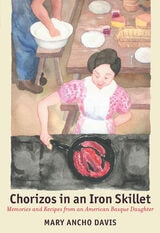
Chorizos in an Iron Skillet
Memories and Recipes from an American Basque DaughterMary Ancho Davis
University of Nevada Press, 2001
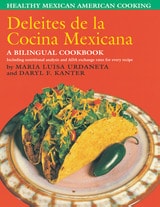
Deleites de la Cocina Mexicana
Healthy Mexican American CookingBy Maria Luisa Urdaneta and Daryl F. Kanter
University of Texas Press, 1996
Mexican food, Tex-Mex, Southwestern cuisine—call it what you will, the foods that originated in Mexico have become everyone's favorites. Yet as we dig into nachos and enchiladas, many people worry about the fats and calories that traditional Mexican food contains.
Deleites de la Cocina Mexicana proves that Mexican cooking can be both delicious and healthy. In this bilingual cookbook, Maria Luisa Urdaneta and Daryl F. Kanter provide over 200 recipes for some of the most popular Mexican dishes-guacamole, frijoles, Spanish rice, chiles rellenos, chile con carne, chalupas, tacos, enchiladas, fajitas, menudo, tamales, and flan-to name only a few. Without sacrificing a bit of flavor, the authors have modified the recipes to increase complex carbohydrates and total dietary fiber, while decreasing saturated and total fats. These modifications make the recipes suitable for people with diabetes-and all those who want to reduce the fats and calories in their diet. Each recipe also includes a nutritional analysis of calories, fats, sodium, etc., and American Diabetic Association exchange rates.
Because diabetes is a growing problem in the Mexican-American community, Deleites de la Cocina Mexicana is vital for all those who need to manage their diet without giving up the foods they love. Let it be your one-stop guide to cooking and eating guilt-free Mexican food.
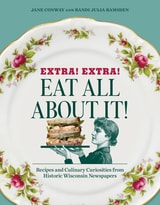
Extra! Extra! Eat All About It!
Recipes and Culinary Curiosities from Historic Wisconsin NewspapersRandi Julia Ramsden
Wisconsin Historical Society Press, 2024
A blend of cookbook and bite-size history, Extra! Extra! Eat All About It! offers a unique glimpse into the culinary landscape of the late nineteenth and early twentieth centuries. Fifty recipes selected from Wisconsin newspapers are served alongside brief essays that dig into the stories behind the food trends of the time.
In lively prose, Jane Conway and Randi Julia Ramsden reveal how coconuts and oysters made their way to 1800s Wisconsin, how bakers gauged the temperatures of their wood-burning stoves, and how our predecessors really did slip on banana peels, among other flavorful facts. In addition to capturing quirky food fashions, like breakfast parties and paper-bag cooking, the recipes provide insights into regional cooking traditions.
Each original recipe appears alongside the authors’ easy-to-follow updated version. Mouthwatering modern photographs showcase the revived dishes for the first time in their long history, and newspaper clippings, ads, and illustrations give the book a charming vintage feel. Featuring a variety of recipes, ranging from trendy (Barbecued Ham with Bananas) and tempting (Pickled Walnuts) to traditional (Pumpernickel) and tantalizing (Apple de Luxe), Extra! Extra! Eat All About It! will satisfy the appetites of history lovers and home chefs alike.
“Such a fun and fascinating book! Extra! Extra! Eat All About It! deftly delves into Wisconsin’s long-ago food fads, evolutions, and absurdities. Don’t be surprised if this book inspires new trends that are riffs on some of these century-old ideas. Pickled walnuts, anyone? Or mock pumpkin pie, with prunes?” — Mary Bergin, author of Wisconsin Supper Club Cookbook
“Both cookbook and chronicle, Extra! Extra! Eat All About It! is an ingenious, illuminating tasting menu of our culinary past. Sourced from nineteenth and early twentieth century Wisconsin newspapers, its fifty vignettes serve up historical insights, forgotten fads and bygone recipes. From paper bag cookery and ‘oyster saloons’ to fire-baked eggs and maple taffy, I ate this book right up.” — Terese Allen, coauthor of The Flavor of Wisconsin
“This beautiful, fun, and informative book is a masterclass in how historical cooking opens a window onto wider historical themes, including mechanization, the impacts of war, immigration, globalization, and changing nutritional advice.” — Eleanor Barrett, author of Leftovers: A History of Food Waste and Preservation
“Conway and Ramsden do a great job of using historical documents to demonstrate what people were eating and how they entertained. They describe recipes as interaction and community, as well as how food trends change over time. The writing is smart and clever. A wonderful read.” — Kimberly Wilmot Voss, author of The Food Section: Newspaper Women and the Culinary Community
Food for the Soul
The Recipes of Schubert OgdenSchubert Ogden
Bridwell Press, 2022
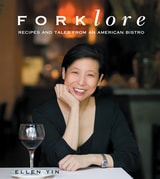
Forklore
Recipes and Tales from an American BistroEllen Yin
Temple University Press, 2007
Forklore tells the tale of this extraordinary dining establishment, while dishing out some delectable recipes. Yin brings to her writing the same qualities of careful attention and lively enthusiasm that characterize her best dishes. With great gusto, she describes how she fell in love with food, how Fork was born, and how her chefs have helped to create its unique cuisine. And throughout her story she liberally sprinkles recipes -- simple, delicious, and easy to cook at home -- that represent the best of New American Bistro cooking. There are nearly 100 recipes in all, and every one has a story, served up by Yin with relish and delight.
For anyone who likes a juicy story, well seasoned with zesty anecdotes and mouthwatering recipes, Forklore is a treat.
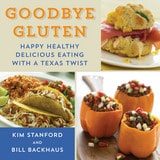
Goodbye Gluten
Kim Stanford
University of North Texas Press, 2014
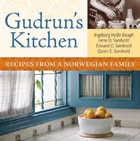
Gudrun’s Kitchen
Recipes from a Norwegian FamilyIrene O. Sandvold
Wisconsin Historical Society Press, 2011
The youngest of a large Norwegian immigrant family, Gudrun Thue Sandvold was known for her beaming blue eyes and a reserve that gave way to laughter whenever she got together with her sisters. She took immeasurable pride in her children and grandchildren, kept an exquisite home, and turned the most mundane occasion into a party. And to all who knew her, Gudrun’s cooking was the stuff of legend.
Part cookbook, part immigrant story, and part family memoir, Gudrun's Kitchen features hundreds of Gudrun Sandvold’s recipes for comfort food from a time when families and friends gathered at the table and connected with one another every single day. But this book is much more than a guide to Norwegian culinary traditions; it is an important contribution to immigrant history and a vital documentation of our nation’s multicultural heritage.
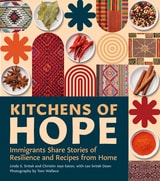
Kitchens of Hope
Immigrants Share Stories of Resilience and Recipes from HomeLinda S. Svitak
University of Minnesota Press, 2025
Culinary journeys from around the globe: recipes and stories from immigrants to the United States
Immigrants carry more than hope as they cross oceans and traverse continents to come to the United States. They hold tightly to stories and recipes, remembrances of what they left behind. Kitchens of Hope brings together these memories from contributors who hail from more than thirty countries, offering a glimpse into their kitchens and insight into their lives. This book is a celebration of people and cuisines from around the world, infused with the aromas of epazote and cardamom, the tang of fish sauce, the heat of chile peppers, and the bite of mustard greens.
With tales as compelling as the brimming bowls and overflowing platters of these foods that represent home, Kitchens of Hope features immigrants coming from vastly varied circumstances. Some arrived in the United States fleeing war and violence, others were seeking education and opportunity; some have called the United States home for years, and others have only recently arrived. Despite the differing situations that brought them here, the contributors all find comfort and tradition as they gather to share meals with family and friends. They are activists and entrepreneurs, parents and community leaders, and some are affiliated with the Minnesota-based nonprofit the Advocates for Human Rights, the organization that inspired the creation of this book.
Structured around the contributors’ personal stories of their journeys, the chapters reflect the main themes connecting them: community, resilience, opportunity, justice, hope, and celebration. In these pages, readers will find inspiration, along with more than fifty recipes, from curry, mole, biryani, and borscht, to pita, pho, sambusa, pupusas, and so much more. Welcome to the Kitchens of Hope table.
Low Protein Cookery for Phenylketonuria
Virginia E. Schuett
University of Wisconsin Press, 1997
The major new feature of the third edition is entirely new nutrient calculations. The available food supply has changed significantly in the past fifteen years, and nutrient information is much better now. The nutrient calculations in this edition of the cookbook are based on the updated 1995 Low Protein Food List for PKU compiled by the author, which is the most widely used food list for the PKU diet in the United States. Some of the changes in nutrient values are subtle, others more significant; all reflect the best information currently available.
Low Protein Cookery for PKU offers recipes that appeal to a wide range of ages, suit a wide range of individual diet requirements, and facilitate integration of the diet into normal family eating routines. Many of the recipes are suitable for the entire family; others include instructions for adapting the recipe to suit the needs of family members not on the diet, or are accompanied by recipes for the preparation of similar non-diet items. The recipes provide gram weights when appropriate, for greater accuracy in preparing the recipes and in maintaining the diet.
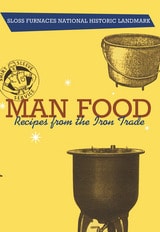
Man Food
Recipes from the Iron TradeKaren R. Sloss Furnaces Historical Landmark
University of Alabama Press, 2007
The secret history of manly eating in the Heart of Dixie
Man Food: Recipes from the Iron Trade is a flavorful tribute to Alabama’s industrial soul and culinary heart. Born from the legendary Sloss Furnaces in Birmingham—once the beating heart of the Magic City’s iron industry—this cookbook blends Southern tradition, foundry grit, and backyard hospitality into one unforgettable volume.
Collected from the pages of Pig Iron Rough Notes, a magazine once circulated among Alabama’s ironworkers, these recipes reflect the lives of men who forged metal by day and cooked with cast iron by night. Inside, you’ll find dishes like Brunswick Stew, Catfish Chowder, and Bean Hole Beans—hearty meals rooted in Alabama’s outdoors, work camps, and family kitchens.
With colorful stories, vintage illustrations, and a deep appreciation for cast-iron cooking, Man Food celebrates the “Gentlemen Cooks” of the South—men who knew that good food and good company were just as important as hard work. Whether you're a native Alabamian, a history buff, or a lover of Southern foodways, this book offers a delicious slice of Alabama culture.
Fire up your skillet, pour a cup of camp coffee, and taste the legacy of the Iron Trade—Alabama style.
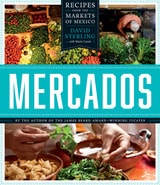
Mercados
Recipes from the Markets of MexicoBy David Sterling
University of Texas Press, 2019
Part travelogue, part cookbook, Mercados takes us on a tour of Mexico’s most colorful destinations—its markets—led by an award-winning, preeminent guide whose passion for Mexican food attracted followers from around the globe. Just as David Sterling’s Yucatán earned him praise for his “meticulously researched knowledge” (Saveur) and for producing “a labor of love that well documents place, people and, yes, food” (Booklist), Mercados now invites readers to learn about local ingredients, meet vendors and cooks, and taste dishes that reflect Mexico’s distinctive regional cuisine.
Serving up more than one hundred recipes, Mercados presents unique versions of Oaxaca’s legendary moles and Michoacan’s carnitas, as well as little-known specialties such as the charcuterie of Chiapas, the wild anise of Pátzcuaro, and the seafood soups of Veracruz. Sumptuous color photographs transport us to the enormous forty-acre, 10,000-merchant Central de Abastos in Oaxaca as well as tiny tianguises in Tabasco. Blending immersive research and passionate appreciation, David Sterling’s final opus is at once a must-have cookbook and a literary feast for the gastronome.
My Mexico
A Culinary Odyssey with RecipesBy Diana Kennedy
University of Texas Press, 2013
By universal acclaim, Diana Kennedy is the world’s authority on the authentic cuisines of Mexico. For decades, she has traveled the length and breadth of the country, seeking out the home cooks, local ingredients, and traditional recipes that make Mexican cuisines some of the most varied and flavorful in the world. Kennedy has published eight classic Mexican cookbooks, including the James Beard Award-winning Oaxaca al Gusto. But her most personal book is My Mexico, a labor of love filled with more than three hundred recipes and stories that capture the essence of Mexican food culture as Kennedy has discovered and lived it. First published in 1998, My Mexico is now back in print with a fresh design and photographs—ready to lead a new generation of gastronomes on an unforgettable journey through the foods of this fascinating and complex country.
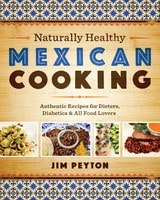
Naturally Healthy Mexican Cooking
Authentic Recipes for Dieters, Diabetics, and All Food LoversBy Jim Peyton
University of Texas Press, 2014
Just about everyone loves Mexican food, but should you eat it if you want to manage your weight or diabetes? Yes, absolutely! There are literally hundreds of authentic Mexican dishes that are naturally healthy—moderate in calories, fat, and sugar—and completely delectable. In Naturally Healthy Mexican Cooking, Jim Peyton presents some two hundred recipes that have exceptional nutrition profiles, are easy to prepare, and, most important of all, taste delicious.
Peyton starts from the premise that for any diet to work, you have to enjoy the food you’re eating. Substitutions that alter the taste and pleasure of food, such as nonfat yogurt for mayonnaise, have no place here. Instead, you’ll find tasty, highly nutritious, low-calorie dishes from the various schools of Mexican and Mexican American cooking in Texas, New Mexico, Arizona, and California. From traditional meat, seafood, and vegetarian entrees and antojitos mexicanos, including tacos, enchiladas, and tamales, to upscale alta cocina mexicana such as shrimp ceviche and mango salsa, these recipes are authentic, simple for home cooks to prepare with supermarket ingredients, flavorful, and fully satisfying in moderate portions. Every recipe includes nutritional analysis—calories, protein, carbs, fat, cholesterol, fiber, sugar, and sodium. In addition to the recipes, Peyton offers helpful information on diet and healthy eating, Mexican cooking and nutrition, ingredients, cooking techniques, and cooking equipment.
Try the recipes in Naturally Healthy Mexican Cooking, and you’ll discover that comfort food can be both delicious and good for you. ¡Buen provecho!
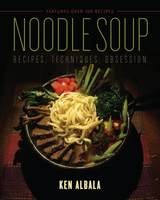
Noodle Soup
Recipes, Techniques, ObsessionKen Albala
University of Illinois Press, 2018
This primer offers the recipes and techniques for mastering quick-slurper staples and luxurious from-scratch feasts. Albala made a different noodle soup every day for two years. His obsession yielded all you need to know about making stock bases, using dried or fresh noodles, and choosing from a huge variety of garnishes, flavorings, and accompaniments. He lays out innovative techniques for mixing and matching bases and noodles with grains, vegetables, and other ingredients drawn from an international array of cuisines. In addition to recipes both cutting edge and classic, Albala describes new soup discoveries he created along the way. There's advice on utensils, cooking tools, and the oft-overlooked necessity of matching a soup to the proper bowl. Finally, he sprinkles in charming historical details that cover everything from ancient Chinese millet noodles to that off-brand Malaysian ramen at the back of the ethnic grocery store.
Filled with more than seventy color photos and dozens of recipes, Noodle Soup is an indispensable guide for cooking, eating, and loving a universal favorite.
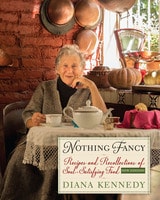
Nothing Fancy
Recipes and Recollections of Soul-Satisfying FoodBy Diana Kennedy
University of Texas Press, 2016
Featuring new and revised recipes, photos, and bêtes noires, this culminating book of an illustrious career presents the favorite dishes and personal stories of the world’s foremost authority on traditional Mexican cooking and one of its most-celebrated food writers
Diana Kennedy is the world’s preeminent authority on authentic Mexican cooking and one of its best-known food writers. Renowned for her uncompromising insistence on using the correct local ingredients and preparation techniques, she has taught generations of cooks how to prepare traditional dishes from the villages of Mexico, and in doing so, has documented and helped preserve the country’s amazingly diverse and rich foodways. Kennedy’s own meals for guests are often Mexican, but she also indulges herself and close friends with the nostalgic foods in Nothing Fancy.
This acclaimed cookbook—now expanded with new and revised recipes, additional commentary, photos, and reminiscences—reveals Kennedy’s passion for simpler, soul-satisfying food, from the favorite dishes of her British childhood (including a technique for making clotted cream that actually works) to rare recipes from Ukraine, Norway, France, and other outposts. In her inimitable style, Kennedy discusses her addictions—everything from good butter, cream, and lard to cold-smoked salmon, Seville orange marmalade, black truffle shavings, escamoles (ant eggs), and proper croissants—as well as her bêtes noires—kosher salt, nonfat dairy products, cassia “cinnamon,” botoxed turkeys, and nonstick pans and baking sprays, among them. And look out for the ire she unleashes on “cookbookese,” genetically modified foods, plastic, and unecological kitchen practices! The culminating work of an illustrious career, Nothing Fancy is an irreplaceable opportunity to spend time in the kitchen with Diana Kennedy, listening to the stories she has collected and making the food she has loved over a long lifetime of cooking.
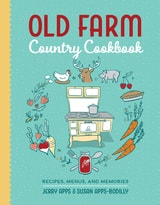
Old Farm Country Cookbook
Recipes, Menus, and MemoriesJerry Apps
Wisconsin Historical Society Press, 2017
Inspired by the dishes made by his mother, Eleanor, and featuring recipes found in her well-worn recipe box, Jerry and his daughter, Susan, take us on a culinary tour of life on the farm during the Depression and World War II. Seasoned with personal stories, menus, and family photos, Old Farm Country Cookbook recalls a time when electricity had not yet found its way to the farm, when making sauerkraut was a family endeavor, and when homemade ice cream tasted better than anything you could buy at the store.
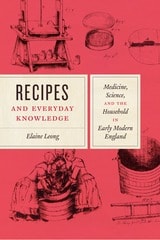
Recipes and Everyday Knowledge
Medicine, Science, and the Household in Early Modern EnglandElaine Leong
University of Chicago Press, 2018
In Recipes and Everyday Knowledge, Elaine Leong situates recipe knowledge and practices among larger questions of gender and cultural history, the history of the printed word, and the history of science, medicine, and technology. The production of recipes and recipe books, she argues, were at the heart of quotidian investigations of the natural world or “household science”. She shows how English homes acted as vibrant spaces for knowledge making and transmission, and explores how recipe trials allowed householders to gain deeper understandings of sickness and health, of the human body, and of natural and human-built processes. By recovering this story, Leong extends the parameters of natural inquiry and productively widens the cast of historical characters participating in and contributing to early modern science.

Recipes and Reciprocity
Building Relationships in ResearchHannah Tait Neufeld
University of Manitoba Press, 2022
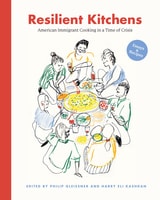
Resilient Kitchens
American Immigrant Cooking in a Time of Crisis, Essays and RecipesPhilip Gleissner
Rutgers University Press, 0
Winner of the James Beard Award for Best Book in Food Issues and Advocacy
Immigrants have left their mark on the great melting pot of American cuisine, and they have continued working hard to keep America’s kitchens running, even during times of crisis like the COVID-19 pandemic. For some immigrant cooks, the pandemic brought home the lack of protection for essential workers in the American food system. For others, cooking was a way of reconnecting with homelands they could not visit during periods of lockdown.
Resilient Kitchens: American Immigrant Cooking in a Time of Crisis is a stimulating collection of essays about the lives of immigrants in the United States before and during the COVID-19 pandemic, told through the lens of food. It includes a vibrant mix of perspectives from professional food writers, restaurateurs, scholars, and activists, whose stories range from emotional reflections on hardship, loss, and resilience to journalistic investigations of racism in the American food system. Each contribution is accompanied by a recipe of special importance to the author, giving readers a taste of cuisines from around the world. Every essay is accompanied by gorgeous food photography, the authors’ snapshots of pandemic life, and hand-drawn illustrations by Filipino American artist Angelo Dolojan.
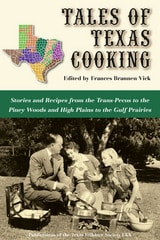
Tales of Texas Cooking
Stories and Recipes from the Trans Pecos to the Piney Woods and High Plains to the Gulf PrairiesFrances Brannen Vick
University of North Texas Press, 2015
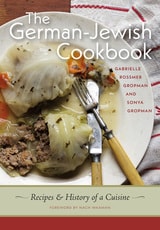
The German-Jewish Cookbook
Recipes and History of a CuisineGabrielle Rossmer Gropman and Sonya Gropman
Brandeis University Press, 2017
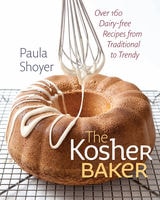
The Kosher Baker
Over 160 Dairy-free Recipes from Traditional to TrendyPaula Shoyer
Brandeis University Press, 2010

The Medieval Kitchen
Recipes from France and ItalyOdile Redon, Françoise Sabban, and Silvano Serventi
University of Chicago Press, 1998
"This book is a delight. It is not often that one has the privilege of working from a text this detailed and easy to use. It is living history, able to be practiced by novice and master alike, practical history which can be carried out in our own homes by those of us living in modern times."—Wanda Oram Miles, The Medieval Review
"The Medieval Kitchen, like other classic cookbooks, makes compulsive reading as well as providing a practical collection of recipes."—Heather O'Donoghue, Times Literary Supplement
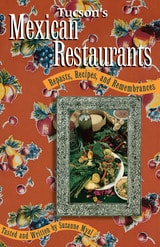
Tucson's Mexican Restaurants
Repasts, Recipes, and RemembrancesSuzanne Myal
University of Arizona Press, 1999
From the traditional restaurants of South Tucson to newer dining spots on the north and east sides, Tucson's Mexican Restaurants is an affectionate look at some of the best places to savor this wonderful cuisine. Suzanne Myal takes readers into the kitchens of many of these establishments to offer insights into the families that run them, the secrets of food preparation, and even the history of some of Tucson's best-loved recipes. Many of those recipes, along with others from prominent Mexican American families, are reproduced in the book, inviting readers to try their hand at red beef tamales, chiles rellenos, and other favorite dishes.
The book is organized by six sections of town, with a locator map for each. The entry for each establishment includes address, hours, price range, and credit card information, and indicates the specialties of the house. Each entry is also coded for features such as level of alcohol service; availability of carryout, delivery, and catering; and whether the menu features heart-healthy or vegetarian options. A separate section lists Mexican bakeries and tortilla factories, and a guide to fiestas helps readers choose beer or tequila—and find menudo when they've overindulged.
From street trucks to historic sites, Mexican restaurants in Tucson offer something for every palate. This book can help visitors and residents alike find their way around them and better enjoy some of the best Mexican food north of the border.
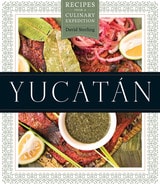
Yucatán
Recipes from a Culinary ExpeditionBy David Sterling
University of Texas Press, 2014
Winner, James Beard Foundation Best Cookbook of the Year Award, 2015
James Beard Foundation Best International Cookbook Award, 2015
The Art of Eating Prize for Best Food Book of the Year, 2015
The Yucatán Peninsula is home to one of the world's great regional cuisines. With a foundation of native Maya dishes made from fresh local ingredients, it shares much of the same pantry of ingredients and many culinary practices with the rest of Mexico. Yet, due to its isolated peninsular location, it was also in a unique position to absorb the foods and flavors of such far-flung regions as Spain and Portugal, France, Holland, Lebanon and the Levant, Cuba and the Caribbean, and Africa. In recent years, gourmet magazines and celebrity chefs have popularized certain Yucatecan dishes and ingredients, such as Sopa de lima and achiote, and global gastronomes have made the pilgrimage to Yucatán to tantalize their taste buds with smoky pit barbecues, citrus-based pickles, and fiery chiles. But until now, the full depth and richness of this cuisine has remained little understood beyond Yucatán's borders.
An internationally recognized authority on Yucatecan cuisine, chef David Sterling takes you on a gastronomic tour of the peninsula in this unique cookbook, Yucatán: Recipes from a Culinary Expedition. Presenting the food in the places where it’s savored, Sterling begins in jungle towns where Mayas concoct age-old recipes with a few simple ingredients they grow themselves. He travels over a thousand miles along the broad Yucatán coast to sample a bounty of seafood; shares “the people’s food”at bakeries, chicharronerías, street vendors, home restaurants, and cantinas; and highlights the cooking of the peninsula’s three largest cities—Campeche, Mérida, and Valladolid—as well as a variety of pueblos noted for signature dishes. Throughout the journey, Sterling serves up over 275 authentic, thoroughly tested recipes that will appeal to both novice and professional cooks. He also discusses pantry staples and basic cooking techniques and offers substitutions for local ingredients that may be hard to find elsewhere. Profusely illustrated and spiced with lively stories of the region’s people and places, Yucatán: Recipes from a Culinary Expedition is the long-awaited definitive work on this distinctive cuisine.